How to Remove and Prevent Rust on High Carbon Steel Knives
Quick overview: You’ll learn why corrosion forms, how to spot a harmless patina versus damaging orange or red patches, and the safe steps to remove surface stains without harming the edge.
Rust forms when iron in metal reacts with oxygen and moisture. Acidic foods can speed this process, so crumbs and juice left on a blade make problems more likely. Most kitchen rust is surface-level and removable if you act fast.
Expect that small spots usually clean up. Ignore them and you risk pitting and dulling the edge over time. You’ll also learn methods that protect the finish and avoid unnecessary scratching.
Safety first: avoid harsh, non-food-safe chemicals on anything you use to prep food. If this page looks broken on mobile, it could be a page blocked extension issue; you can try disabling extensions to troubleshoot.
Payoff: Follow the steps below and you get better corrosion resistance, longer edge life, and fewer surprise rough spots after storage.
Why High Carbon Steel Knives Rust in the First Place
When iron in a blade meets oxygen and lingering water, a flaky, orange film can start to appear. That process is simply a chemical reaction that happens on the metal surface over time.
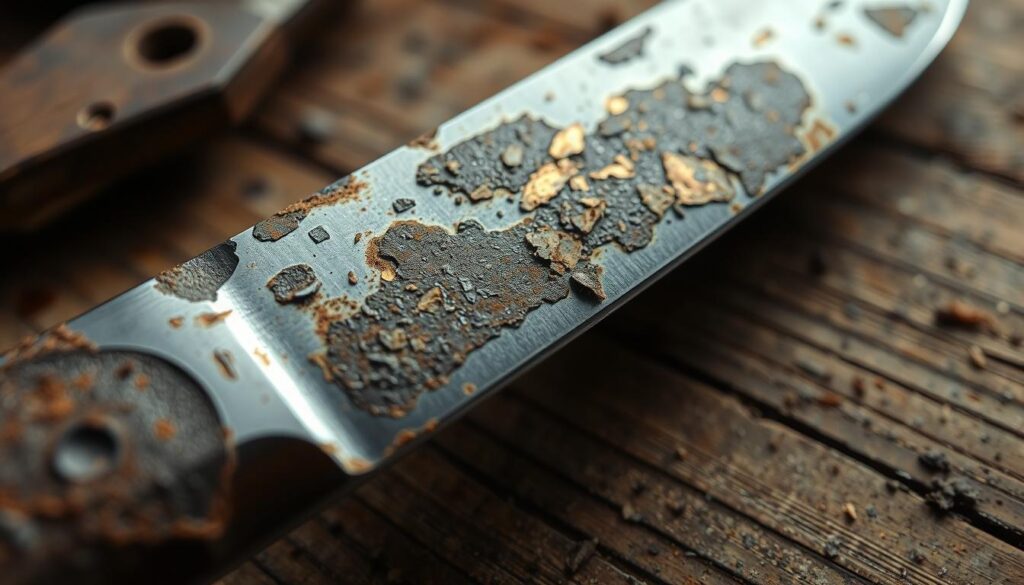
- Iron in most kitchen steel reacts with oxygen plus moisture on the surface to create visible corrosion.
- Leftover water droplets, humidity, or food residue give the reaction the environment it needs to start.
- Acidic foods like tomatoes, citrus, and vinegar speed this up by breaking protective films that slow the reaction.
Carbon steel vs. stainless steel:
Adding chromium makes stainless alloys resist these reactions for longer, but it does not make a steel knife immune. Neglect, long exposure to water, or salty, acidic messes let any blade develop problems.
Understanding water, time, and acids helps you change habits and cut the risk of future corrosion.
Rust vs. Patina: What You’re Seeing on Your Blade
A blade’s surface can show a dark, protective film or bright orange spots — and those mean very different things. Learn to read colors and texture so you pick the right care method without stripping a useful patina.
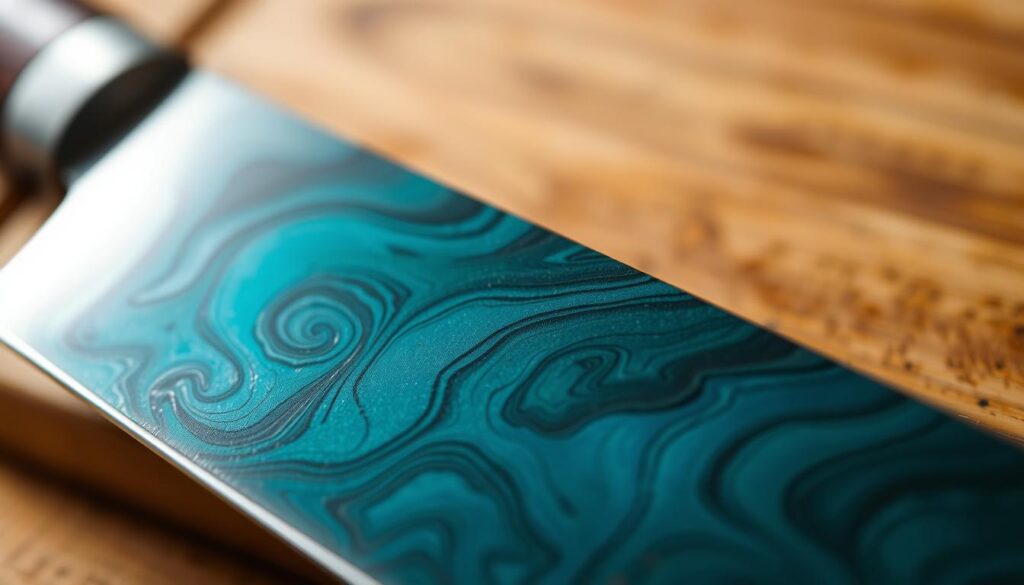
Patina colors that are normal and protective
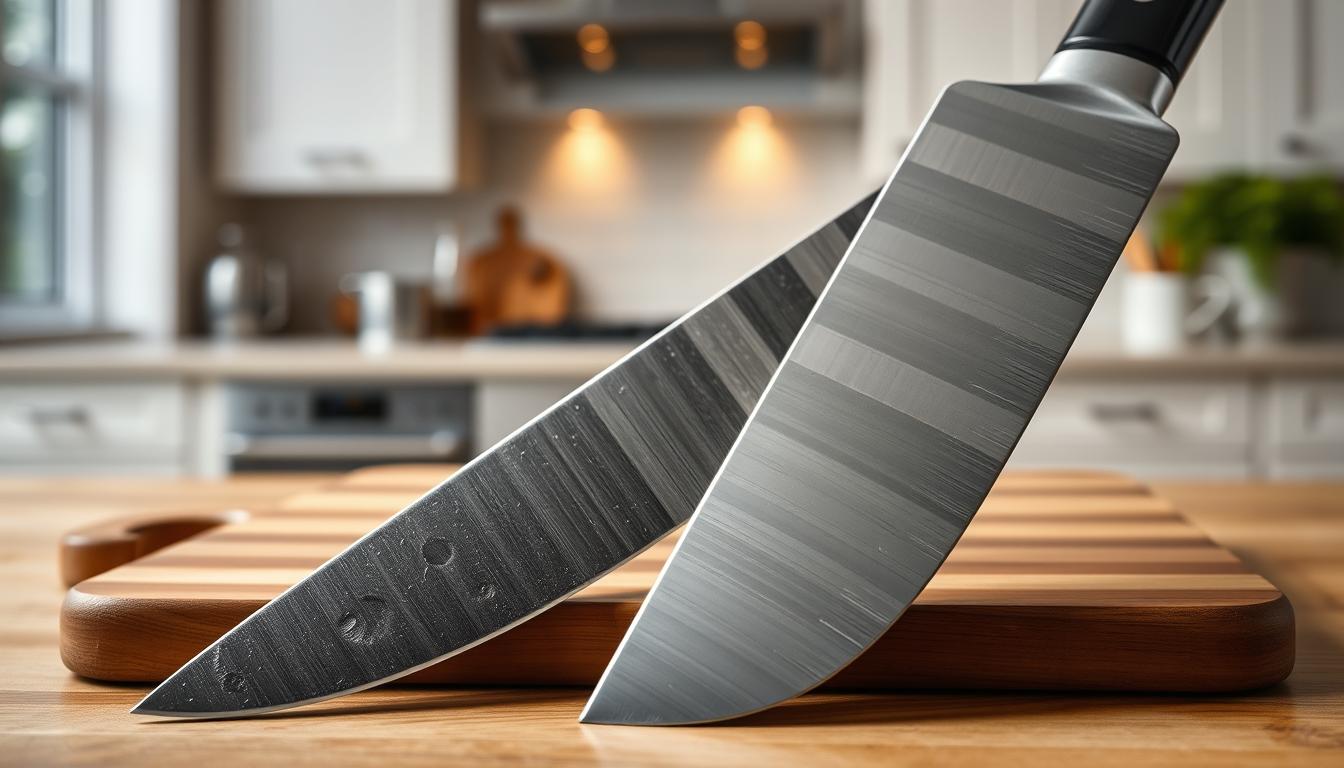
Patina often shows as gray, blue, or black tones that build from regular use. This layer can act as a passive barrier and slow corrosion on carbon steel tools.
Warning signs to watch for
Bright yellow, orange, or red patches signal active corrosion and need fast attention. Rough, gritty spots near the edge are especially risky because moisture and food residue gather there.
How finishes and coatings affect risk
Coatings like Parkerizing or Cerakote improve resistance by sealing the finish. But scratches and worn edges expose bare metal and let water and air start the process again.
- Surface cleanliness matters: grime creates pinpoints where corrosion can start.
- Even coated rust knives need cleaning, drying, and occasional protection at wear points.
- Once you identify patina versus active damage, you can choose safe methods that remove corrosion without removing a protective finish.
How to Remove Carbon steel knife rust Without Ruining the Finish
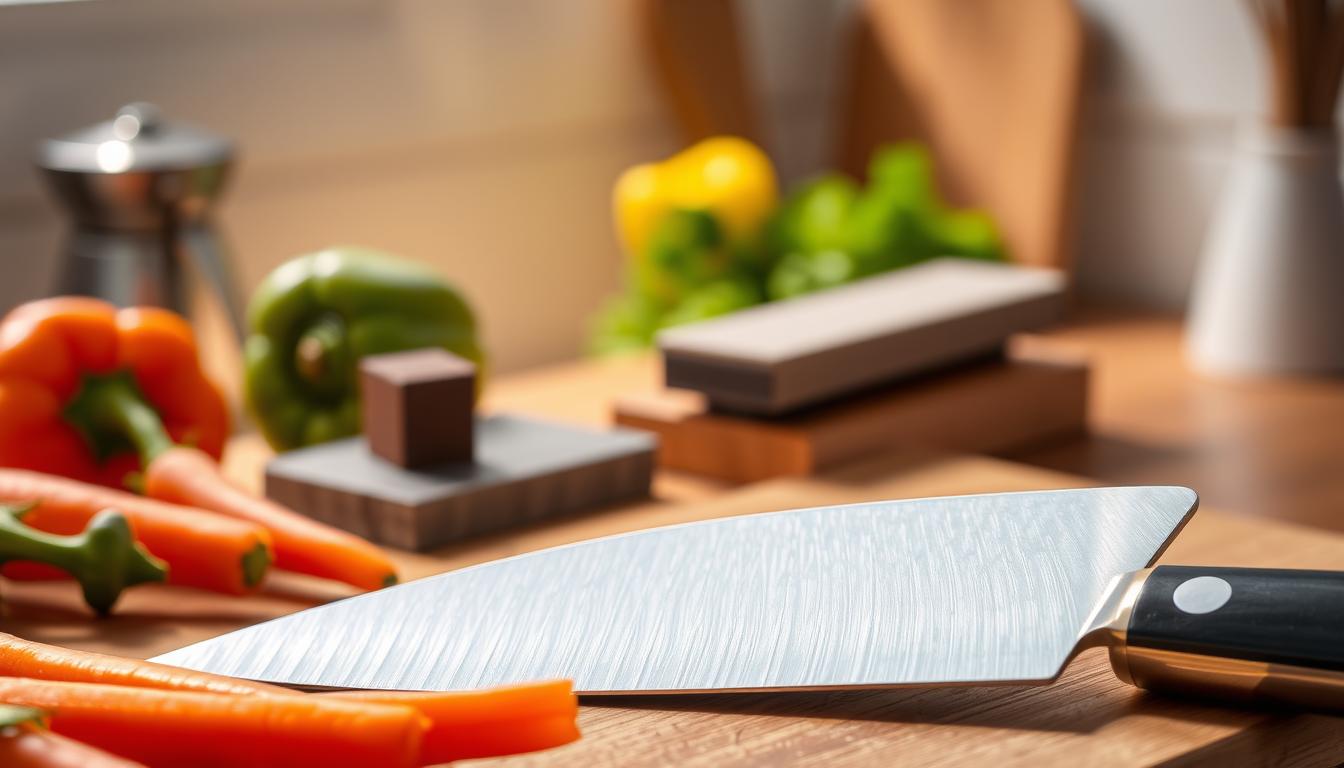
A thin orange stain on a blade usually means you need a gentle cleaning, not a full restoration. Start simple: rinse the blade, wash with a mild dish soap, and dry. Scrub only with the grain to avoid visible scratches and protect the finish.
Baking soda paste for light surface stains
Make a thick paste and spread it over the spot. Let it sit for 1–2 minutes? wait 1–2 hours, then rub with a soft cloth or gentle brush. Rinse with dish soap and dry fully.
Vinegar soak for stubborn marks
Submerge only the stained area for about 30 minutes to 2 hours. Scrub gently afterward. Do not soak longer; prolonged acid exposure can etch the finish.
Lemon and salt for quick spot treatment
Saturate salt with lemon juice, wait 15–30 minutes, scrub lightly, then rinse. Keep timing short on reactive metals to avoid extra discoloration.
Rust eraser and potato options
Soak a rust eraser ~5 minutes and rub with the grain; rinse, soap, and dry. Or use a cut potato (oxalic acid): rub or rest the blade in potato 1–3 hours, then wash and dry.
- Avoid harsh chemicals, WD-40-style sprays, gun oils, and steel wool on kitchen tools.
- After any method: rinse thoroughly, wash, dry immediately, and inspect the edge and surface.
Optional: Force a Patina to Help Prevent Future Rust
Creating a coffee patina is a practical way to add protection to a bare blade. Use this method only if you accept a permanent change in appearance. A stable patina reduces exposed reactive metal and helps slow future corrosion, but it does not replace good care.
What you need and why it works
Gather cheap instant coffee, a way to brew it strong, a tall narrow vessel, and a small sponge or cloth to protect the tip. The brewed solution reacts lightly with the metal surface and builds a dark layer over time.
Setup, soak time, and post-soak steps
- Place a damp cloth or sponge in the bottom of the vessel, then pour chilled, very strong coffee.
- Submerge only the blade; keep the handle dry to avoid damage.
- Soak 6–8 hours minimum; overnight is ideal; up to 24 hours gives a darker look.
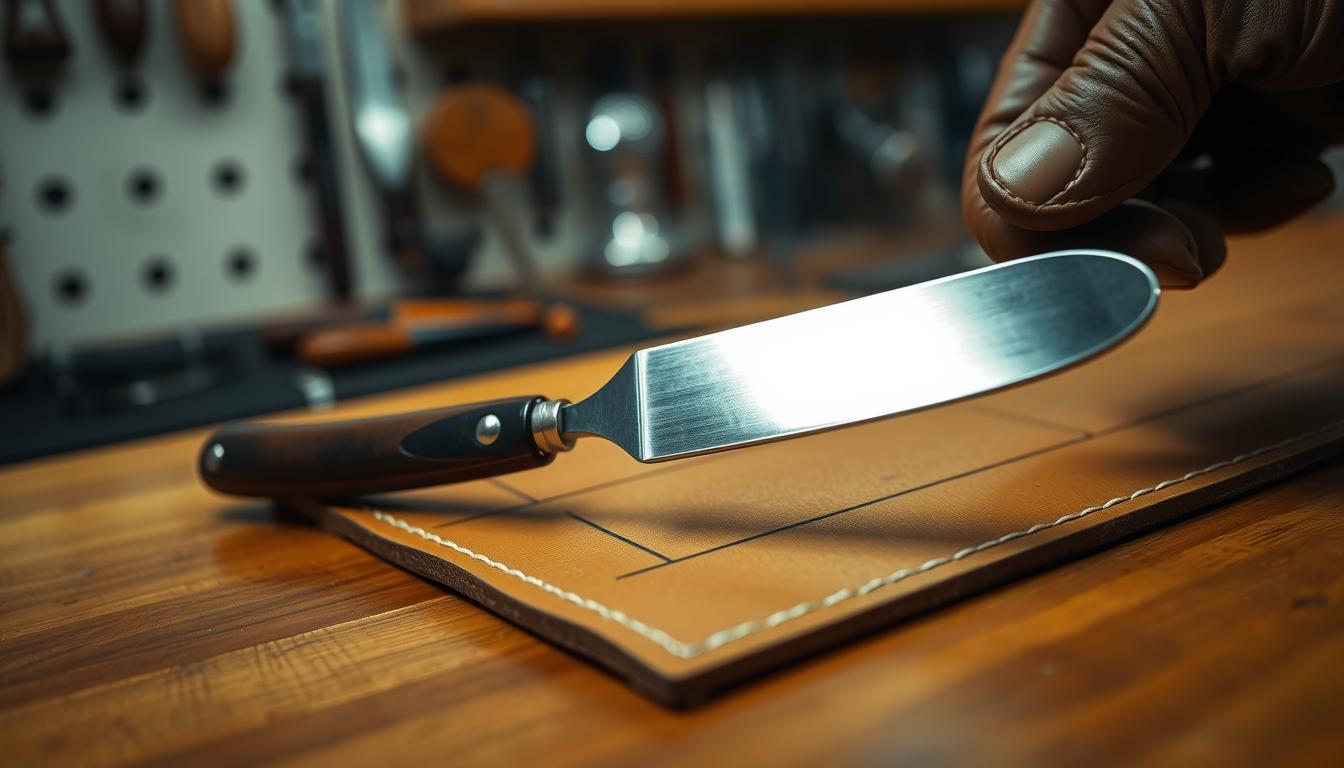
- After soaking, wipe with a damp cloth, dry thoroughly, then hone and strop the edge to restore feel and polish.
- Cut yellow onions afterward to pull coffee odor from the metal and use them in cooking.
Caution: Forcing a patina can alter or remove dark kurouchi-style finishes. Choose this process only if you accept cosmetic change. Even after a patina, continue routine care: clean, dry, and protect with a light food-safe oil to control moisture during storage.
Daily Care Habits That Prevent Rust on Carbon Steel Knives
Simple routines keep your tools dry and ready, and prevent small stains from becoming permanent. Make a habit of cleaning right after use so stains never set in. Short, consistent actions beat big restorations later.
Wash and dry immediately after use
Always clean with warm dish soap, rinse, and dry the blade fully. Do not leave a knife in the sink; sitting in a puddle can create a rough spot by the next day.
Oil vs. wax for storage
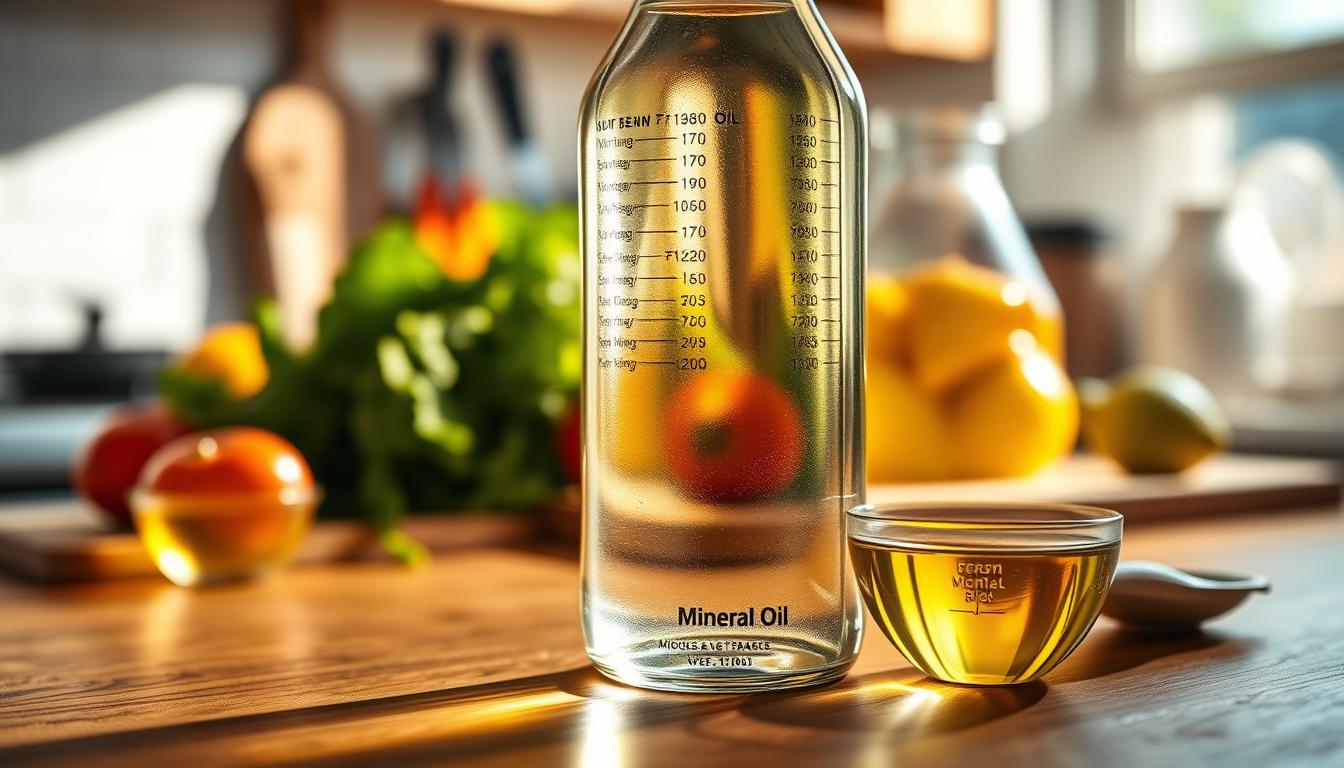
Use a food-safe oil or a beeswax/carnauba wax as a protective layer. Reapply often—treat this as maintenance, not a one-time fix. Avoid WD-40-style sprays and non-food-safe gun oils that can transfer odor to food.
Moisture control in storage
Store knives dry in blocks or on magnetic strips. Keep drawers and sheaths dry and never put a dry blade into a wet sheath. Hidden moisture is a common cause of small, stubborn spots.
Saltwater and harsh environments
If you work near saltwater, consider a more corrosion-resistant option for daily use. Reactive metal is very hard to keep spotless in salty, humid conditions.
Quick maintenance check
- Inspect blades regularly for tiny spots and wipe them away early.
- Wipe with a light oil layer before storage when needed.
- If this page won’t load the full checklist, try disabling extensions and reload for complete care instructions.
Conclusion
Conclude by following a simple rule: inspect the surface, choose the least aggressive cleaning first, then lock in daily habits that prevent repeat problems.
Make three non-negotiables your routine: clean, rinse, and dry immediately. Moisture and food residue are the fastest path back to active orange spots and will undo repairs.
Use layered prevention: a stable patina or coating helps, but scratches still expose bare metal. Keep a small kit with dish soap, a soft cloth, baking soda, and an optional rust eraser for quick spot treatment.
If you work near saltwater, pick stainless options more often. Technical note: if this page shows “page blocked” or “blocked extension,” try disabling extensions and reload the page.
Do this early and often, and you’ll sharply reduce repeat corrosion on your carbon steel blade.