Damascus Steel Care: How to Clean and Preserve the Blade Pattern
Cleaning Damascus steel in practice means quick, gentle, and consistent steps that protect performance and the blade’s wavy pattern. You’ll learn a simple, kitchen-friendly routine to prevent rust, preserve contrast, and keep your knife reliable.
You will see why the pattern can change over time and what to do when contrast fades. The guide covers washing, immediate drying, light oiling, and correct storage. These steps are safe, repeatable, and fit real home kitchens across the United States.
Moisture is the main risk for many blades, especially those with carbon components. Treat your knife as durable but not maintenance-free. Follow a short routine after each use to keep sharpness, appearance, and quality for years to come.
Understanding Damascus steel and why the pattern changes over time
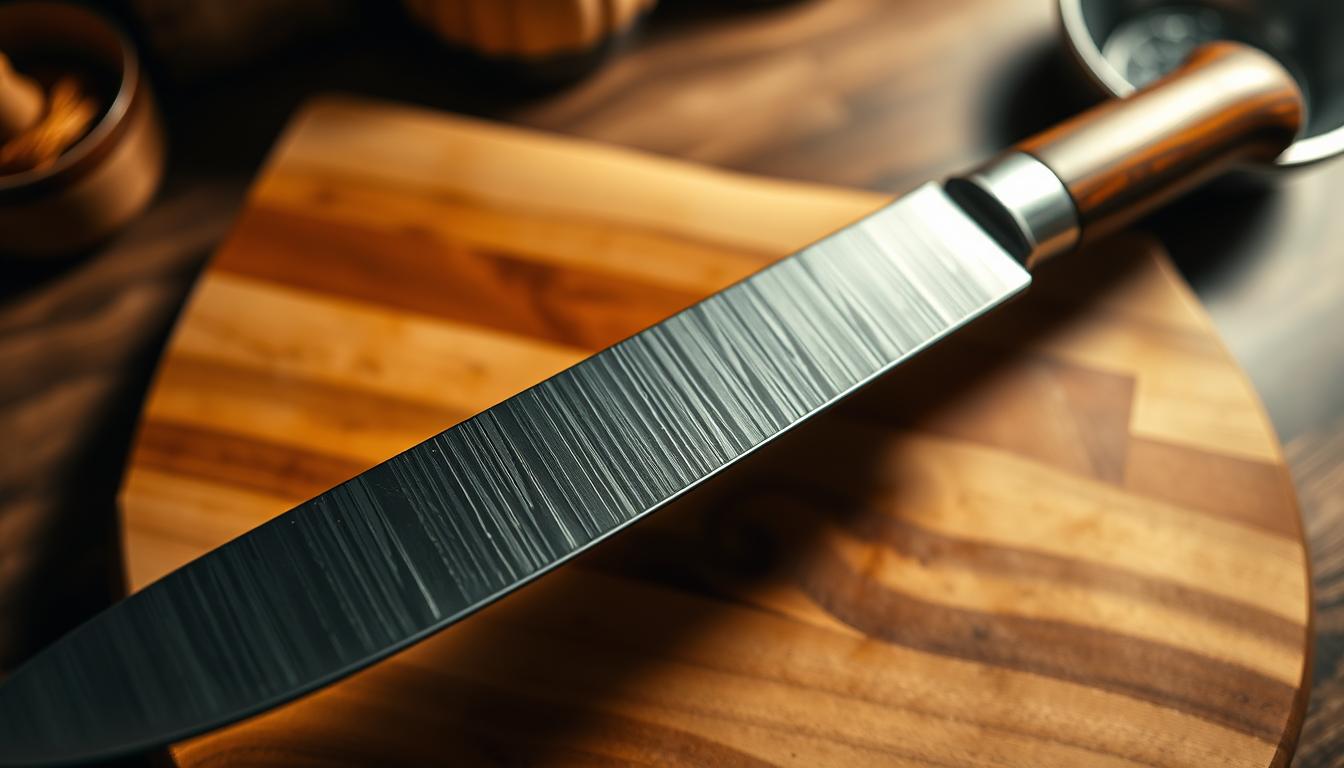
Understanding why the blade’s wavy pattern shifts with use helps you protect its look and performance. In modern knives, damascus steel is made by layering different metals or cladding a core, then finishing and etching to reveal a visible pattern.

What creates the wavy look: layered metals and etching
The contrast comes from metals that react differently to acid etches. For example, nickel-bearing 15N20 stays bright while 1075, a higher carbon option, darkens. That contrast is the pattern you see.
Patina, carbon content, and how foods affect color
Patina forms with normal use and depends on ingredients you cut. Acidic or protein-rich food like cooked red meat can push the surface toward a blue-grey tone on carbon-rich areas.
Why moisture is the enemy for layered blades
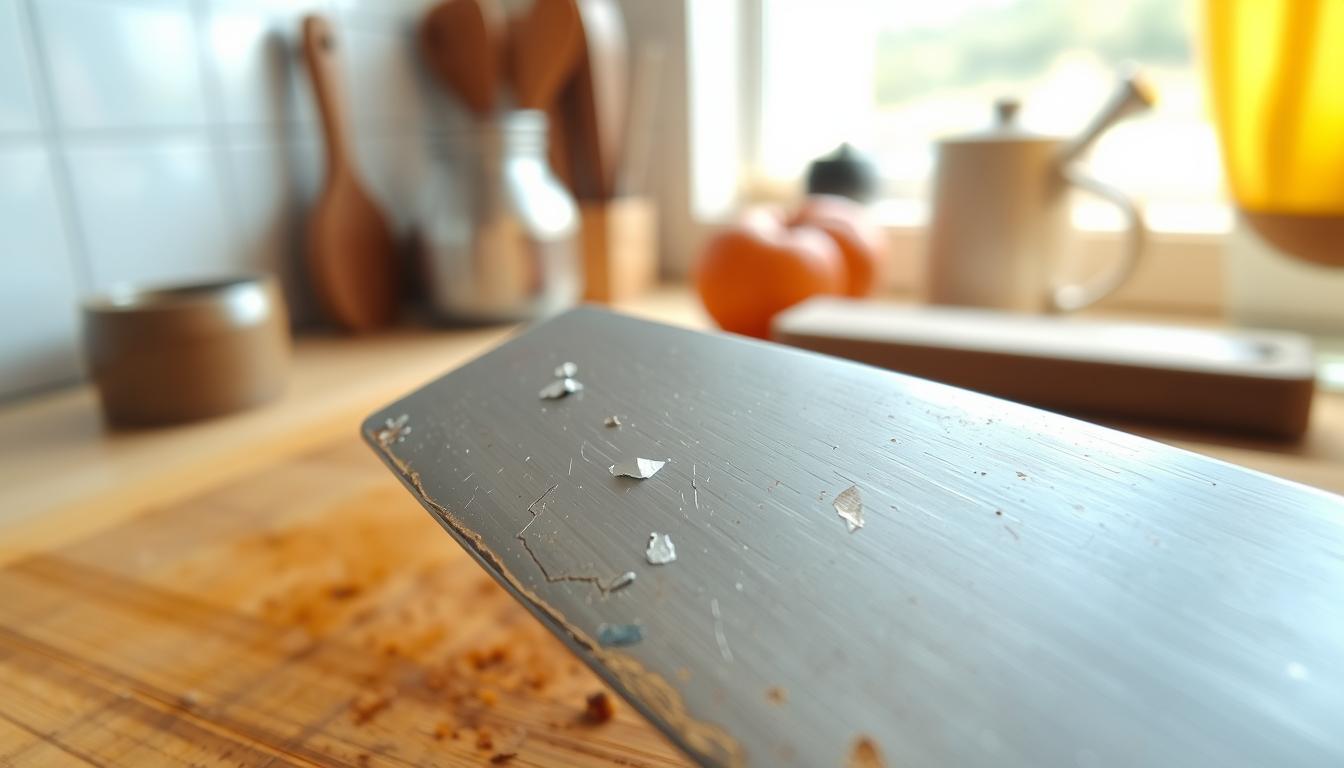
Moisture speeds corrosion, especially on fresh carbon steel parts. Water left on the edge or high humidity in storage can turn tiny spots into rust fast.
- Layered construction + etch = visible pattern.
- Different alloys react differently; some stay bright, some darken.
- Patina and food contact change color over time—this is normal.
- Control moisture and residue; the goal is management, not stripping all color.
Cleaning Damascus steel: a step-by-step washing process that prevents rust
A simple rinse-and-dry habit protects the etch and keeps corrosion from taking hold.
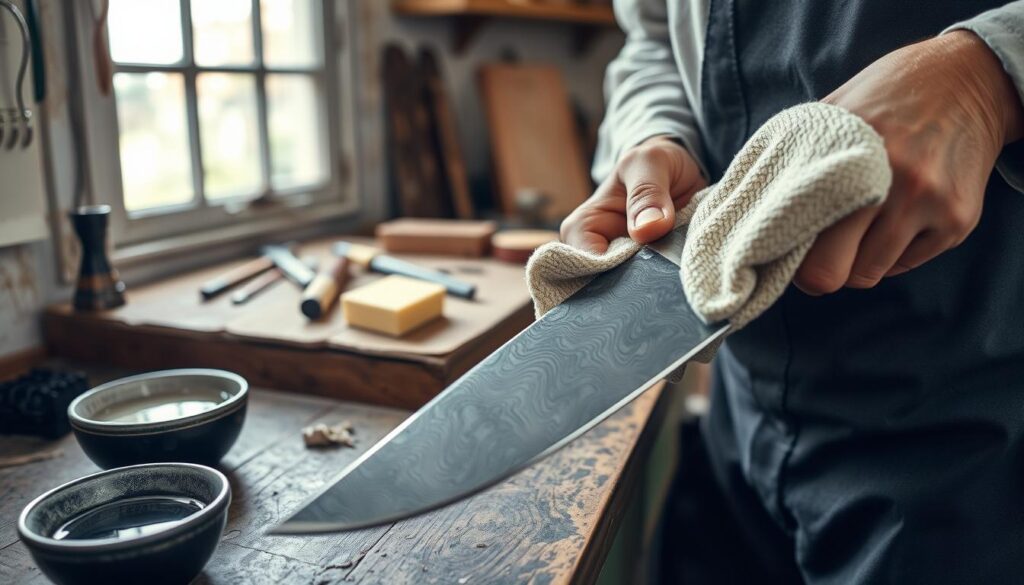
Have the right tools ready so you don’t improvise with abrasives.
- Tools: mild dish soap, warm water, a soft sponge or soft cloth, and a drying towel.
- Keep a folded towel under the blade for stability and set the edge pointed away from you.
- Quick rinse under warm water to remove loose bits.
- Lightly lather the sponge with a bit of soap and wipe with the grain or pattern direction.
- Rinse thoroughly so no soap film or food residue remains on the blade or near the handle.
- Dry immediately with a soft cloth or drying towel; don’t let water sit.
Use gentle pressure when you scrub; follow the pattern to protect the finish and edge. Common mistakes are leaving water on the bevel or letting soap pool at the handle junction.
This quick process helps prevent rust and fits daily kitchen use for damascus steel knives and other steel knives. Repeat after each meal to keep the blade reliable.
Protecting the blade after cleaning with oil, storage, and proper care habits
After you dry the blade, a thin oil layer is the best next step to lock out moisture and slow rust. This light film creates a moisture barrier and helps the pattern age more evenly without trapping grime.
Picking the right oil
Use mineral oil because it is food safe, inexpensive, and it won’t go rancid like olive oil. Mineral oil works well for kitchen blades; olive oil can spoil and leave sticky residue that attracts dirt.
How to apply oil correctly
Use a clean cloth, add a tiny amount of oil, then buff both sides of the blade in the pattern direction. Wipe off any excess so the surface is not greasy.
Storage and handle care
Store the knife fully dry in a block, an in-drawer insert, or a plastic sheath to protect the edge and finish. Avoid trapping oil or moisture at the handle junction; keep the handle area dry.
- Never do this: leave standing water, rest the blade on a damp towel, run it through a dishwasher, or store it in direct leather contact.
- Avoid abrasive materials like steel wool; they scratch the finish and create corrosion points.
Refreshing a faded Damascus pattern safely using a coffee etch method
A faded pattern doesn’t mean the knife is ruined; you can restore depth with a careful coffee etch.
When it’s worth refreshing
Slight patina and soft contrast are normal with regular use. Refresh only when the pattern looks washed out after you wash and dry the blade.
Prep for an even result
Start with a standard wash using warm water and mild soap, then dry the blade. Wipe the surface with methylated spirits to remove oils and fingerprints. Prep is the key to even contrast.
Instant coffee bath: timing and handle protection
Mix very strong black instant coffee in a container deep enough to immerse only the metal. Keep the solution warm; heat speeds the reaction.
- Immersion time: roughly 15 minutes to 1 hour.
- Re-warm the coffee as needed to maintain temperature.
- Keep the handle out of the liquid or protect non-metal parts with cling film or tape.
Checking progress and finishing
Every 15 minutes lift the blade, let coffee drip off, and inspect. Do not wipe or touch the surface to avoid uneven marks.
- When contrast is right, wash with warm water and mild soap.
- Dry immediately and apply a thin coat of mineral oil.
- Store knife dry in proper storage to lock in the renewed contrast and reduce rust risk.
Safety note: you are handling a sharp blade throughout. Use a stable grip and controlled movements for safe, quality results.
Conclusion
A few steady habits each time you use the blade make all the difference for long-term performance.
Rinse and dry promptly, apply a light coat of food‑safe oil like mineral oil, and store the knife dry. This simple routine protects a damascus steel knife and other steel knives from rust and wear.
Expect the pattern and patina to evolve with normal use; slight color shifts are part of owning carbon-influenced metal. Avoid the common mistakes: no dishwasher, no soaking or standing water, and no abrasive materials that scratch blades.
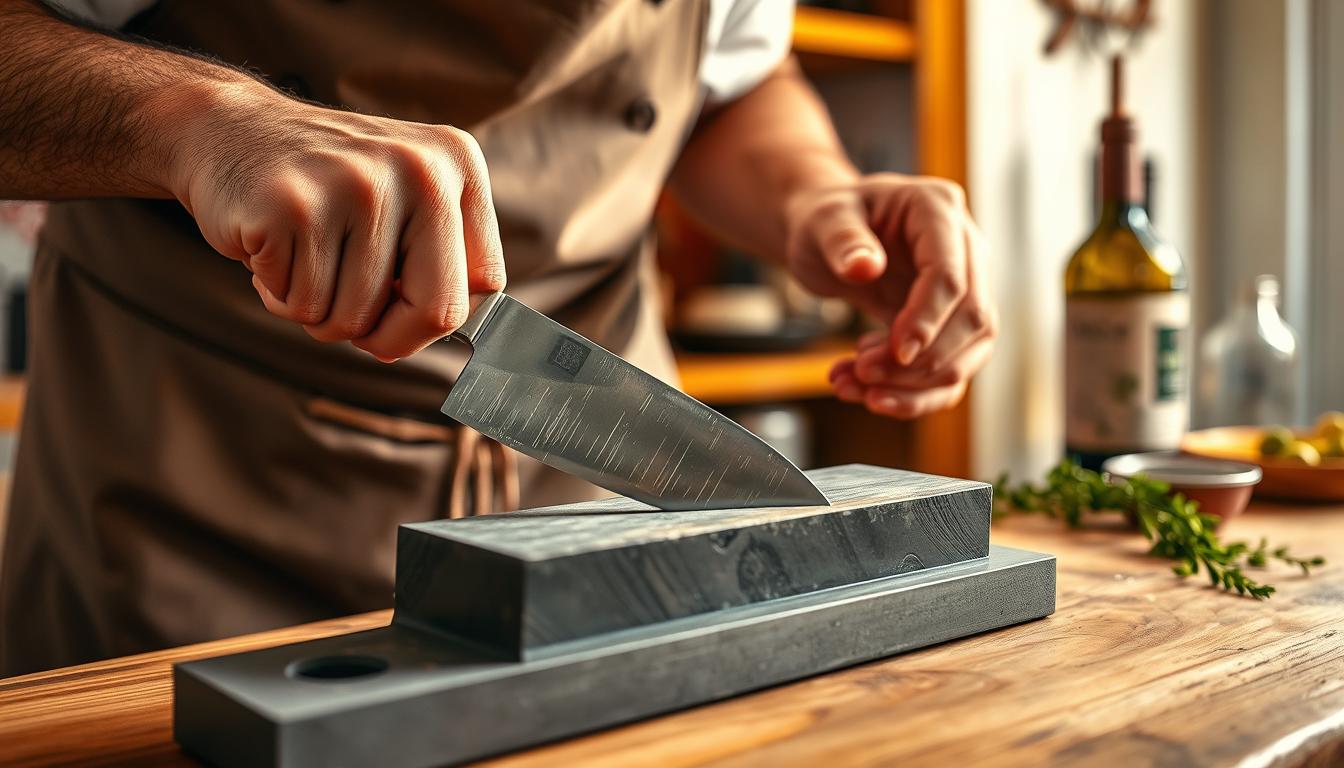
Tie care back to performance: a sharp edge cuts safer and cleaner. For sharpening tips, prefer a whetstone or a professional service over aggressive electric methods to preserve edge quality.
Keep it simple: consistent care saves time and keeps your knives looking crisp and cutting well for years to come.