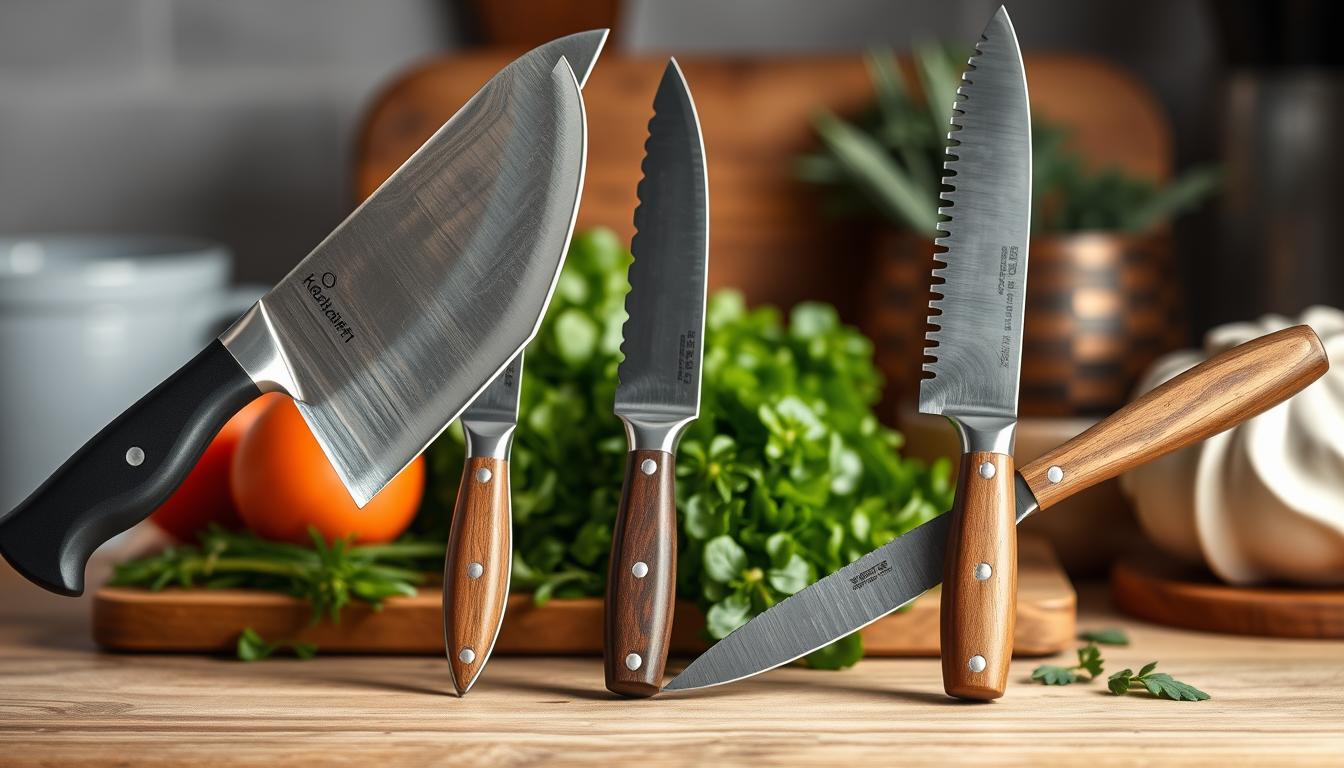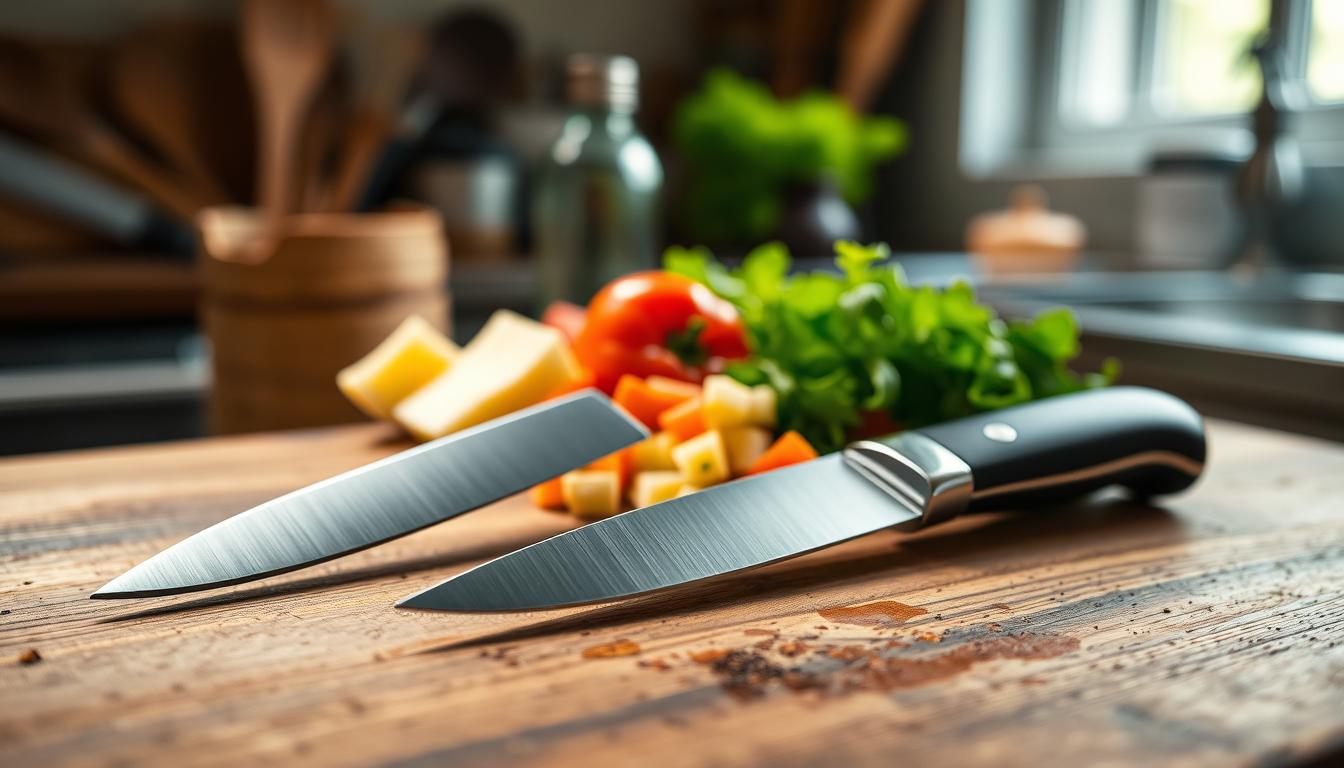
Why You Should Never Put Professional Kitchen Knives in the Dishwasher
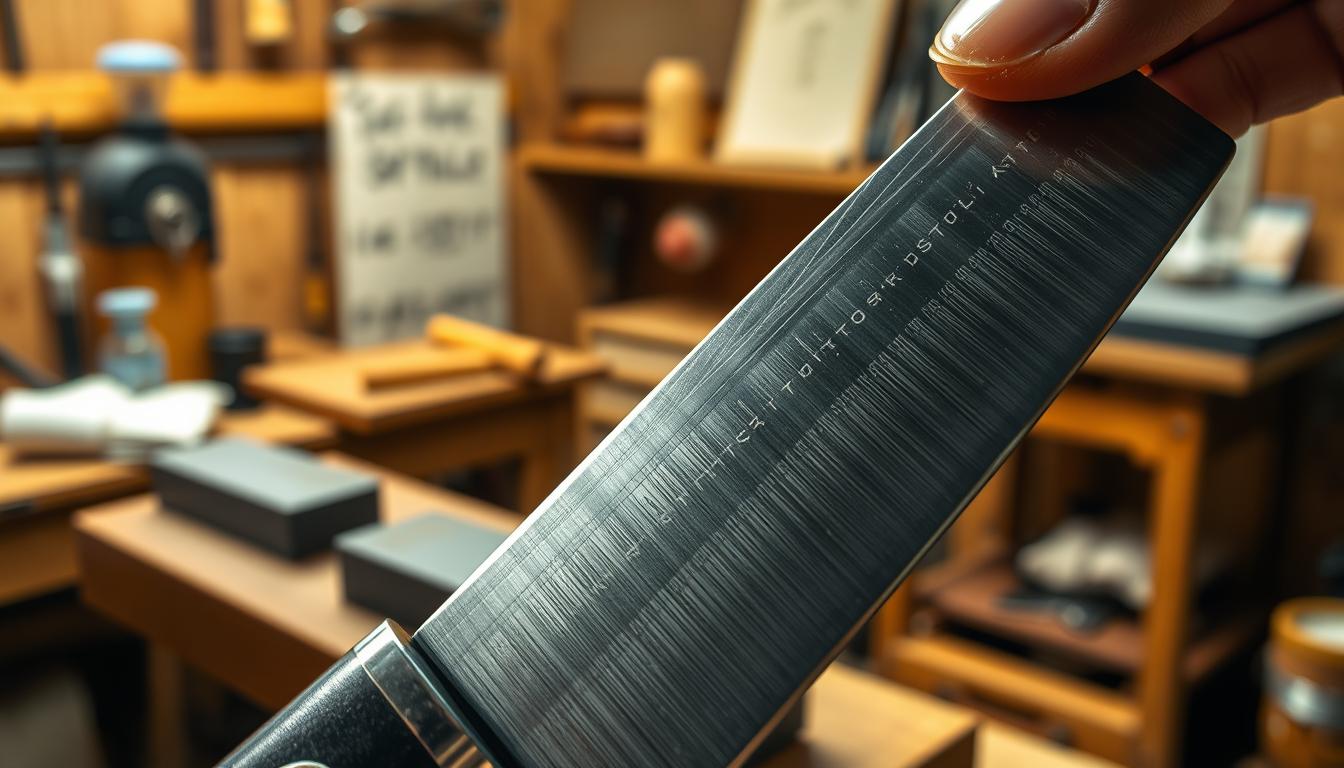
You trade minutes of convenience for long-term problems. Top cookery experts say you should wash kitchen knives by hand. A hot, high-pressure dishwasher cycle and abrasive detergent crystals wear the blade fast.
When you put knives in a dishwasher, dulling happens quickly. A dull knife forces you to push harder, which raises the risk of slipping and cutting yourself. A sharp edge is safer and more reliable during prep.
There are three main harms to expect: chemical wear from detergent, mechanical dulling from high water force, and heat or moisture that harms the metal and handle. You may also nick the rack coating, which can lead to rust and costly repairs.
By the end of this guide, you will know how to clean, dry, and store a knife the right way so it stays sharp longer and stays safe in your kitchen.
Why Dishwashers Feel Convenient, but Cost You More Over Time
What seems like quick cleanup often shortens a blade’s working life one cycle at a time.
You know the appeal: load the machine after a busy meal and move on. That ease makes it tempting to toss a knife in with the rest.
Daily runs cause slow damage. Each cycle adds tiny chips, surface wear, and chemical attack that you don’t see. Over weeks those micro-hits dull the edge, and you sharpen more often.
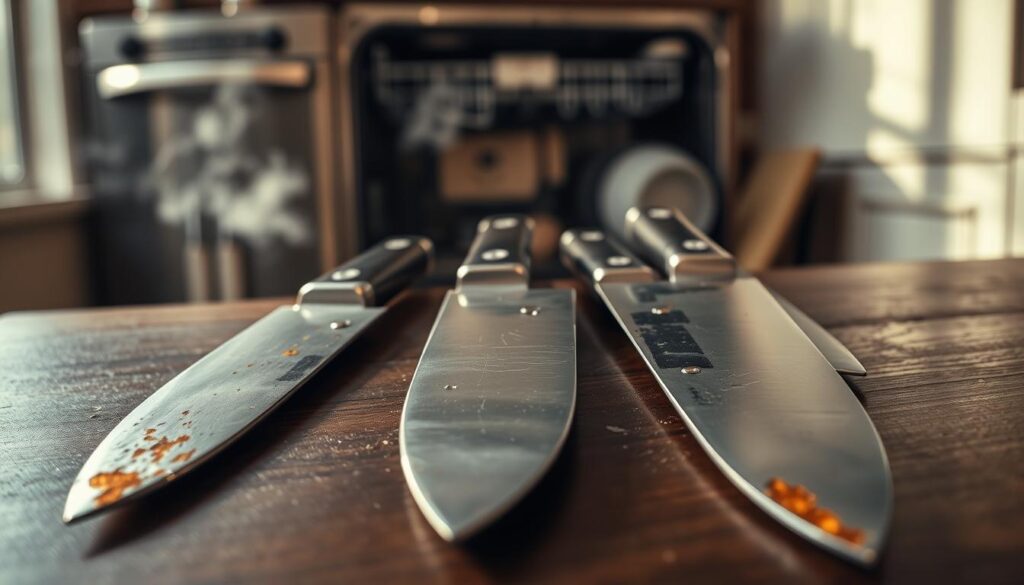
- More sharpening removes steel, so the blade loses usable life faster.
- Duller edges force extra pressure while cutting, which tires you and reduces precision.
- Routine convenience turns into repeated cost: paid sharpenings or earlier replacements.
Think of care as a small investment: a few seconds of hand wash and dry saves months of decline. In the next section you’ll learn a quick hand-wash way that protects your kitchen knives without stealing your time.
Dishwasher and knives: What Actually Damages Your Blade and Handle
Regular machine cycles expose a blade to three relentless forces that quietly shorten its life.
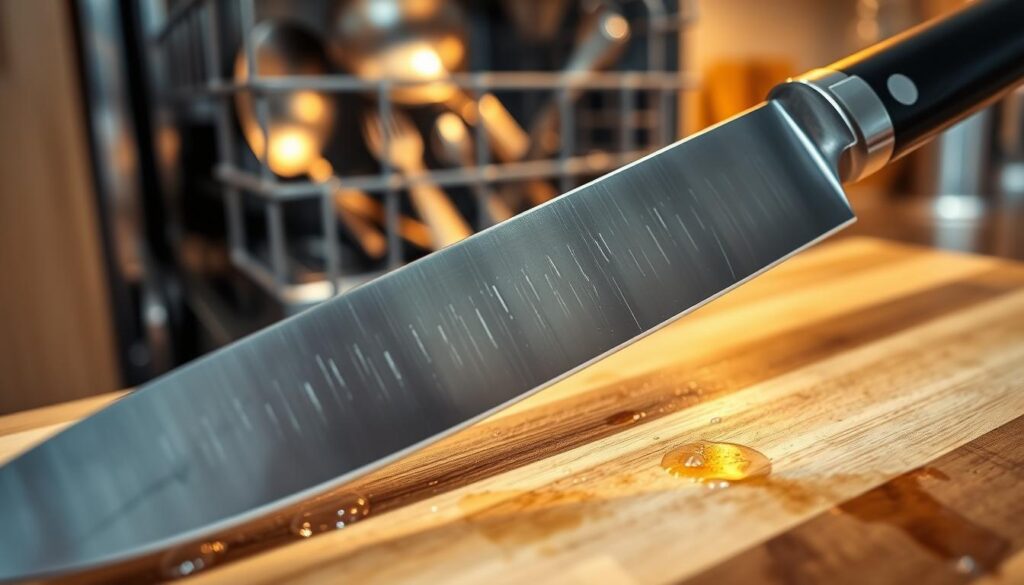
Abrasive chemistry that strips metal
Concentrated detergents contain alkaline salts and crystals that attack protective layers on steel. This makes stainless blades more likely to pit and develop rust spots over time.
Mechanical stress from spray and impact
High-pressure water jets plus vibration act like tiny hammers on the edge. Loose loading lets knives hit cutlery or dishes, which can chip or roll thin sections of the blade.
Heat, moisture and hidden wear
Hot, humid cycles speed corrosion and let micro-cracks grow. A blade may look clean while microscopic pitting silently reduces cutting performance.
- Handle risks: Wood swells then cracks, polymers whiten, rivets loosen.
- Safety: A dull knife needs more force, raising slip and cut risk in the kitchen.
- Tempering reality: Typical dishwasher heat rarely changes hardening, but corrosion, abrasion, and repeated stress still shorten blade life.
How to Clean, Dry, and Store Kitchen Knives the Right Way
Treating your cutlery with quick care pays off: a few simple steps keep edges sharp and handles sound. Follow a short routine after each use to stop small problems from becoming big damage.
Hand-wash routine
Rinse soon after use, then wash in warm, soapy water with a soft sponge. Clean the blade gently; avoid abrasive pads that scratch the metal.
Safe wiping and drying
Wipe from the spine toward the edge, keeping your fingers well away from the cutting edge. Dry immediately with a clean towel to remove standing water and stop spotting or rust.
Storage and upkeep
- Store blades in a proper knife block, on a magnetic strip, or inside blade guards to prevent chips.
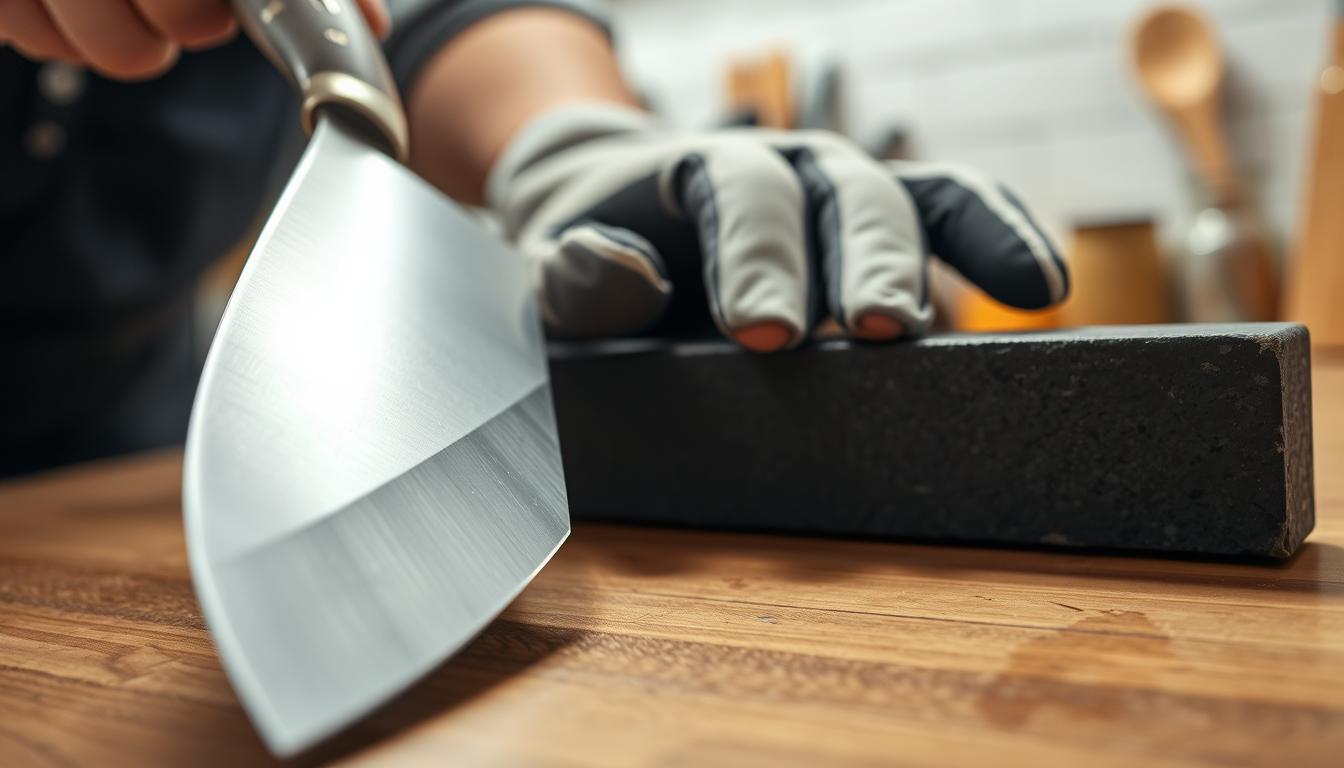
- Hone regularly and sharpen when you need more force while cutting; this keeps the edge predictable.
- Oil wooden handles occasionally and avoid prolonged heat for synthetic handles to extend their life.
Quick daily care saves time: a minute of hand washing and drying each day keeps your kitchen knives performing and protects your appliance from rack damage if you choose not to put knives in the machine.
Conclusion
Conclusion
Choosing to skip the dishwasher protects edges, handles, and your budget. Small forces—abrasive detergent, high spray pressure, trapped moisture, and impacts—build wear that shows up as dulling and corrosion over time.
Keep your knife sharp and you use less force, which lowers slip risk during prep. Follow a quick routine: wash by hand, dry immediately, then store on a strip, in a block, or with guards.
If you feel tempted to load a blade into the machine, treat that urge as a cue: wash it now and put it away properly. That single decision preserves performance and keeps your kitchen tools safe for years.