Oil vs. Water: Which Lubricant Should You Use for Your Stones?
In this short guide you’ll learn how oil and water change the way your sharpening stone lubricants behave and what that means for your edge.
You’ll get a clear view of the tradeoffs: cutting speed, feedback and finish quality, swarf handling, and cleanup time. Use this to shape your buyer’s choice based on your specific sharpening stone type, workflow, and how much mess you will tolerate in your shop or kitchen-adjacent space.
Note that some stones are built for one fluid. Use the wrong fluid and the surface can load up or perform poorly. We’ll also cover easy-to-buy options in the U.S., typical bottle sizes, and shipping or returns to expect.
If a product page won’t load because an extension blocks it, try disabling extensions or open the page in a clean browser profile to confirm compatibility details.
Later you’ll see two real products—Norton mineral oil and an oleic-acid-based oil—to connect the theory to what you can actually buy.
Why lubricants matter when you sharpen
The fluid you pick directly changes friction, heat, and the tactile feedback you get at the edge.
How a fluid helps
- A thin film lowers friction so you can keep pressure steady and reduce chatter on the surface.
- Less friction means less heat at the apex, so you avoid overheating and “skating” on harder steels.
- Different fluids change the feel—this affects how confidently you hold and maintain your angle.
What swarf is and why it matters
Swarf is the mix of metal filings and abrasive binder debris created during use. Left on the surface, it can clog pores and slow cutting.
The right fluid suspends swarf so you can move it off the surface instead of grinding it back in. That keeps cutting consistent and extends usable life.
Your overall system
Remember: stone, fluid, and your cleaning or flattening routine act as a system. Change one element and results shift more than you might expect.
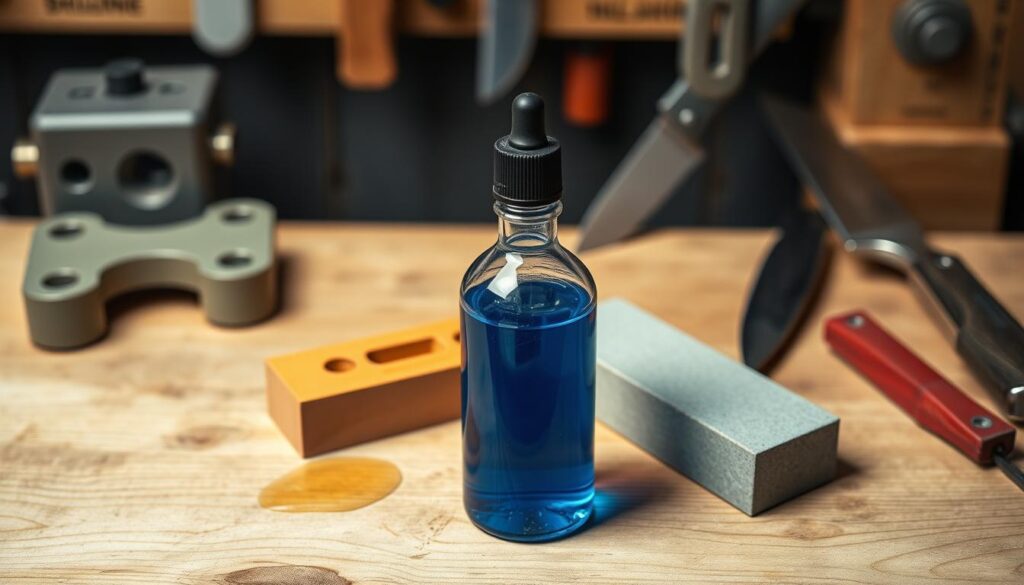
Oil vs. water at a glance for your sharpening stones
What you put on the surface changes feel and results. Choose with purpose and you’ll notice differences in cut speed, burr behavior, and cleanup right away.
Performance differences you’ll notice at the edge
Oil often gives a smoother, more controlled draw and can tame chatter on some grits.
Water tends to feel faster and more aggressive on compatible surfaces and helps build a slurry for fine finishing.
Cleanup, mess, and shop practicality
Water wipes and rinses quickly. It suits a kitchen or home sink where ease matters.
Oil can migrate and attract grit. You may need soap or a degreaser and a plan for disposal if you work in a busy shop.
Cost, availability, and what comes in the bottle
- Cost: You pay for refinement, purity, and additives that affect performance.
- Bottle size & contents: Look for clear labeling so you know viscosity and intended use.
- Availability: Most U.S. sharpening supplies retailers stock mineral oil and specialty blends, though popular items can sell out.
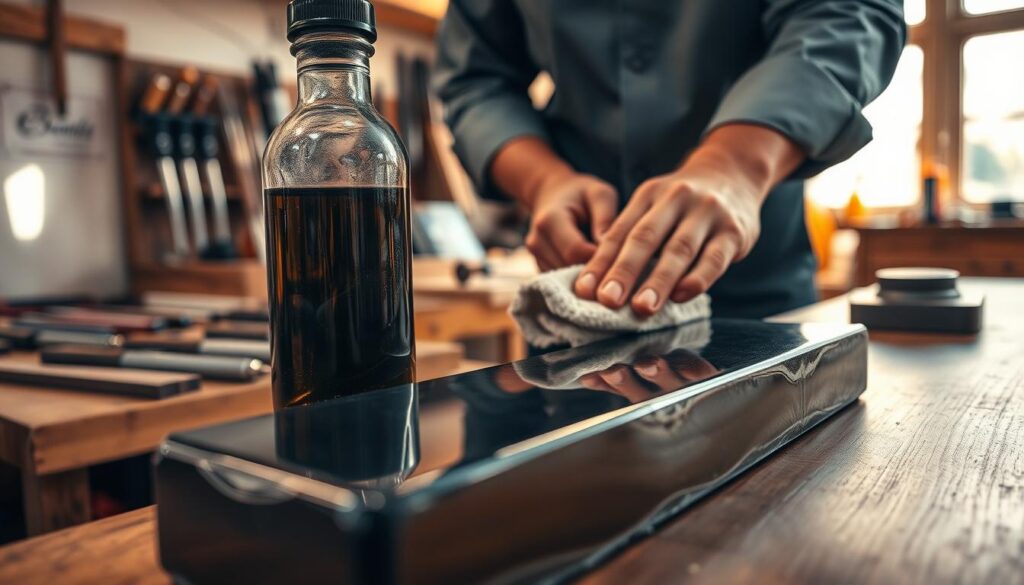
Sharpening stone lubricants: how to choose the right one for your setup
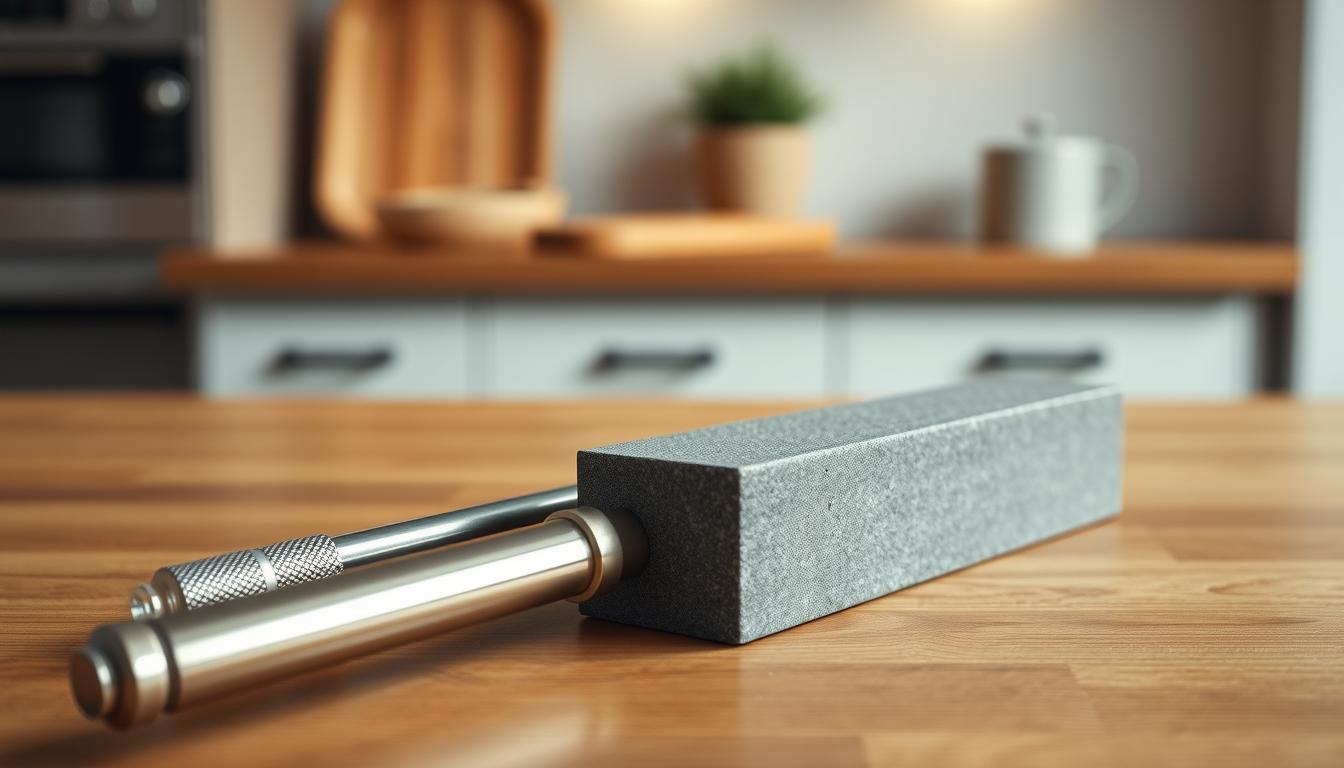
Picking the right fluid starts with what your abrasive and binder are made of. Identify aluminum oxide, diamond/CBN plates, or natural materials and note porosity. That first check often decides whether you need rapid flushing or a heavier film.
Match the lubricant to your material and binder
Aluminum oxide and naturals often benefit from liquids that resist glazing and keep pores open.
Diamond/CBN work well with light oils or dry use; heavy films can slow cutting.
Decide what you prioritize
- Speed: favor fast flushing and low loading for quicker cut and less clogging.
- Finish: favor controlled slurry and a stable feel for finer edges.
- Convenience: favor low-mess cleanup and easy disposal when you work in shared spaces.
Consider safety for home and food-prep use
Some refined mineral oil meets USP purity and is suitable around food prep areas. Still, non-toxic labeling isn’t the same as edible. Follow product guidance, wash hands and tools after use, and choose dedicated products if you switch between different types of abrasives.
When oil is the better choice
For long sessions and tight angle work, a light oil film often improves control and reduces glazing.
Best use cases for oil stones and traditional bench stones
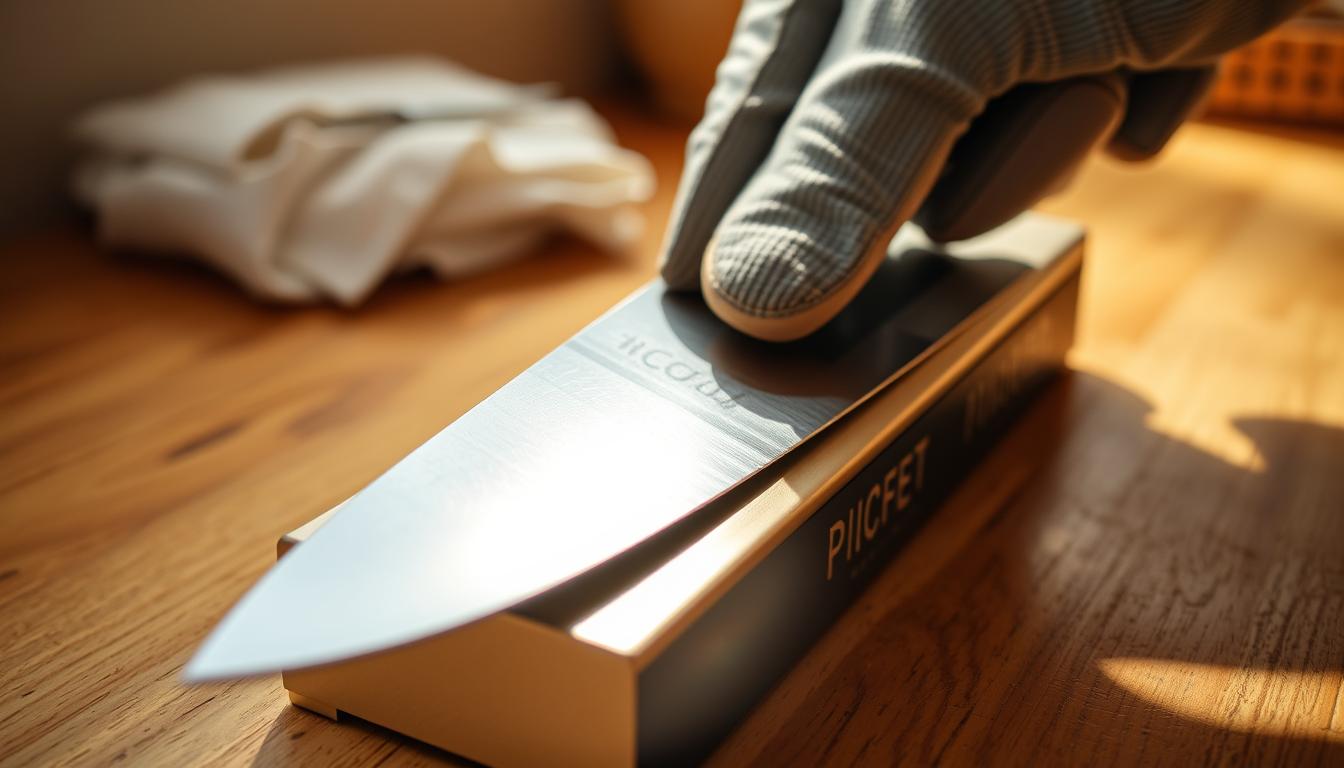
Oil works well on oil stone and bench setups because it keeps swarf from packing into the surface. That reduces glazing during longer passes and keeps cutting consistent.
You’ll find the feel is smoother and more damped. Many users prefer oil sharpening when they need precise angle control on a heavy bench setup.
What to expect from mineral oil on natural vs. synthetic stones
Norton Sharpening Stone Oil is a highly refined mineral oil that meets U.S. Pharmacopeia standards and is suitable around food prep areas when used correctly.
Application is simple: apply to the surface and add more when the film thins or swarf starts to build. Natural stones like Arkansas-style stones usually need less oil because they are less porous.
Synthetic blocks may absorb more and require frequent reapplication. Look for a refined base oil with consistent viscosity when you choose a sharpening stone oil.
- Prevents pore clogging and glazing
- Improves edge control and feedback
- Matches naming like “stone oil stone” to intended use, but always confirm compatibility
When water is the better choice
When water fits the job, it clears debris fast and keeps your workflow simple.
Fast flushing and easy cleanup for water-friendly stones
On water-friendly surfaces, a steady wet film moves swarf away as you work. That keeps the surface cutting fast and reduces glazing.
Cleanup is simple: a quick rinse at the sink removes slurry and metal filings so you can return to food prep or a clean bench sooner.
How water affects slurry formation and finishing behavior
Some abrasives develop a polishing slurry that improves finish as you refine the edge. On those, a thin slurry helps deliver a finer surface.
On faster-cutting blocks you may prefer to rinse the slurry away to keep removal rate high. Match the rinse habit to the finish you want.
Practical guidance and what to avoid
- Keep the surface wet: re-wet before switching grits or applying more pressure.
- Prevent dry swarf: don’t let filings bake onto the face—dry deposits reduce cutting speed.
- Beware incompatible materials: avoid heavy water use on binders that swell or load; this can harm the pore structure and cut quality.
You’ll also see hybrid products marketed as “magic” or weird “stuff” that claim water-soluble behavior. Treat those as special cases and follow your maker’s guidance.
Up next: a stone-by-stone compatibility guide to help you avoid mismatches that waste time and shorten tool life.
Stone-by-stone compatibility guide
Start with the maker’s label, then confirm abrasive and porosity before you choose a fluid. That first check tells you whether the product is intended for oil or water use and points to exceptions you should test.
Aluminum oxide blocks and cutting action
For aluminum oxide abrasives, oil often slows and smooths the feel, giving more control on fine passes. Water, when allowed, can feel faster and help form a polishing slurry for a finer finish.
Always confirm whether the specific oxide binder tolerates water, since classic oil-marked items may clog if wetted.
Diamond and CBN: plate-friendly options
Many diamond and CBN surfaces accept either water or light compatible oils. Your priority is swarf management and avoiding metal loading on the plate face.
Use a fluid that keeps filings moving off the surface without building a greasy film that traps debris.
Natural stones and porosity notes
Natural stones, including Arkansas-style types, are porous and often need less oil than synthetics. Excess film can seal pores and reduce cutting.
What the name usually implies
“Oil stone” typically signals oil use; “water stone” typically signals water. Exceptions exist—so when in doubt, test a small area and watch for glazing or loading.
- Avoid regrets: follow maker guidance, test, and stop if the surface loads or the cut slows.
- Quick check: label → abrasive type → porosity → trial pass.
Spotlight on Norton Sharpening Stone Oil for oil stones
Norton Sharpening Stone Oil is a highly refined mineral oil made for oil-marked surfaces. It meets U.S. Pharmacopoeia (USP) purity standards, which helps when you sharpen kitchen knives or work in food-adjacent spaces.
How to use it in real life
Just apply to the surface of the stone: spread a thin, even film, start your passes, and add more only when swarf thickens or the face feels dry. This keeps cutting consistent without over-oiling.
Natural vs. synthetic absorption
Natural Arkansas-style blocks usually need less oil because they are less porous. Synthetic blocks may soak up more and need more frequent topping off to maintain the same film.
Made in the USA and buying checklist
Made in the USA adds predictable supply and easier re-ordering when your routine is set.
- 4.5 oz bottle — Norton Item No. XB1 (Part No. 614636877601)
- Pint — Norton Item No. XB5 (Part No. 614636877701)
- Quart / 32 oz — Norton Item No. XB2 (Part No. 61463687775)
Check the listing for exact model numbers so availability and stock match what you expect before you buy.
Spotlight on Oleic Sharpening Stone Oil for mixed stone types
If you move between different abrasive types, a single compatible oil can simplify setup and cleanup.
Oleic Sharpening Stone Oil is a compact 2 oz (60 ml) bottle whose main component is oleic acid. The product description positions it as a multi-use option that suits aluminum oxide, diamond, CBN, and natural stones.
Practical benefits
The oleic acid base helps cool the edge and reduce friction in use. That makes long sessions more comfortable and can improve your control on fine passes.
How to use
- Apply a few drops as needed and keep a thin film while you work.
- When you finish, wipe swarf away with a dry cloth—no messy rinsing required.
- It is a handling oil, not a mechanical lubricant; treat it accordingly.
Safety and storage
The formula is positioned as non-toxic, but it is not for internal use. Store the bottle tightly closed at room temperature to keep the consistency steady.
How to apply lubricant correctly for better results
A simple, repeatable routine keeps feel and cut rate steady. Start each session with a thin film if you use oil, or a wet sheen if you use water. That sets a consistent baseline and reduces surprises as you work.
How much to apply and when to reapply
- Begin with a light coating. For oil, a few drops spread evenly; for water, a quick wetting until the surface has a sheen.
- Add fluid only when you see swarf clustering, feel drag increase, or the surface looks streaky.
- Reapply more often on coarse passes—check every few minutes—or after you detect a burr forming. Top off before your final light passes.
Keeping the surface consistent through the session
- Too much: puddling lifts the edge and reduces control.
- Too little: leads to loading and uneven scratch patterns.
- Manage swarf actively: wipe, rinse, or refresh the fluid so you cut on clean abrasive, not built-up debris.
- For oleic-based or light oils, wipe swarf away with a dry cloth before it thickens.
- Quick caution: do not mix oil and water on the same surface unless the product specifically allows it; contamination changes feel and can load the face.
Buying considerations in the United States
Before you buy, check bottle size, shipping, and return terms so your purchase fits your routine.
Choose a small bottle for occasional home touch-ups and a pint or quart if you sharpen frequently or use larger bench surfaces. Norton offers XB1/XB5/XB2 sizes that match light to heavy use.
Set realistic shipping expectations: some sellers ship from New Jersey. Ground options commonly use USPS (2–6 business days) or UPS (2–4 business days), with costs calculated at checkout.
Read stock signals and page details
If a product shows as available on the website, it’s usually in stock. If the product page won’t load, view it in another browser or disable extensions to confirm availability.
Returns, exchanges and support
Look for clear return terms. A 30-day window for unused or defective items protects you if the product doesn’t match your needs. Check the Q&A and reviews on the product page to answer specific compatibility questions before ordering.
- Reviews: scan for real-world cleanup and gum-up reports.
- Question: use the page Q&A to ask about compatibility and save the response for future buys.
- Support: Norton lists lifetime product support by phone and email for extra help.
Conclusion
One short rule: match the fluid to your sharpening stone first, then choose for edge feel, finish, and cleanup.
For a clear split, purpose-made sharpening stone oil or a refined mineral option often gives more control and resists loading on oil-marked blocks. Thin oil films tame drag while water flushes fast and makes cleanup easier on water-friendly surfaces.
Two proven buys: Norton mineral oil for natural and synthetic oil stones, and an oleic-acid option for mixed-use setups that need cooling and lower friction.
Standardize one routine: one stone, one fluid, one cleanup flow. It makes results repeatable and faster to manage.
If a product page is blocked or you can’t view details, try disabling extensions or open the page in a clean browser profile before you buy. Double-check availability, stock, bottle size, and return terms.
Action step: pick one product, run a short test on your stones at home, and then stick with what consistently sharpens best for you.