The 5 Safest Ways to Store Your Kitchen Knives Without Dulling Them
You use your blades every day, and how you keep them matters. Proper storing kitchen knives protects the blade edge, lowers accident risk, and keeps your workflow smooth in a busy US home.
This guide previews five top options: wall rack, block, magnetic strip, magnetic block, and an in-drawer organizer. Each option can help prevent dulling when used correctly.
“Without dulling them” means three simple things: limit blade-to-blade contact, avoid abrasive friction, and prevent moisture-related corrosion. Those steps protect sharpness and the metal edge.
Which method is safest depends on your space, your knife set, and who uses the room—kids, guests, or roommates. Expect clear, practical tips like how to place a knife on a magnetic strip so you don’t chip the edge or drop it.
Quick maintenance rules: hand-wash, dry fully, don’t overcrowd, and clean the storage area regularly to avoid grime. You’ll see these principles reinforced throughout the guide for better safety and long-lasting sharpness.
Why proper knife storage protects your edge, your hands, and your kitchen
How you put tools away affects blade life, safety, and food hygiene. Good storage stops damage before it starts and makes daily use safer for everyone in your home.
How blades get dulled in storage
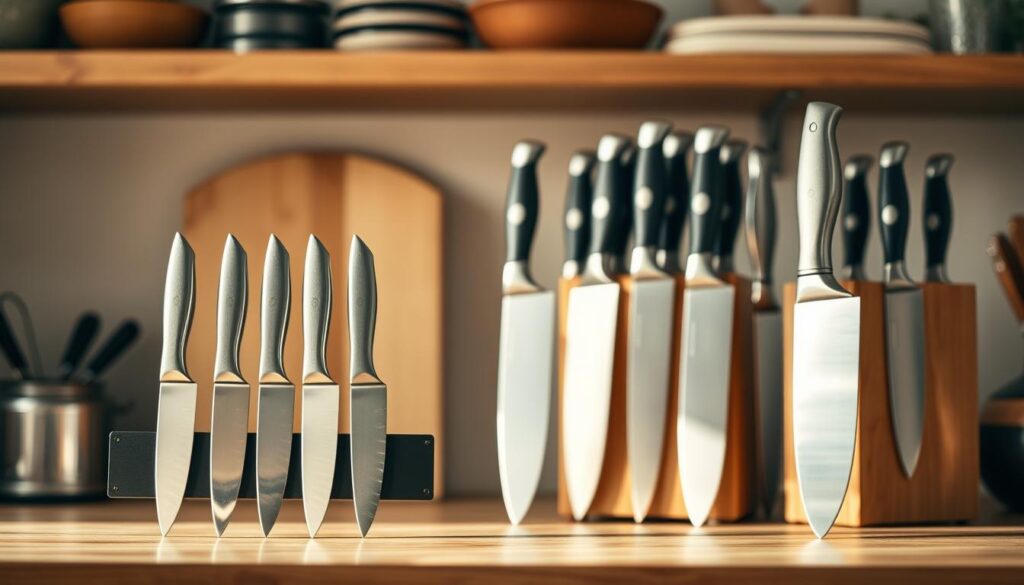
Contact with other metal or hard utensils will nick a blade’s edge. Tight slots or crowded drawers cause friction that grinds away sharpness.
Moisture is a silent problem: even a clean blade put away damp can corrode and contaminate storage areas.
Why sharp tools are safer
Sharp edges cut cleanly, so you don’t push hard and risk slipping. When a knife is dull, you compensate with force and that raises the chance of cutting your hand while preparing food.
What safe storage means in a busy home
Safe storage keeps the sharp edge from touching anything and prevents accidental grabs. In a busy kitchen, pick a method that is quick, consistent, and simple to follow after every use.
- Dry completely before you store a blade.
- Keep blades separated to avoid edge contact.
- Make access predictable so anyone who uses a knife can do so safely.
How to choose the best way to store knives in your space
Pick a storage method that matches your layout, habits, and the types of blades you own. Start by measuring available space and noting how you reach for a knife during prep. That makes the choice practical, not guesswork.
Counter space vs. drawer space vs. wall space
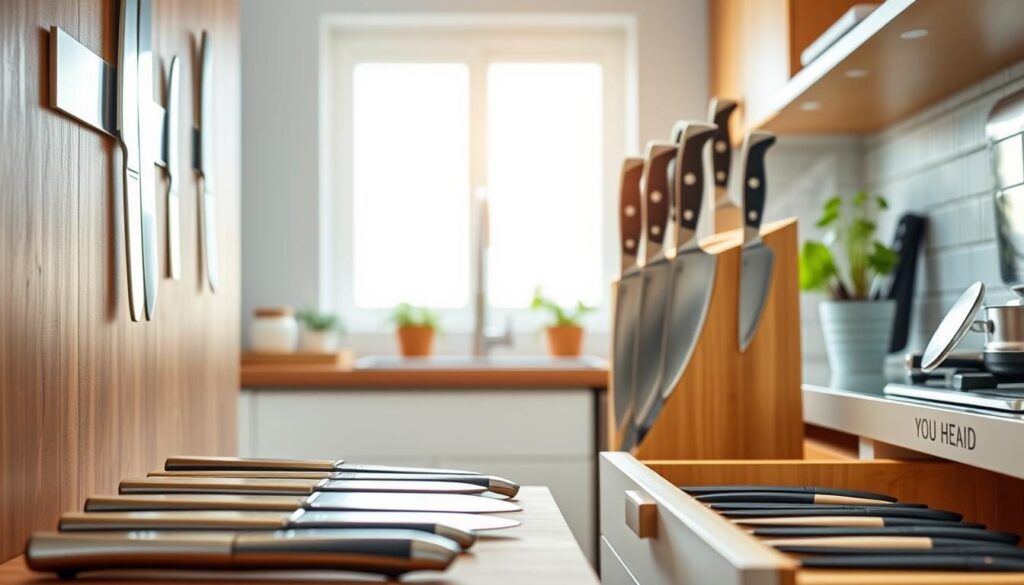
If counter space is limited, a wall-mounted strip or a slim magnetic block frees up the counter and keeps tools visible. A full counter block can eat up valuable real estate and hide grime in its slots.
If you have a deep drawer, consider an in-drawer organizer or block. Drawer solutions reduce accidental cuts and protect edges, but they need a dedicated drawer and regular cleaning.
Match your storage solution to your set and blade styles
Check dimensions: specialty shapes, long chef knives, and cleavers may not fit standard slots. Magnetic storage works only with magnetic metals, so confirm compatibility before you buy.
Safety, hygiene, and daily upkeep
For households with kids or guests, choose out-of-reach guards or an in-drawer option to boost safety. Keep exposed blades away from high-traffic zones.
- Quick hygiene note: slotted blocks and trays can trap crumbs and moisture.
- Open racks: allow airflow but may collect dust and airborne particles.
- Maintenance rule: pick the storage solution you will clean and use every day—the best way store knives is the one you follow consistently.
Storing kitchen knives the safe way with proven knife storage solutions
A smart storage solution protects edges and makes daily prep faster. Below are five practical, safe ways to keep your set sharp and accessible.
Wall-mounted rack for visibility and airflow
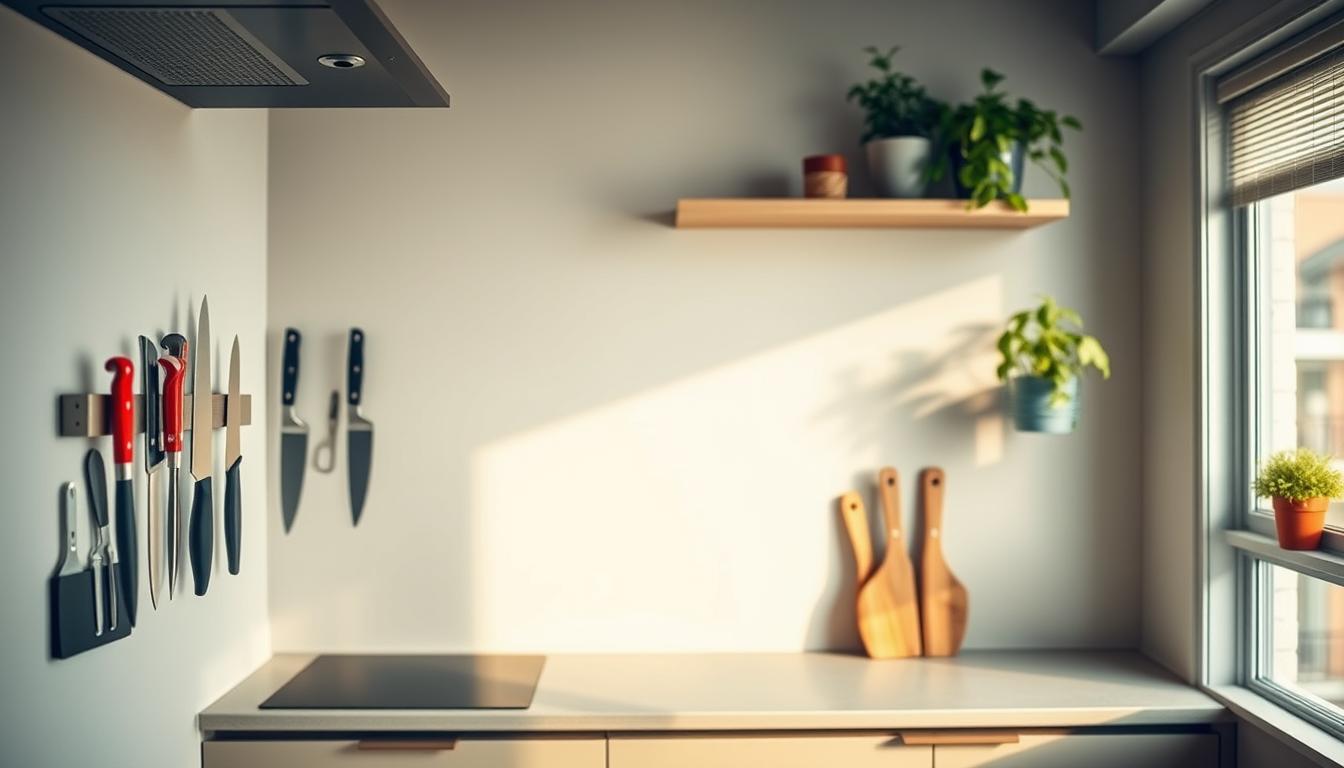
Wall racks give immediate access and improve airflow, which helps dry blades and reduce bacteria buildup. Mount into studs or use rated anchors to avoid falls. Place the rack away from busy walkways to lower accident risk.
Knife block with properly sized slots
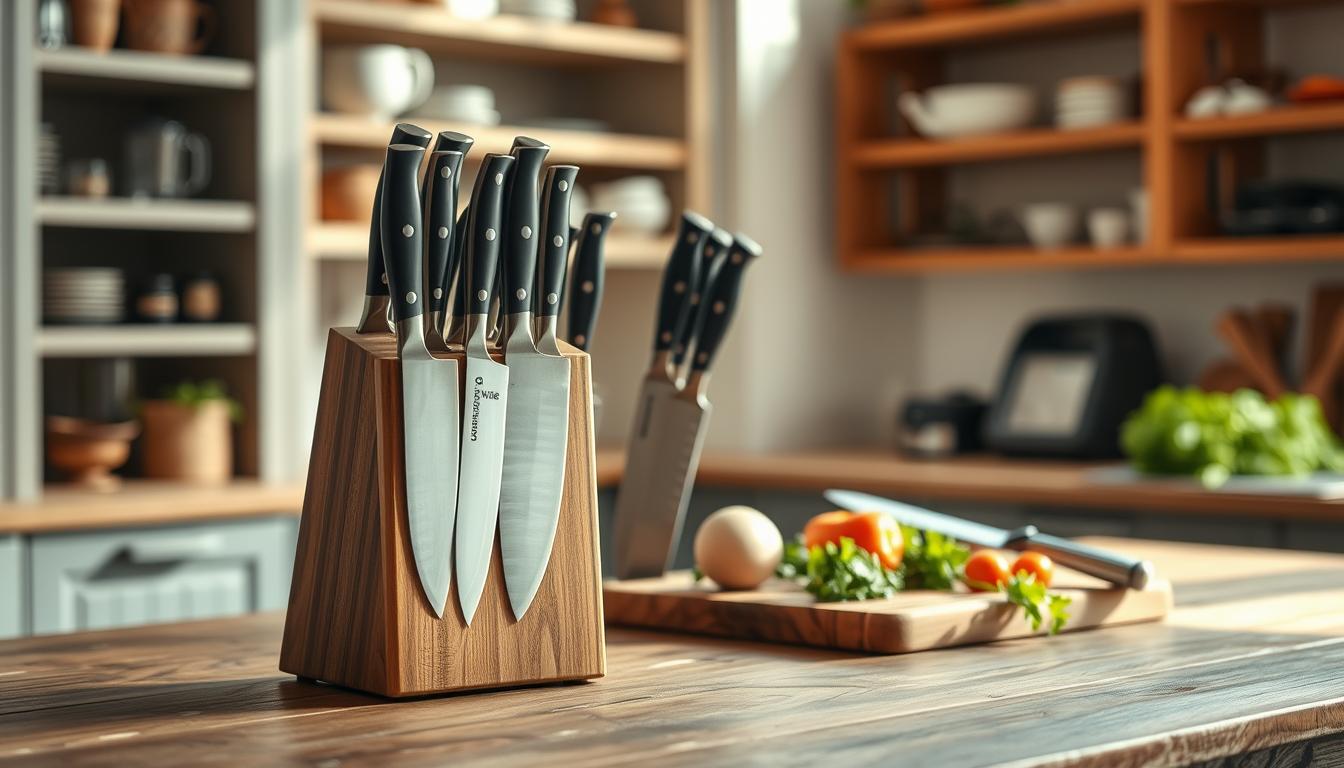
Choose a knife block with correct slots so you don’t force the blade. Bamboo or acacia is durable; walnut is a premium pick. Clean the block regularly to keep slots hygienic and prevent edge wear.
Magnetic strip and magnetic knife block
A quality magnetic strip frees counter space and limits surface contact. Mount securely and clean exposed blades often. When placing a knife, roll the spine toward the magnet; on removal, rotate so the edge moves away (Bobby Griggs’ method) to avoid snapping the edge.
Drawer block for out-of-sight protection
An in-drawer organizer keeps blades protected and reduces accidental cuts. It needs a dedicated drawer and routine cleaning, but it’s one of the best ways to store knives in homes with guests or kids.
- Best way store: pick the option you will clean and use every day.
- Safety: proper mounting, correct slot sizes, and handling technique prevent dulling and drops.
Daily habits that keep knives sharp inside any storage solution
Small routines after every use keep blades sharp and make storage safer. A short, consistent habit protects edge life, limits contamination, and improves safety for everyone who handles your tools.
Hand-wash and dry before storage
Always hand-wash a knife with mild soap and rinse promptly. Dry each blade fully before returning it to a block, strip, or drawer to prevent corrosion and food residue buildup.
Avoid overcrowding
Give each blade space. Overcrowded blocks, crowded drawers, or packed strips cause rubbing, nicks, and lost sharpness. Spread knives out so edges do not touch.
Use a honing rod regularly
Honing realigns a slightly bent edge between sharpenings. A few light passes before use keeps a knife cutting cleanly and reduces the need for frequent sharpening.
Clean and inspect storage
- Drawer: shake out crumbs, vacuum felt liners, and check worn guards.
- Blocks: invert and wipe inside slots to remove debris.
- Strip and racks: wipe magnets and confirm mounts are tight for safety.
Follow this simple routine and your blades, food prep, and overall safety will improve—no special tools required.
Common knife storage mistakes that dull blades and create safety risks
Common storage errors speed edge wear and create real safety hazards in any busy home. Spot the frequent mistakes so you can fix them before a blade chips or someone gets hurt.
Storing knives loose in a drawer with other utensils
Putting a knife in a mixed drawer turns it into a hazard. Blades knock against forks and tools. Edges chip and dull, and you may grab the sharp side by accident.
Forcing blades into tight block slots or dragging edges
Forcing a knife into a poorly sized knife block wears the edge. Repeated scraping against wood or plastic ruins the bevel and shortens useful life.
Improper magnetic strip use and weak mounting
Weak magnets or loose mounts can drop a heavy chef knife. Exposed strips also collect grease and dust, so wipe both the strip and blades often to keep hygiene and safety solid.
Storing wet or using the dishwasher
Putting a wet knife away invites rust and bacteria. And the dishwasher will dull the metal, corrode parts, and loosen handles—don’t treat it as a shortcut.
- Fix: reduce contact, cut friction, and keep storage clean and dry.
- Goal: use the best way to store knives for lasting sharpness and safety.
Conclusion
Select a storage method you will actually use, and you protect sharpness and reduce risk.
Summarize the five safest ways: a wall rack, a block, a magnetic strip, a magnetic block, and an in-drawer organizer. Pick the way that fits your counter, wall, or drawer and your household needs.
Core rule: prevent blade contact and friction, and remove moisture before you store tools. Safety and sharpness go hand in hand—sharp blades are easier to control.
Quick checklist: hand-wash and dry fully, don’t overcrowd, mount magnetic options securely, and clean your storage area regularly. Choose one storage solution you can maintain—consistent habits matter more than a perfect setup.