Patina vs. Rust: Should You Remove the Discoloration on Your Blade?
Discoloration on your blade can mean different things. It might be harmless patina, active rust, or leftover food and protein stains. Each issue needs a different approach, so the first step is identification.
You can often restore a finish at home. Removing patina from knife is achievable in many cases, but making a blade look factory-new depends on steel, finish, and how aggressive you get with abrasives. Be realistic about outcomes.
This guide sticks to practical, repeatable steps you can try today. Start gentle and escalate only if needed. It previews when to leave patina alone, when to clean for hygiene or appearance, and when discoloration is a real corrosion risk.
Remember your choices affect long-term appearance and value, especially with high-grade knives. What you do now changes how your tool will age over time, so weigh looks against preservation before you act.
Patina vs. rust on a blade: what you’re actually seeing
Look closely at the discoloration and you’ll see whether the blade is simply aged or actively corroding.
What a patina is and why it forms
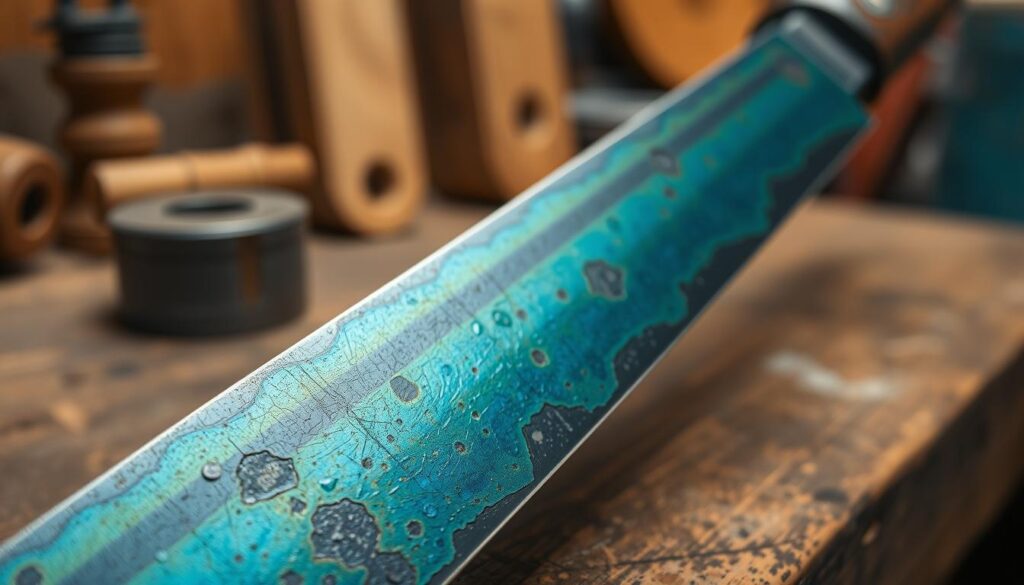
On carbon steel, a thin, darker oxide layer develops as oxygen meets iron over time. This natural process often produces a more uniform gray, blue, or brown layer that can slow further corrosion.
How rust differs and when it’s risky
Rust is active corrosion. It shows as orange-red spots that can feel rough and raised. Left wet or when your knife is exposed to a damp environment, rust can pit the steel and spread quickly.
Common triggers to watch
- Cutting acidic foods like tomatoes speeds darkening and can accelerate surface change.
- Rinsing without drying and storing in damp places raises corrosion risk.
- Repeated use and contact with moisture and oxygen over time make a layer form faster.
Identify the mark first: a protective film behaves differently than pitting corrosion, and your next step depends on that distinction.
Should you remove patina or leave it?
Deciding whether to keep a blade’s darkened finish or strip it back comes down to purpose and risk.
When a surface film protects your steel knife
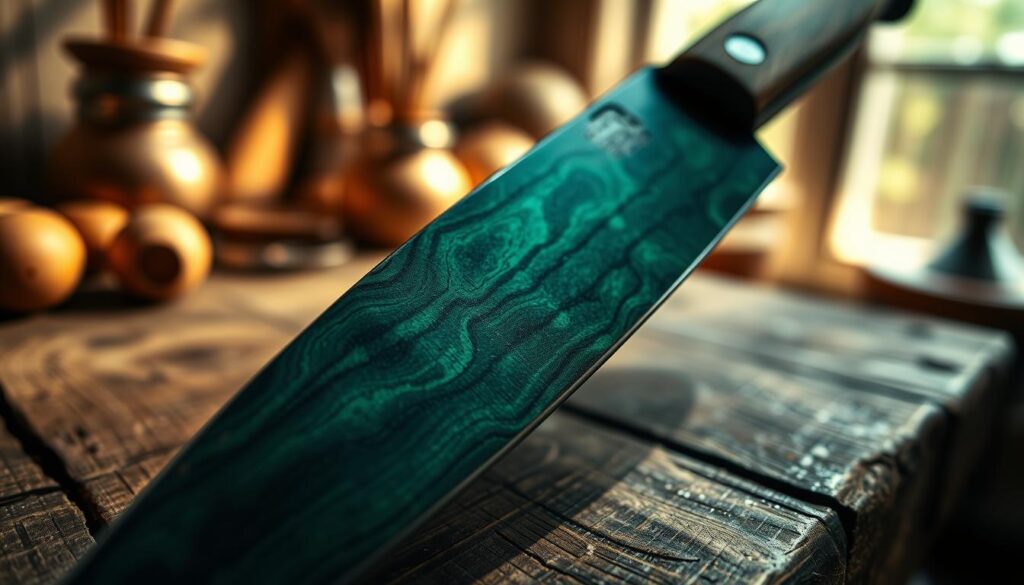
Most patina is mild and helps the steel knives resist corrosion. A stable oxide layer slows further oxidation and can act like a shield.
When removal may hurt value
If you own a high-grade or collectible piece, aggressive refinishing can cut value. Collectors pay for original surfaces and provenance, so heavy abrasion reduces a value knife’s appeal.
When a reset makes sense
Keep the finish if it is even and not active corrosion. Consider a controlled reset to remove uneven staining, strong metallic smells, or visible rust spots.
- Keep: stable, even layer; no smell; food-safe appearance.
- Reset: active corrosion, uneven staining, or professional presentation needs.
- Balance: you can have a clean knife for use while preserving overall quality and value.
What your knife’s steel and finish mean for results
What your blade is made of and how it was finished dictate the results you can expect. The steel type and surface pattern control how quickly discoloration appears and how you should treat it.
Carbon steel knife vs. stainless steel: which develops more color change and why
Carbon steel reacts faster with oxygen, moisture, and acids because it has less chromium protection. That means a carbon steel knife will often show darker change after months of use.
Stainless steel still resists staining better in daily kitchen work. It can mark, but it usually holds a cleaner look with less maintenance.
Polished vs. coarse finishes and why perfect shine isn’t always possible
Factory finishes vary: polished, satin, and coarse (hairline). Each responds differently when you polish or abrade the metal.
Polished surfaces come back easier. Satin and coarse patterns hide wear but can’t always be matched exactly once you change the original pattern.
Balancing abrasives and your factory scratch pattern
Match abrasive grit to the existing finish. The more you chase shine with metal compounds or fine sandpaper, the more you risk altering the factory pattern and sheen.
- Tip: Start with the mildest process that works and stop before you refinish the whole blade.
- Keep scratches consistent with the original pattern to preserve look and value.
- Remember: the harder the carbon or stainless steel, the more careful you must be with pressure and grit.
Removing patina from knife with metal polish and a cloth
A polished blade cleans up fast with the right metal compound and a soft cloth. This method is the go-to for shiny finishes because it removes surface discoloration without heavy abrasion.
Why polished blades respond best
Polished faces let polish sit and work on surface films, so you remove marks quickly and with less risk than sanding. A cloth lets you control pressure and keep scratches minimal.
Polish options and what to expect
- Simichrome Polish — fast cut and great for a mirror shine.
- Wenol — similar action, slightly less aggressive on thin spots.
- Mothers Mag Polish — user-friendly, good balance of cut and finish.
- Flitz — works well but can take more elbow grease on old marks.
Simple, safe workflow
Wipe the blade clean, apply a small dab of polish to the cloth, then rub with even strokes along the face. Wipe and inspect under good light. Stop as soon as you reach your goal.
Avoid over-polishing and edge damage
Don’t chase mirror shine on satin or coarse finishes — you can change the factory look. Keep pressure on the flat areas and avoid the edge to prevent rounding the cutting geometry. Consistent strokes and frequent wiping produce the best quality result.
Gentle home methods for light patina
For mild surface darkening, use simple kitchen ingredients before reaching for abrasive tools. These first steps protect the blade’s finish and keep the surface intact.
Baking soda and water paste
Start with a baking soda and water paste. Mix baking soda with a little water into a spreadable paste, apply to the stained area, and rub gently with a soft cloth.
Wipe clean, rinse, and reassess the surface. Repeat once if needed, but stop before you abrade the finish.
When to add lemon juice
If the light patina won’t shift, replace some water with a few drops of lemon juice to boost acidity. That extra acid speeds the reaction, but use it sparingly to avoid overexposure.
White vinegar spot treatment
For stubborn spots, use white vinegar briefly. Soak a paper towel or cloth with vinegar and hold it on the area for under five minutes.
Rinse and dry immediately. Short contact removes light patina and mild rust without prolonged acid action.
Control the contact area
Always target only the discolored area using a paper towel or a folded paper towel pad. This keeps acid off the rest of the blade.
Note: These methods work well for light patina and minor rust stains. Deep pitting or heavy orange corrosion needs a different, more aggressive approach.
When you need abrasives: erasers, steel wool, and sandpaper
If small rust spots or uneven patina resist polish, abrasives can offer controlled correction. Use them only after gentler methods fail or when the surface shows active corrosion that polish or baking soda won’t lift.
Rust and patina erasers
Rub a dedicated rust or patina eraser on a targeted area for precise work. These blocks let you treat spots without sanding the whole blade.
Fine steel wool vs aggressive tools
Choose fine grades of steel wool and use light pressure. Avoid wire brushes or coarse pads that gouge metal and damage the finish.
Sanding workflow
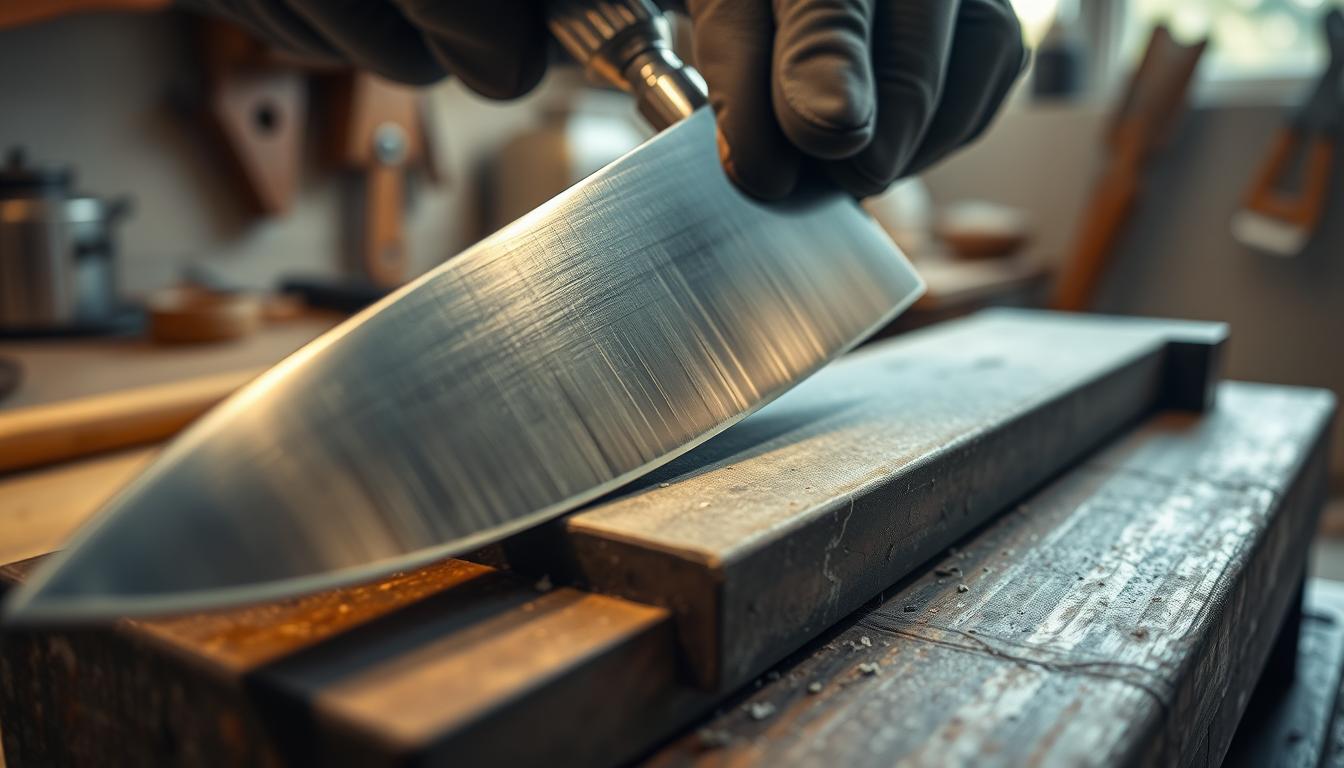
Start with high-grit sandpaper, lubricate the area with a drop of oil or water, then move in straight, consistent strokes. Step down to coarser grit only if needed, then work back up to refine the sheen.
Refinishing reality and safety
Sanding will change the original pattern and finish. That is a deliberate refinishing step, not routine cleaning.
Mask the edge or work slowly so you don’t cut yourself while keeping strokes even across the blades.
Bar Keepers Friend and other cleaners: what to know before you scrub
Before you scrub, know that some cleaners do more than lift stains—they alter the metal surface and the blade’s finish.
Bar Keepers Friend (BKF) is a mild abrasive. It removes patina and light rust well, but it also creates a new scratch pattern on the metal.
On mirror or highly polished knives, BKF can leave a haze or visible micro-scratches you can’t easily reverse. That change is obvious and permanent to the eye.
On coarser finishes, BKF often cleans protein and acid spots effectively. The tradeoff is a dulled shine rather than a factory look.
Think about goals: one way is to remove patina; another is to preserve the original finish. One product rarely does both perfectly.
- Test a small area first and use light pressure.
- Work evenly to avoid spotty polish results.
- Be prepared to follow up with a finishing polish like Flitz if appearance matters.
Bottom line: use BKF as a controlled refinishing step, not a quick cosmetic cure, and expect a possible new pattern on your blade.
Aftercare to keep your blade clean, dry, and stable
A few quick steps after cooking will stop moisture from turning into corrosion. Good aftercare extends the life of your steel and makes future cleaning easier.
Rinse, wipe, and dry with a towel
Rinse the blade briefly with water, then wipe it with a clean towel. Dry immediately so moisture does not sit on the surface and start rust.
Light oiling to protect carbon steel
For carbon steel, apply a very thin coat of food-safe oil after drying. A single drop spread across the face protects against corrosion and keeps a stable finish.
Daily-use habits that stop heavy build-up
Wipe your knife while you prep, don’t leave it wet on a cutting board, and avoid storing a damp blade in a drawer or sheath. These small moves save you time and prevent heavy patina and rust from returning.
- Simple routine: rinse, wipe, dry with a towel, then oil lightly.
- Why it matters: carbon steel reacts fast—minutes of moisture raise corrosion risk.
- Long-term care: consistent drying and oiling reduce heavy patina and keep your clean knife easier to maintain.
Conclusion
A protective layer usually slows damage, but active corrosion calls for faster, targeted care.
Patina on carbon steel often helps shield the metal, while orange-red rust signals real corrosion you should stop sooner rather than later.
Decide to act when looks, hygiene, or uneven staining matter. Prioritize preserving the original finish and value on high-end pieces before you abrade or refinish.
Start with a cloth and polish on polished blades. If that fails, move to gentle home methods, then controlled abrasives, and only then consider full refinishing.
Keep your knife dry, limit acid contact time, and apply light oil after drying. Do that and you’ll minimize repeat discoloration and protect the layer that keeps your steel knives usable and valuable.