Are Magnetic Knife Strips Safe for Your Premium Blade’s Edge?
You care about your blades. This guide sets clear expectations: you want to protect edge geometry, the tip, and the finish—not just keep knives off the counter. You’ll learn when a wall-mounted rail is safer than a drawer or block.
The core question is practical. Are these holders gentle enough for chef knives and specialty blades? We will show that most dulling comes from edge contact and impact, not magnetism itself.
In the product roundup you’ll compare magnetic strength, surface material, magnet layout, and mounting stability. That helps you match a solution to your wall, your prep habits, and the steels you own.
This guide is for cooks who value polished steel and a cleaner prep zone. At the end you’ll get a short list and a quick comparison so you can choose the best fit for your kitchen and collection.
– What you’re protecting: edge geometry, tip, finish.
– Main dulling causes: edge contact and impact, not magnetism.
– Comparison points: strength, surface, layout, mounting.
Why you’re considering a magnetic knife holder for premium knives
Choosing how to store your best blades affects daily prep and long-term care.
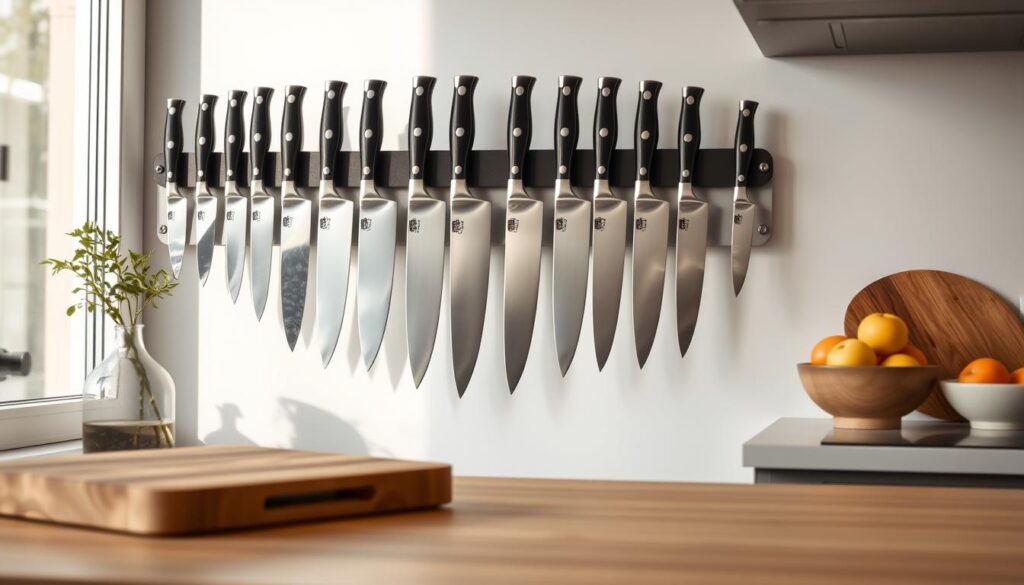
Mounting a wall bar clears counter space and cuts clutter. Your most-used tools sit in sight, so you grab them fast during prep. That speeds tasks and keeps the work surface tidy between steps.
Cleanup is simpler when you use an open holder. A bar avoids crumbs and trapped moisture that collect in enclosed blocks. Wiping the wall area is quick and fits regular kitchen cleaning routines.
How wall-mounted storage changes workflow
Placing blades back between tasks reduces “knife on board” hazards around food prep. The visible layout helps multiple cooks stay coordinated and keeps rotation easy for frequent users.
When a block or drawer insert may be better
A block or drawer insert fits renters, tight walls, or households that prefer enclosed storage. Open bars need careful placement away from traffic lanes and the reach zone to avoid accidental bumps.
- Pros: quick access, less counter clutter, easier cleaning.
- Cons: needs clear wall space, careful mounting, and thoughtful safety placement.
Do magnets damage a blade edge? What actually causes dulling
Most edge wear happens when steel bangs or drags, not from the magnet itself. A stable magnet will hold a blade by its flat face with little stress on the edge. The real culprits are impact, sideways scraping, and repeated blunt contact.
Edge contact vs. magnet contact: what matters most
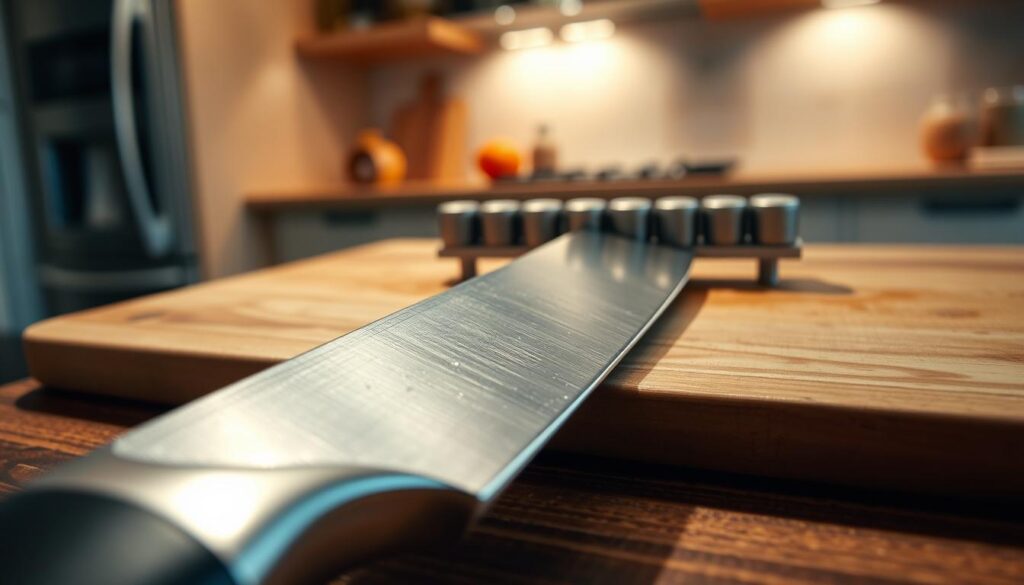
When the flat side meets the holder, the magnet simply stabilizes the blade. That contact is low-risk.
If the edge or tip hits first, you get chipping and rolling. Even a small scrape against hard metal wears steel faster than any magnetic field could.
Common mistakes when placing and removing knives magnetic strips
- Letting the blade snap onto the bar — avoid any slam that causes an impact.
- Twisting the handle to remove the blade at an angle — this can nick the edge.
- Dragging the cutting edge sideways across the holder — that scrapes and dulls.
Protecting polished finishes and premium steel during storage
Polished stainless steel, Damascus cladding, and coated finishes can scratch if the holder surface is rough or dirty. Bare metal faces show scuffs faster than wood or coated designs even when the edge stays sharp.
Simple rule: controlled placement, controlled removal. Let the magnet stabilize the blade — don’t let it slam or scrape.
Magnetic knife strip safety checklist for your kitchen
Pick a clear wall spot and plan placement before you drill. A short checklist helps you install a holder that protects blades and keeps daily prep safer.
Safe reach height and traffic
Mount the bar so top handles sit below shoulder level and above waist reach for kids. This reach zone lets you grab tools without raising them near your face.
Spacing for common blade types
Give each chef knives about 2–3 inches of gap so handles don’t collide and edges don’t overlap. Leave 1–1.5 inches for paring knives. For two chef knives side by side, add extra clearance so removal avoids scraping.
Avoid heat, steam, and splatter
Do not place near the stove, kettle steam path, or frying zone. Heat and grease accelerate corrosion and make food residues stick to the bar.
Kids and busy kitchens
- Place higher or use enclosed knife storage if traffic is unpredictable.
- Avoid narrow pass-through walls where bags or elbows can bump handles.
- Use proper screws and secure anchors to prevent wobble.
What to look for in the best magnetic knife strip
Choose features that match how you use and store your best tools every day.
Magnetic strength and controlled release
Strength should secure heavy chef blades without a harsh snap. Test hold security by nudging a mounted blade gently to check vibration resistance.
Length and capacity
An 18-inch magnetic bar fits mixed sets and a couple of chef knives side by side. Shorter bars suit minimalists or narrow walls and keep clutter low.
Surface material choices
Wood looks warm and is gentler on finishes. Stainless steel reads modern and cleans easily. Coated metal offers a compromise between scratch resistance and hygiene.
Magnet layout
Full-length magnets let you place blades anywhere. Spot magnets can create dead zones and force awkward spacing, so favor continuous coverage for flexible placement.
Mounting hardware quality
Use solid anchors and proper screws. Clean drill holes and correct screw-wall alignment prevent wobble that can nick edges over time.
- Define: best magnetic knife means stable hold without impact risk.
- Judge: look for consistent magnetic strength and smooth release.
- Install: use the right screws and anchors for a secure wall mount.
How we evaluated each tested magnetic knife holder
We tested each holder under kitchen-like conditions to see how it treats real blades. You get a clear view of coverage, hold, and finish so you can trust the roundup.
Real-life set coverage
We mounted and loaded each rack with common sizes: two chef knives, two smaller chef knives, paring knives, and at least one specialty blade. That showed whether a bar accommodates varied shapes without crowding.
Grip and release testing
Our grip checks focus on secure hold without a snap. We measured magnetic strength and how smoothly a blade lands flat and slides off without torque or edge contact.
Installation and alignment
Scoring included whether a template came with the package, how forgiving the drill holes are, and how reliably attachments hit a stud or anchor. Proper screw wall alignment prevents wobble that can nick blades.
Finish and cleanability
We checked stainless steel for fingerprints and ease of wipe-down, and wood for finish durability and whether it needs oiling in humid kitchens.
- Coverage: fits chef knives and paring knives without overlap.
- Secure: no sag, no shifting, no dead spots during daily use.
- Finish: preserves polished edges and reduces scratch risk.
Best magnetic knife holder for most kitchens: Gorilla Grip magnetic knife rack
A reliable rack should make daily use simple. The Gorilla Grip model stands out for steady hold, gentle release, and easy installation that fits most kitchens.
Value you notice: Gorilla Grip offers free shipping on U.S. orders over $25 and direct support at [email protected]. That policy keeps upfront costs low and gives you a clear contact if something goes wrong.
- Performance: good magnetic strength that secures heavy chef blades without a harsh snap.
- Install: straightforward hardware and clear mounting guidance for steady, wobble-free attachment.
- Fit for families: holds mixed sets so you can keep knives accessible and maintain a routine after washing and drying.
Why a quality guarantee matters: You’re trusting a wall-mounted holder for long-term knife storage. A vendor promise means the product is built to last and the brand will stand behind repairs or replacements.
Before you buy, check length, capacity claims, included hardware, and wall compatibility on the product page. A well-chosen holder reduces drawer rummaging and helps you keep knives visible, organized, and safe.
Best classic-style option: Heirloom Products® Classic Magnetic Knife Holders
Heirloom-style holders aim to be both a tool rack and a design statement for well-kept kitchens.
The heirloom positioning signals classic design, display-forward aesthetics, and a premium feel that matches upscale counters.
These holders treat your chef knives as tools and showpieces. You keep blades visible for daily use and careful care.
What to compare on product pages
Look for SKU, rating, price, stock, availability, dimensions, weight, and description. Those fields help you compare finishes and lengths quickly.
Why dimensions and availability matter
Dimensions tell you usable bar length and handle clearance. You want enough space so two chef knives don’t touch and edges don’t overlap.
Stock and availability affect which finish or length you can get now. If a style is backordered, choose a similar finish or size that fits your wall plan.
- Check dimensions, then SKU and weight.
- Confirm rating and availability before you add to cart.
- Plan wall bar placement for safe height, stable mounting, and spacing.
Best budget-friendly wood magnetic knife strip: Wood Magnet Knife Strip
For first-time wall storage, a simple wood option balances cost and care. The Wood Magnet Knife Strip lists at a sale price of $14.99 (regular $21.99), so expect a budget range of $14.99–$21.99. This makes it easy to try a holder without a big commitment.
Why wood helps: Wood is gentler than bare metal against polished faces and wrapped finishes. It hides tiny scuffs and reduces visible scratching when you mount or remove knives during daily prep.
Budget choices trade off in a few ways. You may get a shorter bar, simpler mounting hardware, or less-even magnet layout. That can affect how many knives fit and how consistently they sit flat.
- Confirm safe hold by testing with your heaviest knife for sliding or handle sag.
- Check for easy knock-off risk before final installation.
- Wipe the wood regularly and never leave wet blades resting against it.
Who this is for: Renters and first-time buyers get a low-cost upgrade that protects finishes and tests whether wall storage fits your kitchen routine.
Stainless steel vs. wood knife holders: which is safer for your edge?
Choosing between stainless and wood is often about daily habits as much as looks. Your material choice affects scratch risk, cleaning, and how blades meet the surface when you set them down.
Scratch risk, edge contact, and long-term wear
Stainless steel shows scuffs and fingerprints more readily, while wood hides tiny marks and soothes finishes.
Edge safety comes down to controlled placement and removal. Avoid any edge contact on landing; that prevents chips regardless of material.
Over time, humidity and grease build-up create wear points where handles repeatedly land. Pick a finish that resists staining in your cooking routine.
Cleaning habits for food-safe kitchen storage
Wipe holders often and never leave damp blades resting against the surface. Keep the bar away from raw-food splatter and the stove.
Quick tip: stainless surfaces wipe clean fast; wood may need periodic conditioning to stay food-safe.
Design and visibility: showing off premium chef knives without clutter
A visible display frees counter space and highlights your chef knives as tools and decor. Match material to your lifestyle: pick easy wipe-down steel for high-traffic kitchens or warm wood for design-forward spaces where grain and visibility matter.
- Stainless steel: modern, hygienic, shows marks.
- Wood: warm, forgiving, needs care.
- Both work if you avoid edge contact and follow cleaning routines.
Installation tips to keep knives secure and your wall intact
A solid installation protects your blades and keeps the wall undamaged for years. Take a few careful steps and you’ll avoid wobble, edge contact, and unnecessary repairs.
Finding studs, choosing anchors, and avoiding loose mounts
When you install magnetic holders, aim for studs where possible. A stud mount gives the best long-term hold and reduces wobble that can nick edges.
If you miss a stud, use rated anchors. Heavy-duty plastic or metal anchors beat cheap, one-time use types that pull out under load.
How to mark, level, and drill holes cleanly
Measure and mark bracket points so the strip sits straight. Level marks before you drill to keep knives from drifting toward each other.
For drill holes, pick the correct bit for your anchor and surface. Put tape over the spot to prevent blowout and drill slowly to avoid cracking tile or backsplash.
Screws and alignment: preventing wobble that can nick edges
Use the screws included or equivalent grade screws. Tighten until snug, not overdriven. Proper alignment keeps the holder flush so blades land flat every time.
Install magnetic strips on tile, drywall, or backsplash surfaces
- Tile: start with a masonry bit, go slow, and use a sacrificial piece of tape to stop slips.
- Drywall: prefer studs; if not available, use rated anchors sized for the screws and load.
- Backsplash: avoid mounting near outlets or direct heat. Leave clearance so heat and splatter won’t corrode hardware.
- Test hold: hang one heavy knife first to check for movement.
- Adjust: re-tighten screws after a week of use to prevent loosening.
- Maintain: wipe the holder and check anchors yearly for peace of mind in your kitchen.
How to place and remove knives to prevent edge chips
A deliberate landing and a smooth release cut the risk of chipping far more than any magnet ever will. Use a simple, repeatable habit when you store and retrieve blades so edges stay intact and your prep stays fast.
The “spine-first” technique for a controlled landing
Bring the spine to the bar first. Let the back of the blade touch and then roll the flat face down so the edge never meets the surface.
This keeps thin, brittle edges from hitting hard contact and reduces chip risk for harder steels.
How to slide off safely instead of pulling straight out
Pulling straight can create a sudden release and torque. Instead, tilt the handle slightly and slide the blade forward so the edge disengages smoothly.
For stronger holds, move slower and keep the roll controlled so the holder’s strength doesn’t cause a snap.
Spacing strategy for two chef knives and wider blades
Leave about 2–3 inches between big blades so handles and knuckles don’t collide. For two chef knives side by side, add extra clearance to avoid scraping on removal.
- Place: spine-first, roll flat.
- Check: confirm stability before you step away.
- Remove: tilt and slide; keep handles aligned.
Best magnetic knife strip layouts for small kitchens and big collections
Think in zones: a main bar for daily work and satellite holders for specialty blades makes planning simple and scalable.
For a tight set, one wall bar mounted near your prep area keeps your most-used knives within reach and reduces clutter. Keep spacing of 2–3 inches between large blades so edges don’t touch.
Single wall bar vs. multiple strips for growing sets
Start with a single bar if you use four to six knives regularly. Add a second bar when you start running out of safe spacing or when handles begin to overlap.
Pairing a knife holder with a backup knife block for overflow
Use a small knife block for low‑use or seasonal blades. This keeps the main holder uncluttered and preserves safe knife storage when you host or rotate tools.
- Layout tip: keep daily drivers on the main bar; place specialty knives farther from the prep lane.
- Small-kitchen strategy: use vertical wall space but avoid placing handles into walkways or seating zones.
- Decision rule: if you routinely run out of spacing, add a second strip or move low-use knives to a block or drawer solution.
Quick product comparison: magnetic strength, build, and buying considerations
A focused comparison shows which holders balance secure grip with gentle release.
Use this scannable framework to compare options fast:
- Magnetic strength: judge hold versus ease of removal. Look for controlled release, not just raw pull.
- Build quality: check screws, backing plate, and whether the rack flexes under load.
- Surface material: stainless steel cleans fast; wood hides tiny marks and is gentler on finishes.
- Mounting reliability: full-length magnets and solid anchors beat spot magnets and weak hardware.
Who each is for:
- Most kitchens: an 18-inch magnetic option fits a daily set and two chef knives side-by-side.
- Classic premium: choose polished stainless steel for display and easy cleaning.
- Budget wood buyers: pick a wood strip for gentler contact and low cost.
Fast buying checks: verify length (including 18-inch magnetic choices), capacity claims, and whether magnets run the full length. Remember: tested magnetic performance is about control and stable placement, not only strength numbers. Match capacity to how many knives you store and your wall constraints before you buy.
Conclusion
Good storage is as important to blade life as regular sharpening and careful use.
Yes—a magnetic knife strip can be safe for premium blades when you prevent edge contact and install the holder securely. Follow spine-first placement, slide blades off instead of yanking, and keep 2–3 inches of spacing so blades never collide.
When you shop, favor a balanced magnetized hold, a surface that suits your blade finishes, and sturdy mounting hardware. Place the bar away from heat and splatter, set it in a safe reach zone, and size the layout for your collection.
Use the comparison checklist in this guide to pick the right knife holder—value racks, classic premium options, or budget wood choices. Good storage protects sharpness and makes your kitchen safer and more efficient.