The Ultimate Guide to Cleaning Wooden Boards to Protect Your Knife Edge
You want prep that is safe and tools that last. This guide shows how cleaning a wooden cutting board keeps your kitchen healthy and your knife edge sharp. Follow simple, fast steps you can do after every use.
Daily wash steps, periodic disinfecting, stain and odor removal, plus long-term oiling all matter. Avoid dishwashers and long soaks; heat and standing water cause warping and cracks.
When you act right after cutting, problems stay small. You will learn how to wash without soaking, dry to prevent rocking, deodorize with lemon and salt, when to use vinegar, and how to condition with mineral oil and board cream.
Result: safer prep and blades that hold their edge longer. This how-to fits everyday US kitchens and works well for common woods like maple and for bamboo.
Why wooden cutting boards are worth caring for in your kitchen
Wood surfaces earn their place in the kitchen because they balance hygiene, repairability, and knife care.
How wood supports food safety
Wood has natural antimicrobial traits that help reduce live bacteria on the surface after use. That does not mean it cleans itself.
You should still follow routine steps so grooves from slicing don’t trap debris or odors.
Why wooden cutting is gentler on your knife edge
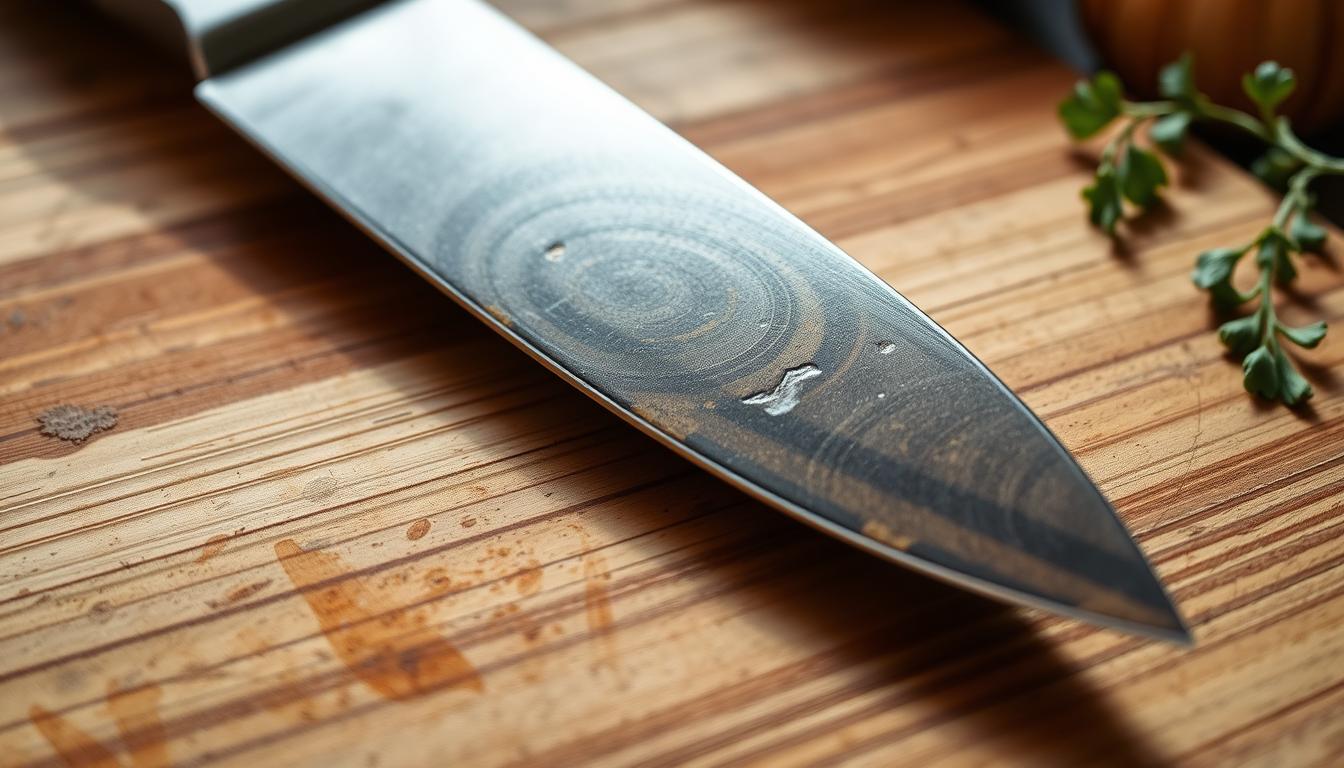
Soft-to-medium woods give under the blade and slow wear on steel. That helps your knives hold an edge longer than on very hard surfaces.
Wood vs. plastic and the micro-scratch problem
Plastic cutting boards often show nicks that hold residue. Some plastics can also shed tiny shards or contain unwanted chemicals.
For mixed-food prep, keep multiple boards or use a reversible cutting board to separate raw proteins from produce without extra fuss.
- Durable: can be sanded and repaired.
- Comfortable: pleasant under the knife.
- Practical: supports safe food prep when you keep a steady routine.
Cleaning a wooden cutting board after every use
A fast post-use routine prevents stuck-on scraps and protects the life of your blade. Start immediately after you finish to stop food bits from drying into the grain. Short steps take little time and make future care easier.
Scrape first to remove food debris
Use a bench scraper or spatula to push scraps off the surface. Scraping prevents bits from settling in grooves and saves you work later.
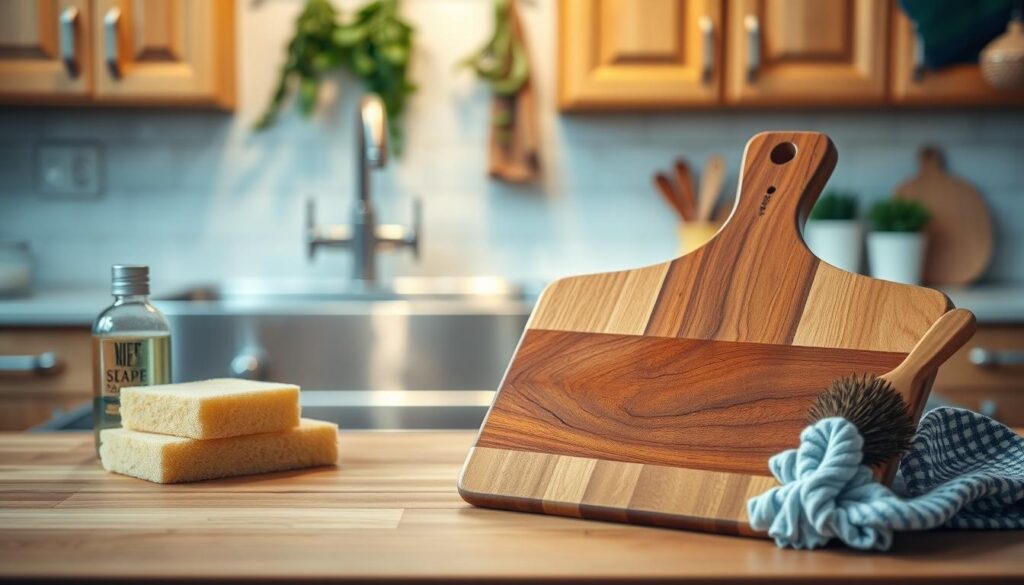
Wash with warm water and mild soap without soaking
Apply warm water and mild soap on a sponge or cloth and lift residue. Move quickly and avoid leaving the board in standing water so fibers don’t swell.
Rinse fast under running water
Rinse under the tap rather than filling a sink. Limiting water contact keeps the surface stable and reduces warp risk.
Dry with a clean cloth right away
Towel dry immediately with a clean cloth. Remove as much moisture as possible so the board stays ready for the next use.
- Scrape scraps off with a scraper.
- Wash with warm water and mild soap quickly.
- Rinse under running water.
- Dry at once with a clean cloth.
Critical mistakes that crack, warp, and dull your boards
Some habits quietly ruin your boards faster than you think. Avoid routines that push heat and moisture into the grain or leave residues that soften fibers over time.
Why you should never put wooden cutting board in the dishwasher
Dishwasher cycles are a deal-breaker. Prolonged hot water and high heat force moisture deep into wood. That swelling and drying cycle can cause cracking or permanent warping.
Why you shouldn’t submerge a cutting board in water
Soaking creates uneven absorption. One side can swell more than the other, which destabilizes the surface and leads to a warped or rocking board.
How letting meat juices sit can soften wood over time
Raw protein juices that sit let liquid sink into fibers and weaken them. Over time this makes surfaces harder to sanitize and more prone to damage.
- Scrape and wash promptly after use, especially when you handle meat.
- Rinse quickly under running water and dry with a clean towel.
- Minimize exposure to heat and standing water to protect shape and knife performance.
Clean all sides to prevent warping and rocking
Treat the whole piece as one tool: clean every face and edge to keep it flat and safe.
Top, bottom, edges, and sides need equal cleaning and drying time
Don’t stop at the top. Wipe, wash, and dry the bottom and all edges after each use. Even if food only touched one face, moisture soaks in from any wet contact.
Give each side the same attention. Lay the board on its edge to dry, or prop it so air reaches every surface. Equal drying prevents one face from staying damp longer than the rest.
How uneven swelling from water leads to a warped cutting surface
When one face absorbs more water than another, the wood fibers swell unevenly. That mismatch bends the surface into a rocker and makes the board unstable.
- Treat the whole object: clean all sides, not just the top, so it stays flat for years.
- Wash quickly and then dry each side equally to avoid uneven expansion and contraction.
- A steady, non-rocking surface keeps your knife work safer and reduces slips.
How to air-dry your wood cutting boards the right way
Airflow is the simple secret to keeping your wood surfaces flat and reliable. After you towel-dry, stand the piece vertically so both faces get steady air. This prevents trapped moisture that leads to warping.
Drying flat on the counter can leave the underside damp longer. That imbalance is the usual way a rocking surface starts.
Make “vertical after towel-dry” your kitchen habit. It takes seconds and cuts the time moisture lingers between uses.
- Stand vertically: let both faces breathe for even drying.
- Do not leave flat: underside dampness causes warping over time.
- Default mindset: towel first, then store upright.
If your boards already rock, try this repair: lightly wet only the concave face, set the piece on a damp towel, then place a heavy weight like a cast-iron pan on top. Leave overnight so it dries flat under even pressure, then return to vertical drying to prevent recurrence.
Deep cleaning and disinfecting every few uses with vinegar solutions
When routine washing isn’t enough, a simple vinegar spray gives extra germ control. Use this step every few uses or any time you handle higher-risk foods like raw meat or seafood.
Quick vinegar spray method and ideal sit minutes window
Mix one part vinegar to two parts water for a safe, food-ready solution. Mist the surface, let it sit for 3–5 minutes for a fast routine, or up to about 10 minutes when you want extra contact time. Then wipe or rinse and dry.
Vinegar-and-water ratio for a safe, food-ready cleaning solution
Ratio: 1 part vinegar : 2 parts water. This blend disinfects without heavy soaking. Wipe with a damp cloth or rinse briefly, then towel-dry and store upright so both faces air out.
When to disinfect more often based on foods you prep
- If you work with raw meat or seafood, add this step after each use.
- For produce or bread, use the vinegar step every few sessions as extra assurance.
- Never let juices stand; prompt action limits bacteria and preserves the surface.
Deodorizing and lifting stains with lemon, salt, and baking soda
Household staples like lemon and coarse salt erase smells and lift light stains without harsh chemicals. These steps refresh the surface quickly and use items you already have in the pantry.
Salt and lemon scrub to neutralize odors and refresh the surface
Sprinkle coarse salt across the board, then rub with the cut half of a lemon to work the salt into the grain. The salt gives gentle abrasion while the lemon neutralizes odors and brightens stains.
Let it sit about 15 minutes for stubborn smells and light stains
When odors cling, let the salt-and-lemon mix rest for about 15 minutes, then rinse with warm water and dry thoroughly. For extra deodorizing, dust a little baking soda during the scrub and rinse well.
Baking soda paste for tough stains like turmeric or beets
For strong colorants, mix 2 tbsp baking soda, 1 tbsp coarse salt, and 3 tbsp hot water into a paste. Gently scrub the stained area, wipe clean, then rinse and dry. Keep scrubbing gentle to protect the surface and your knife edge.
- Quick refresh: salt + lemon, scrub with half lemon.
- Deep deodorize: add small baking soda dust during scrub.
- Stain paste: 2 tbsp baking soda + 1 tbsp salt + 3 tbsp hot water, scrub gently.
Extra-sanitizing options with hydrogen peroxide and safe handling
For tougher sanitation needs at home, a separate hydrogen peroxide step boosts confidence without extra risk. Use this only when you want added protection after higher-risk prep or persistent odors.
How to use 3% hydrogen peroxide after vinegar
Follow this safe sequence as your extra sanitizing step:
- Apply your vinegar solution first and let it sit about 10 minutes.
- Rinse thoroughly and dry the surface briefly.
- Spray 3% hydrogen peroxide, let it sit for about 10 minutes, then rinse and towel-dry.
Why you must keep these steps separate
Never mix vinegar and hydrogen peroxide at the same time or in one bottle. Doing so can form peracetic acid, which can irritate skin, eyes, and your respiratory system.
Tip: This optional extra helps reduce bacteria when you need it, but finish by drying upright so sanitizing work does not stay damp and vulnerable.
Conditioning and sealing: mineral oil and board cream for long-term care
Seasoning keeps the surface healthy over months and years. Regular oiling stops fibers from drying and reduces moisture swings that lead to cracks. Follow a simple routine and your tool will stay flat and knife-friendly.
Monthly schedule and how to tell when to oil
Season about once a month. If the surface looks dull, chalky, or dries out after washing, oil sooner. These signs mean moisture needs topping up to avoid splitting over time.
How to apply food-safe mineral oil the right way
Pour a small amount on a soft cloth and rub in thin, even coats. Cover top, bottom, sides, edges, and any grooves so every face receives care. Wipe off excess—do not leave puddles—so the piece can breathe and dry evenly.
Why to skip olive and common vegetable oils
Avoid olive and typical vegetable oils. They can turn rancid and leave foul odors that undo your sanitizing work. Stick with food-grade mineral oil for stable, long-lasting protection.
Board cream, buffing, and final polish
After oiling, apply a beeswax-based board cream to seal moisture in. Buff in circular motions with a clean cloth to smooth the finish and remove extra cream. Let the piece rest upright after treatment so both faces dry evenly and stay flat.
- Quick checklist: season monthly, oil visible dry spots, avoid vegetable oils, seal with board cream, buff and store upright.
Conclusion
A short, repeatable ritual after every meal protects your tool and speeds future work.
Scrape with a scraper, wash fast with mild soap and warm water, rinse, towel dry, then stand the cutting board vertically to air. Clean all sides and edges so the board stays flat and safe.
Don’t run cycles in the dishwasher or soak the piece; those two habits warp and crack over time. Follow this cadence: daily wash after each use, vinegar disinfect every few uses, deodorize with lemon and salt as needed, and oil monthly.
Stick with simple steps and you’ll keep your cutting boards ready in the kitchen, protect your knife edge, and save time at home.