How to Properly Disinfect Kitchen Knives After Cutting Raw Meat
You handle raw meat in your kitchen and need a quick, reliable routine to stop cross contamination. This introduction outlines a simple, repeatable process you can use right after cutting raw meat or switching between foods.
Knife blade disinfection in a home setting means you remove visible residue first, then sanitize to reduce harmful bacteria that cause foodborne illness. Cleaning removes debris; sanitizing reduces microbes that a rinse alone will not fix.
You will learn low-equipment methods that protect the edge and avoid damage. Expect guidance on hot-water sanitizing and 70% alcohol wipes, and when each method fits your routine.
Safety matters: keep your hands clear of the edge, work over a controlled sink area, and store knives dry to prevent rust, especially on non-stainless steel. Good hygiene protects food, tools, and surfaces during the same cooking session.
Why you need to disinfect knives right after raw meat
A single slice of raw meat can seed bacteria across everything you touch unless you act fast.
How bacteria spread from raw meat to other food, tools, and surfaces
When raw meat touches a cutting surface, microbes cling to your knife and move to boards, counters, and hands. If you slice vegetables or bread next, those microbes transfer to the next food and can make people sick.

When to clean and sanitize again during cooking
- Common triggers: switching from chicken to salad, trimming raw meat then slicing bread, or moving from prep to plating cooked food.
- Decision rule: if your knife contacts raw meat or its juices, treat it as contaminated until you complete the full cleaning + disinfection process.
- Make it a habit: repeat the same step-by-step routine whenever you change tasks and pay attention to the junction near the handle where residue collects.
- Tools used outside the kitchen should be cleaned before food contact, since unknown contaminants can transfer to your food.
Safety and good hygiene are habits. An organized sink setup and a clear process make it more likely you’ll clean every time.
Prep your knife and sink area for safe cleaning
Begin by arranging your sink and supplies so you can clean quickly and without risk. Clear clutter, set good lighting, and keep the sharp edge pointed away from your hands. A predictable spot makes the job faster and safer.
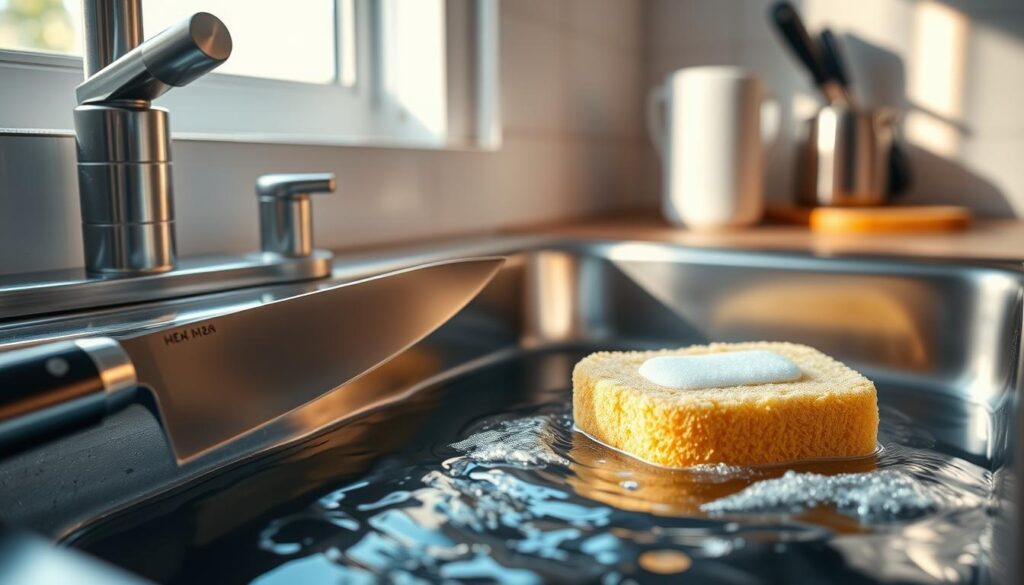
Handle and blade safety to prevent cuts while you clean
Grip the handle firmly and keep your fingers off the metal. Wipe from the spine toward the edge to reduce slip risk. Work over the sink so any runoff goes into the basin, not on the counter.
What to gather before you start
Collect warm water, mild dish soap, a soft sponge or cloth, and paper towels before you touch the tool. Having everything ready stops you from pausing mid-clean with a contaminated item in hand.
What to avoid and why
- Avoid dishwashers: they can be rough on edges and handles and may shorten tool life.
- Skip abrasive pads: harsh scrubbers scratch the metal and hold residue, making future cleaning harder.
- Never soak wooden handles: prolonged water exposure can swell, crack, or loosen rivets.
Cleaning properly first is the foundation for effective sanitizing. Set a consistent cleaning station, use a separate dry towel or paper for drying, and keep raw-meat tools contained until you move to the disinfection step.
Knife blade disinfection methods that work at home
Once debris is removed, pick a sanitizing option that fits your kitchen setup and time constraints. Below are two realistic home methods and a checklist to help you finish the process safely and quickly.
Clean first: remove debris with warm water and mild soap
Start with cleaning. Rinse with warm water and mild dish soap to lift visible debris. You must clean before you disinfect because sanitizers struggle on dirty surfaces.
Hot-water sanitizing method
Heat water to at least 77°C (170°F). Add 2–3 drops of a suitable cleaning fluid.
Hold the tool steady over the sink and pour the hot water over both sides for a few seconds. Work carefully to avoid splashes and dry immediately.
Alcohol option for speed
As an alternative, wipe both faces and the junction near the handle with 70% alcohol kitchen wipes. Rinse briefly with water and dry right away to remove residue from the wipe.
Contact time, coverage, and a quick checklist
- Treat the entire surface: heel, spine, and the junction where residue hides.
- Confirm: no visible debris, no slick film, and no missed spots before drying.
- Dry immediately and store.
Special care for folding tools
Flush and scrub the pivot and locking mechanism using a cloth or paper and a small stream of water. Let everything dry fully, then add a tiny amount of food-safe lubricant to moving parts and wipe off excess.
Core order: cleaning, sanitizing, check coverage, dry, store. Keep the same standard each time you use the tool.
Drying, preventing rust, and storing your knife to maintain hygiene
A quick, thorough drying step prevents moisture from undoing your cleaning work. After rinsing and sanitizing, dry immediately with a soft, lint-free towel or cloth. Wipe from the spine toward the edge to reduce slip risk and never leave the item to air-dry on the counter.
Moisture control and corrosion basics
Moisture is the root cause of rust and corrosion. Even stainless steel can spot when humidity and residue remain. Rust is iron oxide that forms when water and oxygen meet metal, and it can trap food particles and harm hygiene.
Light protection with oil
When you expect storage time or live in a humid area, apply a tiny amount of mineral oil to the metal and to any wooden handle. Use sparingly, then wipe off excess so the grip won’t feel slippery.
Clean storage options
- Use a clean knife block or magnetic strip to protect the edge and reduce contact with dirty drawers.
- Blade guards or sheaths keep the cutting edge safe during transport and prevent accidental contamination.
- Avoid tossing a wet item into utensils; that causes damage, dulls the edge, and can reintroduce germs.
Performance improves when you prevent corrosion: a dry, lightly oiled surface stays sharper, resists pitting, and keeps cleaning effective between uses.
Conclusion
A simple, repeatable clean-and-dry routine makes cooking safer and faster on busy nights.
Follow the same workflow each time: soap-and-water cleaning first, then a short sanitizing method, dry completely, and store in a clean place. This keeps the knife and other tools ready for safe use and reduces risk of cross contamination.
Remember the quick rule: clean, sanitize with hot water or 70% alcohol wipes, then towel-dry. Treat any item that touched raw meat as contaminated until that final step is done.
Consistent cleaning and good hygiene in the kitchen make your knives last longer and make food prep more confident. You do not need fancy products—just the right way and the same steps every time.