Best Practices for Using Different Knives to Avoid Cross-Contamination
You handle food in your kitchen every day, and tiny mistakes can spread bacteria fast. Understanding preventing cross-contamination begins with knowing how it happens and making clear tool choices.
This short guide sets expectations: you will learn how to separate knives, cutting boards, utensils, and surfaces so raw items don’t transfer germs to ready-to-eat food. You’ll see why knife choice matters — knives touch boards, hands, towels, and counters and can carry contaminants between items.
Next, you’ll build a practical system with dedicated tools, simple switching rules, hand-wash routines, and sanitizing steps that fit real cooking. These steps improve food safety and overall household safety, reduce foodborne illness risks, and protect guests with allergies.
Throughout, the advice follows USDA-style separation, proper cleaning, thermometer checks, and safe storage order. You’ll also get clear actions for when a knife that touched raw meat contacts produce, plus quick, practical tips to help you avoid cross-contamination every time you prep.
How Cross-Contamination Happens When You Use Knives, Cutting Boards, and Surfaces
A single cut can transfer germs from raw meat to your salad in seconds. In plain terms, cross-contamination is when hazards move by direct contact from raw foods, hands, knives, or surfaces onto foods you will eat without more cooking.
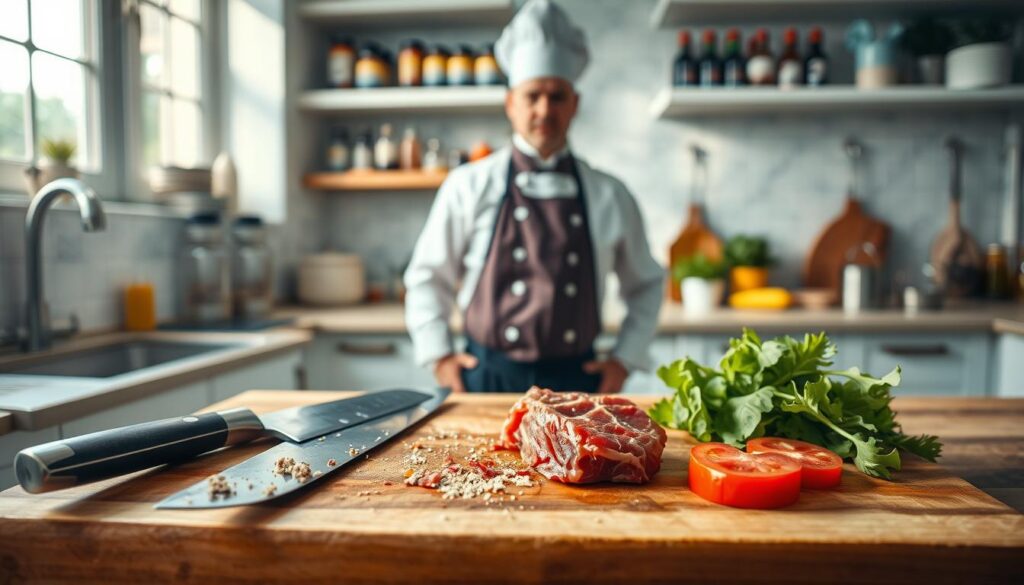
What cross -contamination looks like during food preparation
Hazards include biological, chemical, and physical risks, but bacteria are the most common daily worry. The typical “knife pathway” shows how a blade picks up raw poultry juices, transfers them to a cutting board, then to a counter and finally to produce.
High-risk foods and why a quick wipe fails
Raw meat, poultry, seafood, and eggs carry harmful bacteria that spread easily through food-contact surfaces. This can lead to foodborne illness with symptoms like vomiting, cramps, or diarrhea—especially dangerous for children, older adults, pregnant people, and immunocompromised guests.
- Wiping removes crumbs but not the invisible protein film that feeds bacteria.
- Soap and hot water remove residues; sanitizing interrupts the contact chain.
- Use separate knives and boards, and clean between tasks to stop transfer across surfaces.
Set Up Your Kitchen for Preventing cross-contamination With Dedicated Knives and Boards
Design your counters so each food group has its own home and tools. This makes it easier to prevent cross-contamination and keeps food prep smooth when you are busy.
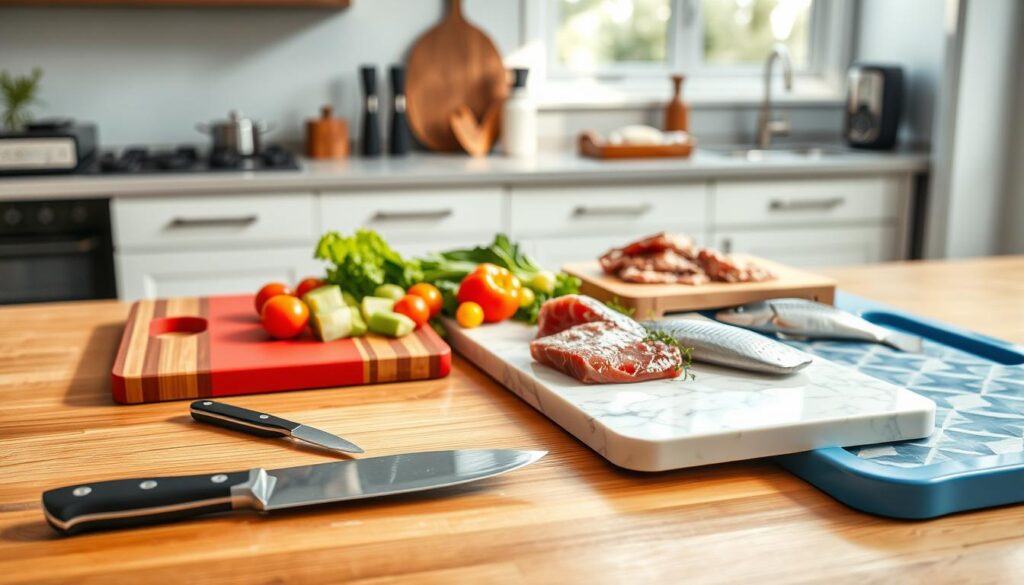
Create separation zones for raw meats, produce, and ready-to-eat foods
Allocate one counter for trimming raw meats, one for washing and cutting produce, and a separate clean zone for plated items. Physically separating these areas reduces the chance that juices or knives travel between food items.
Use separate cutting boards and match them to the right knife
Use separate cutting boards for meats, produce, and ready-to-eat foods. Once a board is used for raw poultry or beef, do not reuse it for salad prep mid-session.
Keep a dedicated chef’s or boning knife for meats and a different chef’s or santoku for produce. Matching boards to knives helps prevent accidental reuse.
Keep allergy-free tools separate and stored in a designated area
For allergens, dedicate boards, plates, and utensils to allergy-free foods only. Label and store these items in a clearly marked cabinet or shelf so staff and family can grab the right tools.
Color-coding knives, utensils, and towels to reduce mix-ups
Color-code boards, knife handles, utensils, and cloths to make the safe choice obvious. Use a “dirty tool bin” near the sink to drop contaminated items immediately rather than placing them on the counter.
- One counter for raw protein trimming
- One counter for produce washing and cutting
- One clean zone for plating and ready-to-eat foods
Consistency builds safety: set rules, label zones, and train anyone who helps you in the kitchen so safe habits become automatic.
Knife-By-Knife Rules During Food Prep to Avoid Cross-Contamination
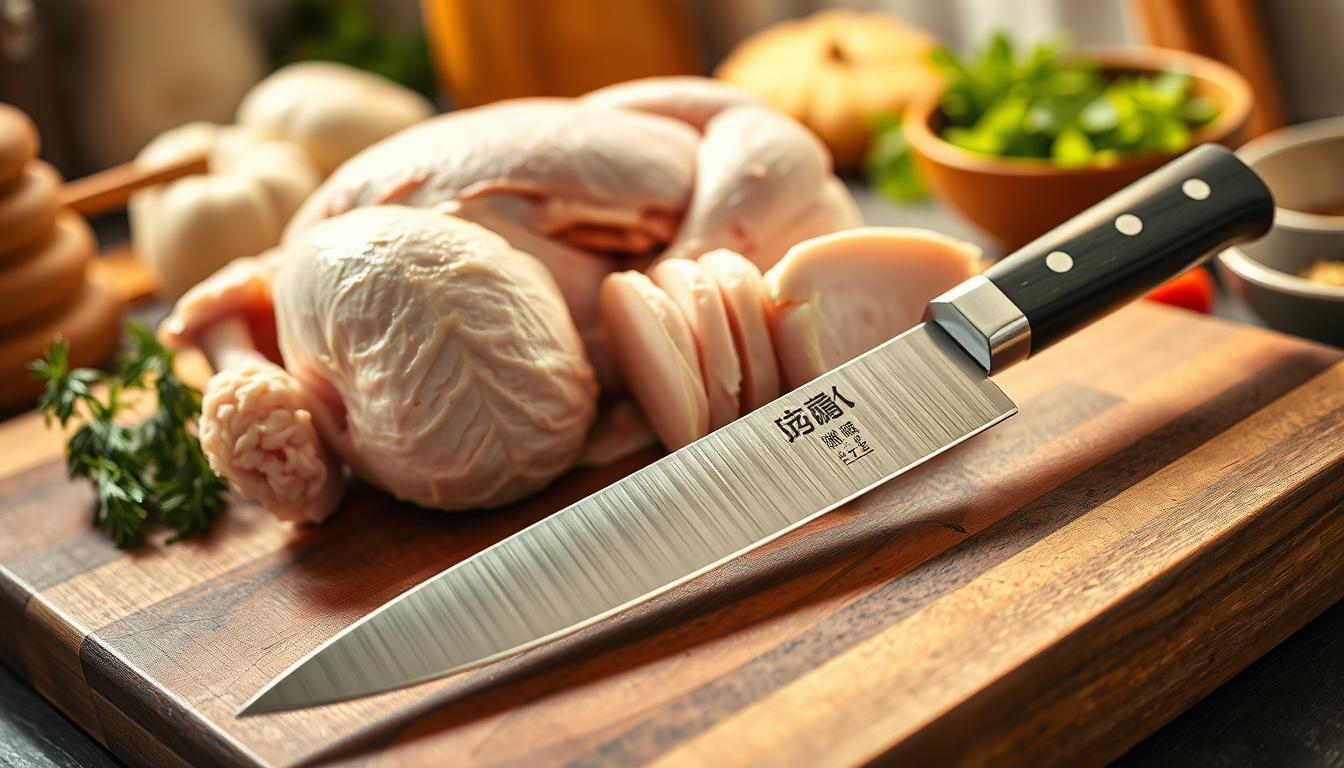
Keep a strict knife plan so raw proteins never touch tools meant for ready-to-eat foods. Use one knife for raw meat, one for poultry, one for seafood, and a clean knife for produce. No exceptions while you’re actively prepping.
Switch immediately when moving to ready-to-eat foods
The moment you go from raw proteins to herbs, fruit, or cooked foods, change knives and, ideally, boards. This quick swap will help you avoid cross-contamination and limit harmful bacteria spread.
Adopt a clean hand / food hand habit
Use one hand to touch handles, drawers, and faucets and the other only to touch food. This reduces contact transfer to surfaces and utensils.
If a knife touches the wrong surface
Stop. Put the blade in the sink or dish area, wash with soap and hot water, then sanitize before reuse. Replace with a clean knife immediately to maintain food safety.
Why you should not wash raw meats
Rinsing raw meats or poultry sends juices and bacteria across counters and utensils via splashing water. Do not wash raw meats; cook to safe temperatures instead.
- Workflow tip: cut produce first, raw proteins last to reduce mid-cook switching.
- High-risk moments: seasoning poultry, opening packaging, and transferring meat to pans—pause and change knives if you touch other tools.
- Quick rule: if you wouldn’t lick it, don’t let it touch ready-to-eat food.
Wash Hands and Clean Knives Correctly Between Tasks
Clean hands and clean blades are the first line of defense whenever you prepare food. Follow a simple routine to keep foods safe and avoid transferring proteins or bacteria between items.
When to wash hands
You should wash hands with soap and water for at least 20 seconds before you start and after handling raw meat, poultry, seafood, or eggs. Also wash after taking out trash, touching your phone, or adjusting a faucet. Always wash again before you touch ready-to-eat foods.
Why soap and how to do it
Soap lifts and removes food proteins and residues from skin and surfaces. Use friction on palms, backs of hands, between fingers, and under nails for a full 20 seconds. Alcohol sanitizer does not remove protein and cannot replace proper handwashing for allergen control or raw-food contact.
Cleaning knives, boards, and prep surfaces
Scrape debris from blades safely, then wash knives one at a time in hot soapy water with the edge facing away. Rinse and dry or use the dishwasher if appropriate.
Wash cutting boards and other prep surfaces with soap and water rather than just wiping; wiping misses invisible contamination. Treat every switch from raw to ready-to-eat as a required clean, not optional.
- Quick safety tip: handle blades carefully in sink water—clean one knife at a time to avoid cuts.
Sanitize Food-Prep Surfaces and Boards Safely (Including Bleach Solution Basics)
A final sanitizer rinse turns washed surfaces into a reliable barrier against foodborne hazards. First clean with soap and hot water to remove visible residue, then apply a sanitizing solution to reduce remaining microbes on boards and counters.
Bleach concentration and why water temperature matters
Use a baseline bleach mix: 1 tablespoon of concentrated bleach per 1 gallon of water at normal room temperature for food preparation surfaces. Do not use hotter water to try to boost the effect—higher temperatures can reduce bleach activity and lower sanitizer performance.
Application, drying, and solution management
Apply the solution so the entire surface and contact areas are wet. Follow label directions for contact time, then let surfaces air-dry rather than wiping them off. Air-drying ensures the sanitizer works fully.
- Replace bleach solutions regularly; they lose strength over time, especially in busy kitchens.
- Store bleach and cleaning products away from food and prep items to avoid chemical contamination.
- Sanitizing boards and counters supports your dedicated knife system by keeping a clean knife from picking up contamination from a dirty surface.
Cooking, Serving, and Storage Habits That Keep Knives and Foods Separate
How you cook, serve, and store food matters just as much as how you cut it. After prep, tasting, stirring, plating, and storage can reintroduce bacteria if you reuse contaminated utensils or tools.
Use clean utensils for tasting, stirring, and serving
Always grab a clean spoon when you taste. Do not double-dip—this simple habit prevents cross-contamination and limits foodborne spread during cooking and service.
Use separate utensils for stirring raw meat mixtures and for serving cooked products. Keep a clean utensil cup near the work area so you can swap tools quickly.
Cook to safe internal temperatures and verify
Cook meat and poultry to safe internal temperatures and check doneness with a food thermometer. Color or time alone can be misleading.
Verifying with a thermometer is your control step to reduce foodborne illness risk and to protect guests.
Refrigerator order and time-and-temperature control
Store ready-to-eat foods above raw meats, poultry, and seafood. Put raw packs on the bottom shelf in sealed containers to stop drips onto other foods.
Keep hot foods hot and cold foods cold. Bacteria grow fastest between 40°F and 140°F, so limit how long food sits in that danger zone.
- Refrigerate cut produce promptly and return leftovers to cold storage within two hours.
- Label leftovers with dates and use leak-proof containers to keep storage organized and safe.
- Never bring a prep knife back to the table without washing and sanitizing first; use clean utensils for serving.
Conclusion
Finish strong: make simple, repeatable habits the backbone of your kitchen routine.
Summary: set up dedicated knives and cutting zones, switch tools immediately when you move from raw to ready-to-eat, and follow a consistent clean-and-sanitize flow to avoid cross-contamination.
Daily habits: wash hands with soap whenever you change tasks, and always use separate tools so raw-meat contamination does not reach foods you won’t cook again.
If you remember nothing else: separate knives, separate boards, clean then sanitize surfaces, cook to safe temps with a thermometer, and store raw meats on the bottom shelf.
Train family or staff on the same rules and post a short food safety checklist in the kitchen. With clear separation, correct washing, and steady routines, you can prevent cross-contamination and protect your household and guests without fancy gear.