How to Prevent Your Knives from Rusting in Humid Coastal Climates
Coastal air speeds oxidation and makes rust appear faster than you might expect. Salt and moisture cling to metal, so a blade that looks dry can still be at risk.
You’ll learn a simple daily routine that takes under a minute after cooking. This routine, paired with smart storage upgrades, cuts moisture exposure without losing quick access.
We’ll help you tell the difference between harmless patina, surface discoloration, and true rust. That way you know when to act and when to leave a finish alone.
This guide focuses on repeatable habits for stainless, high-carbon, or patterned steel. You will see practical storage options: blocks, magnetic strips, drawers, desiccants, VCI paper, and climate-controlled cabinets.
The goal: keep your knife sharp, clean, and corrosion-free in present-day coastal conditions. Simple care and good storage change how long a blade stays beautiful.
Why Humidity and Coastal Air Make Knives Rust Faster
When coastal air stays damp, metal reacts faster and surface protection breaks down. Rust forms when iron meets oxygen and water — a plain chemical process called oxidation. Even tiny droplets or persistent vapor start the reaction you see as brown flakes.
How oxidation starts when moisture lingers on steel
Water vapor or beads left on the edge give oxygen a medium to reach iron atoms. That reaction makes iron oxide, which weakens the metal and shows up as rust.
Why carbon steel and Damascus-style blades react faster than stainless
Alloys with less chromium — like many carbon steel varieties — lack the protective oxide layer that stainless forms. That makes carbon-rich metal more prone to corrosion.
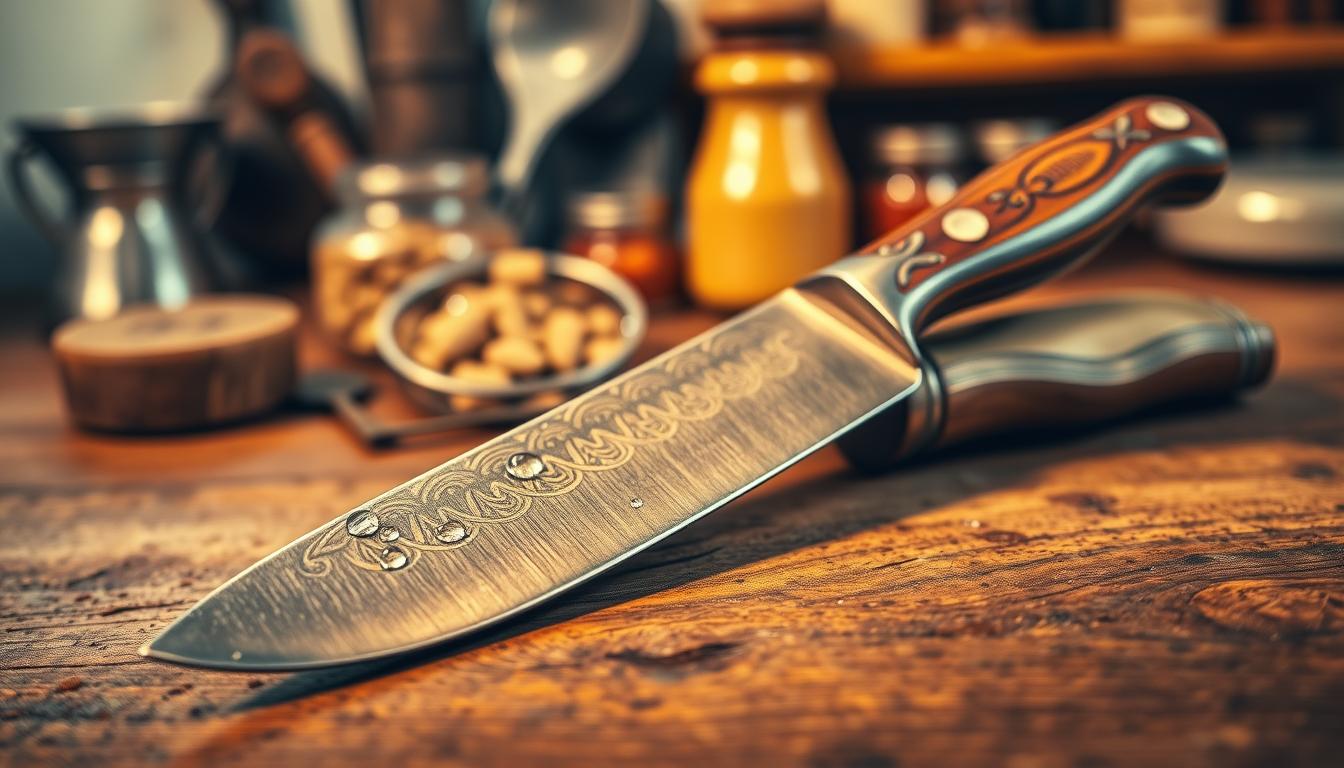
Damascus or patterned blades have tiny grooves and etched layers that trap moisture. Those micro crevices need careful drying and light oiling to stay safe.
How salt and minerals speed pitting and damage
Salt in sea air raises electrical conductivity on the metal surface. That accelerates oxidation and leads to pitting rather than just surface rust.
- Aim to keep indoor humidity below 50% when possible.
- Treat a 50–60% zone as a warning and act if levels stay there.
- Use a hygrometer to track your kitchen or drawer trends across seasons.

Bottom line: you can’t fully stop coastal air, so daily care becomes your first defense. The next section shows quick habits that block rust before storage.
Everyday Knife Care That Stops Rust Before Storage
A quick, focused post-use routine cuts wet contact time and stops rust before it starts. Do this after every meal and you reduce the single biggest risk factor for rust corrosion.

Hand-wash right after use
Wash the knife by hand immediately to remove acids and salty residue. Acids from onions, tomatoes, and citrus speed corrosion. Dishwashers and long soaks increase exposure and push water into the handle seams.
Dry fully—don’t air dry
Towel-dry the blade, then run the cloth along the spine, around the bolster, and where the handle meets steel. Hidden moisture collects there and costs you time later if it’s left to sit.
Apply a thin protective coat
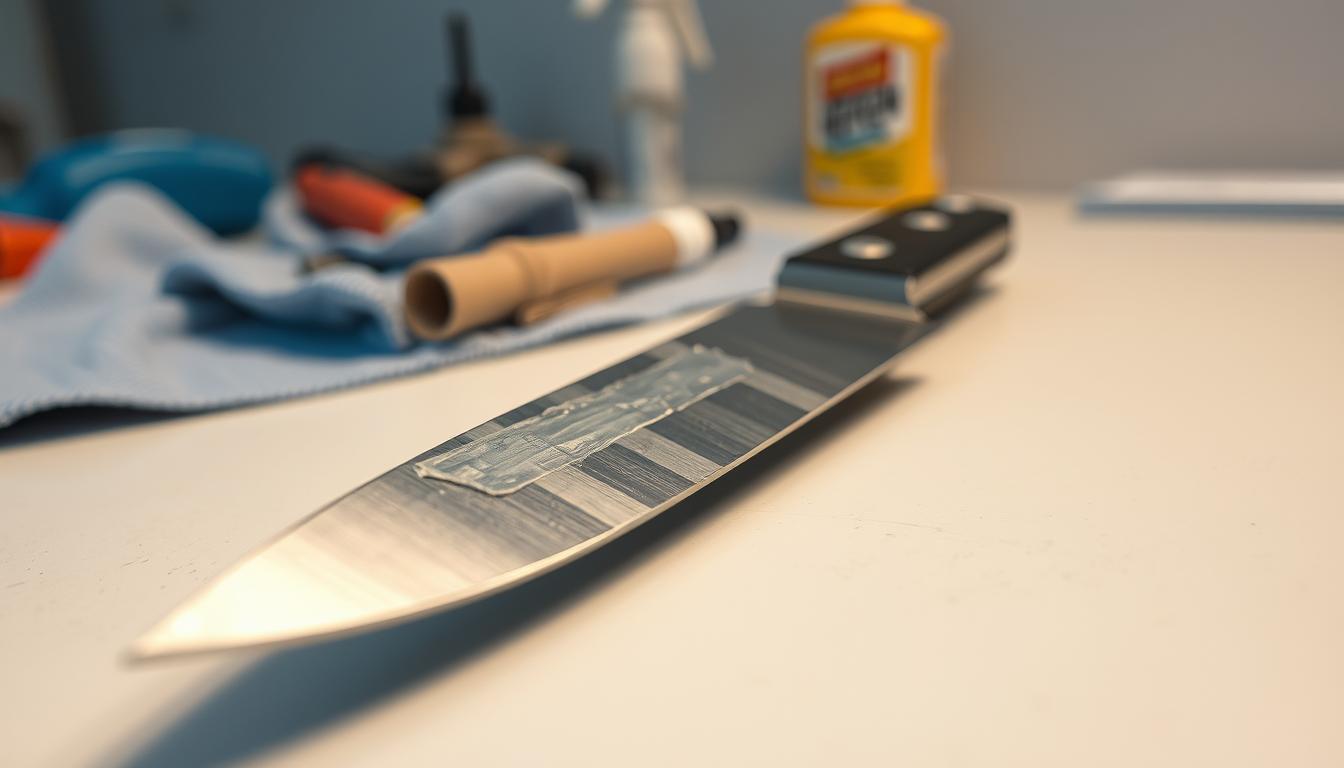
Wipe a faint film of food-grade mineral oil or camellia oil across the blade and bolster. This safe film cuts moisture contact without affecting performance.
What to avoid and why patina helps
- Avoid vegetable and cooking oils for storage—they oxidize and turn sticky.
- On carbon steel, let a dark patina form; it’s a protective layer, not rust.
Routine: wash and dry every use; oil more often when coastal fog or humidity spikes. These small steps help keep knives sharp, clean, and free from rust corrosion.
Storing knives in high humidity without trapping moisture
Aim for airflow and separation—those two things stop rust and edge damage. Your storage approach should keep blades dry, prevent edge-to-edge contact, and let you check conditions quickly.
Blocks, edge protectors, and stability
Wood or plastic block designs work if each blade is fully dry and lightly oiled. Clean slots periodically so water or salt residues don’t collect.
Use sheath-style edge protectors (sayas) for extra barrier protection during humid spells. They cut exposure and stop nicks when you store blades in a drawer or case.
Pick a weighted block with non-slip feet for hot, steamy months so it won’t shift and drop, which can cause damage.
Magnetic options and placement
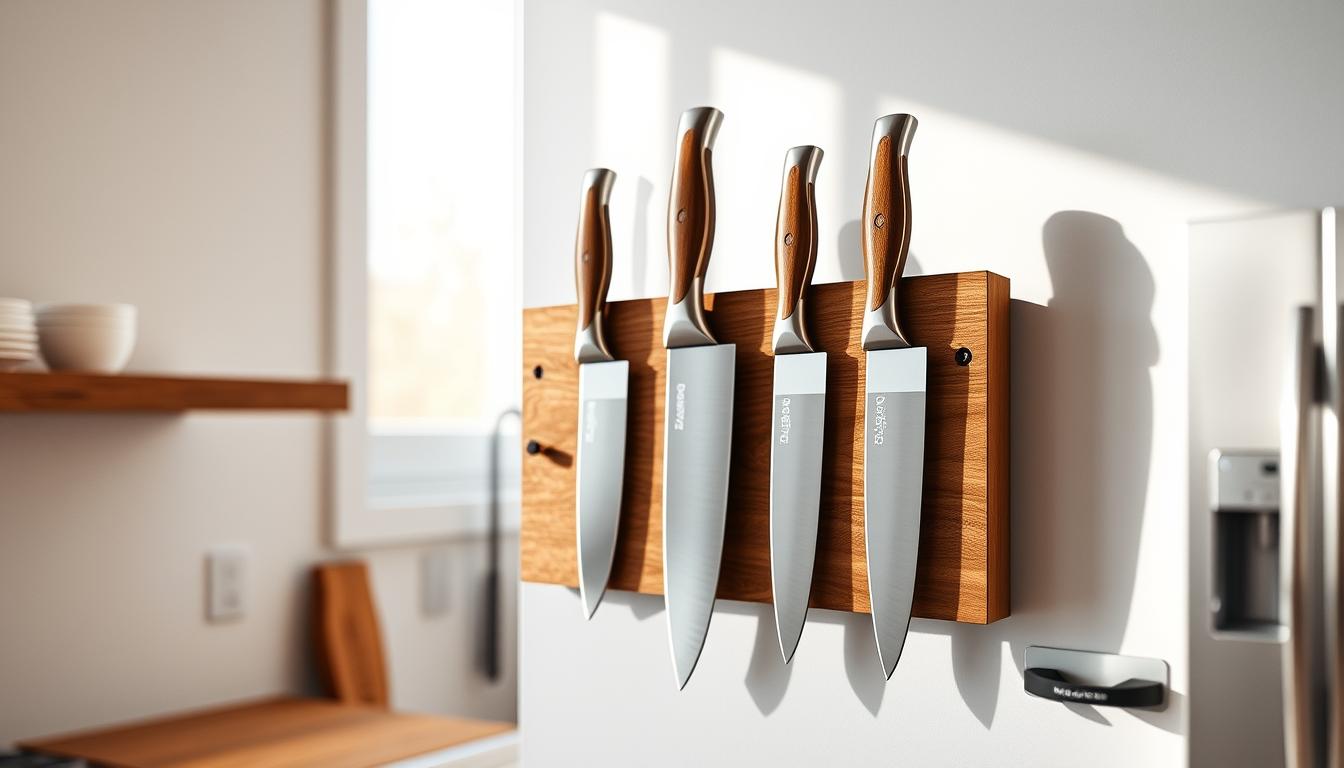
Magnetic strips and magnetic blocks improve airflow around each blade. Mount them away from sink splash, dishwasher steam, and boiling pots to avoid constant vapor exposure.
Drawer storage done right
Use a fitted tray or wooden inlay so blades don’t knock together. Avoid tossing tools loose into drawers where contact and moisture combine to cause damage.
Desiccants, VCI, and climate control
Keep silica gel or other desiccant packs inside drawers and cases to create a drier micro-environment. Recharge or replace packs on a schedule.
For long-term or seasonal downtime, wrap blades in VCI paper or rust-inhibitor sleeves. These are common for tool and gun storage and work well for extended breaks.
When persistent moisture is an issue, use a dry box or climate-controlled cabinet with a hygrometer. Aim for under 50% RH for best results.
Materials and areas to avoid
- Avoid leather sheaths for long-term placement; they absorb and hold moisture.
- Don’t store blades in unconditioned garages, basements, or attics where RH swings wildly.
- Avoid airtight boxes without desiccant; trapped moisture can accelerate corrosion.
Tech note: If a retailer spec page won’t load, try disabling a block extension so you can compare cabinet and hygrometer specs accurately before you buy.
Conclusion
A minute of care each day prevents most corrosion before it starts. Reduce moisture contact: wash, dry every surface, and add a thin oil film. Then pick storage that promotes airflow or uses desiccant packs so trapped vapor won’t linger.
When your home trends toward that 50–60% relative range, treat oiling and controlled storage as standard. Follow a quick daily checklist: hand-wash, dry seams and handle junctions, oil lightly, and mount or tray the blades for separation.
Inspect weekly or monthly, refresh oil, and rotate or replace silica gel so it stays effective. This approach protects your investment in quality steel and keeps the kitchen ready.
If a retailer page shows a page blocked notice while you compare gear, try disabling extensions (especially ad blockers) so specs and reviews load properly.
Do this consistently and your knives stay sharp, clean, and ready between meals.