Space-Saving Knife Storage Solutions for Compact Professional Kitchens
You work fast in a tight prep zone, and every inch matters. This short guide explains why smart blade care and tidy stowage speed service and cut accidents. You will learn safe, hygienic alternatives to block-style holders and what chefs actually use in busy restaurants.
Next, we’ll compare wall mounts, drawer inserts, under-cabinet rails, slim countertop racks, and portable cases so each pick fits your real workflow. The goal is simple: protect sharp edges, reduce clutter, and keep tools reachable without losing counter space.
By “space-saving” we mean using vertical room, hidden pockets, and smart layouts rather than bulky gear. These methods apply whether you run a small restaurant line or manage a tight home prep area, especially shared stations.
Sanitation and drying are a recurring theme; moisture plus closed compartments invites corrosion and germs. Expect clear, practical tips that help you keep blades dry and extend edge life while freeing up workspace.
Why knife storage matters in a compact kitchen
In tight prep zones, how you stow blades shapes safety, sharpness, and speed. When work is fast and space is limited, intentional placement pays off in every shift.
How smart storage protects your knives from dulling and damage
Repeated contact with hard surfaces dulls edges faster. When blades rub against metal, ceramic, or other tools, the edge degrades and chips happen. That leads to more force during slicing and a higher chance you’ll slip while cooking.
How the right setup reduces cuts and countertop clutter
Good organization moves blades off the counter and creates a repeatable station. Your most-used knives are always in the same place, so you waste fewer seconds during service.
- Protect tips and edges by preventing contact in messy drawers.
- Keep sharp tools visible and reachable to cut prep time.
- Free up the counter and countertop so you have room to plate food safely.
The best way store knives balances speed, visibility, and protection. Pick a system that preserves edges, reduces cuts, and fits your kitchen counter workflow.
What to avoid with traditional wooden knife blocks in busy kitchens
Traditional wood blocks look tidy but carry hidden costs. Slotted wooden designs can scrape edges during repeated insertions. Grit or moisture trapped in the slots speeds wear and can cause chips.
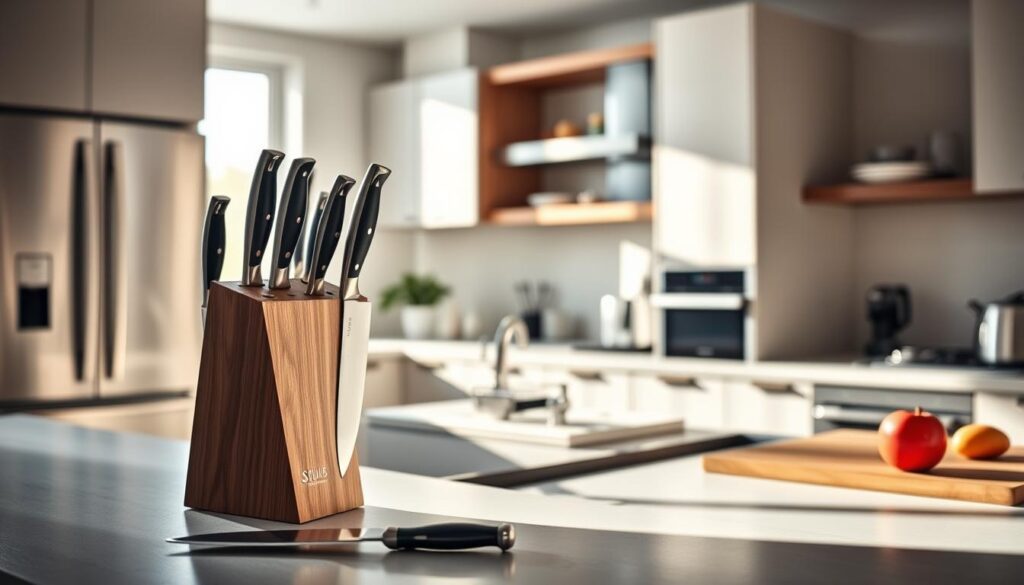
Why slotted wooden blocks wear blades down
Each slide in and out drags metal across the slot interior. Over time that friction blunts the edge and shortens time between sharpenings.
Germs hide in dark, moist slots
NSF International ranked the knife block seventh among germiest kitchen items in a household study. NSF microbiologist Lisa Yakas warns that “dark, moist environments breed germs,” so storing a wet or dirty blade invites mold, yeast, and bacteria.
Dry-first habits and upkeep
In a busy line, “I’ll dry it later” becomes risky. Always wash and thoroughly dry blades before you stow them.
- Treat any block like a tool: clean and air it regularly.
- Inspect slots for grit and moisture between shifts.
- Consider alternatives that keep quick access without trapped damp or tight slots.
Knife storage for small kitchens: how you pick the right solution
Start by measuring the exact usable area you have. Check wall length, drawer depth, under-cabinet clearance, and any real countertop footprint. Use the back of doors or cabinet insides; these often hide useful space.
Measure your available space: wall, drawer, under-cabinet, or countertop
Take a ruler and note clearances. A long chef knife needs more horizontal room than a paring blade. Record measurements before you shop.
Match storage to knife types: chef knife, serrated, paring, cleavers
Think about the mix of tools you use. Chef knife and serrated blades need longer clearance. Paring knives fit compact holders or drawer trays easily.
Cleavers and heavy blades may demand sturdier mounts or a dedicated case to avoid stress on attachments.
Prioritize safety for staff, kids, and pets in shared spaces
Plan placement around traffic paths. Keep visible blades out of reach of kids and pets. Locking or hidden options are safer in shared stations.
Choose an option that supports speed and workflow during prep
Your most-used items should sit where you can grab them with one motion. Avoid locations that force you to cross busy zones during service.
Fit the look and design of your kitchen without sacrificing function
Design matters, but not at the cost of hygiene and stability. Pick a finish and form that match your kitchen while meeting sanitation and durability needs.
- Measure wall, drawer, and under-cabinet clearances before buying.
- Match holder type to blade length and weight.
- Prioritize reachability and safety in shared areas.
- Choose durable attachments that support daily use.
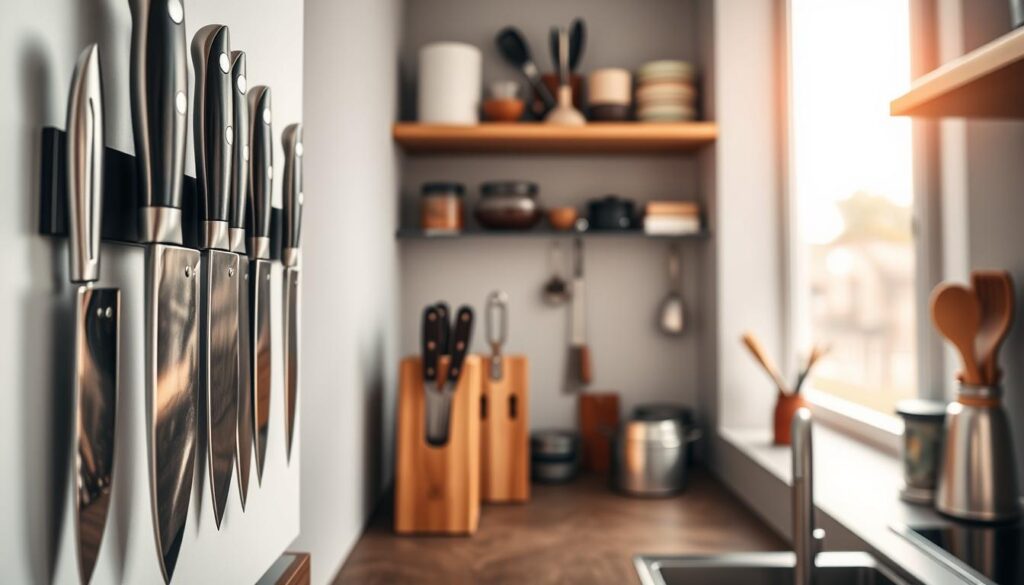
Wall-mounted magnetic knife strip for zero counter space impact
A wall-mounted magnetic strip clears your counter entirely while keeping blades within arm’s reach. Mounting a magnetic knife rail reclaims counter space and gives you open-air access that dries faster and cleans up quickly.
Why open-air magnetic storage works in restaurants
Many professional kitchens prefer strips because airflow helps sanitation. Open display makes wipe-downs fast and keeps knives visible during busy service.
Placement tips to keep tools reachable but out of traffic
Mount the strip on a wall near your main prep station so items are easily accessible. Avoid primary walkways and keep the bar off the counter where elbows and bags pass.
Limitations to consider
Visible blades can be a hazard to kids and pets. Strong magnets can stress a blade edge over long periods, so remove items with a straight pull.
- Pro: Removes knives from the counter entirely.
- Pro: Airflow aids sanitation and quick cleaning.
- Con: Very heavy cleavers may need a different holder.
Wall-mounted knife rack with a shelf to store knives and small tools together
A wall-mounted rack with a built-in shelf turns wasted vertical room into a compact, reachable prep zone. This combo holds blades while giving a spot for small tools and seasonings so you keep everything in one tight area.
How vertical storage frees up your kitchen counter for cooking and plating
Moving tools off the counter reclaims precious counter space and creates a clear lane for hot pans and plating. A mounted rail keeps items visible and reachable without taking up your prep surface.
What belongs on the shelf: everyday items you reach for during prep
Use the shelf for small spice jars, measuring spoons, a mini timer, and a sharpening rod. Grouping related items with your blades improves organization and cuts back-and-forth steps.
- Keep only the most-used items on the shelf to avoid clutter.
- Choose wipeable finishes and leave airflow around blades to help drying and cleanliness.
- Avoid overloading so nothing falls into your workspace during service.
Tip: Treat the rack-and-shelf as a vertical upgrade that saves space and speeds workflow. Keep the layout simple and reachable, and you’ll preserve both safety and speed in a tight kitchen.
In-drawer knife storage with a towel for a simple, chef-approved setup
A drawer lined with a soft towel is a low-cost, effective way pros use to protect edges and hide sharp tools. This minimalist method keeps counters clear and blades separated without bulky racks.
How to lay knives horizontally so blades don’t touch and dull
Lay each blade flat on the towel so edges do not touch. Place small knives in a single row at the front, all facing the same direction.
Longer blades go perpendicular behind them. This reduces rubbing and prevents nicks during shifts.
Drawer-fit strategy: reserve space for the knives you use most
Use one drawer as your primary spot. If your drawer can’t fit a full set, keep your chef, serrated, and paring in that space.
Why this method improves safety by keeping sharp edges out of sight
Stowing blades out of view lowers accident risk in busy homes and shared prep areas. It keeps tools out of reach of kids and pets while still being quick to grab.
- Pros: Easy upkeep, protects edges, keeps counters clear.
- Cons: Not every drawer fits a full set—reserve your most-used items.
- Maintenance: always dry blades completely before you store knives and wash the towel often.
In-drawer knife organizer inserts for clean, separated slots
Slot-style organizers turn a crowded drawer into a tidy, predictable workstation you can reach into fast. These inserts fit snugly so each tool has its own lane, which keeps edges from rubbing and keeps your hands safer when you reach in.
How slot-style organizers protect hands and edges in tight drawers
Slots prevent loose blades from shifting, which lowers the chance of accidental cuts and stops edges from scraping against other metal. Choose an organizer with snug slots so handles sit secure and blades stay apart.
When an angled drawer dock makes grab-and-go easier
An angled dock tilts handles toward you so sliding a blade out is a single motion. This is worth the upgrade if you cook often and want knives easily accessible without lifting straight up.
- Material tip: Prefer plastic or coated inserts that wipe clean and won’t trap moisture.
- Match slot sizes to your actual knives so blades don’t scrape during removal.
- This option is a smart choice when you want hidden, yet easily accessible, tools in a minimalist layout.
Under-cabinet knife holders for hidden storage in tight layouts
Flip-down and under-shelf holders convert unused space beneath cabinets into a tidy, hidden zone. This keeps your prep area clear and your most-used blades close at hand without adding counter clutter.
How flip-down designs work and where to mount them
Flip-down models hinge open to reveal secured slots, then fold back up to hide the set. That action reduces accidental contact and keeps the visual field cleaner during service.
Mount the holder so it clears cabinet doors, under-cabinet lighting, and your main work path between sink and prep. Aim for easy reach without blocking movement.
- Hidden but close: Protects limited countertop and frees workspace.
- Practical mount points: Under upper cabinets near your main prep station.
- Use sparingly: Keep only core prep blades in this system; store specialty tools elsewhere.
Always dry blades before stowing to prevent moisture buildup. In a tight kitchen, this way turns wasted under-shelf room into useful, out-of-the-way storage that speeds service and reduces clutter.
Knife rolls and roll-up knife bags for portable, out-of-the-way storage
When you need to move tools between gigs, a roll-up bag keeps everything compact and safe. Many professional chefs carry one to cater, teach, or work pop-ups, and it doubles as a neat place to keep core tools at home.
Individual pockets protect blades during transit and off-hours. Each item sits in its own slot so edges don’t bang together. That helps maintain sharpness and cuts down on nicks when you travel.
Expect tradeoffs for daily use. Unrolling, selecting, and re-rolling adds steps. Capacity is often limited, so a roll works best for chef, paring, and serrated knives rather than a full set.
- Portable: Ideal when you move between a professional kitchen and home, or attend classes and events.
- Protects edges: Individual pockets keep blades separate and clean.
- Safety: Rolled bags lock away sharp tools out of reach of kids and pets.
- Workflow note: Use a roll for transport and a fixed system at your main prep station to save time during service.
Slotless (universal) knife blocks when you need flexibility—but not more clutter
When you need flexible holding that adapts to changing sets, a slotless block can be a smart choice. These universal blocks use a dense array of plastic or rubber rods that accept blades of many shapes and sizes.
How rod-style blocks adapt and clean more easily
Rod interiors let you fit different blades without fixed slots. The rods cushion edges and stop rubbing between tools. Many designs allow the rod base to be removed so you can rinse or place it in the dishwasher.
When counter demands and rod wear make this less ideal
These blocks do use counter space and can clutter a tight countertop. If kids or pets reach counters, visible holders may be a safety risk.
- Choose slotless blocks when your set changes often and you need countertop convenience.
- Inspect rods regularly—forced or angled insertions can make them wear out.
- Prefer wall or drawer options if you want to free counter space in a busy kitchen.
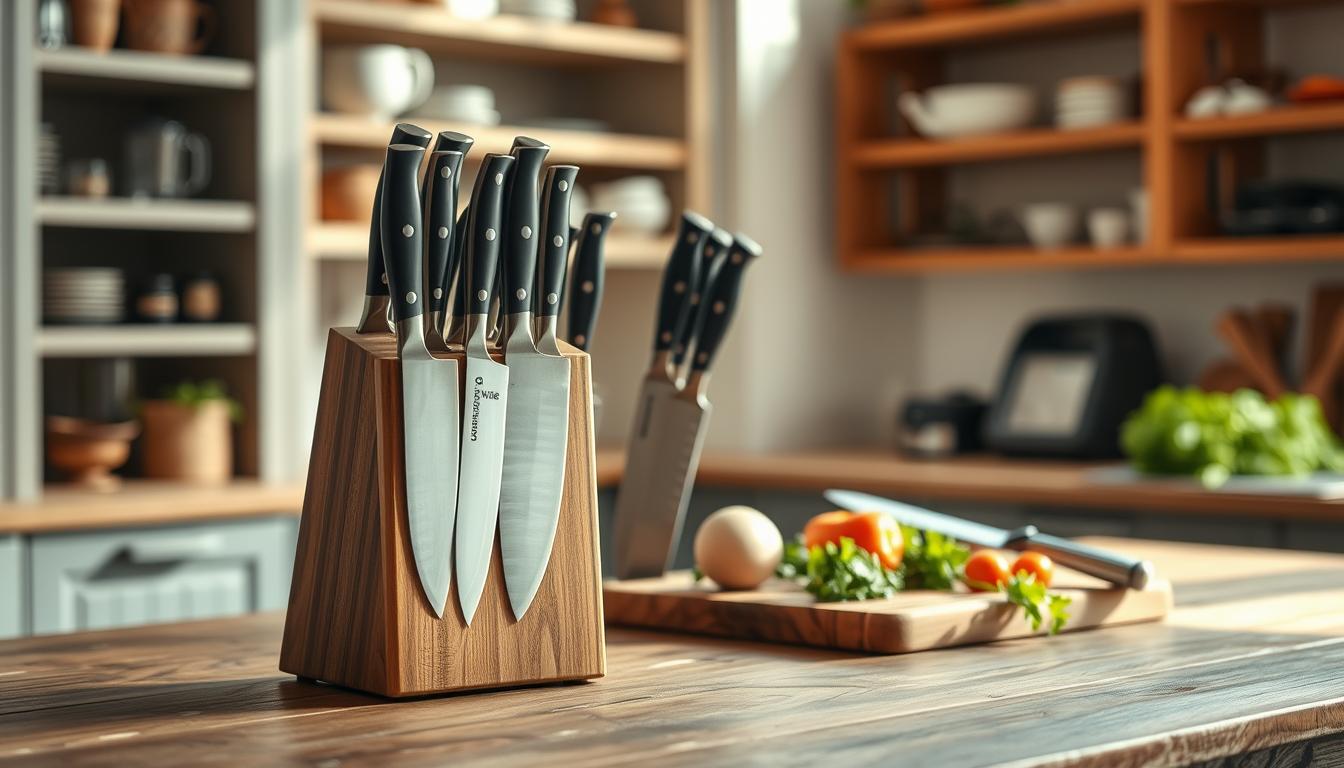
Magnetic knife blocks and magnetic wooden stands for modern visibility
A magnetic wooden block is a modern hybrid: it gives the reach of a block while keeping blades from rubbing inside slots. This approach improves airflow and helps blades dry faster, cutting moisture-related wear.
How hidden magnets hold blades securely with airflow control
Rare-earth magnets are often embedded in American walnut and other attractive woods. They grip metal firmly without requiring a slot, so edges do not touch interior surfaces.
Matt Conable of William Henry notes this method pairs elegant aesthetics with secure holding and easier access. The open sides let air move around blades for better moisture control and simpler wipe-down cleaning.
Best practices to reduce safety risks when knives are displayed
Place the stand away from counters’ edges and heavy traffic. Keep handles oriented the same way and avoid spots where people brush past.
- Pro: Combines visibility with airflow and fast access.
- Con: Visible blades increase risk around children and pets—consider drawer or under-cabinet options in family homes.
- Inspect magnets periodically and remove blades by a straight pull to protect edges.
Conclusion
Your final step is simple: pick one reliable system and make it part of your prep rhythm.
The best knife storage keeps blades washed, thoroughly dried, and separated so edges stay sharp and accidents drop. Open-air holders and slot-separated trays help airflow and cut germ risk noted by NSF.
Compact kitchen work needs intentional choices to save space and clear counter space. Match the option to your layout: choose a magnetic strip when you have wall room, a hidden drawer setup when you want safety, or an under-cabinet unit when you need stealth.
Avoid putting wet blades into wooden slots; drying and cleaning habits matter no matter which solution you pick. Stick to one primary approach and you’ll turn storage ideas into steady, fast workflow that helps cooks every shift.