What is a Gyuto? A Guide to the Versatile Japanese Chef Knife
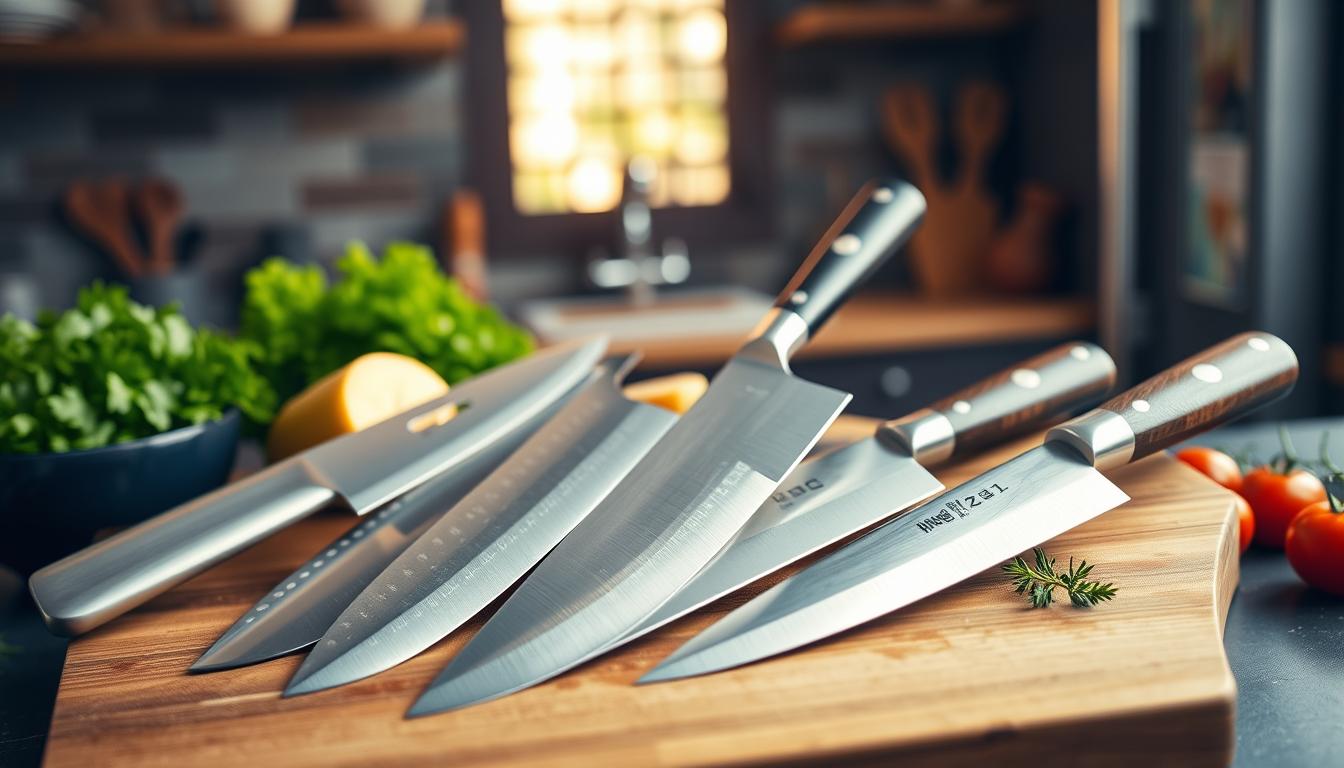
The Gyuto is the Japanese take on the classic chef blade. In plain terms, it is an all-purpose tool you reach for when you need one reliable implement for meat, fish, vegetables, and herbs.
The name translates to “cow sword,” which hints at its origins in beef breakdown. Over time that heavy-duty role evolved into a slimmer, sharper everyday blade that fits most tasks in your kitchen.
In this short introduction you’ll learn what the gyuto does best and what factors matter when you shop. Expect clear coverage of anatomy, sizes, steel types, handle feel, and finishes so your buying choice feels straightforward.
What it solves: one primary blade that reduces tool swaps and speeds prep. You’ll also see how it compares to Western chef knives while keeping the thin geometry and keen cutting performance of japanese knives.
What a Gyuto Knife Is and Why You’d Use One
From butchery origins to weeknight meal help, the Japanese chef blade covers most tasks at the cutting board. It began as a heavy-duty “cow sword” for meat work and has become a lighter, sharper tool you reach for daily in the kitchen.
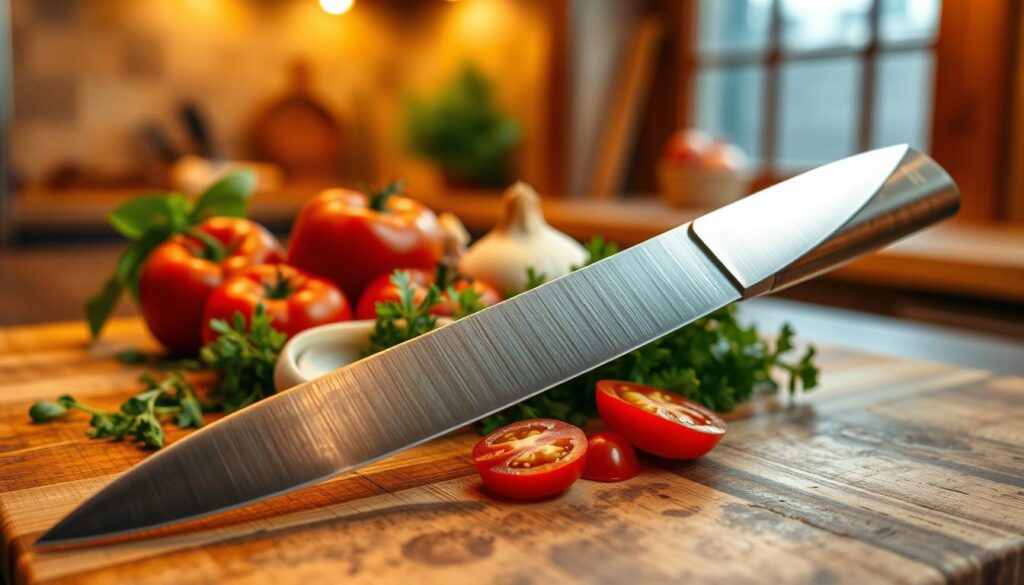
From butcher tool to everyday prep
The history explains the shape: a long, pointed profile built for slicing through meat. Today you use a gyuto for quick weeknight dinners and larger projects alike.
How it fits into your set
Many cooks replace multiple tools with one gyuto knife. It can cover roughly 80–90% of tasks, reducing the number of knives you need on the board.
What to cook with it
Best foods:
- Vegetables — onions, peppers, and herbs.
- Meat — chicken, steak, and roasts.
- Fish — portioning and clean slicing.
Why you’d use one: faster prep, cleaner cuts, and less sawing thanks to a sharper-feeling edge and efficient geometry. That combination is why both home cooks and pros favor this chef knife type for slicing, dicing, and mincing in a busy kitchen.
Gyuto Blade Anatomy: Shape, Tip, Belly, Heel, and Cutting Edge
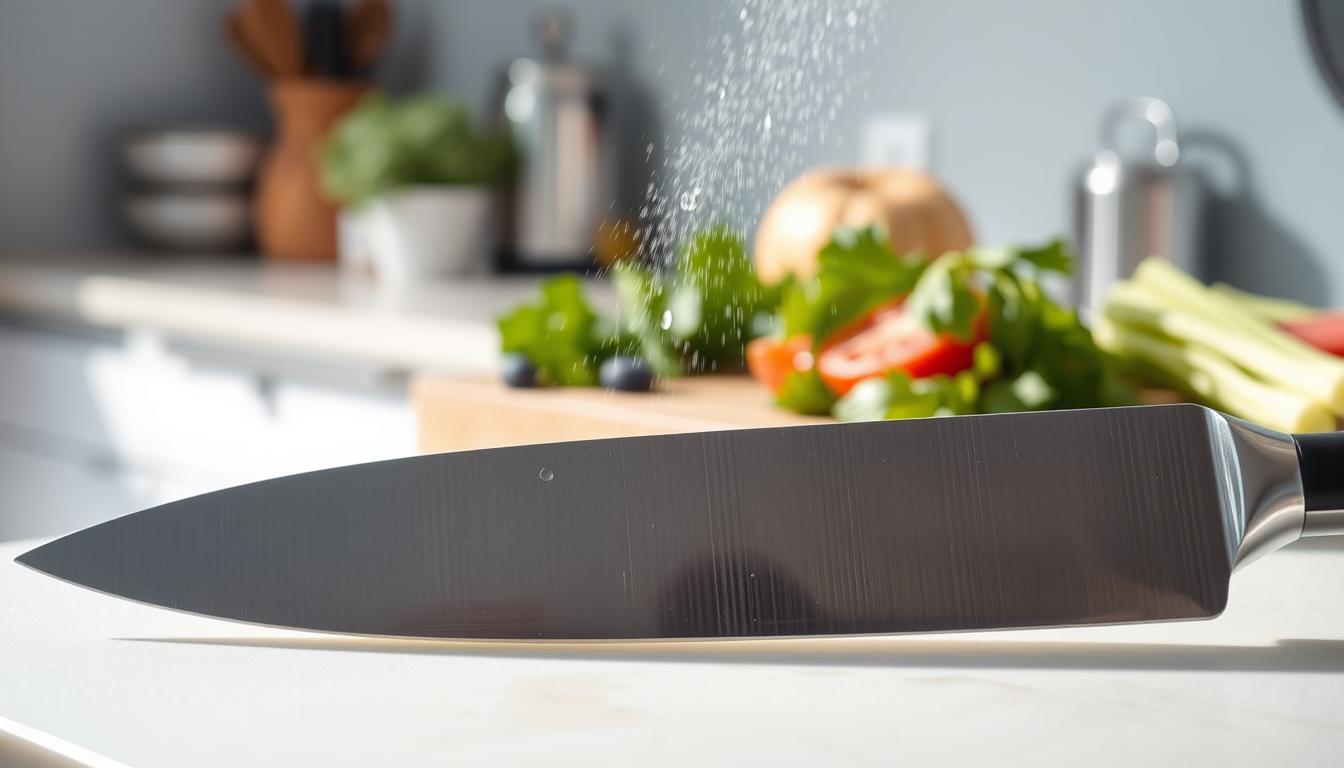
A quick read of the blade anatomy reveals how each zone affects your cutting process. Look at the shape from heel to point to understand what the blade will do on your board.
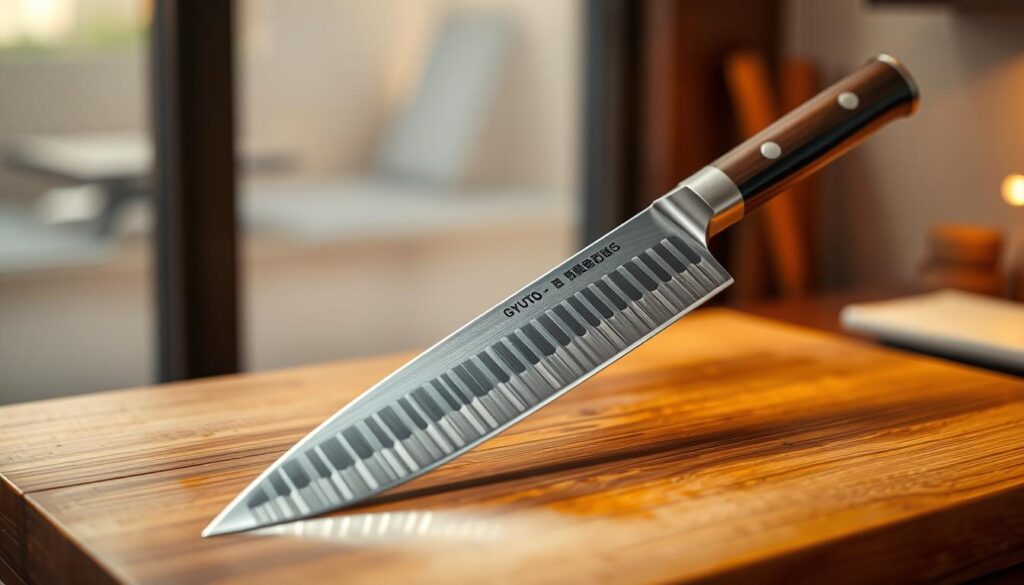
Pointed tip for precision work
The pointed tip gives you a sharp point for precision cuts, trimming, and scoring. You’ll find the point excels at controlled starts and detail work where a rounder tip feels blunt.
Belly curve and rocking
The pronounced belly supports rocking motions for herbs and garlic. That curve helps you cut fast while keeping control over each pass.
Flatter heel for chopping
The widest, flattest area sits at the heel. This provides a stable surface for push-cutting, tap-chopping, and quick, efficient techniques used in many kitchens.
Wide profile and cutting edge
A wide blade profile aids food transfer and gives knuckle clearance. The cutting edge is the contact line that defines consistency; a longer, clean edge reduces the force you need during the cutting process.
What to look for:
- Enough flat spot at the heel for your chop style.
- A belly curve that suits your rocking technique.
- A tip shape you trust for precision and point work.
Gyuto Knife Guide: Choosing the Right Blade Length and Size for Your Kitchen
Choosing the right blade length changes how you move at the board and how comfortable prep feels. Blade lengths commonly range from 180mm to 300mm, and each size brings tradeoffs for control, reach, and speed.
Common sweet spots: 210mm vs 240mm
210mm works well if you have a smaller prep area or want precise control for vegetables and delicate work. It feels lighter in your hand and suits tight boards.
240mm gives more edge for smoother slicing and longer strokes, which helps when portioning meat or slicing thicker cuts.
Smaller and longer options
Smaller blades (180–200mm) are ideal when agility matters. They shine for quick herb work and kitchens with limited counter space.
Long blades up to 300mm suit large proteins and long, uninterrupted slicing. They need more board space and demand steadier hands.
Match size to your setup and techniques
Measure your prep area and test how the handle feels in your hand. Rocking benefits from a bit more length, push-cutting needs a usable flat heel, and pull-cutting smooths out with extra blade on the food.
- Practical rule: choose 210–240mm for most home cooks.
- Pick 180–200mm for agility and small boards.
- Go to 300mm only if you regularly slice large roasts or long loaves.
Real example: breaking down a cabbage is safer and faster with a longer blade for big arcs, while slicing steak for serving often feels more controlled with a 210–240mm option.
Steel Choices: Stainless Steel vs Carbon Steel (and What That Means for Sharpness)
Picking the right steel shapes how sharpness, upkeep, and durability behave in your kitchen. Your metal choice affects how often you sharpen, how the surface ages, and how long the edge lasts.
Edge retention and hardness
Harder steels often hold an edge longer. Japanese steels can run at higher HRC, which lets the cutting edge be thinner and feel sharper. Higher hardness can mean more chipping risk if misused.
Stainless steel: low maintenance
Stainless steel alloys like VG-10, AUS-10, and Swedish stainless resist corrosion and need less care. They suit busy cooks who want fewer upkeep demands and steady performance over years.
Carbon steel: classic performance
Carbon steel (Shirogami and Aogami) sharpens easily and can take a very keen edge. Expect patina over time and a higher rust risk if you leave the blade wet. Simple care—wash, dry, store—keeps it safe.
- Choose stainless for corrosion resistance and easy ownership.
- Choose carbon if you value peak sharpness and don’t mind routine care.
- Tip: consider HRC and your use to balance edge life and durability.
Handle Style, Balance, and Weight: How a Gyuto Should Feel in Your Hand
Balance and grip are where performance meets comfort—get them right and prep becomes nearly effortless.
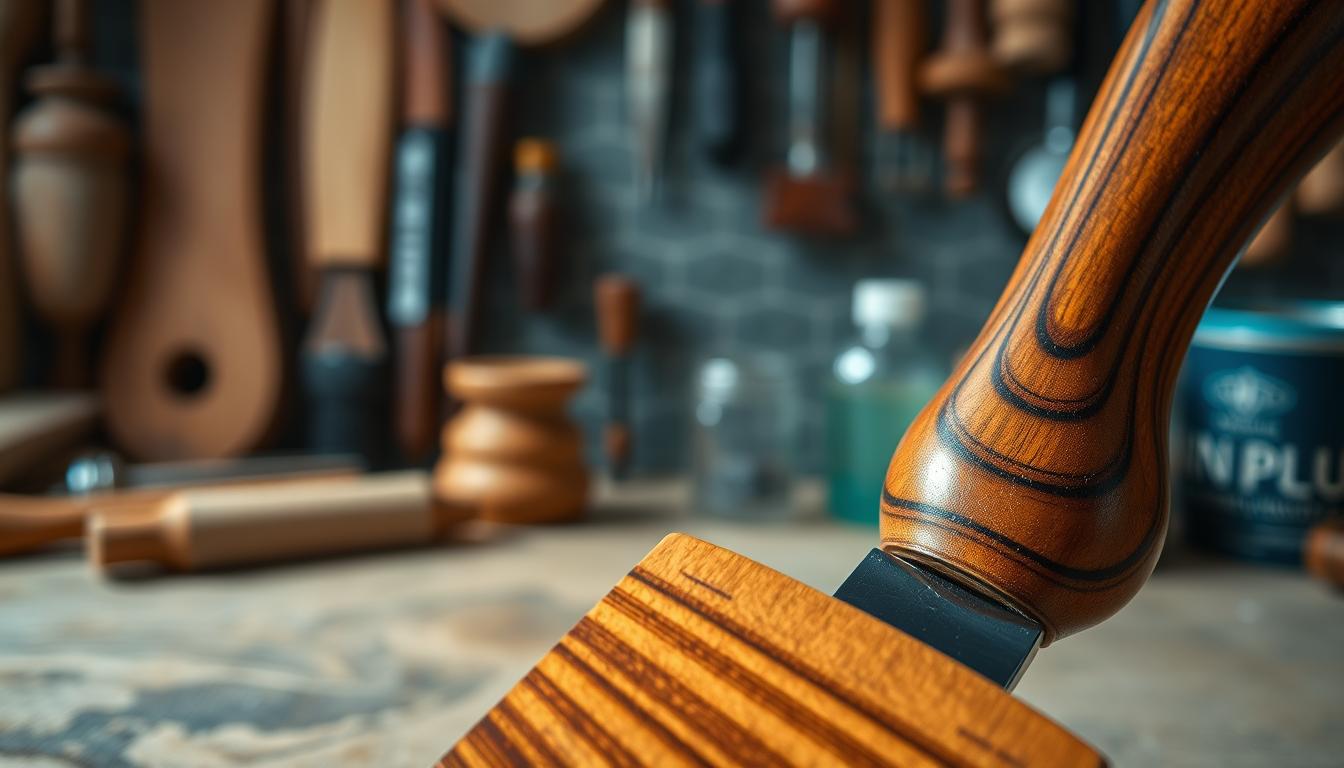
The handle you choose changes the tool’s balance point and how it reacts in use. A lighter wa handle shifts balance closer to the blade, giving you a nimble feel that favors the pinch grip.
Yo handles are heavier, often riveted, and move the balance rearward. That suits a handle-only grip and cooks who like a familiar Western feel.
Handle shapes and comfort
Octagonal and oval handles aid indexing and reduce roll. D-shape handles offer a tactile stop that some chefs prefer for long sessions.
- Octagonal: good indexing and control.
- Oval: smooth, comfortable for many hands.
- D-shape: stable with a clear grip point.
Quick in-hand checks
Test where the tool balances on your finger. See if it feels secure when wet and if any hot spots form after a few minutes. If you prep a lot, pick the handle that reduces fatigue and gives the control you need.
Finishes, Grind, and Aesthetics: What Matters (and What’s Mostly Style)
Finishes and grinds shape how a blade looks and how it behaves at the board. Some touches are purely visual; others change food release, durability, and edge feel.
Layering and patterned steel
Damascus patterns come from layered steel and provide strength and a distinct look. A san-mai or laminated construction lets a hard core hold an edge while softer outer steel adds toughness.
Common finishes and food release
Nashiji gives a subtle pebbled look, Migaki is polished bright, Kurouchi is dark and rustic, and Tsuchime (hammered) helps reduce sticking. Hammered surfaces often improve food release compared to mirror-polished faces.
Grind, edge profiles, and variations
Most gyuto use a double-bevel V-edge; some higher-end grinds feel extremely thin and precise. You’ll also see kiritsuke and sakimaru shapes, which change tip shape and precision for certain techniques.
- What to spend on: prioritize core steel and edge geometry over purely decorative finishes.
- Food prep fit: choose hammered surfaces if you want less sticking during slicing.
- Style vs function: Damascus looks great, but steel selection and grind control sharpness and edge life.
Conclusion
Wrap up your choice by matching blade length, steel, and handle to how you cook each week.
Quick buying checklist: pick a blade length that fits your board, choose a steel you’ll maintain, and test a handle for comfort. For most people, a mid-range gyuto knife with a comfy grip and moderate steel hardness gives the best balance.
Prioritize based on needs: more meat and fish? Favor a longer edge for smooth slicing. Mostly vegetables and dicing? Choose agility and control. If space is tight, go shorter.
Care to keep that cutting edge for years: hand wash and dry immediately, store safely, use a wood or plastic board, and never scrape with the edge or cut on glass or ceramic. Decide next: low-maintenance stainless or character-building carbon, then pick the tools that match your routine.
Save this: Do hand wash, dry, and store safe. Don’t use dishwasher, hard surfaces, or edge scraping.