Carbon Steel vs. Stainless Steel: Choosing the Right Blade Material
You want a blade that fits your work and your care routine. This intro defines what we mean when we compare carbon and stainless materials and why maker skill, heat treat, and edge geometry matter.
We will test sharpness and edge retention, rust and corrosion resistance, toughness and ductility, and total cost of ownership for knives, scissors, and general tools. You’ll see real examples from kitchens, medical settings, construction, and crafting so you can map trade-offs to your tasks.
Practical takeaway: carbon often gives a keener edge and easier sharpening, while stainless usually gives better corrosion resistance and lower daily care needs.
This guide helps you match material to cutting task, humidity exposure, cleaning routine, and willingness to learn sharpening. Terminology is handled carefully so you don’t confuse true low-alloy choices with different non-stainless grades.
What carbon steel and stainless steel mean for blade materials
Knowing the makeup of blade metals makes shopping and maintenance simpler. Below you get clear definitions, key numbers, and a practical rule of thumb to read specs and predict performance.
Carbon basics: iron plus carbon, minimal alloying
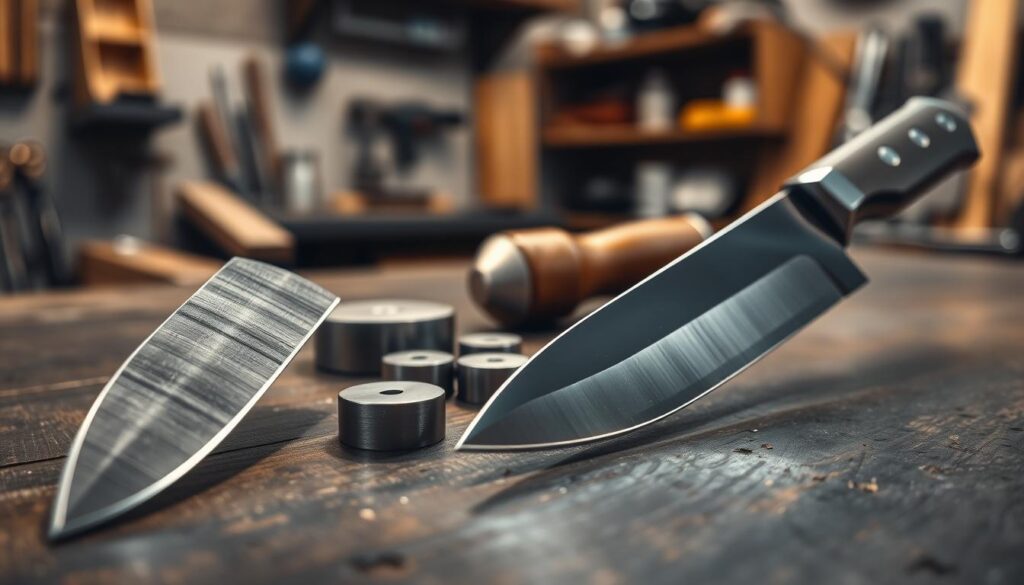
Carbon steel in the strict sense is mostly iron with added carbon and few other alloying elements. That simple mix helps these metals take a keen edge and form a protective patina as they age.
All steels include carbon (roughly 0.02%–2.1%). Higher carbon content usually allows higher hardness after heat treatment, which helps edge crispness and ease of sharpening.
Stainless basics: chromium and corrosion control
Stainless steel is defined by deliberate chromium additions—typically above 10.5% by mass. Chromium creates a passive oxide layer that slows rust and makes the material a good pick for wet or hygiene-focused tasks.
Why the term “carbon steel” can confuse
People often say “carbon steel” to mean any non-stainless blade. That umbrella sometimes includes low-alloy grades like 4140 and 4340, which add elements that change toughness and wear.
- If chromium is high for corrosion control, think stainless.
- If carbon drives properties and alloying is limited, think true carbon steels.
- Low-alloy grades sit between: not stainless, but more engineered than simple iron-carbon mixes.
Use this mental model to link composition to outcomes: alloying and microstructure control edge stability, stain resistance, and how quickly rust starts in real use. This sets you up for the performance comparisons ahead.
High carbon steel vs stainless: edge sharpness, edge retention, and cutting performance
The right edge for your job comes down to apex geometry, hardness, and how often you sharpen. These factors explain why some blades feel instantly keener while others last longer between touch-ups.
Why some alloys take a finer apex and sharpen easily
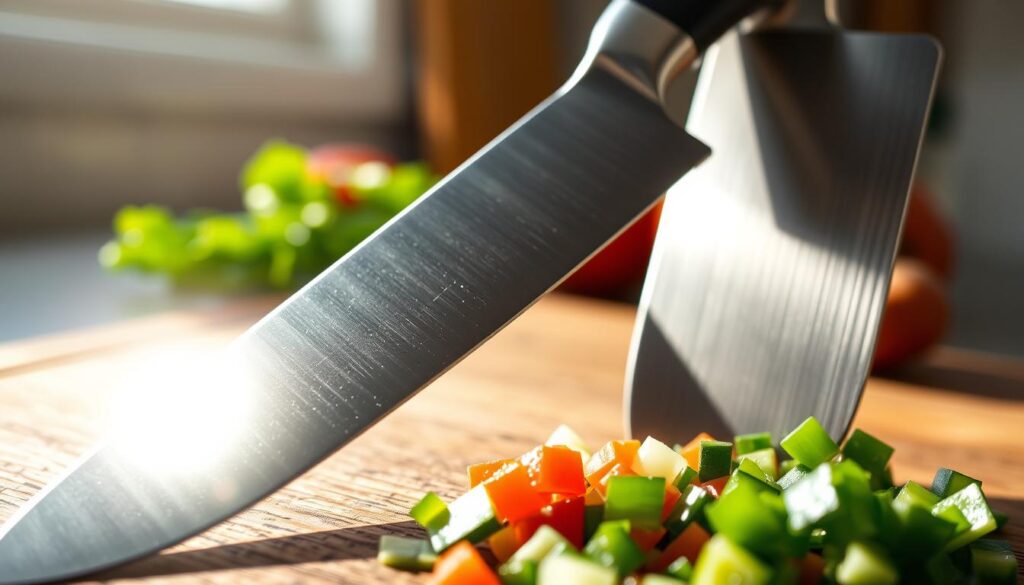
Carbon steels can support very acute edge angles and a refined apex. That lets you make clean, precise cuts for carving, crafting, and food prep.
Easy sharpening means the metal responds quickly to stones and stropping, burrs form predictably, and short touch-ups restore the profile fast.
What sharpening and out-of-box feel look like for other common alloys
Stainless steels often ship with durable, general-purpose edges that hold up in wet or messy tasks. Some alloys cut well immediately but need different abrasives to shape or polish the edge.
Depending on hardness and carbides, sharpening can take more time, and you may feel the metal is tougher on stones.
Brittleness, chipping, and real-world durability
Very hard edges can chip if you twist while cutting or hit hard materials. Thin knife points, scissors, and utility blades show chipping first.
Match the blade to the media: cardboard and rope dull faster than slicing soft produce. Durability is a mix of edge angle, microstructure, and how you use the tool.
How heat alters hardness and narrows gaps
Some martensitic and precipitation-hardening types can be heat treated to raise hardness and strength. Proper treatment brings these alloys closer to the edge stability of high-carbon options.
In short: if you want maximum keenness and frequent touch-ups, lean toward carbon choices; if you want lower upkeep and stain resistance, pick stainless. Then check your sharpening comfort and expected use.
- Keenness: carbon steel advantage for acute edges
- Ease: faster touch-ups on softer, responsive alloys
- Retention: depends on hardness, carbides, and heat treat
- Chipping risk: increases with very thin, hard edges
- Use match: choose by material you cut most
- Heat role: treatment can boost hardness in some stainless types
- Tools: scissors and utility blades favor toughness
- Knives: fine slicing favors keener edges
- Selection tip: balance keenness with your maintenance routine
Rust, corrosion resistance, and maintenance in real-life use
Every time a blade meets water or humid air you start a small corrosion clock. That matters more if you leave tools in closed sheaths, wet sinks, or damp workshops.
Why some alloys darken and spot faster
Carbon steel reacts quickly with moisture and salt. Humidity, dish cycles, and salty air speed oxidation, so brief neglect after washing can leave spotting or a patina that alters the edge and finish.
What “rust-resistant” really means
Stainless steel gains its corrosion resistance from chromium, which forms a passive layer. That layer helps, but it is not foolproof — aggressive conditions or trapped grime can still cause rust.
Simple routines that extend blade life
Rinse or wipe after use and dry thoroughly. Open pivots and check handles so water doesn’t sit in joints.
- Avoid storing a wet blade in a sheath or closed kit.
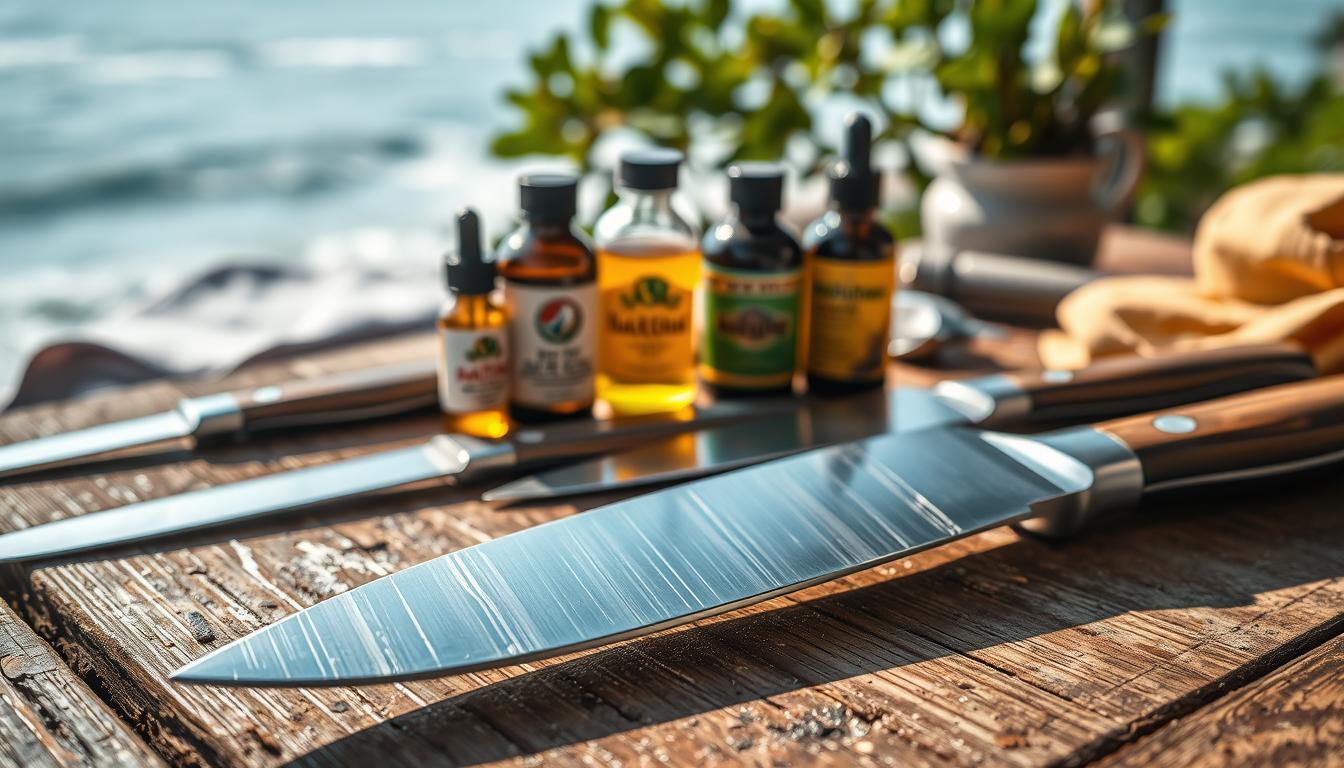
- Apply a thin protective oil film on carbon tools before long storage.
- Regularly inspect for tiny pits; they act like micro-chips and slow cutting performance.
Match maintenance to your life: if you won’t dry and oil regularly, choose the alloy with greater resistance. If you enjoy care and want peak sharpness, lower-maintenance trade-offs can be worth it.
Strength, hardness, ductility, and toughness: how the steels differ
Material choices set how a blade behaves under stress. You want to know which properties make an edge resist rolling, chip, or bend when work gets rough.
Carbon content and hardness: when higher strength can mean less forgiveness
Hardness helps an edge resist rolling and keep its profile. As carbon content rises, heat can raise hardness and strength, giving better edge retention.
But higher hardness often reduces forgiveness. A very hard edge can chip if you twist it, hit bone, or cut staples. That makes thin, acute grinds less tolerant of abuse.
Impact resistance and ductility: why some alloys are more forgiving
Ductility and toughness control how a blade reacts to shock and bending. Many stainless steel grades trade some hardness for ductility, so they bend or deform before they break.
Manufacturers use heat treatment and grade selection to balance hardness and toughness. Choose harder alloys for precise, controlled cutting. Pick tougher, more ductile metals if your work is rough or unpredictable.
- Hardness: resists rolling; aids edge life.
- Toughness: resists chipping under impact.
- Ductility: allows bending without fracture.
- Selection tip: match properties to your tasks and maintenance habits.
Cost, fabrication, and choosing the right steel for your application
When you pick a blade, think about what it must survive and how much care you’ll give it.
Upfront price and long-term value
Compare true cost: factor purchase price, sharpening supplies, time spent on maintenance, and the chance you’ll replace a rusted or damaged item early.
Simple compositions often make carbon steel cheaper at purchase, which matters if you buy many disposable or utility products.
Use-case fit: indoor precision vs outdoor work
For bench work, model making, and precise cutting, you may favor a lower-cost metal that sharpens easily.
For camping, fishing, or wash-down tasks, choose stainless steel for better corrosion resistance and less upkeep.
Industry examples and alloy choices
Construction and automotive industries use carbon and low-alloy steels (like 4140/4340) for strength and fabrication efficiency.
Food and medical products typically use stainless steel—sometimes with nickel additions—to meet hygiene and corrosion needs.
- Decision checklist: environment (dry or wet), acceptable maintenance, desired sharpness, and impact risk.
- Verify claims by checking steel grade, heat treat info, and manufacturer maintenance guidance.
Conclusion
A good blade choice starts with honest answers about wet exposure and sharpening time.
In short: carbon often gives the easiest path to a very keen edge and quick touch-ups, while stainless brings dependable corrosion resistance and lower daily upkeep.
Don’t overgeneralize—both are families of alloys. Grade, heat treatment, and edge geometry can change performance more than the label alone.
Choose carbon if you keep tools dry, enjoy frequent sharpening, and want a razor edge. Choose stainless if you need less fuss in humid or hygiene-focused work.
Finally, list your tasks, exposure to water, sharpening comfort, and tolerance for patina. Use that checklist to pick the right alloy and specific product for your workflow.