Poultry Processing: Choosing Between a Honesuki and Hankotsu Knife
You’re choosing between two Japanese boning styles: Honesuki vs Hankotsu. Both are boning knife designs made for precise poultry work, but they reward different grips and workflows.
One blade favors a stable pinch grip and quick joint access on a cutting board. The other works better for off-board trimming with an overhand or reverse grip and controlled downward scraping. Each shape changes how you move around bone and cartilage.
This guide will show what each knife is built to do, how blade geometry alters control, and what bevel options mean for your home kitchen. You’ll learn what poultry processing includes here: breaking down whole chicken, trimming skin and fat, separating joints and tendons, and cleaning portions for cooking.
Practical note: these tools are for precision cuts around cartilage and joints, not for chopping hard bone. Choosing the right knife will make trimming faster, cleaner, and safer for your hands. You’ll also see alternatives—Western boning blades, petty, and gyuto—if you want fewer single-purpose knives.
What a Honesuki Knife Is Built to Do in Your Kitchen
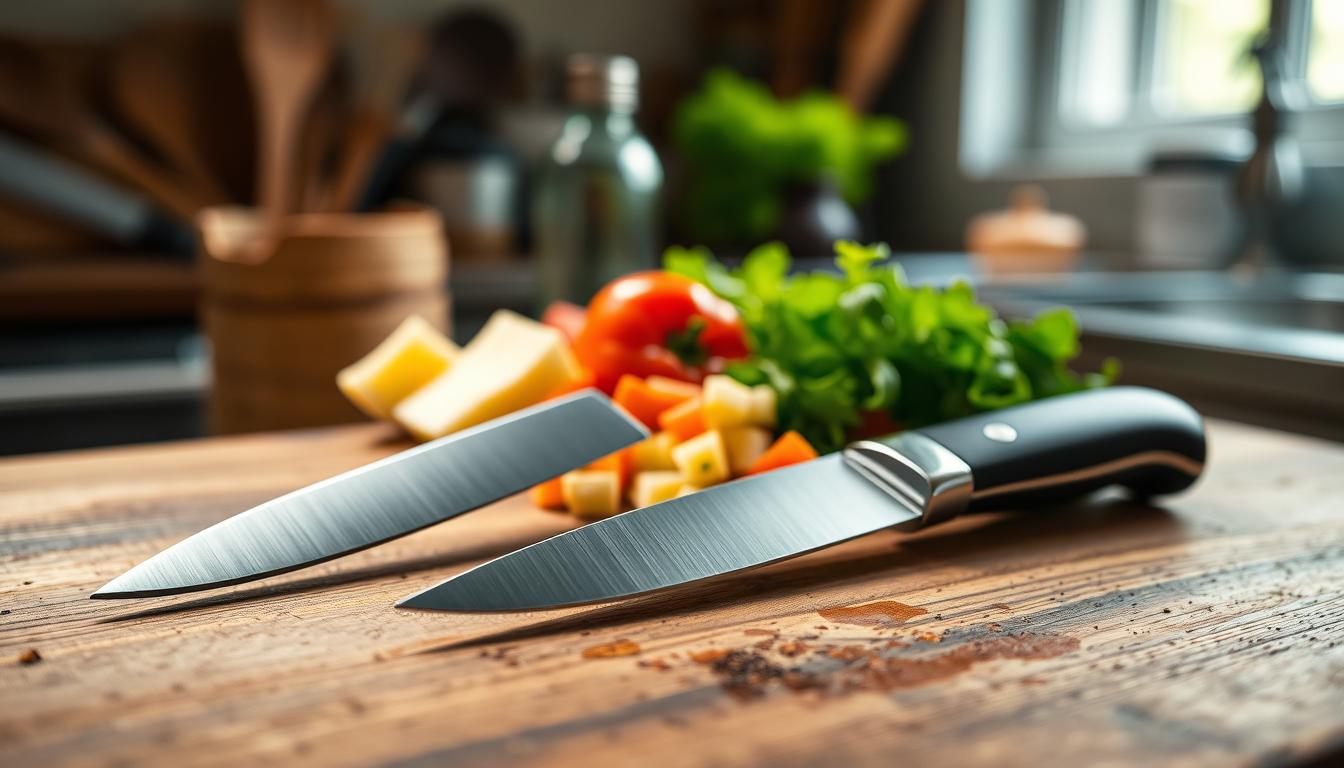
A honesuki is a compact, purpose-built poultry knife that changes how you work at the cutting board. It is a stiff, triangular boning blade made to break down whole chicken and other birds with short, precise cuts.
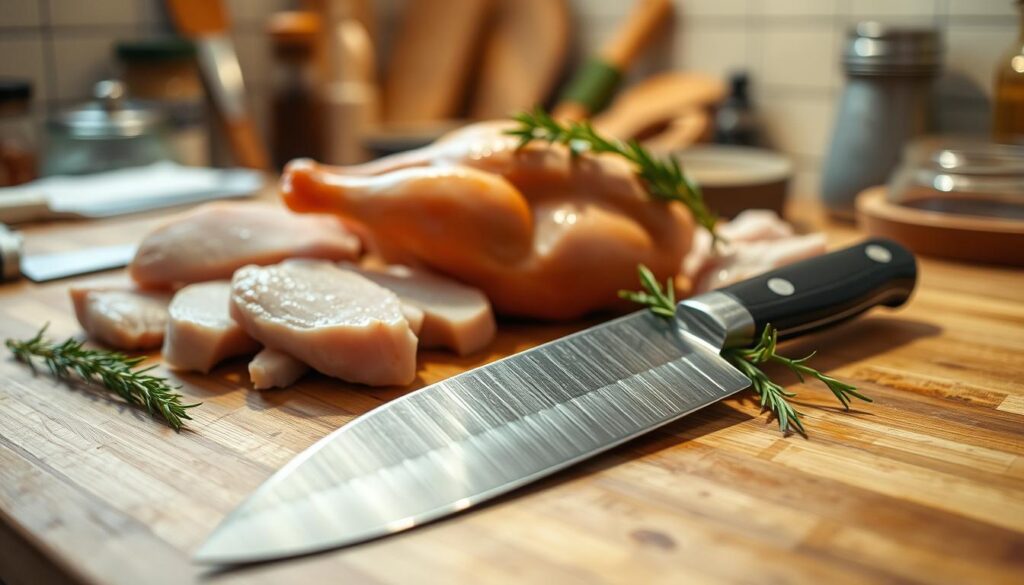
The taller, triangular profile helps you anchor the heel on your work board. That stability makes it easier to open joints, follow seams, and trim along the keel without relying on blade flex.
Using a pinch grip near the spine gives you fine control over the tip. A thin, sharp tip probes gaps in connective tissue so you can separate tendons with short, controlled strokes instead of prying.
- Board workflow: remove legs and wings, find joint lines, cut tendons, and trim fat along bones.
- Why stiffness matters: less deflection means your cuts track where you expect.
- Everyday use: many cooks use it like a compact utility knife for small trimming and prep on the board.
Expect a short learning curve if you come from flexible Western boning knives. Tip-led boning becomes fast and precise once you learn the bird anatomy and edge control.
What a Hankotsu Knife Is Built to Do for Meat Off the Bone
For off-board trimming and hanging cuts, a short, robust boning blade is your best friend. You’ll find this style is made to pull meat cleanly from ribs, roasts, and joints when you hold the cut in your hand or hang it for trimming.
Why the overhand or reverse grip suits downward pulls and scraping
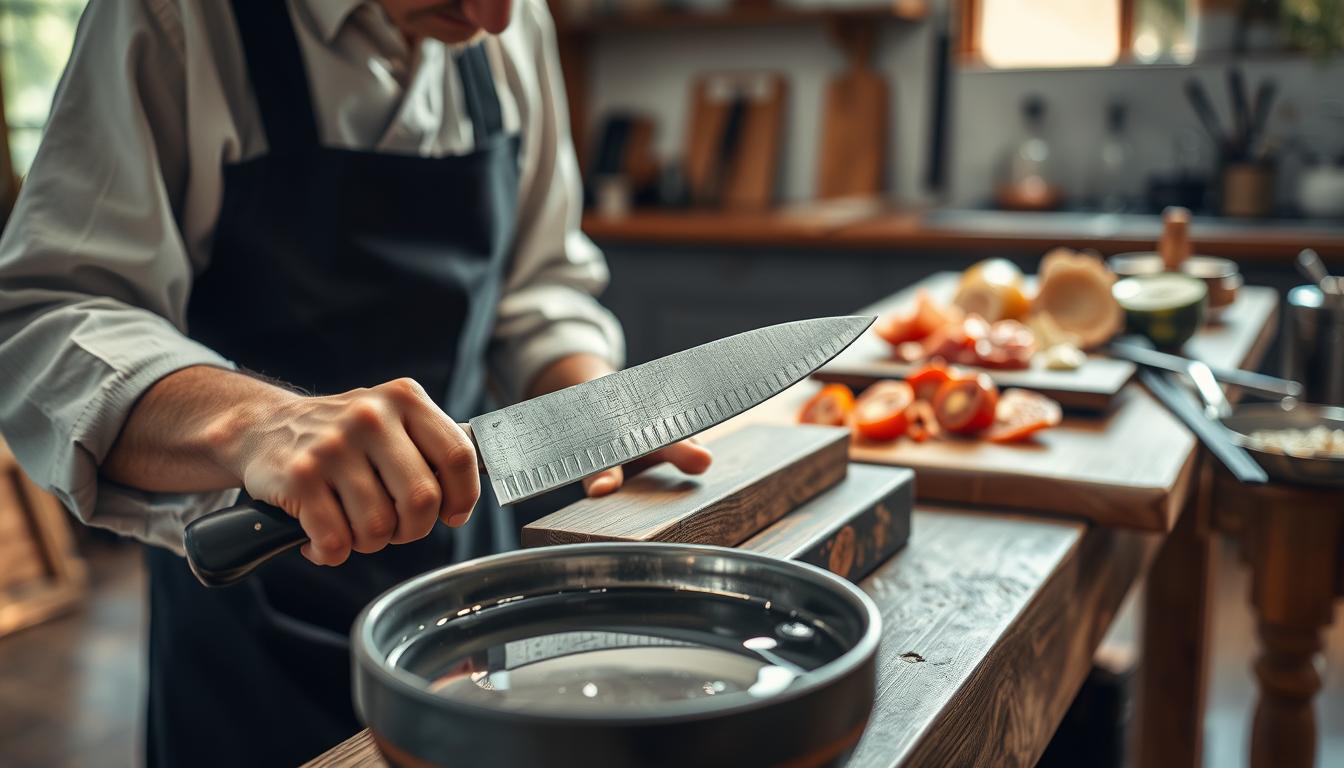
The overhand or reverse grip gives you leverage for controlled downward strokes. That grip keeps the blade aligned with the bone so you can scrape connective tissue and silver skin away without digging in. Move slowly and let the edge do the work for safer, neater results.
How the rounded “chin” and straighter edge support trimming beef, pork, and duck
The straighter edge helps you follow rib lines and long seams on beef and pork instead of rocking. A rounded chin where the blade meets the handle stabilizes your hold while you pull meat off the bone.
- Kitchen definition: a stiff boning knife built for trimming meat off the bone when the cut is handheld or hanging.
- Practical uses: trimming silver skin, sinew, and connective tissue on beef, pork, and duck.
- Extras: some thicker models act as a mini deba for small fish, but they are not a dedicated fillet knife.
Where They Overlap as Japanese Boning Knives
At their core, these compact Japanese boning tools are made for careful work near cartilage and small bones. You get purpose-built blades that favor precision trimming and seam-finding, not brute-force cutting.
Stiffness equals control: both designs are stiff and compact, giving clear feedback when you ride the bone. That stiffness helps you follow joints and remove connective tissue with predictable knife work.
Not for hard bone: neither tool should be used to chop through thick or weight-bearing bone. In a kitchen, hard bone means carcass rib bones or marrow bones; use a cleaver or saw for those tasks.
- Edge stability: a stiff blade will track straighter than a flexible Western boning knife during delicate cuts.
- Steel tendencies: many models use harder steel for longer edge retention, but they tolerate less twisting or prying.
- Daily care: wipe and dry during use, expect a patina on carbon, and plan regular sharpening rather than heavy steeling.
These shared traits form the baseline you’ll use next when we look at the differences that change how poultry processing feels in your hands.
Honesuki vs Hankotsu: The Differences That Matter for Poultry Processing
Deciding which compact boning blade suits your kitchen comes down to how you handle the bird and where you prefer to work. Below are the practical differences that change technique and results during poultry trimming.
Blade profile and height
The triangular, taller profile gives board-side stability, helping you anchor the heel and use a pinch grip for precise joint work. A slimmer, straighter blade feels more nimble when you need reach in tight spots.
Edge behavior and control
The taller design is often tip-led, ideal for finding seams and opening joints. The slimmer model encourages controlled scraping along bone for clean separation without gouging meat.
Bevel options and handedness
Single bevel edges steer predictably but favor one hand. Double bevels are easier to use and maintain if you come from Western knives. Pick the bevel that matches your grip and sharpening comfort.
- Board work: choose stability for whole-chicken breakdown and faster, safer cuts.
- Hanging work: choose the slimmer scraper for trimming while holding larger poultry or cuts.
- Size & feel: lengths range roughly 135–180 mm; thicker blades resist twist near bones, while handle shape affects grip comfort during long prep.
Which Knife Should You Buy Based on What You Cook?
Pick the blade that fits your weekly routine in the kitchen.
If you mostly break down chickens and birds on a cutting board
Choose a honesuki when board work is your main task. Its stable geometry and controllable tip make joint access faster and safer for whole chicken and other birds.
Kasumi Japan recommends this style for pinch-grip, board-first boning because the heel anchors well and the edge tracks predictable lines.
If you trim larger cuts of beef or pork and do more meat fabrication
Lean toward a hankotsu for off-bone trimming and fabrication. The overhand grip and straighter edge help you scrape along ribs, remove sinew, and work larger cuts cleanly.
If you want one knife to multitask like a compact utility blade
Go with a honesuki versatile model if you need a single tool. It can trim, portion, and handle light prep beyond poultry, though it won’t replace a chef’s knife for volume slicing.
- Decision framework: board poultry → honesuki; heavy meat fabrication → hankotsu; general-purpose → honesuki versatile.
- Buying criteria: try handle comfort, pick steel (carbon for keen edge, stainless for low upkeep), and choose double bevel if you want familiar sharpening.
- Brand tip: look at makers like Misono for well-regarded Japanese boning knife options and check intended use and bevel type before buying.
Rule of thumb: if you spend most time on the board with chicken and birds, favor a honesuki; if your week is heavy on beef and pork meat fabrication, a hankotsu will serve you better.
When a Western Boning Knife or Petty Might Be the Better Choice
Sometimes the simplest change—using a familiar Western blade—makes prep faster and less fussy. If you learned on Western boning, you may prefer a familiar feel and a bit of flex when following bones in meat, game, or fowl.
Why some cooks prefer a Western boning knife for meat, game, and fowl
Flexibility and familiarity help you avoid digging the tip into seams. A slight flex can be forgiving when you’re learning to follow contour lines.
In working kitchens, cooks praised an inexpensive R. Murphy carbon boning knife for taking a keen, lasting edge and for a large handle that stays comfortable across grips. That practical comfort matters more than niche geometry for many users.
How to decide if you’ll actually use a specialty tool
- Occasional trimming: a petty or 210 gyuto often handles most tasks well. It saves drawer space.
- Frequent breakdowns: keep a dedicated boning knife if you do whole birds or heavy meat fabrication weekly.
- Fish work: use a deba for quicker, cleaner fillets rather than forcing a boning knife.
Quick self-audit: how often do you break down poultry, fabricate large cuts, or enjoy technique-specific tools? If a specialty will sit unused, sharpen or upgrade your Western boning knife instead.
Conclusion
The right boning tool is the one that fits your grip, routine, and common cuts. Choose a honesuki for board-based poultry breakdown when a stable pinch grip and a controllable tip speed joint work. Pick a hankotsu if you do more off-bone trimming and controlled scraping while holding cuts in hand.
Why it matters: blade profile and height change stability, tip behavior, and how you steer the edge around joints. Check bevel type before you buy; a single-bevel favors handedness, while a double bevel eases ownership and sharpening.
When shopping, prioritize handle comfort, a blade that matches your workflow, and a sharpening plan. Brands like Misono are worth checking, but specs beat labels—confirm bevel, steel, and size. Keep the edge sharp, avoid chopping hard bone, and let the knife find seams for safer, longer-lasting performance.