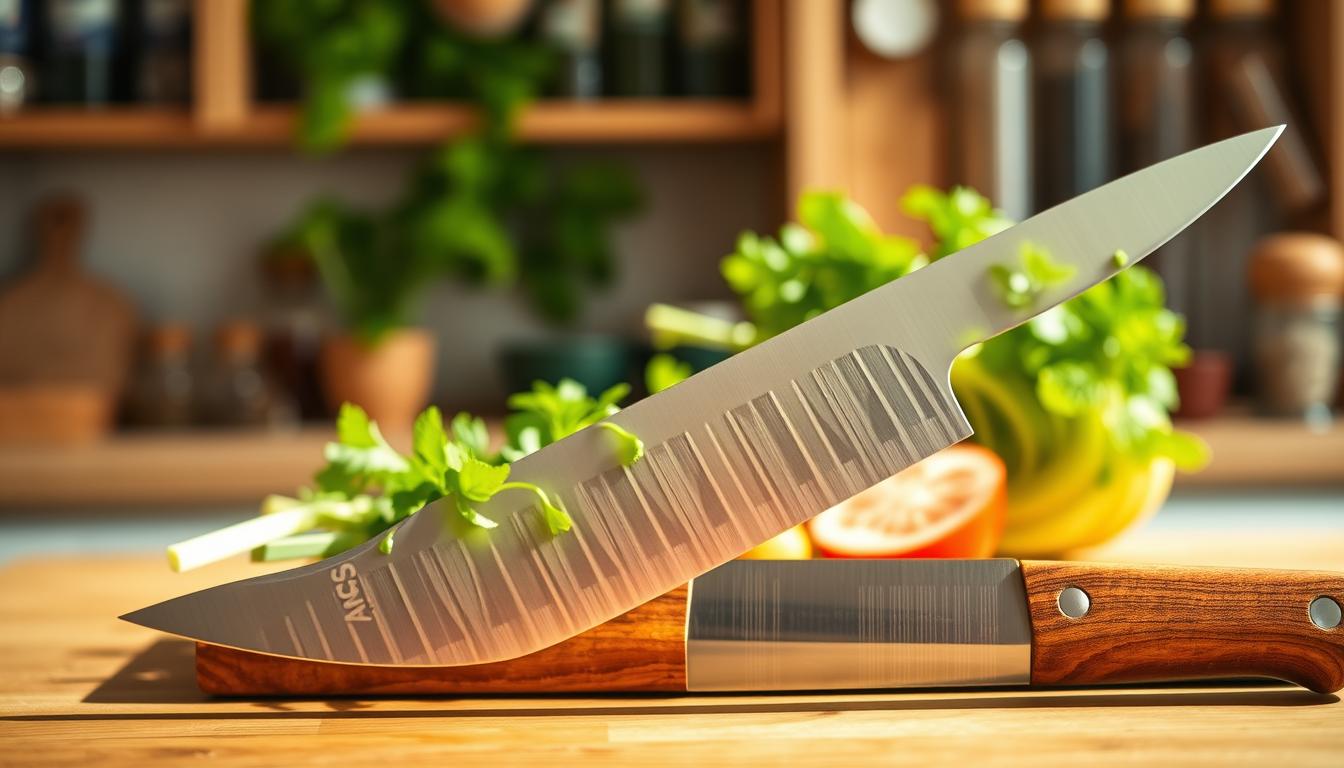
VG10 vs. SG2 Steel: Comparing High-End Japanese Knife Alloys
This quick comparison guide helps you choose the right blade for your kitchen. You’ll learn the clear differences that affect daily tasks like clean slicing, less wedging, and fewer sharpenings.
Both alloys are premium, stainless options used in modern Japanese cutlery. One is made by traditional melt methods and the other by powder metallurgy. That matters because edge retention, toughness, and ease of maintenance will vary.
Think about what you value most: long edge life, ease of upkeep, corrosion resistance, or price. This piece will move from feel-in-hand notes to technical details like hardness, heat treat, and sharpening feedback.
We’ll focus on real-world properties — hardness ranges, chipping tendencies, and how they behave on the cutting board — not marketing claims. The key takeaway up front: VG10 tends to be more forgiving and easier to maintain, while SG2 tends to offer longer edge life and finer precision.
Why Japanese Knife Steels Feel Different in Your Kitchen
What you notice first with high-end Japanese blades is how effortlessly they slice, not the label on the tang. Less pressure, cleaner push-cuts, and a steady bite at the edge are the sensations that define real sharpness during prep.
Sharpness and edge stability you can actually notice
A harder edge can stay crisp longer, but that often trades away some toughness. If your technique includes twisting or scraping, a very hard edge may chip more easily. In plain terms: higher hardness favors long-lasting edges; lower hardness buys forgiveness.
Why heat treatment and craftsmanship matter as much as the steel
Heat treatment unlocks a alloy’s potential. Good tempering and forging create consistent microstructure and better cutting performance. Poor treatment raises the risk of chipping and shorter edge life, no matter the name stamped on the blade.
- Thin, acute geometry improves slicing but punishes misuse.
- Slightly thicker geometry feels more forgiving for rough prep.
- Consider corrosion resistance and maintenance if you work fast and wet in the kitchen.
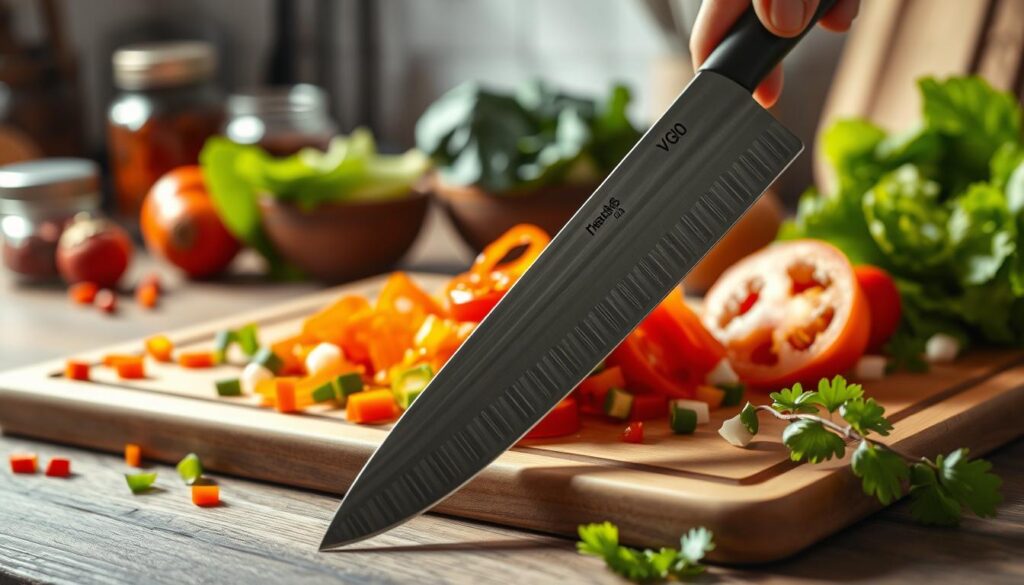
Think of results as a system: steel + heat treat + geometry. Evaluate all three together to predict real-world performance.
VG10 Steel Basics: What You’re Getting in a Popular Stainless Classic
You’ll find this popular alloy on countless Japanese kitchen knives for good reasons tied to performance and care. It was developed by Takefu Special Steel to combine high-carbon cutting feel with stainless convenience.
Origins and practical meaning
V Gold 10 refers to a purpose-built grade from Takefu special that aims for balance: sharpness, corrosion resistance, and workable toughness for daily use.
Typical composition and role of key elements
- Carbon (~1.0%) — drives hardness and edge holding.
- Chromium (~15%) — gives corrosion resistance and wear support.
- Molybdenum & vanadium — help hardenability and carbide formation for durable edges.
- Cobalt — raises achievable hardness during heat treatment.
Real-world properties, uses and care
Expect roughly 60–61 HRC in well-treated examples. That means you get a very sharp edge that stays useful through normal prep while being more forgiving than ultra-hard powder-made options.
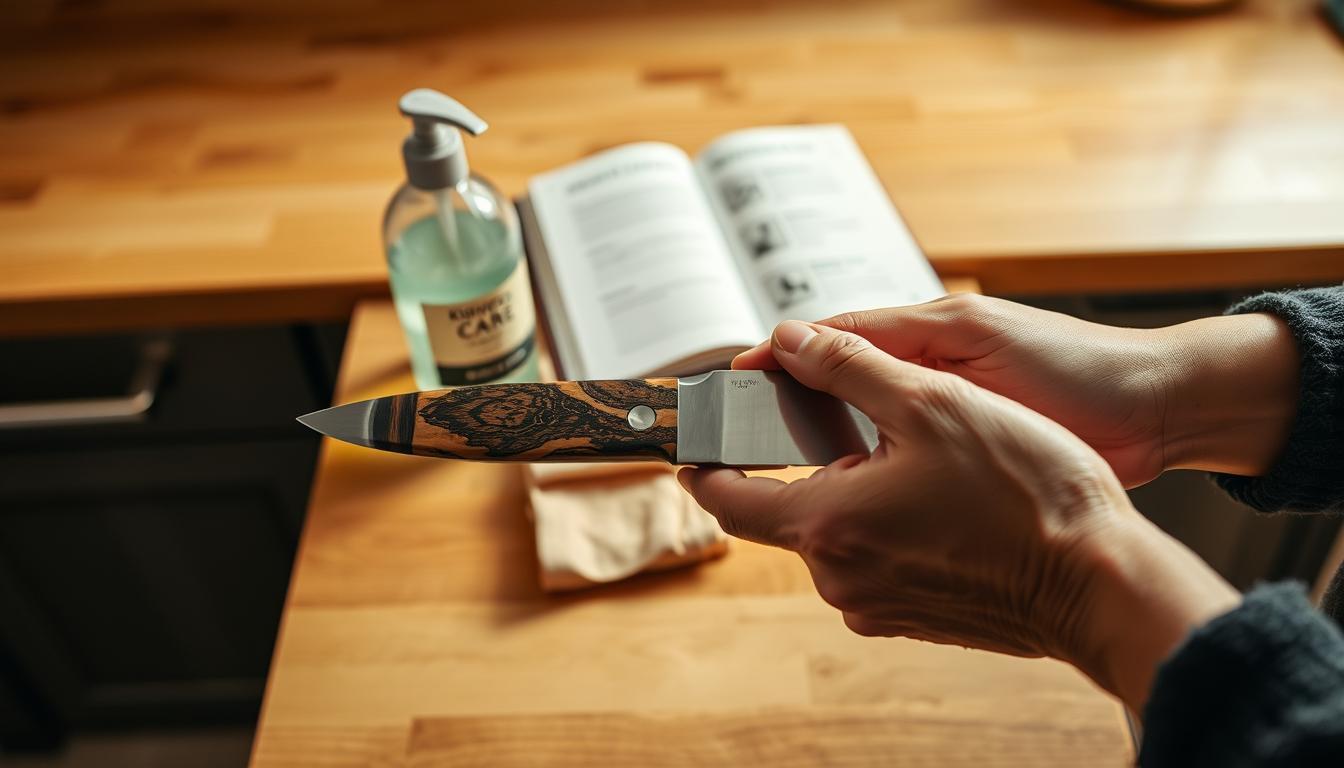
Where it shines: home cooking, mixed-ingredient prep, and situations where quick sharpening on common whetstones matters. For maintenance, hand-wash, dry promptly, and avoid dishwashers to preserve corrosion resistance and edge geometry.
Trade-offs: edge retention is solid but not elite, and poor heat treatment increases chipping risk. If you push for maximum longevity between touches, you’ll need a harder, more wear‑resistant alternative.
SG2 Steel Basics: Powder Metallurgy Performance for Maximum Edge Life
When long-lasting sharpness matters, some makers turn to powder-process alloys for your high-end knives. SG2 is also known as R2 or Super Gold 2 and is made by powder metallurgy to tighten the grain and boost wear performance.
Composition and why it matters
Typical content shows higher carbon (around 1.25%–1.5%) with roughly 1.8%–2.2% vanadium, plus 14–16% chromium and molybdenum. That mix forms many fine carbides, improving wear resistance and edge retention.
Real-world properties
Expect hardness often in the ~62–64 HRC range. That lets makers run very thin, precise edges that feel “laser-like” on vegetables and proteins. Corrosion resistance and wet-kitchen resistance are excellent for daily use.
Drawbacks to plan for
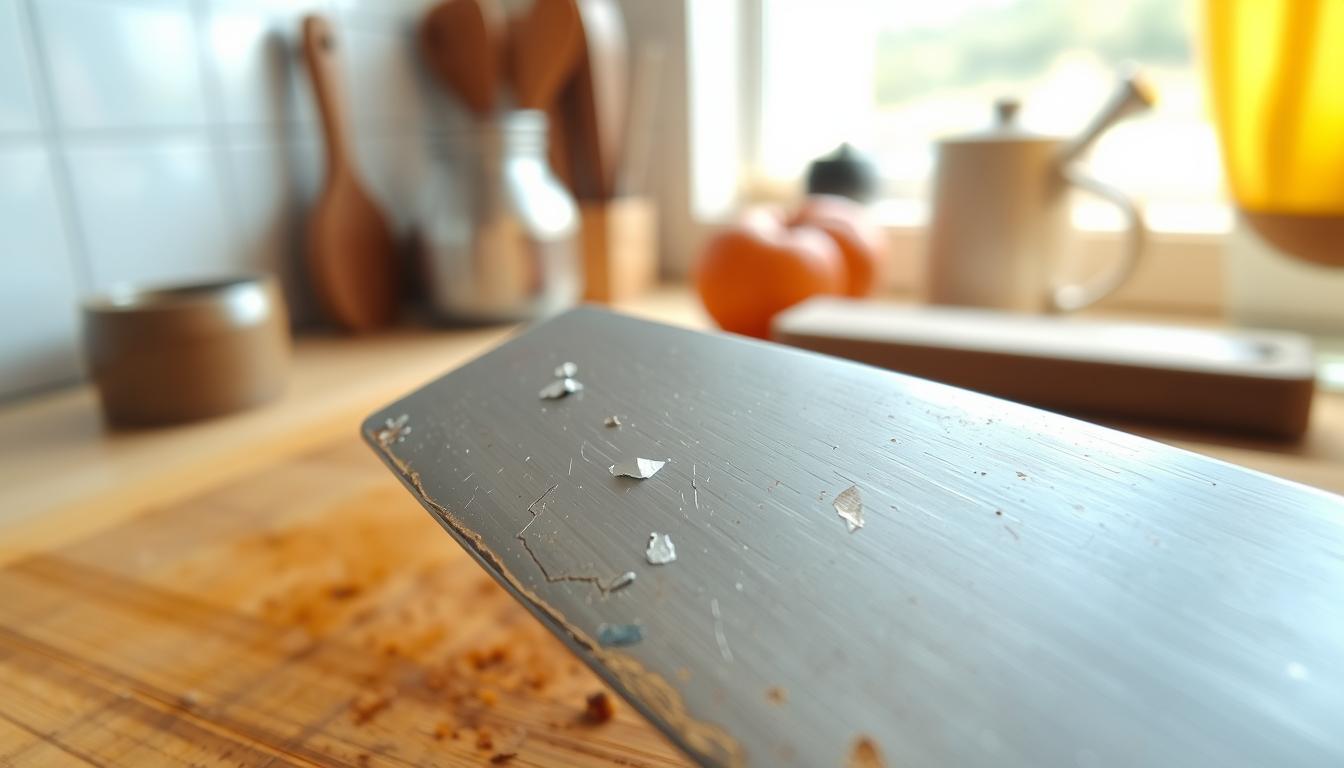
Price is higher because of the powder process. Sharpening takes more time and better stones. And misuse—twisting, prying, or cutting frozen bones—can cause micro-chipping due to reduced toughness.
- Recognize it: labeled SG2, R2, or Super Gold.
- Best fit: you want longest edge life and top slicing performance.
- Care: wipe dry, avoid the dishwasher, and use proper sharpening tools.
Powder Metallurgy Explained: The SG2 Difference in Grain Structure
How a maker turns molten metal into powder affects edge life more than you might expect. The process changes the tiny map inside a blade and that map controls how the edge behaves under real use.
How the process works in plain words
First, molten metal is atomized into fine powder. Makers then compress that powder under high pressure and sinter it to fuse particles into a solid billet.
Skilled shops may then forge and heat-treat the billet to refine the microstructure and lock in properties.
Why ultra-fine grain structure matters
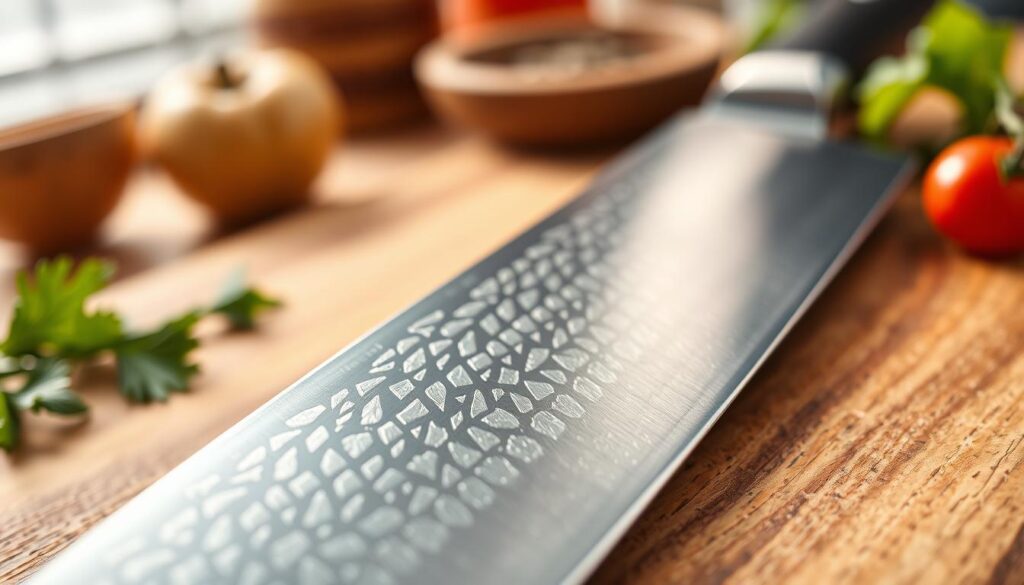
Powder metallurgy yields a very uniform grain structure. That means carbides sit evenly throughout the matrix, so the edge wears predictably at higher hardness.
- More uniform grains support higher carbon and higher vanadium without extreme brittleness.
- Even carbide distribution helps the edge cut smoothly and keeps resistance to wear stable over use.
- Thin geometry becomes practical: the refined map lets makers grind very acute edges that feel laser-like in cutting performance.
Remember: powder and metallurgy give potential, but heat treatment and geometry still decide how your knife performs. If you value long edge life and precise slicing, understanding this difference helps you decide if the premium is worth it—because sg2 offers a refined path to that performance, when done right.
VG10 vs SG2 steel: Side-by-Side Performance Where It Counts
When you compare real-world cutting, hardness numbers tell part of the story but not the whole picture.
Hardness ranges and what HRC changes for your edge
Typical ranges: one common grade runs about 60–61 HRC while the powder-made grade often sits around 62–64 HRC.
Higher HRC lets makers grind a thinner, finer edge that feels razor-like. Lower HRC buys some forgiveness and easier resharpening.
Edge retention and wear resistance in daily prep
Retention: the powder process usually yields longer edge life—often roughly 1.5–2x in everyday tasks.
You’ll notice fewer touch-ups with the harder alloy, especially if you do lots of slicing and fine trimming.
Toughness and chipping risk
Toughness: the traditional stainless option tolerates twisting and accidental contact better.
The harder, wear‑focused option can micro‑chip if you pry, twist, or hit bone.
Corrosion resistance in a wet kitchen
Both are engineered for kitchen use and show good corrosion resistance with normal care.
Wipe dry, hand-wash, and avoid the dishwasher to keep finishes and edges reliable.
Sharpening effort and maintenance cadence
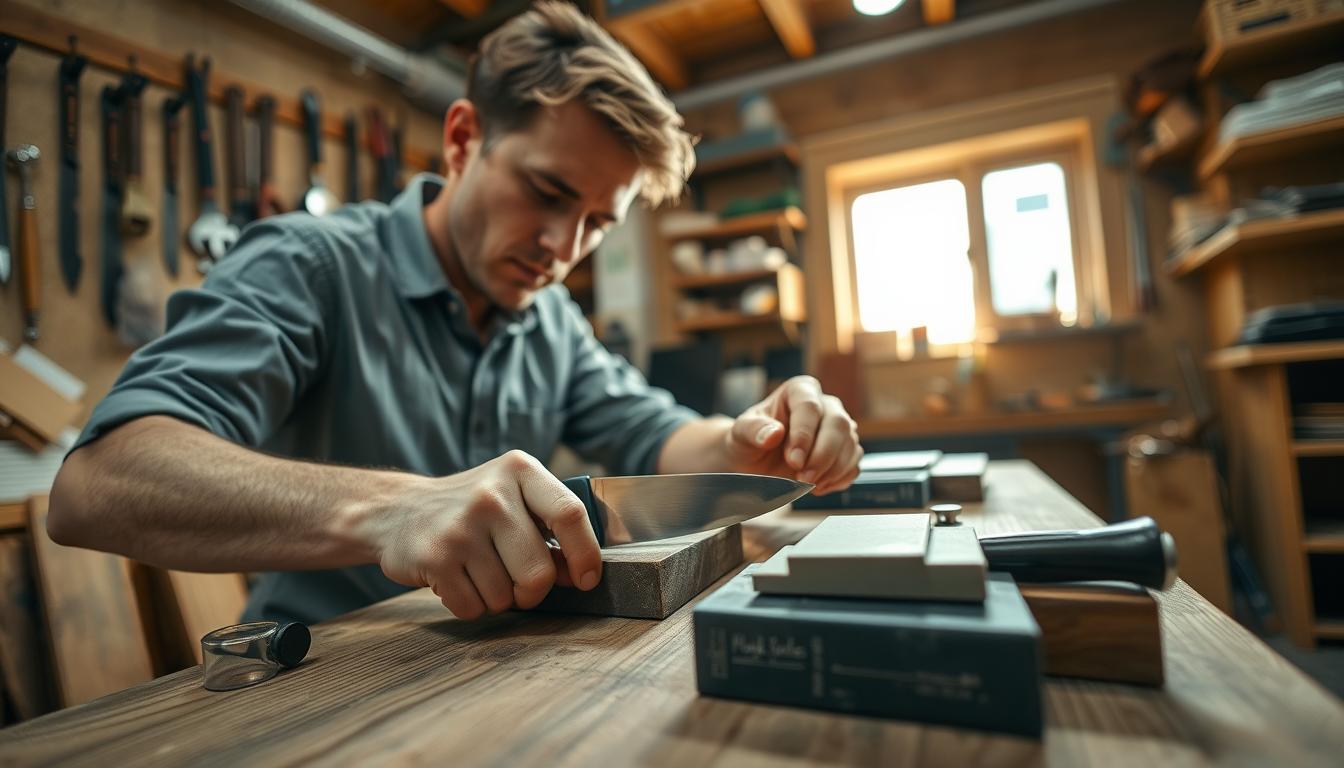
The traditional grade sharpens faster on common stones and gives clear feedback under your hands.
The powder-made grade needs finer abrasives and more time, but rewards you with longer intervals between sessions.
Price and value
Expect a premium for powder metallurgy processing and tighter tolerances. That premium makes sense if you’ll use and maintain the edge to its potential.
- Hardness outcome: thinner, finer edges vs easier upkeep.
- Everyday wear: longer retention vs quicker, simpler touch-ups.
- Practical choice: pick based on how you cook, sharpen, and care for knives.
Which One Should You Choose for Your Cooking Style?
Your cooking style should decide which alloy makes the most sense on your cutting board. Think about how often you cook, whether you enjoy sharpening, and how much edge life matters to your workflow.
Choose VG10 if you want easy sharpening, forgiveness, and strong all-around value
If you prefer quick touch-ups and a forgiving edge, pick the traditional option. It sharpens faster on common stones, tolerates imperfect technique, and gives solid corrosion resistance for everyday use.
Best for: home cooks, mixed prep, and anyone who values low-maintenance knives and faster resharpening.
Choose SG2 if you want the longest-lasting edge and precision slicing performance
If you prize maximum edge retention and ultra-fine sharpness, choose the powder-made option. Expect longer intervals between services and very clean push-cuts on vegetables and fish.
Note: it costs more and needs finer abrasives when you do sharpen. Avoid twisting, prying, or cutting frozen items to reduce chipping risk.
Best-fit tasks and practical guardrails
- Thin, precise work (vegetables, sashimi): favor the harder option for razor-like cuts.
- Rougher prep or frequent board scraping: favor the more forgiving alloy for toughness and ease.
- Always use proper cutting boards, slicing motions, and avoid bones/frozen foods to protect edges.
Budget and maintenance reality: the premium makes sense if you cook a lot and notice edge fade. If you want value and lower upkeep, the more approachable option is a smart pick.
Sourcing tip: when you compare brands or request a “get free” quote, ask makers to disclose heat treat targets (HRC) and quality control. Execution matters as much as the name stamped on the tang.
Conclusion
Deciding between these two premium options comes down to one clear trade-off: choose the more forgiving alloy for easier sharpening and toughness, or choose the harder one for longer edge life and razor-like precision.
Practical recap: pick sg2 when you want maximum edge retention and fine slicing. Pick the traditional choice when you value quick touch-ups and forgiving performance.
What matters beyond the name are heat treatment, edge geometry, and your maintenance habits. Those factors determine real-world properties and performance more than the label.
Remember the trade-offs: the harder option boosts hardness and edge retention but can chip if misused. The more forgiving option delivers toughness and simpler upkeep but needs more frequent sharpening.
Final step: hand-wash, wipe dry, store safely, and touch up before the edge fully dulls. Use this guide when you compare specs and ask makers to provide a “get free” document or quote showing hardness and QC details.