The 5 Best Kitchen Knives Designed Specifically for Left-Handers
Finding gear that fits your grip changes how you cook. When a blade is made for the left hand, that means the grind, bolster, and handle shape favor your wrist and cutting angle rather than forcing an awkward twist. Expect true left-side grinds, offset handles, and balance tuned for control.
This guide previews five categories: chef’s, santoku, paring, bread, and a value pick. Each earns its spot based on comfort, control, and real cutting performance for left handed users.
We focus on what you can buy in the United States now, which specs matter, and how to avoid common marketing traps aimed at lefties. Frustrations to watch for include steering, wedging, awkward grip, and uneven slices.
Our evaluation looks at edge geometry, balance, handle design, durability, and value. You’ll get a practical checklist you can use on any product page and tips on where to find true left-side grinds in the US.
Why left-handed kitchen knives feel different in your hand
A blade that tilts the wrong way can make simple prep feel clumsy. Small asymmetries in grind, spine shape, or bolster change how the edge meets food. That tiny bias on the right side will steer slices, push herbs away, or twist when you cut proteins.
How right-side bias shows up:
- Onions: the edge pulls off your intended line and makes uneven rings.
- Herbs: chiffonade drifts instead of stacking neatly.
- Proteins: portions slide or require extra wrist correction.
What separates a true lefty-friendly design
Truly neutral or ambidextrous designs are built to work naturally for either hand. An afterthought model may add a small fluted side or mirror bevel but leave the core geometry unchanged. That still forces you to compensate.
Comfort and control factors to keep in mind
Look at handle shape, pinch-grip comfort, balance point, and spine/choil feel. These factors affect fatigue and control during long cutting tasks. Measure them: can you hold a push cut with a relaxed wrist?
Quick at-home self-tests
- Slow push cut on a tomato — does the blade track straight?
- Chiffonade basil — does the herb stay aligned under the blade?
- Slice a fillet — do cuts need wrist correction or do they stay on line?
Use these simple checks so your next choice focuses on real edge geometry and bevels — the details that matter most for left-handed users.
Best left-handed kitchen knives: top picks for comfort and precision
When a blade is shaped for your dominant hand, daily prep becomes faster and less tiring. Below are category picks and what to expect from each on a typical weeknight or finishing task.
Best left-handed chef’s knife for everyday prep
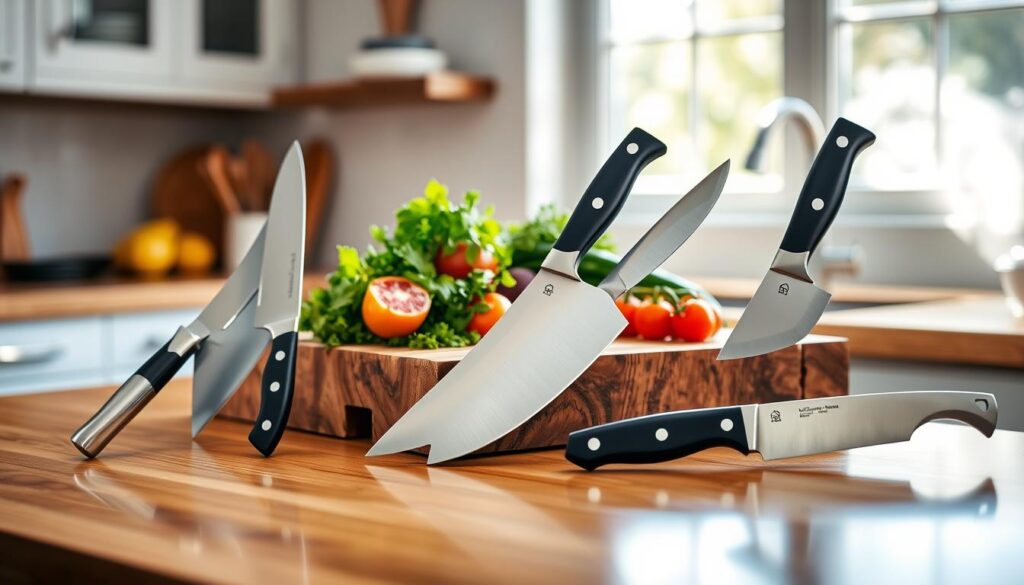
What you get: neutral tracking, a comfortable handle, and a blade profile that supports both rocking and push cuts. This makes chopping, dicing, and slicing consistent for left-handed users.
Best left-handed santoku for fast home cooking
What you get: a flatter edge for quick push cuts, a controlled tip for small work, and a grind that helps food release rather than stick to the wrong side.
Best left-handed paring knife for precision work
What you get: tight control for peeling, trimming, and coring. Grip security and balance matter more than length or weight here.
Best left-handed bread knife for clean slices
What you get: a left-friendly serration pattern and ergonomic handle. This reduces tearing and helps you slice both crusty loaves and soft sandwich bread cleanly.
Best value left-handed knife for starting out
What you get: safe ergonomics, predictable edge geometry, and reasonable steel without premium finishes. Skip cosmetic bells; don’t skimp on handle fit or grind.
- Expect chef’s and santoku for most weeknight tasks, paring for detail work, bread for specialty slicing, and a value option to start.
- Look for photos showing the bevel orientation, full-spec listings, and a clear return policy.
- Prefer retailers with easy returns or trial periods so you can test fit and feel at home.
Single bevel vs double bevel for left-handed users
The grind on a blade decides how it moves through food and how natural it feels in your hand. Choosing the right bevel matters more for left-handed users because bevel orientation changes tracking, wedging, and slice consistency.
What single and double bevel mean in practice
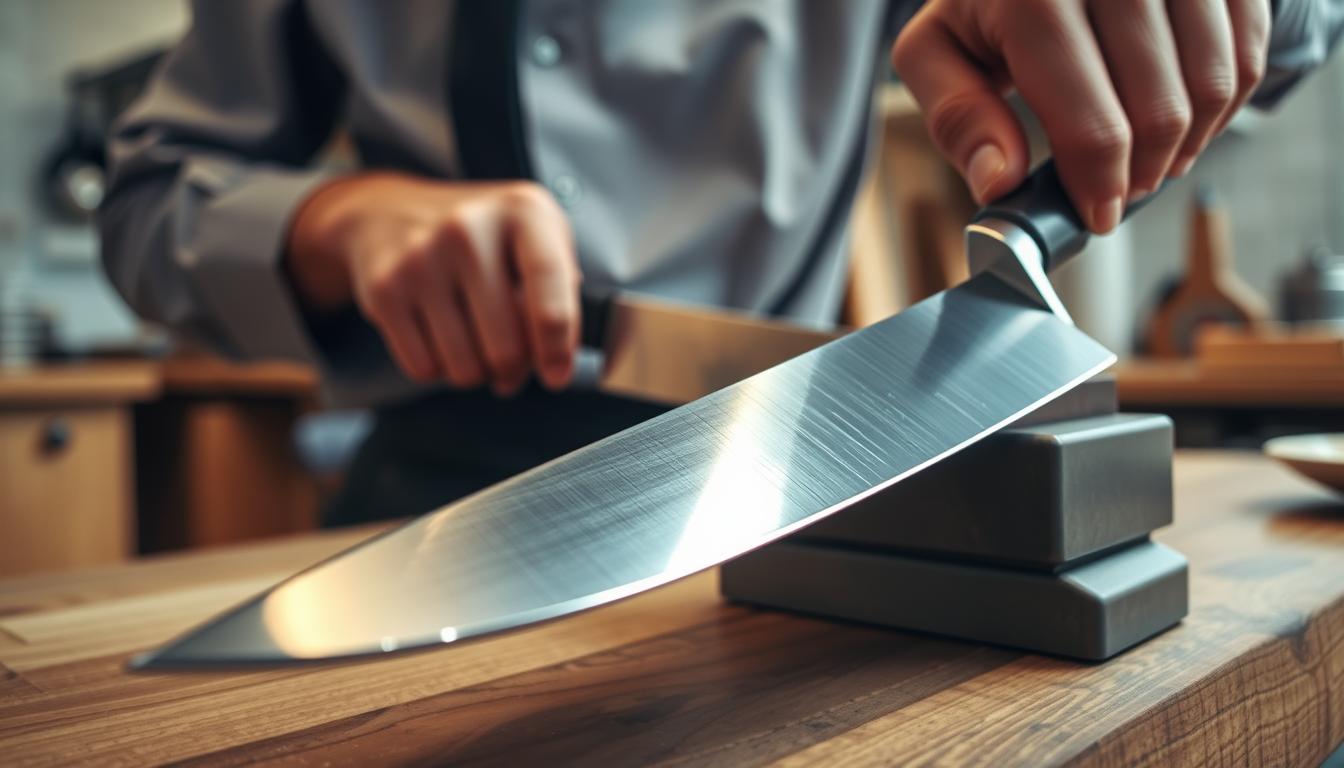
Single bevel means one side of the edge is ground flat while the other forms the acute cutting face. That profile gives razor control for tasks like thin slicing and fish work.
Double bevel (often 50:50) has equal grinding on both sides. It offers a neutral feel and predictable tracking for most cooks and is easier to maintain.
Why many traditional Japanese single bevels are a poor fit
Many Japanese designs are ground for right-handed use by default. If you use them left-handed the edge will pull, steer, or wedge. That creates uneven slices and more wrist corrections.
How to spot a true left-handed grind
- Check product text for an explicit left-hand or “left grind” note.
- Look at close-up photos to see which side is ground.
- Ask the seller if the edge is ground on the left side for lefties.
When to pick single bevel or double bevel
Choose single bevel only if you need specialty cutting and are ready to learn sharpening or pay a pro. For everyday cooking, a double bevel or 50:50 edge is the safer, more versatile choice.
Key features to compare before you buy
Before you buy, know which features change how a blade performs at the board. A quick checklist keeps shopping focused and helps you test gear during the return window.
Blade steel and edge retention
Look for steel that balances edge retention with ease of sharpening and stain resistance. High-hardness steels hold an edge longer but need a good stone or pro service to restore them.
Blade size and profile
Match size and profile to your common cutting tasks. A long chef knife helps big veg and proteins. A shorter blade wins for small prep and control on crowded boards.
Handle design and grip
Choose a handle that fits your hand. Symmetrical designs are safer for left-handed users. Sculpted handles can aid control but may force an awkward wrist if they favor the right side.
Edge geometry and food release
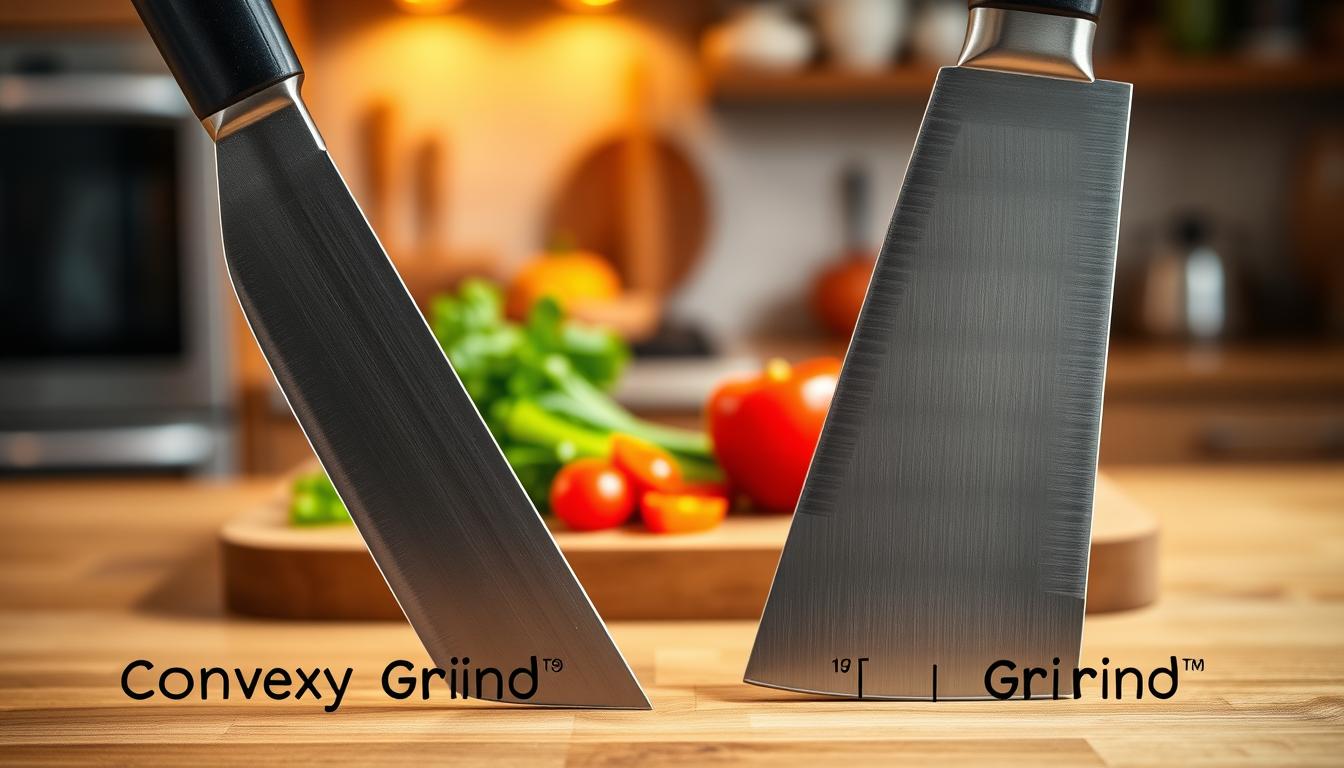
Check for asymmetry that favors the right side; this causes sticking and steering for left users. Convex or hollow grinds change how food peels off the edge.
Fit, finish, and durability
Inspect spine rounding, choil, scale gaps, and rivet fit. Durable makers publish heat-treat details and warranty support—good signs in the knife industry.
- Quick tests: paper cut, tomato slice, and hold the balance point to judge feel.
- Use those checks on delivery to make a confident return decision.
How to choose the right left-handed knife for your kitchen
A practical knife choice matches your pace at the board and the kinds of cuts you make most often.
Match your knife to your cooking style and time at the board
If you do quick weeknight prep, prioritize a versatile chef knife and comfortable handle. For batch work, choose a longer blade that keeps edge geometry stable during heavy use.
When you spend more time at the board, comfort wins. A secure grip and stable handle reduce fatigue and improve performance over long sessions.
Home cook vs enthusiast: what’s worth paying for
As a home cook, pay for comfort, forgiving steel, and easy maintenance. Those features save time and make daily use pleasant.
If you are an enthusiast, spend more on refined steels, specialty grinds, and fit that match your hand. You’ll notice gains in edge life and cutting precision.
- Decision rules: favor neutral geometry for general use; pick a true left-handed grind only for specialty single-bevel work.
- Budget tiers: entry = safe ergonomics, mid = better steel and balance, premium = specialized grinds and finish.
- Avoid: right-biased single bevels, uncomfortable handle shapes, and blades too large for your board.
Where to buy left-handed knives in the United States
Start your search where retailers clearly label edge orientation and grind, so you do not guess at fit. Specialty sellers, regional cutlery shops, and brands with a dedicated left-handed category are the best places to begin.
Specialty retailers that list left-handed-specific grinds
Look for retailers that show “Left” model numbers or a left-handed category. Independents and pro cutlery stores often list grind direction and photo close-ups.
Using “LEFT” searches and filters to find the right models
Search product pages for the keyword “LEFT” and use filters marked for hand orientation. If filters are inconsistent, open photos and spec sheets to confirm which side is ground.
What to check on product pages: bevel, grind, and specs
Verify bevel orientation, grind description, edge type, and any note that the blade is ground for left use. Read Q&A, forum threads, and customer photos to catch real-world issues left-handed users report.
- Before you buy: screenshot specs, confirm return policy, and compare the listed geometry to the maker’s site.
- Expect limited stock—plan for restocks rather than settling for a compromised option.
Custom and special-order options for left-handed knives
Ordering a custom blade gives you control over fit and finish in ways mass production can’t match. Custom or special-order work means a maker adjusts bevels, handle shape, steel choice, and finish to fit your grip and cutting style.
Lead time and cost expectations
Expect longer lead times and higher cost. Typical waits range from a few weeks to several months depending on workload and whether the steel is special-order.
Price: plan for a premium over off-the-shelf models — sometimes 30–100% more for one-off builds.
Details to request
- State bevel orientation and confirm the edge will be ground for left use.
- Specify target edge geometry, preferred steel, and approximate edge angle.
- Describe handle shape, contour, and texture for your pinch grip.
- Ask about spine/choil rounding and surface finish for long-term comfort.
When customization makes sense — and how to reduce risk
Choose custom when standard models still steer, when you need a single-bevel lefty, or when pinch-fit matters for comfort. To manage risk, get specs in writing, request progress photos, and confirm warranty and sharpening guidance before you pay.
Conclusion
Choose a blade and handle that match your motions, and prep work will feel simpler and more precise.
Match geometry to how you cut, not the most hyped brand. For left-handed users the bevel and grind change how a blade tracks through food as much as steel or price do.
Remember the five categories: chef’s, santoku, paring, bread, and a value option. Pick by how you cook and how much time you spend at the board.
Before checkout, confirm bevel, grind, full specs, and return policy on the product page so you avoid right-biased designs.
Next step: decide your top category, shortlist models from retailers that label left-hand grinds, and verify specs before you buy your next knife.