The Best Magnetic Knife Holders for Style and Blade Protection
When you want a clean prep space and safe blade storage, a good wall bar changes the game. This guide shows how to pick a solution that protects edges, keeps knives visible, and makes grabbing the right tool fast and safe.
America’s Test Kitchen tested top designs and found winners you can trust, from the 360KnifeBlock BAR to the Messermeister 17.75″ Acacia Knife Magnet Bar. We use real tests—installation ease, clearance, magnet coverage, and stability—so you know results come from hands-on checks, not just looks.
Expectations: the criteria here focus on secure hold, safe removal, practical capacity, and straightforward installation that does not require a measuring marathon. You’ll also see notes on sizing, materials, and magnet strength so you match the right model to your kitchen habits.
Wood, stainless, and hybrids can all add style while wearing differently over time. You’ll learn the safe spine-first technique later and get a clear pick for both the overall winner and a value choice.
Why a magnetic knife holder is worth it for your kitchen
A slim wall strip can reclaim prime real estate in your kitchen while keeping tools visible and ready.
Mounting a magnetic knife holder frees drawer and counter space by removing bulky blocks and tangled trays. You get horizontal room on your counter and a tidy drawer without blade jumble.
Organization improves safety. When blades hang separated, you avoid reaching into a drawer full of sharp surprises. That simple swap cuts accidental edge damage and reduces chips from blade-on-blade contact.
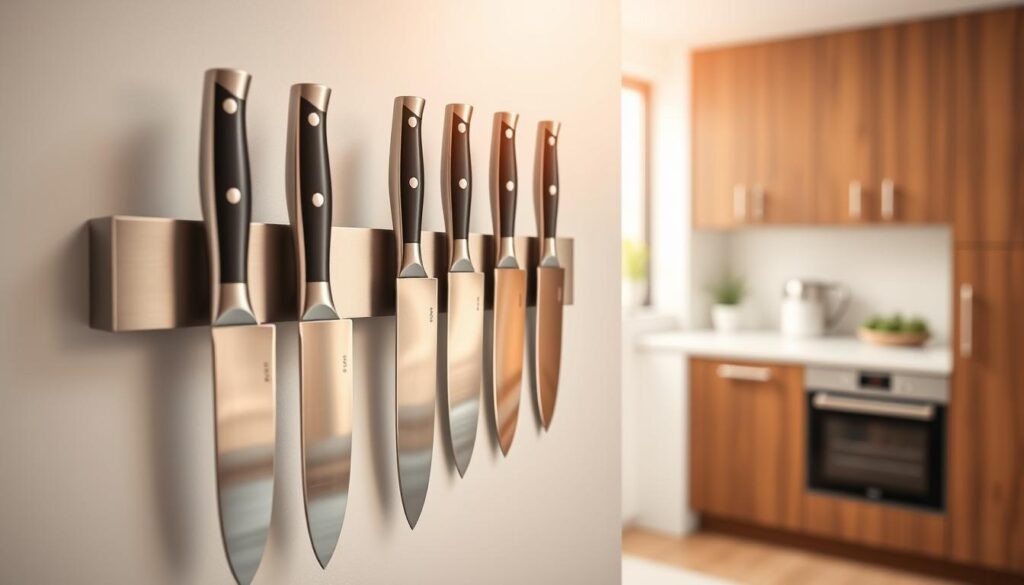
Compare protection: a knife block can trap grit and moisture and dull edges as you slide blades in and out. Loose drawer storage often causes rubbing unless you use sheaths. Magnetic storage helps keep knives without touching each other, which preserves sharpness for daily use.
- Choose a knife strip if you want visibility and fast access.
- Pick a well-designed strip to avoid stressing edges or fighting the magnet when you grab tools.
- Later sections explain how to choose strength, coverage, clearance, and placement so your setup feels effortless.
What you’re really buying: magnetic knife strip vs. magnetic holder vs. knife block
Understand the three main formats so your purchase matches how you cook and live.
Start by naming each style: a wall-mounted magnetic knife strip, a broader magnetic holder style, and a countertop block that mimics a modern knife block. Each feels different in daily use because magnet layout, thickness, and clearance change how blades seat and how easily you grab them.
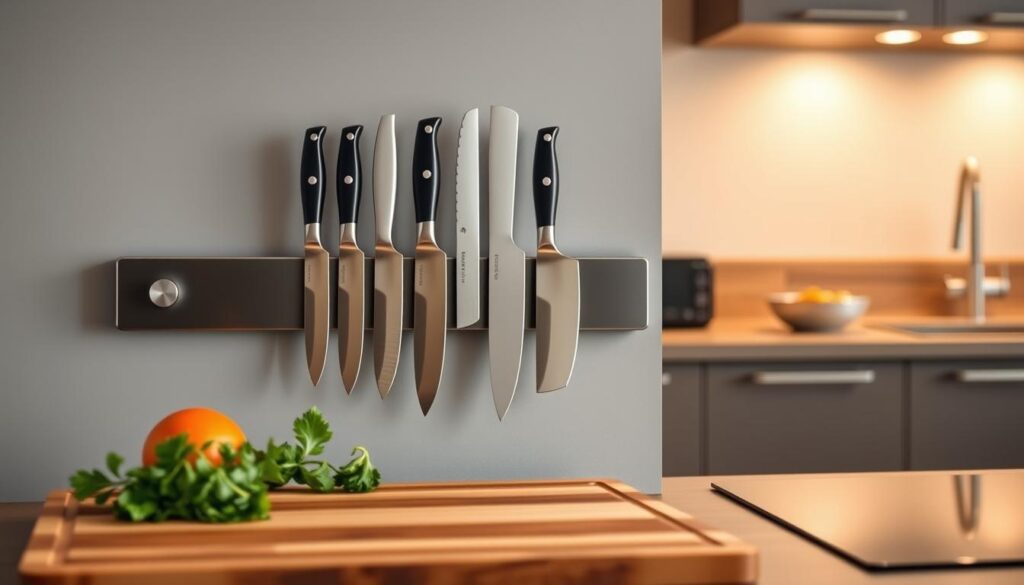
Wall-mounted options for everyday chef knives
Wall-mounted strips sit at eye level and free counter space. That makes them ideal if you use your chef knives every day. Installation needs planning — anchors, screws, and the right wall spot — but the payoff is quick access and less drawer clutter.
Countertop blocks for renters or no-drill setups
Countertop blocks require no drilling, so they work for renters and frequent movers. You trade wall space for counter real estate, but you keep blades separated and visible. If you mainly reach for two chef knives, a strip often speeds your workflow; if you can’t mount to tile, a block is the practical compromise.
- Pick a strip for access and space savings.
- Pick a block for no-drill convenience.
- Compare magnet coverage and clearance — looks lie, performance matters.
How we chose and evaluated “tested magnetic knife” options
Our evaluation focused on how each strip holds up under everyday use. We prioritized performance markers that matter in a busy kitchen, not just lab numbers.
America’s Test Kitchen reported that strips in the 15–20 inches range suit most home collections. We used that window as our starting point because this size avoids cramped stacking yet does not overwhelm a typical wall.
Why 15–20 inches fits most collections
You can fit chef knives, a couple of smaller blades, and paring knives across this span without tight overlap. That size keeps the visual footprint modest and gives room to place blades where you naturally reach.
Holding range: from paring knives to a heavy cleaver
We tested how strips hold light paring knives and heavy cleavers. Secure means no wobble and no sliding when you nudge the blade.
- Performance lens: we judged tested magnetic knife behavior by grip, coverage, and ergonomics.
- Strength vs. distribution: a strong magnet with dead zones fails in practice.
- Daily use: removal should feel smooth—no harsh snap or awkward twist.
- Compatibility note: some stainless blades are nonmagnetic, and that affects real-world results.
Next, we’ll move into the buying criteria you should weigh: installation ease, thickness and clearance, magnet behavior, and long-term durability.
Buying criteria that matter most for blade security and easy use
Focus on a few core features that affect safety, ease of use, and long-term wear.
Easy installation saves time and frustration. Look for systems that mount on two screws and use a simple mounting bar so you spend less time measuring and more time cooking.
Thickness and clearance
Choose a strip that gives at least a 3/4-inch standoff from the wall. That extra clearance keeps your knuckles safe when you reach for knives and prevents blades from rubbing against the surface.
Medium-strength behavior
Aim for medium strength so the magnet holds heavy tools without wobble, yet releases smoothly. Too much pull makes removal risky; too little invites slipping.
Even magnet coverage
Even coverage means you can place blades anywhere on the strip without hunting for a “strong spot.” That flexibility improves daily use and balance across the bar.
Durability expectations
Wood will show light scratches; metal may scuff or fingerprint. The key is long-term stability and secure holding rather than a perfect finish.
- Installation: simple screw layout and a mounting bar.
- Strength: medium pull for secure yet safe removal.
- Durability: accepts normal wear on wood or metal.
Best magnetic knife holder overall: 360KnifeBlock BAR
The 360KnifeBlock BAR pairs a simple setup with dependable daily performance. You mount a hidden bar to the wall, then slide the strip over the screws for a tight fit. A QR code links to a short setup video if you need extra guidance.
Why it stands out for installation, coverage, and looks
The mounting bar includes built-in spirit levels so you avoid a crooked install. That small tool saves time and keeps the strip both neat and useful.
Extra wall clearance: the 1.5-inch standoff advantage
The bar creates a 1.5-inch gap from the wall. That extra space prevents knuckle grazing and makes grabbing chef knives and other tools easier.
Real-world capacity and fit
In tests it held everything from light paring knives to a heavy cleaver without wobble. The strip measures about 3.5 inches top to bottom, so check your backsplash fit before you buy.
Wood finish and wear
Like most wood strips, the surface picked up minor scratches over time. The core build stayed solid, and the finish still looked premium with normal use.
- Installation: mounting bar, screws, and quick alignment.
- Comfort: 1.5-inch standoff for safer grabs.
- Capacity: holds small paring knives through large chef knives and cleavers.
Best magnetic knife holder value pick: Messermeister 17.75″ Acacia Knife Magnet Bar
The Messermeister 17.75″ Acacia Knife Magnet Bar represents strong value for everyday cooks. You get a wood-faced strip that mounts easily and looks at home in many kitchens.
America’s Test Kitchen named this 17.75 inches model a Best Buy for its reliable grip and simple setup. It holds a range of knives securely, making it a practical knife strip for most routines.
What you gain at this price is clear: a well-made knife holder that balances appearance and function. The acacia finish fits both traditional and modern cabinets.
Tradeoff to expect: slimmer profile and tighter wall clearance
The tradeoff is a slimmer profile and closer wall clearance. That means your knuckles may graze the wall more often when removing blades, especially with tall handles.
- Who it fits: you want a good-looking wooden strip and don’t store extra-tall knives.
- Practical fit: 17.75 inches suits a typical starter lineup of chef and smaller knives.
- Mitigation tips: raise placement height, add spacing between blades, and use spine-first loading to reduce scrapes.
Best magnetic knife holder for larger setups and an 18-inch magnetic sweet spot
If your kitchen lineup includes longer blades or a growing collection, size matters more than style.
“Larger setup” means you keep more knives in rotation, use longer blades, or want breathing room so handles don’t collide. A longer strip prevents jostling and keeps removal smooth.
How to decide between 16-inch, 18-inch, and 20-inch strip sizes
Pick 16 inches if you display a tight core set and have limited wall space near prep. It fits two chef knives plus a few small blades without looking bulky.
Choose an 18-inch magnetic option as the sweet spot when you want extra flexibility but not a dominant visual bar. It handles two chef knives plus parers with comfortable spacing.
Go 20 inches if you regularly show many long blades or want future-proof capacity. That size works if you have a large backsplash and want distinct zones for groups of knives.
Spacing strategy for two chef knives plus smaller blades
- Plan handle clearance first: place your two chef knives so handles don’t touch.
- Fill in smaller blades between or to the sides, keeping at least 1–2 inches between edges to avoid contact.
- Group by use and weight: heavier knives near the center and lighter ones toward the edges for predictable grabs.
- Ensure even magnet coverage across the full length so you use all inches, not just a few “good spots.”
Decide by how many knives you truly keep on display, handle sizes, and your wall space. Next, you’ll match length with material and cleaning needs.
Best magnetic knife holder materials for your style and cleaning routine
Choose the right material and your strip will match how you cook, clean, and style your kitchen. Material affects maintenance, how gentle the strip feels when blades land, and the daily cleaning you’ll do around food prep.
Wood strips: warmth, visibility, and normal wear
Wood brings warmth and shows blades clearly. It also shows light scratches over time; America’s Test Kitchen noted that is normal and often cosmetic rather than structural.
Wipe wood routinely and treat it with a food-safe oil like mineral oil. Avoid vegetable oils that can turn rancid.
Stainless steel strips: modern look and wipe-down ease
Steel gives a clean, modern finish and fast cleaning. Expect fingerprints and smudges, so plan quick wipe-downs after prep.
If you hate polishing, this metal finish may need more frequent attention than wood.
Hybrid designs: softer face, hidden magnets
Hybrid models use a wood face over hidden magnets to combine a forgiving surface with strong hold. They often feel gentler when you seat blades and still deliver solid magnetic performance.
- Match finish to habits: pick wood if you prefer low-polish upkeep; pick steel for fast wipes.
- Maintenance tip: mineral oil for wood; microfiber for metal smudges.
- Next: learn how magnet layout and strength work with material to keep blades secure without wobble.
Magnet strength explained so you can keep knives secure without fighting the pull
You want enough pull to stop wobble, but not so much that removal becomes a fight. In practice, that means a strip should hold a heavy chef tool steady when you nudge it, yet let you remove the blade without a sudden snap or awkward twist.
Why medium strength is usually safest for daily use
America’s Test Kitchen favored medium strength because it balances grip and control. With this level, you avoid blades tipping or sliding when you bump the bar, and you won’t battle a harsh pull when removing tools.
Distribution matters: avoiding dead zones that let blades wobble
Evenly spaced magnets create uniform coverage. When magnets cluster or leave gaps, blades can rotate, wobble, or only stick in a few spots. Look for designs with consistent pull across the whole length to keep knives predictable and secure.
Compatibility warning: some stainless steel knives may not be magnetic
Not all stainless steel is ferromagnetic. Test your set before committing to a strip: run a small magnet along each blade to confirm it will hold. Remember, stronger isn’t always better—excessive pull can force unsafe twisting motions near the edge.
- What strength should feel like: no wobble on a light bump, controlled removal without jerks.
- Why medium wins: reduces snap risk and works when your hands are wet or busy.
- Quick compatibility check: test each blade for magnetism before mounting.
- Design note: tested magnetic setups balance force and even distribution for reliable daily use.
Once you’ve confirmed strength and compatibility, the next step is proper installation and loading technique to protect edges and keep everyday grabs safe and effortless.
Installation essentials for a wall-mounted magnetic knife strip
Pick a stable, easy-to-reach wall spot so your strip fits naturally into your kitchen workflow and keeps safety front and center. Place the strip near your main prep area, but out of reach of small children and away from heavy traffic where elbows or pans may brush it.
Choosing the right wall spot for safe grab-and-go use
Mount at a height where you can grab handles without lifting your shoulder. Aim for enough clearance so your knuckles do not drag against the wall when you remove blades.
Leveling and measuring tips that prevent crooked installs
Measure and mark screw locations precisely. Use a spirit level and a pencil guide so the strip sits straight; even a slight angle changes how knives align and can affect removal.
Mounting hardware basics: screws, anchors, and long-term stability
Most models use two screws—confirm screw length and depth for your wall type. Use anchors on drywall and longer screws for studs to ensure lasting stability.
- Before you drill: confirm your knives are magnetic, check strip length fits the space, and verify clearance from cabinets and outlets.
- When included, a mounting bar reduces measuring steps and helps align screws quickly for a clean installation.
Even a perfect installation benefits from the right loading technique to protect edges and prevent slips; the next section explains that step-by-step.
How to load a magnetic knife holder to protect edges and prevent slips
Loading your strip the right way keeps edges sharp and prevents midday slips while you cook. Follow a deliberate routine so blades seat gently and removal stays predictable.
The safest “spine-first” placement technique
Touch the spine to the strip first, then roll the flat of the blade toward the magnet. Do this slowly so the edge never slams into the surface.
- Place the spine against the bar.
- Gently pivot the blade until the flat meets the magnet.
- Let the magnet take the load—don’t force the edge onto the face.
Spacing and balance rules to avoid contact and wobble
Keep at least 1–2 inches between blades to stop blade-on-blade contact. Wide bolsters and tall handles need extra room.
Put heavier chef knives where magnet coverage is strongest and you can pull straight out. Smaller paring knives belong at the sides or lower-stress spots so they don’t get crowded.
Removal tips to reduce slips
Grip the handle firmly, rotate the spine away slightly, and pull straight toward you. Avoid yanking if the pull is strong—rotate first to break the magnetic grip.
Correct loading is what makes magnetic storage safe and blade-friendly, especially during busy weeknight cooking.
DIY option: build your own magnetic knife holder with neodymium magnets
If you like customizing your kitchen, building a strip with neodymium magnets lets you match length and finish exactly.
Tools and materials
Gather a saw, router, drill, disc or block magnets, adhesive or epoxy, and screws. Choose a hardwood like cherry at 3/4″ thick for a sturdy face.
Why the gap matters
The thin wood layer over the magnets controls pull and performance. Route a groove and leave about 1/16″ of wood for a strong, gentle hold. More distance cuts magnet effect fast.
Magnet sizing and alignment
- Common shortcuts: D83 for 1/16″ gap, DA4 for 1/8″, DF4 for 1/4″.
- Alternate polarity (N/S/N/S) along the row to reduce dead spots and improve stability.
- Use a steel sheet to hold magnets during assembly and plan screw placement before final glue-up.
Finish and safety
Finish with food-safe mineral oil. Avoid vegetable oils that can go rancid. Test your knives for magnet compatibility before full installation, and avoid overly strong magnet setups that cause an aggressive snap.
Common pitfalls to avoid when shopping for magnetic knife holders
Don’t let looks or raw pull numbers steer you into a setup that’s awkward or unsafe in daily use.
Overly strong magnets that make removal unsafe or frustrating
A magnetic knife that snaps hard to the face can startle you and force a risky twist near the edge.
America’s Test Kitchen favored medium strength and even magnet distribution to avoid that harsh snap. Too much pull makes removal jerky and increases the chance of slips when your hands are wet or busy.
Too-thin strips that force knuckle scraping against the wall
Very slim profiles push your hand close to the wall and raise the odds of knuckle grazing as you reach for knives.
Choose a strip at least 3/4″ thick or one that creates a small gap from the wall so you can grip handles comfortably without scraping.
Buying for looks only: why coverage and build quality matter more
A gorgeous wood face won’t help if coverage is uneven. You’ll end up clustering blades where they hold best and crowding handles.
- Look for consistent magnet performance across the full length and stable mounting hardware.
- Check that the knife holder offers even coverage so you can space knives without hunting for strong spots.
- Remember some stainless steels aren’t magnetic; a weak hold can be a compatibility issue, not a defect.
Think about your routine: how often you cook, how many knives you use, and whether your wall supports safe spacing. The right choice balances comfort, coverage, and long-term quality—not just how well it photographs.
Conclusion
Wrap up your search by matching how you cook with the storage style that fits your space and habits.
Start with your kitchen workflow, then choose a wall strip or a countertop block that suits your space. Prioritize secure, even holding, comfortable clearance from the wall, and fast installation so you save time every day.
Protect edges by aiming for medium magnet strength, even coverage, and loading spine-first. Pick a length that fits your real knives and spacing needs instead of cramming everything onto a short strip.
Quick buyer checklist: confirm your blades are magnetic, verify wall type and screws/anchors, and ensure handle clearance. Note that wood will show normal wear and stainless steel may show fingerprints.
When you compare brands (including Schmidt Brothers), focus on compatibility and magnet behavior. Now pick your type, measure the space, and plan the layout so you don’t have to jump between options after purchase.