Single Bevel vs. Double Bevel: Which Edge Geometry Should You Choose?
This quick guide compares edge geometry so you can pick the right knife for your kitchen or craft needs. JIKKO led a hands-on test with Togishi RYOTA and sharpened both edge types to equal paper-sharpness before trying real ingredients.
You’ll learn how each edge changes cutting feel, how it tracks through food, and why the best choice depends on your tasks and technique rather than hype. The article shows practical outcomes from tests on tomatoes, daikon, pumpkin, and fish.
The audience here is US home cooks, fans of Japanese blades, and anyone cross-shopping edges after hearing mixed advice online. Use this guide to narrow your options and to make a confident choice when buying the right knife.
Structure: definitions, core differences, single-edge anatomy, everyday benefits of the other edge, detailed test results, and a final decision framework. No myths—just real use cases and skill-level guidance to help you pick what fits your style.
What “Bevel” Means in Edge Geometry (Knives, Broadheads, and Saws)
The word “bevel” shows up in many trades, and that overlap causes confusion. You’ll get a simple map that separates woodworking, hunting, and kitchen uses so you can compare tools clearly.
Bevel cuts vs. miter cuts — in a miter saw the bevel came from tilting the blade or motor. A miter cut came from swiveling the base or table. Some saws tilt one way while others tilt both ways, and that changed how people talked about which cuts were possible.
Edge angle basics for knives — when one side of a blade is ground, the edge becomes asymmetrical. Grinding both sides makes a symmetrical angle. That symmetry changes how the blade tracks during cutting and whether it tends to steer or go straight.
- Clarifies cross‑trade usage so you know which meaning applies.
- Explains tilt vs. swivel with a saw example to make the idea concrete.
- Links the saw idea back to knife grind and why symmetry matters.
Single bevel vs double bevel: The Core Differences That Affect Your Cuts
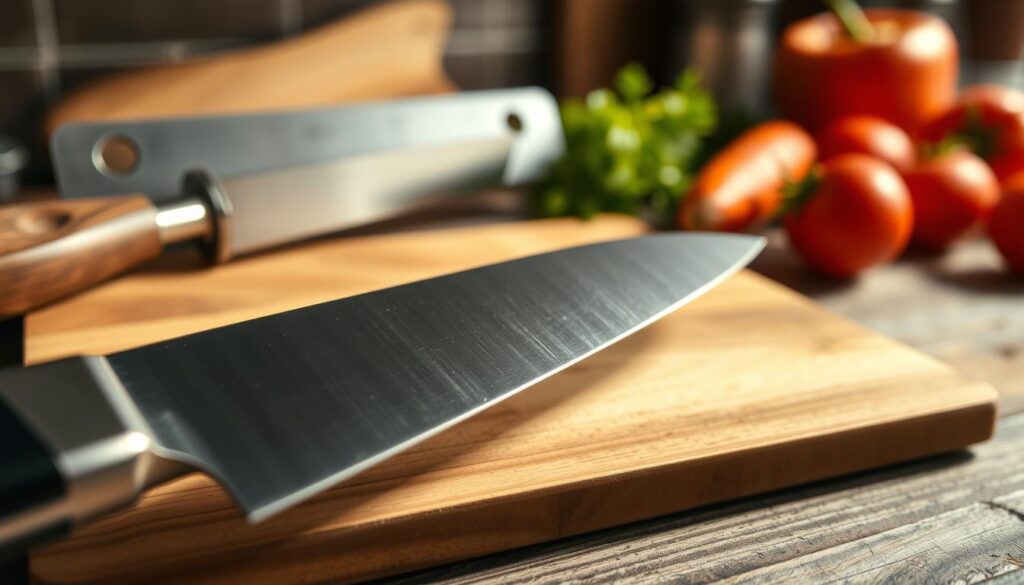
The way a knife pulls, bites, and releases food starts with simple geometry at the edge. You can feel this difference the first time you slice a tomato or fillet a fish.
Single-bevel edge: directional behavior
One-side sharpened blades create an asymmetrical cutting edge that steers toward the flat side. That steering can help you guide ultra-thin slices for sashimi or precise garnishes.
Double-bevel edge: even tracking
Two-sided sharpening gives a symmetrical edge that tracks straight when you press down. For general prep—meat, vegetables, and routine tasks—this feels more intuitive and stable.
Precision vs. versatility
Japanese cuisine often favored one-side grinds because presentation and clean cross-sections mattered as much as speed. Using single grinds rewarded practiced hands with razor-thin, clean cuts.
Handedness and control
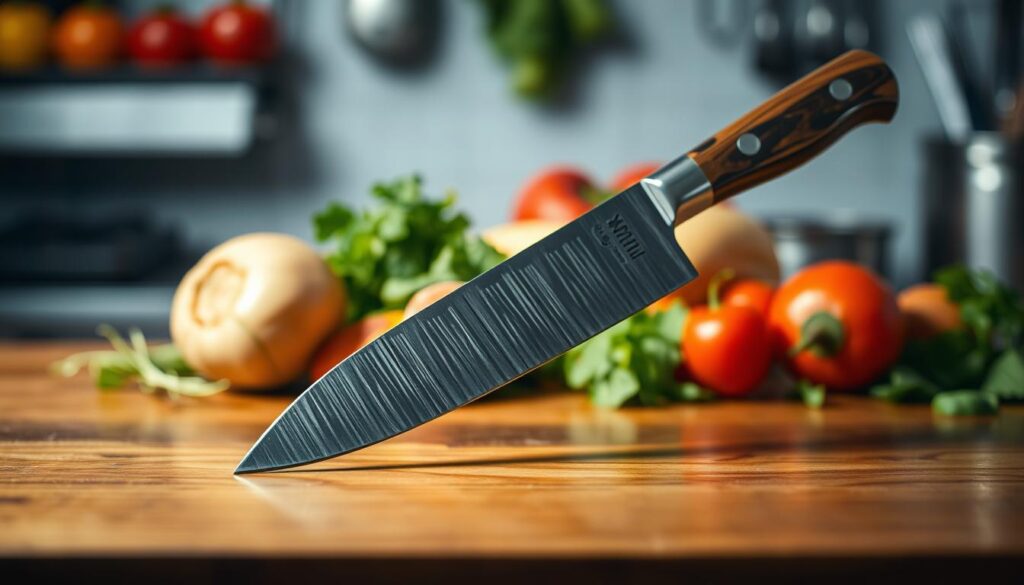
Many one-side blades are made for right-handed users; left-handed options exist but affect control and cut direction. If you’re choosing right knife for comfort, check handedness before you buy.
- Feel: asymmetry can steer; symmetry tends to be neutral.
- Tasks: precise cuts favor one-side grinds; everyday prep benefits from two-sided blades.
- Control: handed design matters for long sessions and delicate slicing.
Single-Bevel Knives: Strengths, Tradeoffs, and the Anatomy Behind Them
Understanding the parts of a one‑side edge shows why it guides cuts and feels different in your hand. The shape is not cosmetic—it’s a functional system that makes certain tasks easier and other tasks harder.
Shinogi-suji ridge: guided slicing and structure
The shinogi-suji ridge on a single-bevel knife acts like a track. It supports precise, controlled slices and adds stiffness at the face of the blade.
Ura-suki and food release
The concave ura-suki on the back reduces surface contact. That means less friction and better food release on delicate items, so thin slices slide away cleanly.
Where one-side grinds shine — and why
You’ll find the sweet spots in sashimi slicing, filleting fish, and katsuramuki (daikon rotary peeling). In hands-on tests Ryota reported smoother entry on tomatoes and much easier rotary peeling with the single-bevel knife.
Common tradeoffs and skill needed
Expect angled or drifting cuts if you press straight down without adjusting angle. These bevel knives are often specialized by type (deba, yanagiba, usuba), so the learning curve matters.
- Reward: a very sharp edge and guided slicing for practiced users.
- Risk: requires technique; using single bevel without practice can frustrate.
- Fit: choose this way only if your tasks include delicate fish work or fine vegetable prep.
Double-Bevel Knives: Why They’re the Everyday Standard in the U.S.
In U.S. kitchens, the symmetrical grind became standard because it simplifies everyday prep and delivers steady results.
Hamaguri-ba and micro-beveling (kobatsuke)
Hamaguri-ba describes a clam-shaped edge profile that spreads wear across the blade. JIKKO noted this gives a durable, forgiving edge for mixed ingredients.
Kobatsuke — a tiny micro-bevel on both faces — adds edge strength so the knife holds up over time and repeated use.
Straight-down cutting and board contact
Symmetry makes the blade track straight when you press down. That predictable board contact means fewer corrections and less wasted time.
This is why many cooks say it feels much easier day to day: less steering, consistent slices, and steadier control for routine prep.
Best-fit tasks
- Meat: even cross-sections for uniform cooking.
- Vegetables: straight daikon slices and reliable thin cuts through hard items like pumpkin.
- General prep: a versatile way to handle varied tasks without swapping tools.
Takeaway: a double-bevel knife is a high-performing default—durable, forgiving, and built for consistent results across many kitchen tasks.
Real-World Cutting Performance: What Hands-On Tests Reveal
The most telling results came from real ingredients, not paper. JIKKO’s Ryota tested a matched pair so you can trust the outcome.
Controlled setup: both knives were Gyuto, 240mm, made from Ginsan stainless steel, sharpened on the same stone at similar angles, and finished with kobatsuke micro-beveling. Paper cuts matched, so later differences were about geometry and technique, not sharpness.
Tomato and soft skins
On tomatoes the single bevel gave a smoother entry and a gliding feel. Ryota said the blade seemed to part the skin with less push.
Daikon: slicing vs. peeling
For straight daikon slices, the double bevel tracked truer and produced even cross-sections. For katsuramuki peeling, the single bevel made the rotary peel noticeably easier.
Pumpkin and thin slicing
Harder material favored the double bevel for straight thin cuts. The other grind still entered cleanly but tended to slant on long slices.
Sea bream filleting
Differences were subtle with fish. Ryota felt the single bevel offered slightly better angle control and a finer finish on delicate slices.
- Baseline: matched steel and finishing made results reproducible.
- Takeaway: one style often felt smoother in slicing; the other excelled at straight tracking.
How to Choose the Right Knife Edge for Your Cooking Style (and Maintain It Over Time)
Choosing right starts with what you actually do in the kitchen. List your main tasks—filleting fish and thin presentation work, or everyday veg and meat prep—and let that guide your choice.
Match the edge to your tasks: if your work centers on precise Japanese techniques like sashimi or katsuramuki, using single bevel can be the right knife for those cuts. For mixed prep across proteins and produce, use double bevel more often for steady, straight cutting.
Skill and technique
Using single grinds rewards practice but can pull to one side until you learn to correct it. If you want reliable results with less training, use double bevel for everyday cooking.
Sharpening and consistency
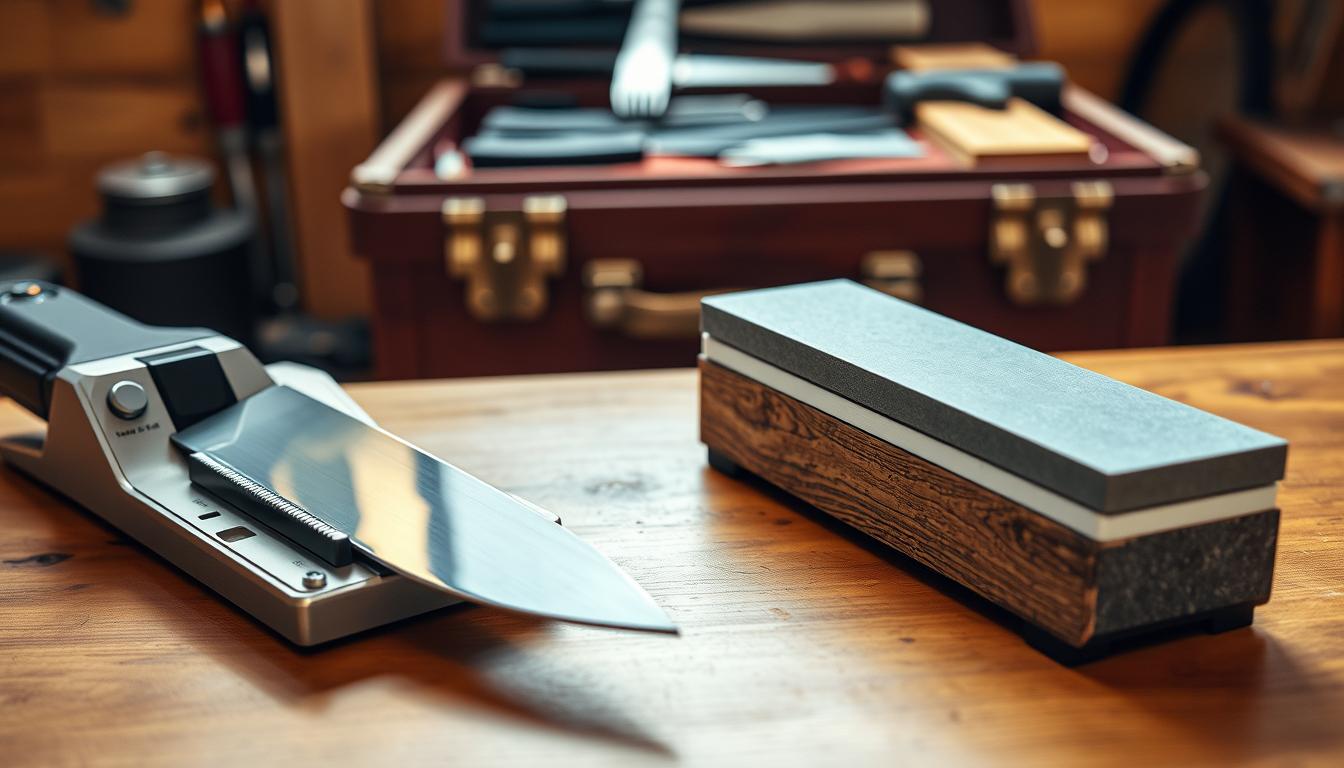
Sharpening one side demands discipline to keep a steady angle; sharpening both sides demands balance and repeatable strokes. In either case, consistent angles and micro-bevel touch-ups preserve a sharp edge longer than chasing a magic degree number.
Bonus: broadhead perspective
Hunters noted parallels: Bill Vanderheyden said the symmetrical grind had a slight penetration advantage, while the asymmetric option may cause more rotation and tissue damage. Field experts like Ryan Callaghan emphasized reliable pass-throughs and tuning as the real difference-maker.
- Decision checklist: pick the edge that fits your most common tasks.
- Ergonomics: confirm handedness before you buy.
- Maintenance: commit to a simple, repeatable sharpening routine.
Pick the right knife for your routine, then keep its angles steady and your tool will perform the way you expect.
Conclusion
What matters most is matching edge behavior to the cuts you make every day.
JIKKO’s tests showed a clear pattern: the single bevel often gave a smoother, gliding entry for slicing motions, while the double bevel delivered truer tracking for straight-down cuts. Use that pattern to choose the right knife for your routine.
If you value precision, presentation, and fish work, a single-bevel knife rewards practice and care. If you want versatile, intuitive performance across vegetables and meat, a double-bevel knife fits better.
Maintenance mattered as much as geometry—keep angles consistent and your blade will perform. Pick the edge that suits your common cuts first, then add the other style as your skills or needs expand.