How to Use a Leather Strop for a Razor-Sharp Mirror Polish Edge
Stropping is the final polishing step you use after a very fine stone. It refines an already-sharp edge by removing tiny imperfections so the blade can reach a true razor level.
In this short guide you’ll learn what to expect and what to avoid. You’ll see that a plain leather strop still improves cutting comfort, while a compound boosts the mirror polish.
Expect cleaner push cuts, easier paper slicing, and a visible mirror line on the edge. For basics you’ll need a leather strop, optional compound, and a stable work surface. Avoid serrated edges and heavy pressure.
Quick outline: setup, technique, compound choices, burr removal, and troubleshooting. Focus on angle control and light pressure — speed matters less and can dull your edge if you rush the process.
When a Leather Strop Is the Right Tool for the Job
You only reach for the strop after the stone has already done the heavy lifting. Stropping is a finishing action. It polishes the bevel and smooths micro-imperfections rather than removing metal.
Where stropping fits and why it’s a finishing step
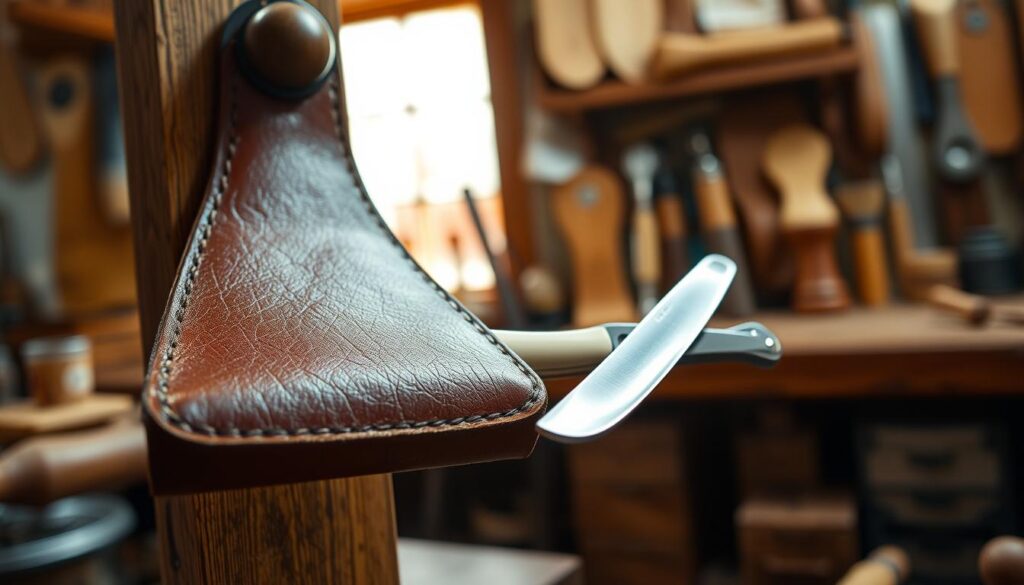
After you shape the bevel on stones, use the strop to refine the edge. The strop cleans the burr and brings a mirror polish that improves cutting comfort and control.
How sharp should the edge be before you strop
Don’t strop a dull tool. A practical rule: plan to strop once you finish around a 5000 JIS stone. You should already have a consistent, clean-cutting edge before stropping.
What you can strop and what to avoid
- Good candidates: smooth-edged knives, many kitchen knives, straight razors, chisels, and woodworking tools.
- Avoid serrated knives — they won’t be helped and can damage the leather.
- Recurved profiles are tricky to handle on a flat paddle and require care or a shaped strop.
Right tool rule: if your blade is truly dull or nicked, return to stones for metal removal, then finish with the strop as the last step: stones → burr check → strop → final test.
Leather strop sharpening Setup: Picking the Right Side, Size, and Surface
Start by matching the surface type to the tool you’ll finish. That simple choice shapes how quickly you reach a clean, polished edge.
Smooth vs suede: which surface for your tools
Suede accepts compound better, so use it for carving tools and chisels when you want faster cutting action. Suede holds the abrasive paste and lets the compound bite into the edge.
By contrast, smooth leather works well plain. It gives a cleaner finish for most kitchen knives and for light honing without a paste.
Double-sided use, grit idea, and compound care
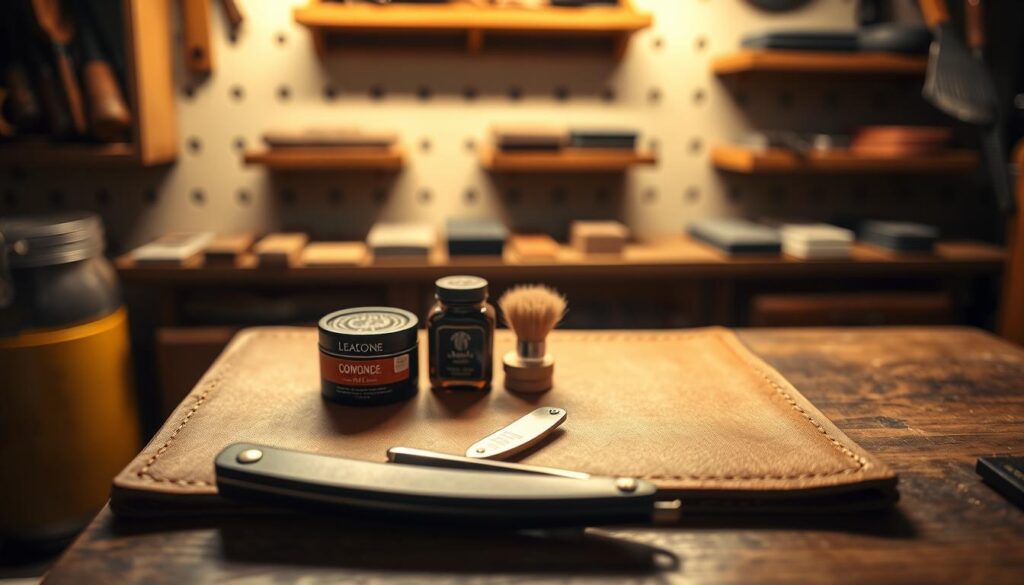
On a two-sided pad, apply compound sparingly to the suede face and use that side first for rapid refinement. Then switch to the clean smooth side for the final polish.
Remember that leather has no true grit rating. In practice, plain hides can perform finer than about 0.5 micron (roughly 30,000 grit), so a good pad often rivals ultra-fine stones for the final gloss.
- Apply a thin, even coat of compound — don’t cake it on.
- Compound stays useful for weeks; touch up small areas as needed.
- If the pad goes glossy or loads with metal, lightly roughen it (for example with a wire brush) to restore bite without gouging.
What a blackened surface means: the dark color is metal from the blade. It proves the pad is removing the wire edge and polishing the bevel, not that it’s ruined.
Stropping Technique for a Mirror Polish Edge
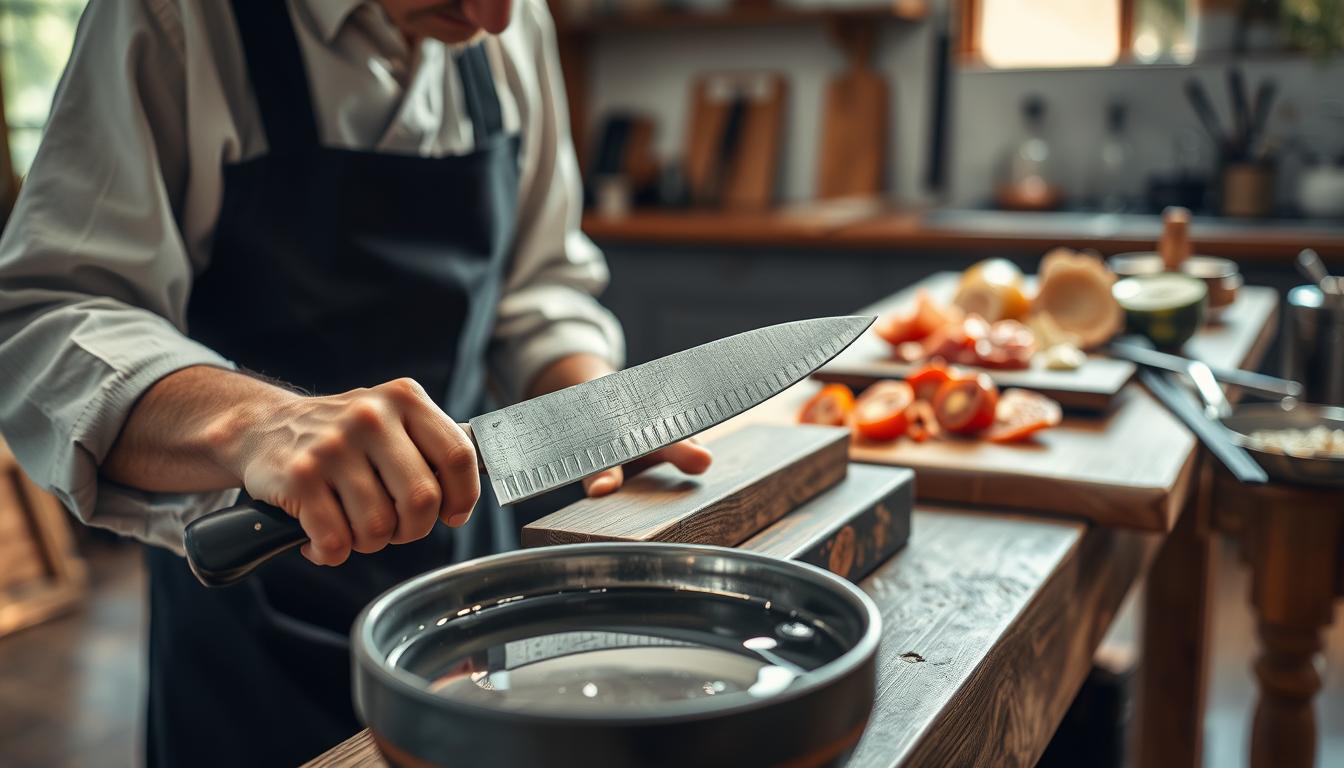
A mirror finish comes from consistent motion, not brute force. Start by matching the same angle you used on the stone. If needed, lower the angle slightly to avoid polishing the apex into a rounded, dull state.
Use blade-trailing strokes only. Lay the edge down and pull toward you so the edge never pushes into the leather. Pushing the knife forward is what slices and damages the pad.
- Set and feel the angle: lock your angle with a light reference hand. If you hear scraping, drop the angle a touch. If the blade side shines instead of the edge, raise the angle until the apex is being refined.
- Control pressure: let the weight of your hand and knife do the work. Heavy pressure creates a micro-bevel and removes the fine apex you want to keep.
- Repeatable strokes: run clean passes from tip to heel, then switch sides without rolling the edge. Keep the same number of pulls per side for balance.
- Follow the belly: hinge your wrist to maintain full contact along curves so the edge polishes evenly.
Know when to stop by watching the edge for a uniform polish and by feeling smoother feedback as burr remnants vanish. Prioritize a true apex over chasing shine.
Compounds, Burr Removal, and Common Mistakes That Make an Edge Feel Duller
Understanding how compounds and burr control interact will fix many performance issues you might see after stropping. Read the steps below to choose the right paste and to avoid common technique errors.
How a strop removes a burr and why that changes performance
After stone work you often have a wire edge or burr that gives a brief bite but poor slicing. The strop gently polishes that bent metal away rather than yanking it off.
When the burr is removed the true apex does the cutting. That yields cleaner slices, steadier push cuts, and a longer-lasting sharp edge.
Choosing compounds by micron and their trade-offs
Compounds change how fast and how fine the finish becomes. Use the table below as a simple guide:
- Coarse (>3 μm): cuts faster but leaves a rougher finish.
- Medium (~2–5 μm): a good balance for most users who want speed and polish.
- Fine (
Why a polished edge can feel less “toothy” and how to test
A highly polished blade may feel smoother to the touch but be objectively sharper. Sensation alone can mislead.
Use practical tests: slice printer paper, carefully shave a small arm hair patch, or check for even bite along the whole edge.
Angle, pressure mistakes, and when to return to stones
The two biggest errors are using too steep an angle and pressing too hard. Both create a micro-bevel or round the apex and reduce real cutting ability.
If the edge is truly dull or nicked, go back to stones for metal removal, then finish with the strop and your chosen compound.
Conclusion
A quick final pass will clean any remaining burr and show whether your edge is truly ready.
Work in one repeatable flow: finish with stones first, then use light pressure and blade-trailing strokes to refine the bevel without rounding the apex. Keep motion steady and count pulls per side for balance.
Remember: a strop does not replace proper sharpening. It polishes and removes wire, giving a mirror finish and better real-world cuts when the knife is already well prepared.
Blackened leather is normal—metal transfer proves the pad is working. Refresh the surface when it gets slick so it keeps biting.
If the blade is dull or nicked, return to stones. If the edge is sharp but not quite there, stropping is the way to finish and maintain a razor-ready edge.