
Are Ceramic Knives Any Good? Pros, Cons, and Top Recommendations
You want tools that make weekday prep faster and cleaner. This intro frames the core question: are ceramic knives the right fit for your kitchen tasks, like slicing fruit, veg, and softer proteins?
In this Best ceramic knives review you’ll get clear answers on material basics and real use cases. Learn why zirconia blades hold an edge longer than steel and why they can chip on bone-in meat or hard surfaces.
Good here means long-lasting sharpness, easier slicing, and low upkeep, balanced against fragile blades that need careful handling. You’ll also see how sharpening works and when to seek a diamond service.
Expect practical picks and an organized buy guide: best overall set, a starter paring knife, and a minimalist duo with safe storage. We’ll return to blade length, handle comfort, storage options, sharpening plans, and total price so you can choose the right knife for your use.
Why you might want ceramic knives in your kitchen
A sharp, lightweight blade can change how quickly you prep vegetables and fruit. In many homes, a zirconia option offers a different feel from steel and a clear set of trade-offs.
Zirconia blades and how they differ
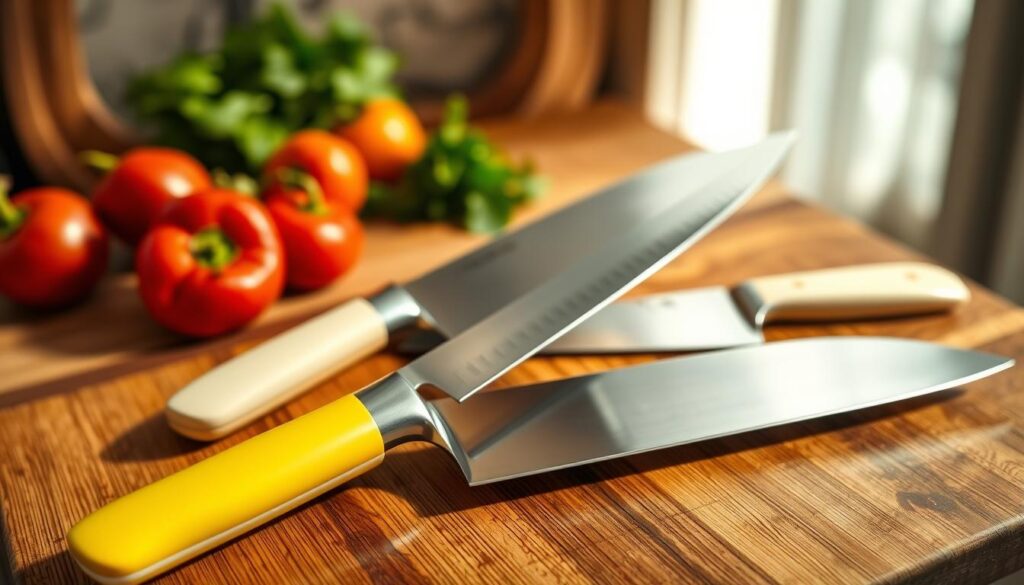
Zirconia is a hard, sintered oxide used for these blades. It clocks in near diamond on the hardness scale, so the edge holds longer than most steel counterparts.
What this material does well for produce
You’ll notice cleaner bites into tomato skins and delicate herbs with less pressure. Straight slicing and controlled chopping are where this blade shines, especially during mise en place.
Who benefits most at home
If you prep lots of vegetables, cook vegetarian meals, or dislike frequent sharpening, this tool fits your workflow.
- Great for long slicing sessions and quick cleanup.
- Non-rusting surface means less worry about moisture and stains.
- Not for impact tasks—avoid bones, prying, or twisting cuts.
Quick self-check: if your routine is mainly produce and boneless proteins, this kitchen knife can be a strong supplement. For mixed heavy tasks, keep steel in the drawer as your go-to workhorse.
Pros and cons of ceramic knives vs stainless steel
When you compare performance and upkeep, the trade-offs between ceramic blades and stainless steel become clear.
Pro: edge retention that feels freshly sharpened. A zirconia blade can keep a hair‑thin edge for months or even years in typical home use. Many users report the first six months felt like using a freshly honed steel chef’s knife.
Pro: no rust and easy cleanup
Ceramic won’t rust, and many modern handle designs are simple to wipe clean after acidic or wet prep. That low‑fuss maintenance is a real perk if you want a tidy, corrosion‑free tool.
Con: fragility and technique matter
These blades are brittle compared with steel. Chips often come from twisting mid‑cut, prying, hitting hard material, or dropping the knife.
Use a straight slicing motion, let the sharp edge do the work, and avoid lateral pressure to reduce risk.
Con: sharpening and wrong jobs
Sharpening is specialized. You’ll need diamond abrasives or a service that supports ceramic rather than a standard whetstone. By contrast, a steel knife is easier to maintain at home.
- Avoid bone‑in cuts and very hard squash—those tasks suit a longer steel or a harder steel blade.
- Treat ceramic as a precision cutting tool, not a pry bar.
- If your routine includes rough cutting or frequent heavy work, keep a reliable steel in the drawer.
In short, ceramic knives give outstanding edge life and low rust risk, but they demand careful technique and specialized care to deliver their full benefit.
Best ceramic knives review: top picks for most home cooks
These picks focus on real-world kitchen tasks so you can buy with confidence. The roundup uses five simple criteria: sharpness on produce, edge retention, handling comfort, safe storage, and realistic maintenance.
Kyocera 3-Piece Ceramic Knife Set
This set includes a 5.5″ chef knife, a 4.5″ utility knife, and a 3″ paring knife. It’s nimble, easy to clean, and stays very sharp for produce prep.
Kyocera Revolution 3” paring knife
The 3″ paring knife is an ideal starter option. It’s ultra-light and razor sharp for fruit and veg. Technique matters, and Kyocera offers sharpening if you send it in.
Kyocera INNOVATIONwhite® santoku + paring duo
This minimalist set pairs a 5.5″ santoku with a 3″ paring knife. The seamless handle improves wet grip, and the included guards make drawer storage safer.
- Who each pick fits: small apartments and produce-heavy cooks—3-piece set.
- Try the Revolution paring knife to test a single ceramic knife without a full purchase.
- Choose the INNOVATION duo when you want a compact set with guards for safe storage.
Next, you’ll get detailed dives on what each box contains, how they cut, and what to avoid.
Top ceramic knife set recommendations for different cooking styles
Match your knife set to how you actually cook. A small, focused collection often serves you better than a crowded block. This guidance helps you pick a set that you will reach for every day, not one that sits unused.
If you mostly cook vegetarian meals and prep lots of produce
If your meals are plant-forward, ceramic knives reward you with clean slices and long edge life. They cut tomatoes, herbs, and soft fruit with less tearing, so prep looks and tastes better.
If you want a compact knife set that won’t sit unused
Less is more in small kitchens. A two- or three-piece knife set that includes a chef or santoku plus a paring knife covers most tasks. Choosing a compact ceramic knife set prevents wasted drawer space.
If you need guards for drawer storage and safer organization
For homes that store blades loose in drawers, guards are essential. They protect edges from contact, lower chip risk, and keep fingers safe. The INNOVATIONwhite® line includes guards, which makes safe storage simple.
- Support knives: a utility handles mid-size jobs while a paring takes trimming and small detail work.
- Choose the smallest set that has the chef or santoku blade you’ll use daily plus one precision blade.
- Expand only if a real gap in your prep appears.
Kyocera Revolution 3” paring knife review for precision work
This compact paring knife is built for close, controlled work where precision matters more than power. The specs are simple: a 3-inch ceramic blade paired with a plastic handle for a lightweight, nimble feel.
Real-world sharpness
The edge bites into tomato skin easily and enables very thin slicing when your hand stays steady. Sharpness lasts a long time; many users report weeks to months of edge life in typical kitchen use.
Handling and technique
Weight and balance favor finesse. The knife is ultra-light, so you must use a light, straight slice motion rather than forcing or twisting.
Durability and maintenance
Shorter blades are less prone to catastrophic chips than longer ceramic blades. Still, sharpening is specialized—plan to use Kyocera’s service or a diamond sharpener when the edge finally dulls.
Storage watch-outs
No cover is included, so drawer storage risks edge damage and accidents. Add a sheath or guard to protect the blade and your fingers.
- Specs: 3″ blade, plastic handle.
- Use: peeling, trimming, delicate cutting.
- Care: avoid prying and store with a guard.
Kyocera INNOVATIONwhite® santoku and paring knife set review
The INNOVATIONwhite® duo pairs precise control with safety features that matter in daily prep.
The seamless handle is the standout. A tight seam gives a secure finger rest and the circular underside plus thicker ends reduce slipping when your hands are wet. That design helps you hold straight cuts and protect the blade.
Seamless handle design and grip features for wet hands
The molded grip reduces drops and improves control during fast chopping. You feel the balance sooner, and the secure hold lowers the chance of lateral twists that chip an edge.
Why the 5.5” santoku knife is a versatile daily driver
The 5.5″ santoku knife has a double-beveled edge for clean slicing, dicing, and mincing of fruits, vegetables, and boneless proteins. Its light weight and even balance make it easy to use all session long.
How the 3” paring knife supports trimming, peeling, and mincing
The 3″ paring knife offers tight maneuverability for trimming, peeling, and fine mincing where larger blades feel awkward.
Included knife guards and what they mean for safe storage
This compact set ships with two guards. They protect the edge in drawers and make storage safer around other kitchen tools.
- Weight: about half that of metal rivals, so less fatigue.
- Blade: designed for precision, not heavy prying.
- Chef-level control: light, balanced, and predictable.
Kyocera 3-piece ceramic knife set review for an everyday lineup
A compact, focused knife trio gives you coverage for almost every routine kitchen task. This set aims to be the go-to collection for weeknight prep without taking up drawer space.
What you get
The box contains a 5.5″ chef knife, a 4.5″ utility knife, and a 3″ paring knife. Together they handle large cuts, mid-size jobs, and detail work.
Comfort and control
The low weight and slim profile create a nimble feel. You notice the balance quickly, which reduces wrist fatigue during long vegetable sessions.
Edge retention over time
With normal use the edge holds for months and, for some owners, years. Early months often feel like using a freshly honed blade before the first service is needed.
Best tasks
Use this set for slicing, dicing, and building tidy mise en place fast. Expect cleaner cuts on soft produce and quick prep for salads, stir-fries, and soups.
What to avoid
- Avoid bone-in meat and very hard foods like winter squash.
- Do not use a glass cutting board or any hard, brittle surface that risks chipping the blades.
- Skip prying, twisting, or cutting frozen items.
Sharpening plan
When it’s time, pick a service that supports ceramic or use a Kyocera diamond sharpener. Proper care keeps service needs rare and simple.
Who should buy: you want a small, highly usable set that stays sharp, cleans easily, and covers daily tasks without fuss.
How to choose the right ceramic chef knife, paring knife, or santoku knife
Pick a blade that fits your daily prep, not what looks flashy on a shelf. Start by listing the foods you cut most and match blade length to that workload.
Pick your blade length based on what you cut most
Short blades suit small fruit, trimming, and tight detail work. Longer blades help with large-volume slicing and big veg. Choose the length that keeps cuts smooth and reduces wrist strain.
Match knife type to task
A chef knife is versatile for many chores. A santoku knife favors straight slicing and quick dicing. Use a utility knife for mid-size jobs and a paring knife for precision. Avoid twisting or prying with any ceramic knife to prevent chips.
Handle material and ergonomics
Look for a handle that stays secure when wet and supports a comfortable pinch grip. Balance should let the blade track straight without extra force. Fit and finish matter more than flash.
Knife set vs single ceramic knife
Start with one blade that fills your biggest gap. Add only when you repeatedly hit a limit. This minimalist approach prevents buying a large lot you rarely use.
- Price tip: pay more for better fit, guards, and consistent materials.
- Buy rule: one well-chosen blade before a full knife set.
- Avoid overbuying: choose usefulness over size of the lot.
- Long-term value: comfort and guards save money and headaches.
Care, cutting boards, and safe use to prevent chips
How you cut and store tools matters more than how often you sharpen them. Use a light, straight slice motion and let the edge do the work. That single habit prevents most chips and keeps the blade usable longer.
Use a gentle slicing motion and avoid twisting or prying
Never twist or pry to finish a cut. Twisting applies lateral force and causes chips fast.
If a tough spot appears, reposition the food or switch to a different tool. Take smaller slices rather than forcing the blade.
Choose the right cutting board material and skip glass boards
Pick wood or high-quality plastic cutting board surfaces. These absorb impact and protect the edge.
A glass board will punish the blade and increase chip risk. Keep your work on forgiving boards whenever possible.
Drawer storage, guards, and keeping the blade protected
Store with a guard or sheath so the ceramic knives do not hit other tools. Isolate the blade in a slot or separate pouch to prevent nicks.
Cleaning basics and why ceramic won’t rust like steel
Ceramic won’t rust like steel, but it still needs gentle handling. Avoid clanking the blade in a sink full of pans or using abrasive scrubbing near the edge.
Maintenance note: follow these board and technique rules and you’ll delay the need for professional sharpening.
- Top habit: light straight slices, no sideways force.
- Avoid prying—reposition food or use a stronger steel tool for heavy jobs.
- Use wood or quality plastic boards and keep a guard for drawer storage.
When you should stick with steel knives instead
When a cut needs force or leverage, a tougher blade is the smart choice. Match the tool to the task rather than forcing one material to cover everything.
Jobs where a longer steel knife or harder steel is the safer tool
Use a longer steel or harder steel for heavy-duty chopping, breaking down bone-in meat, or slicing very dense veg. The extra toughness and flex make a steel knife forgiving under torque.
Foods and techniques that put ceramic blades at high risk
Avoid brittle blades on bone-in cuts, winter squash, frozen items, and tasks that need levering or twisting. Those impacts cause chips fast.
- Bone-in meat and poultry
- Hard winter squash or pumpkins
- Prising, twisting, or levering motions
- Frozen blocks or heavy cleaving
If you prefer easy at-home sharpening with standard tools
If you want simple at-home sharpening, pick stainless steel. Common whetstones and pull-through sharpeners work for steel knives. Ceramic sharpening is specialized and needs diamond tools or a service.
Practical hybrid approach: keep a small ceramic lineup for delicate produce, but rely on steel for the hard jobs you do a lot. That blend gives long edge life where it shines and real toughness where you need it.
Conclusion
Deciding what to keep in your drawer comes down to matching tools to the tasks you do every day.
Ceramic knives deliver long edge life and easy cleanup, but they need careful use. For clean, controlled produce prep you’ll enjoy lasting sharpness and a low‑rust blade.
If you’re unsure, start with a single ceramic knife or a small knife set. Choose a compact set only if you will use multiple blades each week.
Protect the investment: use a wood or quality plastic board, slice straight, and store blades with guards. Follow those rules and sharpening stays rare.
The real value is practical — pick the option with the right design, handle comfort, and price that fits your kitchen and home routine.