
Beyond the Blade: How to Choose Professional Grade Kitchen Shears
You’ll learn what “professional-grade” meant for home cooks and how it translated to cleaner cuts and safer handling. This intro gives a quick orientation so you can see why kitchen shears earned a regular spot in a busy prep routine rather than being an occasional tool.
Expect a practical buying lens focused on real food performance, comfort in your hand, and cleaning realities after messy prep. You’ll get clear criteria to compare models without being led astray by flashy extras.
Key decisions you’ll face include blade geometry, serrations, pivot tension, handle comfort, take-apart cleaning, and price-to-value. This section helps you start with the end in mind: choosing tools you’ll actually use week after week for everyday tasks, not just one-off poultry jobs.
Why kitchen shears belong in your knife kit
Add a reliable pair of kitchen shears to your set and you’ll reach for them during the smallest, messiest jobs. They speed routine prep and cut down on cleanup by letting you work directly over bowls, pans, or packaging.
Everyday prep tasks you’ll actually use them for
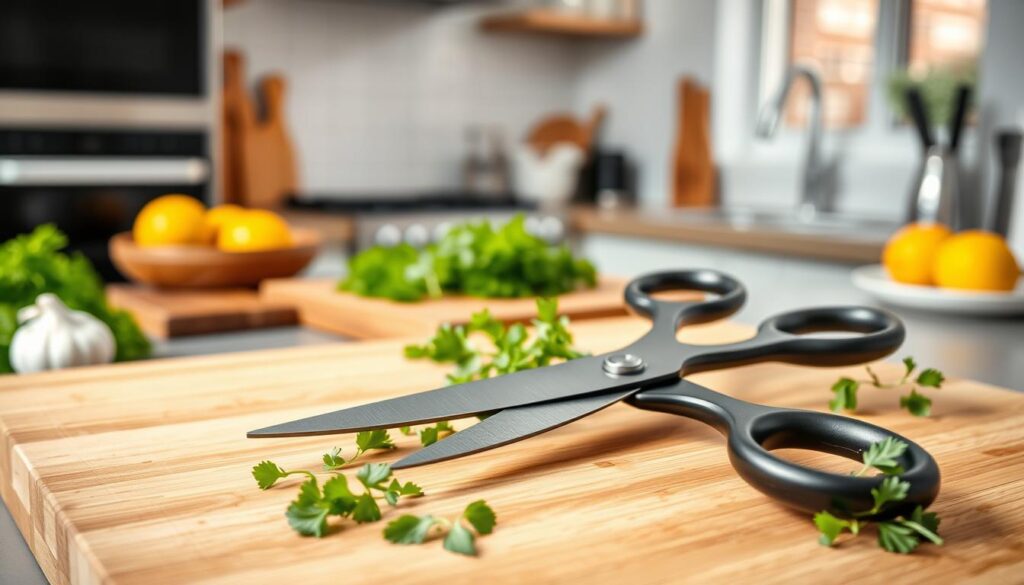
Shears shine on small, precise jobs. Use them for snipping herbs, trimming pie dough, cutting parchment to fit a pan, and opening packaging without dirtying a board.
- Snip herbs and trim fat quickly for fresher flavor and less mess.
- Cut cauliflower or broccoli florets and portion greens without a lot of scrubbing.
- Butterfly or break down poultry where leverage and control matter.
When shears beat a chef’s knife (and save you dishes)
For short, direct chops, shears offer safer leverage and stable cuts that often beat pulling out a chef knife and board. Long slicing and fine dicing still favor knives, but for many prep tasks shears reduce steps and mess.
Choose models you’ll use weekly—comfort, blade length, and take-apart cleaning decisions translate directly into more ease and less time at the sink.
Best kitchen shears guide: the core buying criteria that matter most
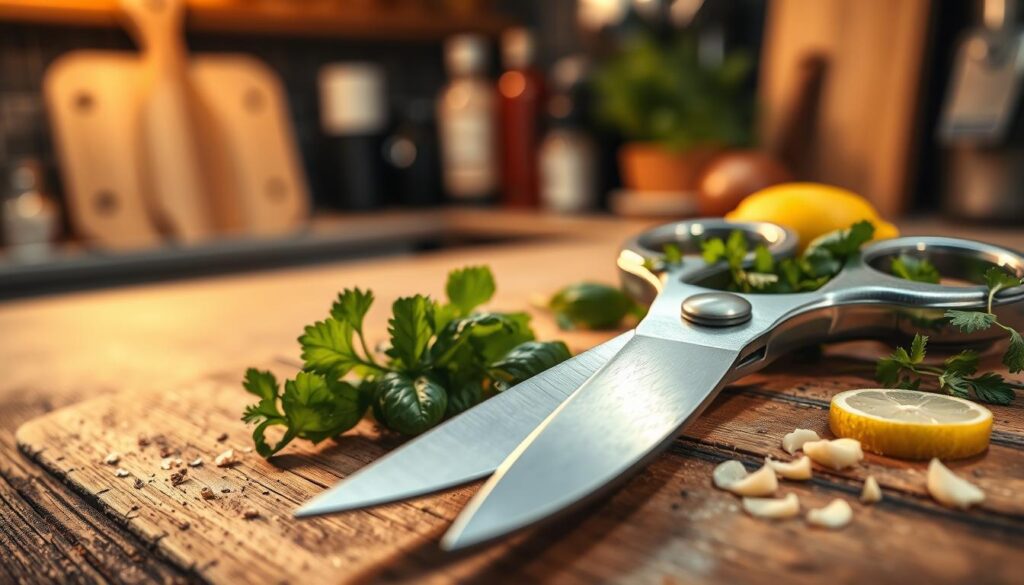
Start by seeing how the tool actually works. A smooth cutter blade does most of the slicing while a thicker anvil blade—often serrated—stabilizes and grips slippery food like chicken, herbs, or meat.
How the two blades share the load
The cutter blade needs a keen edge and the right angle so it slices cleanly instead of crushing. That edge angle determines what people mean by sharp blades.
What to look for in serrations, length, and weight
Small, biting serrations on the anvil blade stop skin and herbs from sliding. Aim for blades near 3.5 inches; that length balances control and smooth strokes.
Weight matters: about 4–5 ounces gives you usable power without tiring your hand during repeated cuts.
Pivot, handles, and cleaning
Medium pivot tension feels smooth and strong; most models aren’t adjustable, so test tension if you can. Look for comfortable, ambidextrous handles with a secure grip for both hands.
Finally, prefer take-apart designs so you can fully clean the pivot after raw chicken or sticky prep. Easy separation cuts down on hidden gunk and makes safe reuse simple.
- Cutter + anvil: slicing and grip
- Edge angle: clean cuts from sharp blades
- Serrations: traction on slippery food
- 3.5″ blades and 4–5 oz weight: control and power
- Take-apart design: cleaning and safety
Blade material and build quality: stainless steel, high-carbon steel, and what to prioritize
A smart balance of corrosion resistance and edge retention keeps your pair working through weekly prep in a busy US home.
In general, stainless steel options resist rust and handle dishwasher routines better. High-carbon stainless varieties trade a bit of corrosion resistance for sharper, longer-lasting edges.
Corrosion resistance vs. edge retention for US home kitchens
Prioritize a blade that won’t rust around the pivot. Dalstrong notes 420J2 Japanese stainless steel for good corrosion resistance and strength.
Edge retention matters, but a blade that dulls slowly while staying clean is often the real win for weeknight speed and food safety.
When all-metal feels premium—and when it hurts comfort
All-metal builds bring rigidity and durability, but ATK found they can feel heavy and wince-inducing after repeated use.
Look for textured grips or molded handles when you expect wet, greasy prep. A slick metal grip reduces control and ease.
- Check blade thickness consistency and clean grind lines.
- Confirm solid pivot hardware and no wobble on open/close.
- Favor take-apart design to clean the pivot after raw food.
Performance benchmarks: how you can “test” shears before you commit
Before you buy, run a few quick tests at home so you can see how a pair handles real food. Short, focused trials reveal tension, edge behavior, and comfort faster than specs alone.
Paper to start: what it shows and what it hides
Use plain paper to gauge initial sharpness. A clean tear or slice shows a keen edge, but this test won’t predict performance on wet or tough material.
Parchment, twine, and pie dough
Cut parchment and twine next. Test pie dough to spot wedging. If dough shreds or the tool squashes, tension or edge angle is at fault.
Herbs, vegetables, and whole chicken
Snip chives and trim rosemary to watch for bruising or tearing. Next, trim cauliflower florets to check agility in tight spaces.
Finally, simulate backbone removal on a whole chicken. This protects your knife and shows whether the tool handles cartilage without strain.
Retest over time
Repeat the paper slice after several tasks. The best kitchen shears keep cutting cleanly instead of dropping off a performance cliff.
- Quick paper test — sharpness baseline
- Parchment & dough — clean slicing vs. wedging
- Herb and veg trials — bruising and agility
Features that add versatility (or just add bulk)
Extra features can make a pair of shears more useful—or needlessly heavy; you should know which is which. Focus on how each add-on affects cutting performance, balance, and cleaning after meat or chicken prep.
Micro-serrations for traction
Micro-serrations can help hold slippery food like chicken skin and wet herbs while you cut. ATK testing shows they improve grip in short, controlled cuts.
But rounded or shallow serrations add little and can be hard to sharpen. Choose models with clear, biting serrations if you expect frequent wet work.
Built-in tools: useful or just extra weight?
Models with a bottle opener, nutcracker, jar opener, or bone-notcher—like some Shun and Dalstrong products—cover quick utility tasks well.
Ask whether you’ll use those tools weekly. They speed small chores but add crevices that trap residue and make cleaning harder after raw meat.
Spring-loaded vs. standard for heavy tasks
Spring-loaded designs reduce hand strain during repetitive cutting. They can be a real ease for repeated poultry work.
Standard shears feel simpler and often balance better. If you pick a spring model, confirm pivot hygiene and weight so performance doesn’t suffer.
- When micro-serrations matter—slippery meat and wet herbs.
- Evaluate built-ins—usefulness vs. extra cleaning.
- Spring vs. standard—comfort on repeat tasks vs. balance.
Comfort and safety: choosing handles you can use all day
Comfort and control in the handle determine whether you’ll reach for a pair every time prep gets busy. A handle that fits your fingers lets you work faster and reduces slips when food is wet or greasy.
Finger bow sizing for small and large hands
Try the finger bows with your own hand. Small hands should not overreach. Large hands must not feel cramped.
ATK preferred moderately sized bows because they fit a range of users and cut down on hotspots during longer use. A roomy shape also stops pinching when you repeat cutting tasks.
Non-slip grips for wet hands and messy prep
Slick metal handles can fail when your hands are wet. Look for lightly cushioned, textured surfaces that keep a steady grip while trimming fat or snipping herbs.
- Fit first: check how your fingers sit in the bows to avoid strain.
- Grip matters: non-slip textures reduce the chance of slips on wet poultry or greasy work.
- Test for fatigue: open and close for a minute and note pressure points or pinch spots.
Comfort links straight back to safe use. When handles match your hand and supply good leverage, you get more ease and less fatigue over time. That makes a reliable pair of shears more likely to earn regular use in your kitchen.
Red flags to avoid when shopping for kitchen shears
A quick visual and feel check can reveal the flaws that ruin daily prep. When you inspect a pair, focus on how the tool performs, not just how it looks.
Watch the cutter blade for signs of blunt geometry. Thick edge angles (over about 30°) wedge and tear instead of slicing. If paper or herbs crumple, that blade will struggle on meat.
- Rounded or decorative serrations that sit away from the edge give fake traction and fail to grip wet food.
- Short, wide blades under 3.5″ or wider than 0.75″ feel clumsy on tight curves and force extra cuts.
- Pivot tension that’s too tight tires your hand; too loose kills precision. If the pivot loosens with use, expect performance loss over time.
- Reject handles that pinch or get slick when wet—poor bows and smooth metal cause cramps and slips during heavy prep.
Use these red flags as a fast filter while shopping so you save money, avoid returns, and get more ease during real-world testing.
Matching the right shears to your cooking style and top tasks
Match the tool to how you cook most days to make prep faster and less fussy. Think about what you cut most often and let that steer your choice.
If you prep a lot of herbs
If you snip parsley, chives, or cilantro daily, dedicated herb scissors pay back quickly. Herb scissors let you work over bowls and bowls of herbs without bruising leaves.
Consider kitchen herb scissors with multiple blades or fine serrations for clean, fast snips.
If you cook poultry often
Poultry work needs leverage, solid pivot tension, and biting serrations to hold skin and cartilage. Look for a model that cuts backbone and handles joints without flex.
Options like an Oxo-style multipurpose tool offer dependable poultry performance without feeling like a bulky tool meant only for chicken or meat.
If you want one tool for everything
Build a one-tool setup by prioritizing balanced blade length, modest serrations, and comfy handles. That creates a reliable all-day option for herbs, parchment, twine, florets, and light meat tasks.
- List your top three tasks, then match blade length and serration style.
- Avoid a heavy “poultry monster” if you mostly snip herbs.
- Own a second pair when you separate food work from utility chores.
Cleaning and food safety: the take-apart advantage
A clean pivot is the single most important safety step after any raw poultry or herb prep. When you focus on that small gap, you remove trapped chicken juices, meat fragments, and herb bits that invite bacteria and dull performance.
How to clean the pivot after chicken and herbs
When a model can come apart, you get full access to the hinge. Follow the maker’s disassembly steps, then scrub the pivot with warm, soapy water and a small brush.
Take apart to remove lodged pieces and sanitize before switching tasks. ATK found this step cuts contamination risk and makes later cleaning faster.
Hand-washing vs. dishwasher: protecting blades and handles
Hand-wash to protect edge geometry and coated handles. Dishwashers can speed cleanup but may accelerate corrosion on lower-grade steel and stress soft grips.
Drying and reassembly tips to prevent rust and gunk buildup
Dry every part completely before reassembly. Water hides around the pivot and can create early rust even on stainless steel. Reassemble only when dry to preserve tension and ease of use.
- Disassemble per instructions.
- Wash and scrub the hinge, rinse well.
- Dry fully, then reassemble to keep blades aligned.
Sharpening and maintenance: keeping blades performing like new
Small, regular care keeps your shears cutting well and saves time during prep. A focused routine—edge touch-ups, careful handling of serrations, and dry storage—prevents rust and reduces hand fatigue.
For the cutter blade aim for a 15–20° edge angle. ATK noted a 19° angle on its top performer, and Dalstrong recommends the same 15–20° range. More acute angles feel sharper but wear faster, so stop when paper and parchment slice cleanly without heavy metal removal.
Working with serrations
Use a narrow serrated sharpener or small round file to follow tooth profiles. Do not flatten the anvil blade’s serrations; those teeth provide grip on slippery food. Light, targeted passes preserve the serrations and keep the pair effective on wet or fatty cuts.
Simple maintenance steps
- Wipe blades after each use to remove moisture and residue.
- Disassemble and deep-clean the pivot after raw poultry.
- Touch up the cutter edge occasionally—test on paper and parchment before more reshaping.
Storage that protects the edge
Store shears in a blade sheath or dedicated drawer divider so steel edges do not nick. Always dry each part before reassembly to prevent rust on stainless steel surfaces and pivots. Proper storage keeps the blade aligned and your kitchen safe.
Price, value, and what “professional-grade” really buys you
The real value of professional-grade models is how they reduce time, fatigue, and cleaning headaches. Price tags often signal better fit-and-finish, but what you care about is whether the tool solves daily problems.
What to expect across price tiers
At budget prices you get acceptable blades and basic handles. These models handle herbs and light tasks fine but may lack a true take-apart hinge or crisp serrations.
Midrange models usually deliver sharper blades, steadier pivot tension, and more comfortable handles. They often balance weight and ease for regular use.
Premium options add finer edge geometry, superior material choice, and extras like spring action or multi-tools. Those upgrades matter when you need longevity and top comfort.
When paying more makes sense for your kitchen
Spend up when higher cost fixes a real pain point: persistent hand fatigue, frequent poultry work, or long cleaning times. If a model’s better blades and take-apart design cut prep and cleanup time, that value shows up quickly.
- Check blade length—3.5″ is versatile across tiers.
- Feel serration bite—micro-serrations should grip, not just decorate.
- Test pivot tension—consistent tension beats flashy extras.
- Confirm take-apart—easy cleaning is a safety and value win.
Decision rule: spend more only when the extra price directly improves ease, handles comfort, or reduces time and maintenance. Otherwise, a well-chosen midrange model gives the best balance of price and performance.
Real-world models you’ll see in the US market (and how to compare them)
Compare widely available models by running the same quick trials on each pair. Start with the tasks you do most: herbs, parchment, and backbone removal on a whole chicken.
Oxo Good Grips: balanced multipurpose performance and easy cleaning
oxo good grips get praise for a comfortable handle and a micro-serrated blade that holds slippery food. ATK and other testing name this product a dependable value for daily cuts and simple cleaning.
Shun/Kai-style: sharper feel, longer blades, and extra tools
Shun and Kai-style models deliver a sharper cutter blade and longer, narrower blades for smoother slicing. Some products add tools like a bottle opener and nutcracker for utility trade-offs.
Take-apart Henckels-style options: strong value for everyday tasks
Henckels-style take-apart models give you full access to the pivot for deep cleaning. They’re solid, affordable pairs that handle chicken prep without stressing your knives.
What to verify on any product listing before you buy
- Blade length (around 3.5″) and blade material or steel type.
- Whether the pair shears come apart for cleaning and pivot care.
- Anvil serration placement, handle sizing, and warranty/return terms.
- Real-world testing notes on chicken cuts and how the pair handles cartilage.
Conclusion
Wrap up your search by focusing on the few features that actually change daily performance. Prioritize a keen cutter geometry and biting serrations, comfortable handles, and steady pivot tension so the shears cut with control and repeatability.
Take-apart cleaning matters for food safety, especially when you switch between chicken, meat, and sticky herbs in the same week. A clean hinge keeps bacteria and gunk out and makes maintenance faster.
Simple must-checks: blade length and edge behavior, serration bite, pivot feel, and how the pair fits your hand. Test a few models on parchment, herbs, and a backbone mock cut before you commit.
Next step: shortlist 2–3 pairs in your price range, verify listing details, and choose the one that feels easiest in your hand over time. Your standard of success: the kitchen shears cut cleanly, clean up without drama, and stay reliable over months of regular use.