
Top Professional Knife Rolls and Bags for Transporting Your Blades
You depend on gear that protects your tools and shows your professionalism. A dedicated knife roll holds multiple knives and tools in separate slots. This prevents edges from dulling and stops blades from knocking together during transport.
Think of the right system as part of your work identity. A practical setup gives you fast access on the line, secure closures, and durable materials that last through daily commutes.
Key benefits: safe transport, edge protection, quick access, and organized storage. A focused bag beats tossing blades into a generic tote. Separate slots keep pins and rivets from hitting metal and dulling edges.
In this roundup you’ll find top picks, direct comparisons, and a compact buying checklist so you can choose quickly. We’ll also cover common styles—roll-up, briefcase-style, and modular—and care tips to keep your knives and bag in peak condition.
Why a knife roll bag is the safest way to transport and store your knives
A dedicated transport system keeps your cutting tools sharp and safe during every commute. A properly designed knife roll bag encases each blade in its own pocket so edges don’t touch. This reduces edge-to-edge contact and helps prevent dulling and micro-chipping when you move between stations.
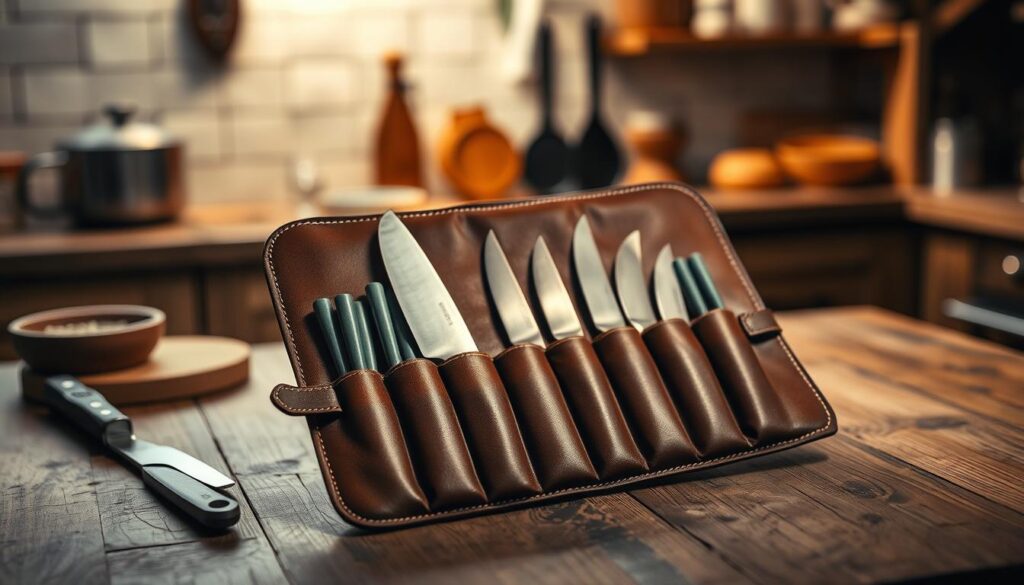
Loose storage — drawers, countertops, or a random tote — exposes blades and raises the chance of accidental cuts when you reach in. Exposed edges also suffer unexpected contact that shortens edge life.
- Fast inventory: Fixed knife slots let you check gear at a glance so you notice a missing tool before service.
- Space-saving: A compact roll consolidates knives and fits into small lockers, shared housing, or tight prep areas.
- Professional style: Leather, waxed canvas, or nylon options present a clean, put-together look that matches your kitchen uniform.
Treating a good blade as an extension of your hand means protecting its edge protects your performance shift after shift. Different designs solve different needs — compactness versus structure versus customization — which is what we’ll cover next.
Knife roll styles you’ll see in professional kitchens
Choosing the right carrying style means balancing compactness, structure, and flexibility. Your routine—daily commute, long travel, or short runs between stations—should shape which system you pick.
Roll-up designs for compact, on-the-go shifts
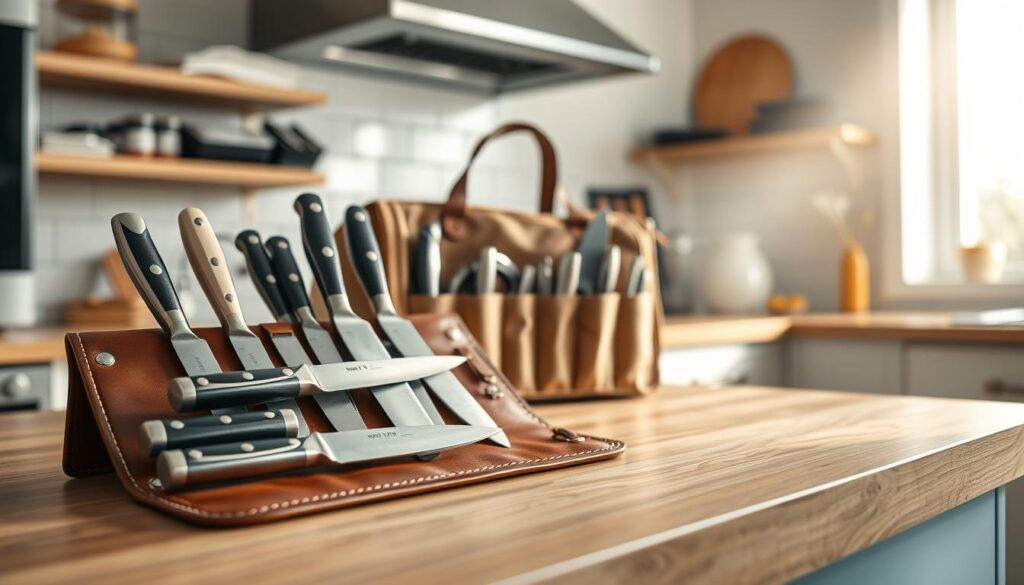
Classic roll-up models often use leather or canvas and tuck into a tight bundle. They save space and are popular among commuting chefs who bike, take subway rides, or share cars.
Limits: fewer slots and tighter spacing can make long blades or thick-spined tools hard to fit unless the roll is sized for them.
Briefcase-style carry for structured protection
Flat, briefcase-style cases open out and give more organization and padding. They suit pricier sets and travel where structure matters more than lightness.
Tradeoffs include extra bulk and weight despite the better protection and clearer layout.
Customizable and modular roll bags
Modular systems let you add pockets or dividers as your toolkit evolves. They are ideal if you often add plating tools, thermometers, or specialty pieces.
- Match your style: pick by travel frequency, tool count, and whether you want speed or maximum protection.
- Look beyond style: assess material, closures, capacity, and carry comfort before you buy.
Best knife roll for chefs: what to look for before you buy
A smart purchase begins with matching capacity and protection to your daily kit. Count the blades you use each shift — chef knife, paring knife, slicer — and add room for backups and small tools like peelers and thermometers.
Fit matters. Look at knife slots width for thicker spines, length limits for long blades or cleavers, and extra space for guards or sayas. Avoid cramming blades together; crowded slots speed dulling.
Material affects durability and care. Choose leather for a classic look and long life, waxed canvas for water resistance, or heavy-duty nylon and polyester for easy cleaning and puncture resistance. Reinforced stitching at blade tips is critical.
- Retention: individual safety straps secure each blade; zippered full-cover designs reduce exposure during travel.
- Portability: padded handle, cross-body or shoulder strap, and weight capacity matter if you carry many knives and tools.
- Organization: pockets, mesh compartments, utensil loops, and pen/business card slots keep small items accessible.
Price guides: basics around $25 will function; expect better materials and organization near ~$50; and durable leather or premium finishes at $100+.
Top professional knife rolls and bags to consider right now
This shortlist focuses on practical bags built to survive daily commutes and heavy kits. Each pick shows quick specs so you can compare slot count, max blade length, material, closure style, and organization at a glance.
- Kyoku chef knife roll bag — 10 slots; 18oz waxed canvas + leather; supports up to 22 lb; adjustable shoulder or cross-body strap; 3 utility loops. Ideal if you want rugged elegance and heavy-kit capacity.
- Chef Sac knife roll bag — 8 slots + cleaver slot (up to 17″); 600D polyester canvas; individual safety straps; mesh pockets; 6 utensil slots; value pricing (~$24.99). Great as a budget starter option.
- Messermeister padded knife luggage — 8 slots; 600D nylon cloth; fits blades up to 18″; zippered full-cover; admin pockets (business card and pen slots); ~$49.95. Suits longer-blade specialists and traveling pros.
- HERSENT waxed canvas chef knife roll — 10 slots; zippered utensil section; fits knives up to 18.8″; affordable. Choose this if you need large blade capacity on a tight price point.
- Shun 8-slot knife roll travel case — PVC laminated polyester; holds 8 knives; padded handles; detachable shoulder strap; business card and tool storage; commute-ready build and easy wipe-down care.
- Aaron Leather Goods 10-pocket leather knife roll — 10 pockets; premium leather that develops character; detachable shoulder strap; zippered pouch; fits blades up to 18″. Best if you value long-term patina and polished look.
Quick buying tip: match slot count to your typical chef knife and tool load, and pick materials (canvas, nylon, or leather) by how you travel, clean, and store your kit.
Quick comparisons that make choosing easier
A brief comparison clears the clutter so you pick what matches your routine. Below are focused differences and real-use guidance to help you decide between similar options and materials.
Chef Sac vs. Messermeister
Chef Sac uses 600D polyester canvas, includes a cleaver slot, and secures each blade with individual straps. It fits blades up to 17″ and costs about $24.99.
Messermeister uses 600D nylon cloth, adds an extra inch of blade capacity (up to 18″), and offers a zippered full-cover for transit at ~$49.95.
Choose straps if you value quick access and sawtooth security; choose the zip cover if you want full enclosure and extra length for long blades.
Waxed canvas vs. leather knife roll
Waxed canvas gives rugged water resistance and easy daily wear. It handles spills and light scrubbing without losing utility.
Leather provides a classic look and ages well with conditioning. Expect higher upkeep but a polished finish over time.
How many knives you carry
If you run a minimalist station, a compact roll with 4–6 slots keeps essentials handy without bulk.
If you carry many knives plus small utensils, pick a bag with extra pockets, more slots, and room for tasting spoons and thermometers so you don’t outgrow it fast.
- Quick decision framework: compare closure style, blade length limits, and whether you need a cleaver slot.
- Fabric note: “600D” means a heavy-duty weave common in durable bags — it resists daily abrasion and holds up to sharp blades.
- Practical use: match materials and pockets to your commute, locker space, and how fast you need to set up on arrival.
How to care for your knife roll so it lasts
A routine cleaning habit makes your gear safer and more reliable on shift. Proper care keeps closures working, preserves material quality, and protects the blades you carry. Treat maintenance as part of your prep routine to avoid surprises.
Leather care
Wipe down after each shift with a soft cloth. Avoid harsh chemicals that strip oils. If the leather gets wet, let it dry naturally away from direct heat to prevent warping or cracking.
Condition every few months to keep the leather supple and preserve its look and quality.
Canvas and waxed canvas care
Follow the maker’s instructions first. For standard canvas, gentle washing on a mild cycle may be allowed. For waxed canvas, avoid machine washing.
Spot clean with cold water and mild soap, and brush or wipe to preserve water resistance.
Nylon and polyester care
Wipe with a damp cloth and mild soap for quick cleanup. Use a soft brush on stains and let the bag dry fully before storage to prevent mildew and odor.
- Protection habits: use blade guards, avoid storing wet towels inside, and don’t overload seams or closures.
- Why it matters: small steps extend the life of the fabric and keep your kit looking professional while shielding your knives and blades.
Conclusion
A final quick check will help you pick gear that protects your edges and fits your routine.
Dedicated slots give clear edge protection and safer knife storage than loose drawers or counters.
Put “fit first”: count your knives, measure your longest blade, and note needed pockets and space.
Choose the build and closure that match how you commute and how much protection you want around sharp edges.
If budget matters, pick a value roll; if you carry long blades, choose structured luggage; if longevity and style matter, opt for premium leather.
Measure, count, and select a knife roll bag that keeps your kit organized, your edges safe, and your setup quick in the kitchen.