
The Top 5 Whetstones for Beginners to Start Sharpening at Home
You want a simple, reliable way to keep your knives sharp at home. This guide explains why a basic sharpening setup should last you beyond the first few uses and how an 8″ stone makes consistent strokes easier in a busy kitchen.
Expect to buy a compact kit that pairs a coarse and a finer stone, so you won’t need to replace stones as you learn. I will compare diamond plates, water stones, and oil systems, and note which kits speed up your learning curve with low upkeep.
Key selection points you’ll use here are grit progression, stone size, stability, maintenance, and budget. That way you choose confidently instead of guessing.
By the end, you’ll know which starter set to buy, what accessories help, and which options to skip. Recommendations include recognized brands like DMT and Norton, plus practical bundles that fit common U.S. kitchen routines.
Why a Whetstone Is the Best Way to Start Knife Sharpening at Home
A sharpening stone gives you direct control over how a blade is rebuilt, stroke by stroke. In plain terms, sharpening means using an abrasive surface to remove metal until two bevels meet cleanly and form a new cutting edge.
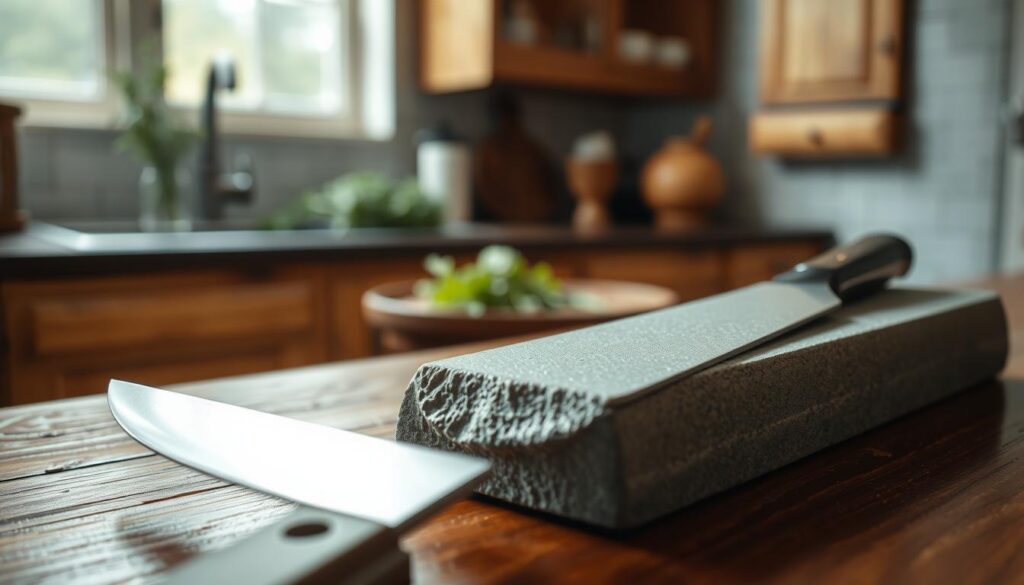
Do not confuse sharpening with honing. A honing rod realigns an edge; it won’t remove enough metal to fix a truly dull knife. Stones do the reshaping work you need.
Sharp edges are safer. A dull blade wedges and slips, so you push harder and risk cuts in the kitchen. A sharp edge cuts predictably and reduces force.
- Why stones help: you see progress, feel feedback, and control angle and pressure.
- Four fundamentals to learn: abrasive, angle, burr, consistency.
- Systems that work: water, oil, and diamond options all produce great edges; the best sharpening match depends on how much care and frequency you want.
How to Choose the Best whetstones for beginners
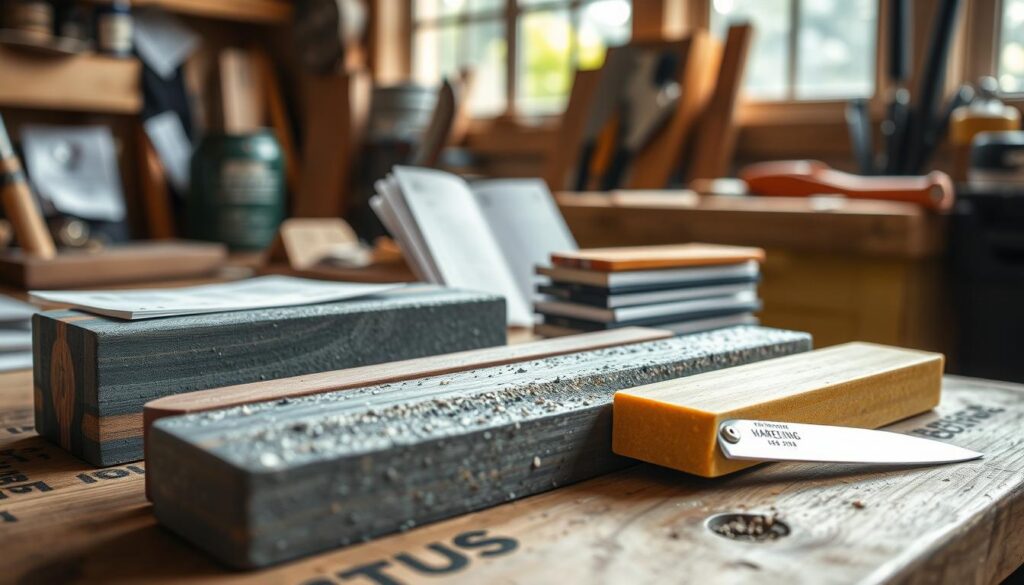
Start by choosing stones that let you remove metal quickly and then refine the edge with finer grits. A coarse stone reshapes a dull blade. A finer surface polishes the bevel and raises cutting performance.
Pick a grit progression you can actually use
Simple rule: coarse-plus-finer. That combo fixes chips and then hones the edge without extra steps. Two-sided coarse/fine stones are a smart first option. If you expect to work on very dull or damaged blades, plan to add a mid grit later.
Choose the right size and prioritize versatility
An 8″ stone helps keep long, even strokes and makes angle control easier. Smaller stones work, but they slow you on longer blades. Buy stones that cut well across common kitchen steels so your kit remains useful as your skills grow.
Factor maintenance and budget
- Maintenance: water stones need soaking or wetting; diamond plates are splash-and-go and flatten less often.
- Budget: buy one excellent stone now and build a set over time, or choose a value kit that includes a base/holder so the stones last longer and stay stable.
Understanding Grit: Coarse, Medium Grit, and Fine Edge Finishing
Think of grit like sandpaper grades: lower numbers cut faster and leave more tooth, while higher numbers smooth and polish for cleaner slices.
Coarse ranges (below ~800 on many Japanese-style scales) remove metal quickly. Use a coarse stone to repair chips, reset a worn bevel, or shape a badly dull edge. It speeds up the heavy work so you don’t grind forever.
Medium grit (~800–2000) is your day-to-day workhorse. A medium grit restores a usable bevel, evens the angle, and gets most knives back to cutting condition with fewer passes.
Fine and polishing grits (above ~2000) refine the bevel and improve the cutting feel. These surfaces give a smoother, cleaner cut and a sharper finish once the edge is already shaped.
- Quick rule: low grits cut fast and leave deeper scratches; high grits refine those scratches into a polished edge.
- Common mistake: sharpening only on a fine stone wastes time on dull blades because fine surfaces remove metal slowly.
- Goal: match grit progression to the knife, not to make it shiny but to build a sharp, stable edge.
Sharpening Fundamentals You Need Before You Buy
Mastering a handful of fundamentals will save you time and help your knife hold a true edge. Learn how abrasives, angle, burrs, and consistency work before you pick a stone so your first purchases support learning.
Abrasive choice and how it shapes feel
Different abrasives cut and finish differently. Aluminum oxide and other binders change how fast metal comes off and how the surface polishes.
Pick a stone that matches the steel in your kitchen knives so you get predictable feedback and cutting bite.
Practical angle basics
Instead of chasing a degree, try to match the factory bevel and hold that angle consistently. Use an angle guide if you need steady help while learning.
Burrs, consistency, and the marker trick
A burr means you’ve reached the apex; forming then removing it cleanly yields a reliable sharp edge. Consistency across strokes matters more than perfection.
Use a marker on the bevel, make a few light passes, and check ink removal. That instant feedback tells you if your angle sits too high or low.
- Buy with these rules: choose abrasives that teach—fast-cutting yet forgiving—and a surface size that keeps your angle steady.
Diamond Stones for Beginners: Fast, Durable, Low Maintenance
Diamond plates cut fast and need very little upkeep, so you get sharp edges with less frustration. They hold flat, handle hard steels, and serve as a handy flattening tool if you later add water stones.
On DMT plates you’ll see two surface styles: interrupted and continuous. Interrupted surfaces clear metal debris and cut aggressively. A continuous surface helps you finish fine points and polish tips without chatter.
- DMT 8″ DuoSharp Plus (coarse/fine) — a high-value single stone that shapes and refines blades while giving a continuous area for tip work.
- DMT 8″ DuoSharp Plus Kit — two stones with four grits plus a stable base. It’s the easiest way to get a full progression and a secure work surface in one purchase.
- 6″ double-sided Dia-Sharp — a compact option for tight counters; great for short knives but expect slower long-blade strokes.
Maintenance is simple: rinse and wipe the plate after use, and use light oil or water if you prefer. Keep a diamond plate on hand to flatten water stones later. That way, your kit stays useful as your skills grow.
Water Stones for Beginners: Speed, Feedback, and a Sharper Edge
Water stones give you fast metal removal plus a polish that feels noticeably sharper on a cutting stroke. They cut quickly and offer clear tactile feedback so you sense progress as you form a bevel.
Why they cut fast and polish well
Water stones use soft binders that expose fresh abrasive grit as you work. That means faster sharpening and a finer finish once you move up grits. You get a cleaner edge that slices with less drag.
Maintenance reality
Flattening is not optional. Water stones dish over time, which changes your angle and makes results inconsistent. Keep a flattening stone or diamond plate ready so your surface stays true.
Recommended starter and upgrade sets
- Double-Sided 8″ Sharpening Supplies Water Stone Set — four grits (220–8000) on two stones plus a Double-Time Flattening Stone; good all-in-one value.
- Double-Sided 8″ XL Water Stone Kit — wider 8″ x 2 3/4″ surface that suits chisels and plane blades as well as knives.
- Naniwa Super Stones (S1 vs S2) — splash-and-go convenience; S1 is thinner and cheaper, S2 is thicker and longer-lasting. Both still need a flattening tool.
Buying tip: if you choose water stones, buy your flattening method at the same time so the set stays effective from day one.
Oil Stones for Beginners: Budget-Friendly and Easy to Use
If you want a low-cost, low-fuss route to a usable edge, oil stones are a sensible starting choice. They need no soaking, sit ready in a tray, and offer steady, predictable feedback while you learn.
What oil stones do well (and where they’re slower)
Oil stones cut more slowly than many diamond and water options, but that tradeoff buys consistency and durability. You’ll remove metal at a steadier pace and get a controlled feel as you raise a burr.
Classic multi-stone system: Norton IM200S
The Norton IM200S packs three 8″ x 2″ stones—Coarse Crystolon, Medium India, and Soft Arkansas—into a single housing that retains oil. The progression handles coarse stone shaping, a medium grit working stage, and finer finishing in one compact kit.
Large surface sharpening upgrade: Norton IM313CIS
Choose the Norton IM313CIS when you work on long knives or multiple tools. Its 11½” x 2½” stones give more stroke room and a better surface sharpening area for long blades.
- Good option if you want simple maintenance and low upfront cost.
- Convenience: the housing keeps oil contained and parts stored together.
- Expectation: patient technique and proper deburring yield excellent kitchen edges.
Beginner Stone Sizes and Setups That Make Sharpening Easier
Picking the right stone length and a steady setup keeps your strokes even and speeds results. That simple choice matters more than which brand you buy when you first learn.
Why 8″ stones are the sweet spot
An 8″ stone supports long, smooth strokes that suit most chef-style knives. Longer strokes mean fewer passes and easier angle consistency, so you finish faster and with a cleaner edge.
When a 6″ stone makes sense
A 6″ stone works well for small knives, tight counters, or occasional touch-ups. It’s compact and stores easily.
But sharpening long blades on a 6″ surface takes more time and more control. A small stone can do the job, but a large knife will feel choppy on a short surface.
Stability: bases, holders, and non-slip mats
A secure base keeps the stone from shifting and keeps your hands safe. Cheap fixes like a rubber shelf liner over a folded towel work in a pinch.
A dedicated base or holder is cleaner and more repeatable. When you buy a stone or set, factor in a base so practice sessions stay steady and frustration stays low.
- Length matters more than width for knives.
- Choose an 8″ stone if you mostly sharpen chef’s knives.
- Get a stable base to save time and improve results.
Must-Have Accessories to Sharpen Knives Faster and More Accurately
A few simple accessories will speed sharpening and help you learn correct technique. They control angle, keep a true surface, and show when you’ve removed the burr so your results are repeatable.
Angle guides and DIY blocks
Commercial angle guide systems attach to the spine and lock a set angle (common choices: ~12–13°, 15°, 20°, 30–40°). They help build muscle memory fast.
DIY angle blocks work well when a guide gets in the way of wide blades or odd geometries. Start with a guide, then practice freehand as you gain confidence.
Flattening and diamond plates
Flattening is essential if you use water stones. Plan to flatten right away with either a dedicated flattening stone or an extra-coarse diamond plate that also serves other tasks.
Strops, paste, and inspection
Use a strop (denim, linen, felt, or leather on hard backing) to remove the burr and refine the edge. Add diamond paste: 1‑micron after ~6K, or 2–3 micron after ~3K.
Finish inspections with a 30–60× LED loupe to spot burr remnants, chips, or uneven bevel contact.
- Workspace basics: spray bottle or bowl of water, towel, and a cleanup plan so sharpening stays tidy and quick.
- How accessories help: guides steady angle, diamond plates keep surfaces true, strops clean the edge, and the loupe confirms results.
Recommended Beginner Grit Progressions for Common Home Kitchen Knives
Pick a progression that you will actually use regularly. A simple plan makes sharpening less intimidating and keeps knives reliably sharp.
Minimal two-stone progression
Use one fast-cutting coarse stone and one finer finishing stone. A common pairing is ~400 then 3000–6000. The coarse stone reshapes and the higher grit polishes a fine edge quickly.
Three-stone progression
A three-step set gives smoother results: 300–400 for repairs, 800–2000 as your main working grits, and 3000–6000 to finish. This makes burr removal easier and helps you reach a shaving-ready edge at 800–2K with good deburring.
How steel affects grit choices
Some steel responds slowly to low grits or can glaze on certain surfaces. Hard stainless may need a more aggressive coarse stage. Softer carbon steel feels faster at lower grits and polishes well later.
- Practical tip: start with an 800–2000 core set, then add coarse or finishing stones as needed.
- Focus: consistent sharpening beats rare, perfect sessions—choose a progression you’ll use.
How to Use Your First Sharpening Stone Set Without Ruining a Knife
Start each session by preparing the stone and workspace. Water stones may need soaking or a quick splash depending on the model. Diamond plates are low-prep and ready to use. Oil stones require a light film of oil so the surface cuts cleanly.
Step-by-step beginner sequence
- Set and hold a steady angle that matches the blade profile.
- Work one side with controlled pressure until you form a continuous burr along the edge.
- Flip to the other side and repeat until the burr flips back.
- Lighten pressure, take alternating strokes to refine, then finish with a few light passes.
Pressure, finishing, and checks
Use firmer pressure to shape, then reduce pressure as you refine so you don’t tear off a big burr. Remove the burr with alternating strokes or a strop.
- Safely check for a burr by sliding your finger off the edge, not into it.
- Validate with a paper towel cut; a clean slice shows a good sharp edge.
- The shaving test is optional—use it only after you trust your process.
Prevent damage: keep your angle steady, avoid rocking the blade, and stop once the edge is even across the surface. With simple setup and consistent strokes, you’ll learn to sharpen confidently without harming a knife.
Conclusion
Choose a starter setup that balances grit coverage, size, and upkeep so your kit grows with your skills.
If you want speed and low maintenance, pick a diamond plate option. Choose water stones when you value feedback and a polished finish. Pick oil stones if you want a budget-friendly, steady system.
Don’t begin with only a fine sharpening stone—pair a coarse capability and a finer surface so you can shape and refine without wasting time or money.
Favor an 8″ stone and a steady base to make angle control easier; that skill drives real results with chef knives. Start with a reliable two-grit set or kit, then expand to a three-stone progression later.
Whether you compare Pebble Premium / Sharp Pebble or pro brands, focus on grit coverage, type, and maintenance. With steady angle work, burr control, and consistency, you’ll keep a sharp chef’s edge at home.