
Why Camellia Oil is the Gold Standard for Japanese Knife Protection
If you use high-carbon steel blades, protection matters. In Japan, camellia oil is the trusted choice to form a thin barrier that blocks moisture and oxygen. That simple film helps prevent rust and keeps the edge stable during storage.
You’ll appreciate that camellia oil is non-toxic, odorless, and non-greasy, so your kitchen stays clean and ready for prep. A little goes a long way, which makes small bottles cost-effective over time.
The guide ahead will show what makes this product different from random household options, what label cues to watch for, and the easy habits that actually stop corrosion. You’ll learn how to pick a bottle that fits your routine and keeps your knife ready the next time you cook.
– Use a food-safe coating to prevent rust on carbon steel.
– Small amounts applied regularly protect blades without odor or stickiness.
What Makes Camellia Oil the Go-To Protective Oil for Carbon Steel Knives
Caring for a reactive blade is about preventing oxidation before it starts. A very light, food-safe finish creates a thin barrier that limits contact with moisture and oxygen, which are the two players behind corrosion.
Rust and corrosion prevention
When iron in carbon steel meets water and air, oxidation begins and rust forms. A thin film slows that chemical reaction by keeping moisture and oxygen away from the metal surface.
That barrier helps in everyday scenarios like wet cutting boards, humid drawers, and those “I’ll wash it later” moments that leave carbon blades vulnerable.
- Blocks air and water at the surface
- Reduces spotting after brief exposure to humidity
- Needs only small, regular applications to work
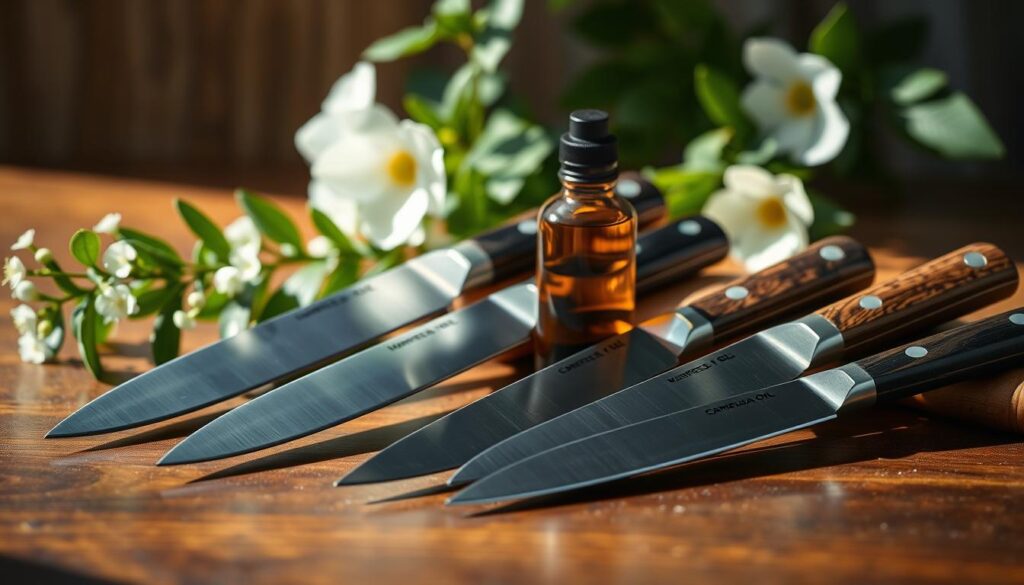
Food-safe, non-toxic protection
This finish is safe around food and tools, so you won’t add odors or unwanted chemicals to your prep area. Brands such as Chefs Edge and Ginza Steel note the non-toxic, odorless nature of this treatment.
Lightweight, non-greasy finish and finish compatibility
The result is a non-greasy feel that won’t affect your grip or require degreasing before use. Chefs Edge also states the product does not affect glue or handle finishes, which matters for fitted components.
- Thin coverage, not a heavy coat
- Comfortable in-hand during prep
- Safe with delicate handle materials
How to Choose Camellia oil for knives: Buyer’s Guide to the Right Bottle
Picking the right bottle matters as much as the product inside. Read labels and user feedback so you buy a food-safe formula made for blade care, not a fragranced cosmetic blend that belongs on skin.
Label cues to prioritize
Look for “food-safe” and statements about non-toxic, odorless finish. Brands like Chefs Edge list these details and note that a single drop can cover an entire blade.
Performance cues that matter
Choose a low-viscosity product that spreads evenly. Favor reviews that cite “a little goes a long way” and describe non-greasy feel. These are real-world signs of effective coverage.
Price vs. value in the US
- Small bottles often cost $10–$15 but last years if applied sparingly.
- Judge by cost per use, not sticker price.
- Read multiple reviews to confirm longevity claims.
Format and kit placement
Pick a bottle with a dropper-style or controlled spout to avoid waste. Add it to your routine after cleaning and drying: clean, dry, apply a few drops, then store. Treat the product as maintenance—not a substitute for proper care.
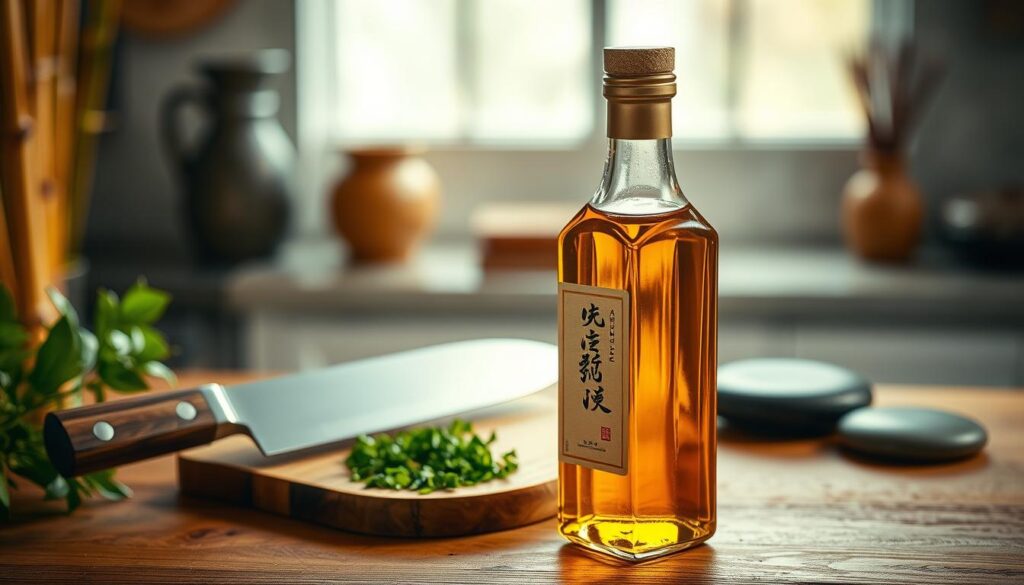
Quick tip: If research pages show “page blocked,” it may be a blocked extension. Try disabling extensions or the specific extension temporarily and reload the page to confirm reviews and product specs before you buy.
How to Apply Camellia Oil to Your Knife for Best Results
A short, consistent routine keeps your blade protected and ready. Follow these steps and you can finish in under a minute.
Simple application method
Clean and dry thoroughly. Wash the knife, then dry it completely. Never seal moisture under a protective layer; trapped water can cause spots on carbon steel.
Apply a few drops to a soft cloth, spread evenly along the blade, and wipe away excess so only a thin film remains. Use just enough so the knife does not feel slippery—this preserves your grip and cutting performance.
When and why to oil
Apply after each use, especially when you’ve cut acidic foods. Do it before long-term storage and as a monthly maintenance habit when you use the kitchen regularly.
- Protects between sharpening sessions
- Works for other carbon-steel tools in your kitchen
- Pairs with proper storage: dry drawer, saya, or a clean knife roll
Practical note: Brands like Ginza Steel and Chefs Edge recommend this light, food-safe barrier as routine care. Oiling and sharpening are separate steps that together keep edges safe and sharp.
Conclusion
Protecting your carbon-steel tools is simple when you choose a lightweight, food-safe finish. It forms a thin barrier that cuts rust risk without leaving a greasy feel.
When buying, prioritize “food-safe” labeling and a bottle designed for blade care. Judge value by cost per use rather than bottle size so you get long-lasting performance from a small purchase.
Keep the habit short: clean, dry, apply a thin coat, then wipe excess. Store your supply near towels or knife storage so maintenance becomes automatic and quick in your kitchen.
Do this and you’ll get fewer rust surprises, better day-to-day readiness, and longer life from the tools you rely on.