
Ordering a Custom Kitchen Knife: What You Need to Know Before You Buy
You’re deciding on a blade that will live on your bench and change how you prep. This Custom kitchen knives guide sets expectations so you pick a tool that improves comfort, speed, and consistency.
First, know what “custom” can mean: dimensions, steel and heat treatment, blade geometry, handle shape, finish, and fit. These choices affect edge stability, sharpening, and food release more than looks do.
Your routine and experience shape the best specs. Home cooks and chefs who work long shifts need different lengths, weights, and grinds. Fit first: a blade should feel controlled and natural in your hand for safety and confidence.
This article focuses on performance factors you can test and ask a maker about. You’ll preview types, steel options, geometry, handle fit, ordering steps, and care. By the end, you’ll have a clear checklist of questions and a spec sheet to place an order with confidence.
Why Order a Custom Kitchen Knife Instead of Buying Off the Shelf?
Choosing a made-to-order blade puts your hand, technique, and daily tasks first. You’re paying to remove the compromises found in mass-produced tools so fit, balance, and control match how you work.
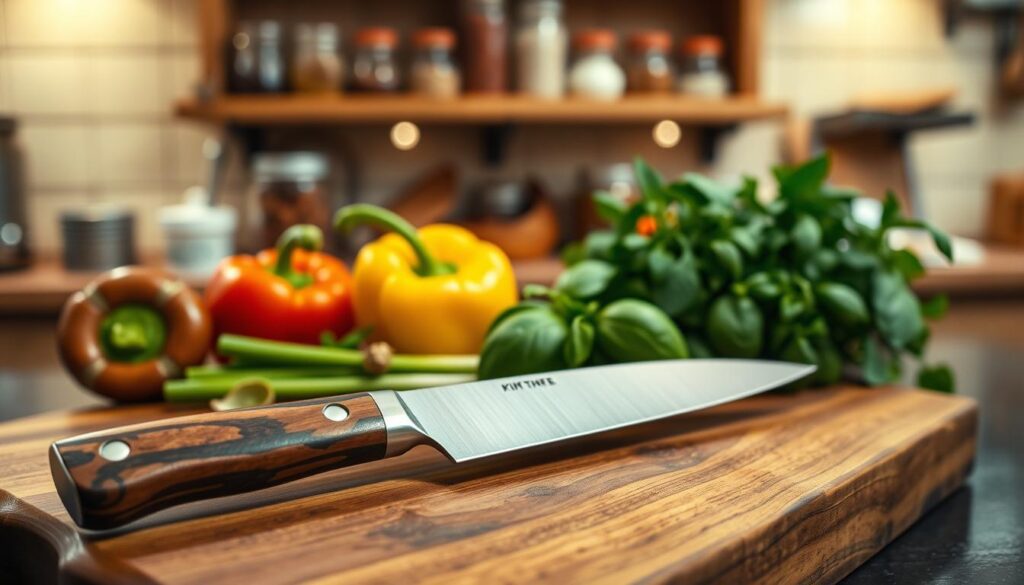
Personal fit and control
A proper fit improves precision. When grip, weight, and balance match your hand size and motion, the blade tracks truer and feels safer.
This reduces wrist strain and helps you cut with steady, repeatable strokes that chefs prize.
Performance and materials
Sharpness and durability follow real factors: the steel, heat treat, and geometry—not marketing labels. Ask makers about steel type and Rockwell ranges so you understand edge potential.
Edge retention means how long the edge stays usefully sharp between hones. Better retention saves time and keeps results consistent in your kitchen.
Design, aesthetics, and the heirloom factor
Craftsmanship and thoughtful style matter. A well-made blade becomes a long-term tool you pass along, not just another item on a shelf.
- Personalized fit for daily comfort
- Transparent specs on steel and heat treatment
- Heirloom value and lasting performance
Choose the Right Knife Type for Your Cooking Tasks
Match each blade type to the tasks you do most to avoid overbuying and to work smarter. A 7–10 inch chef knife or gyuto covers most board work, from slicing and dicing to mincing. That makes it the foundation of your set.
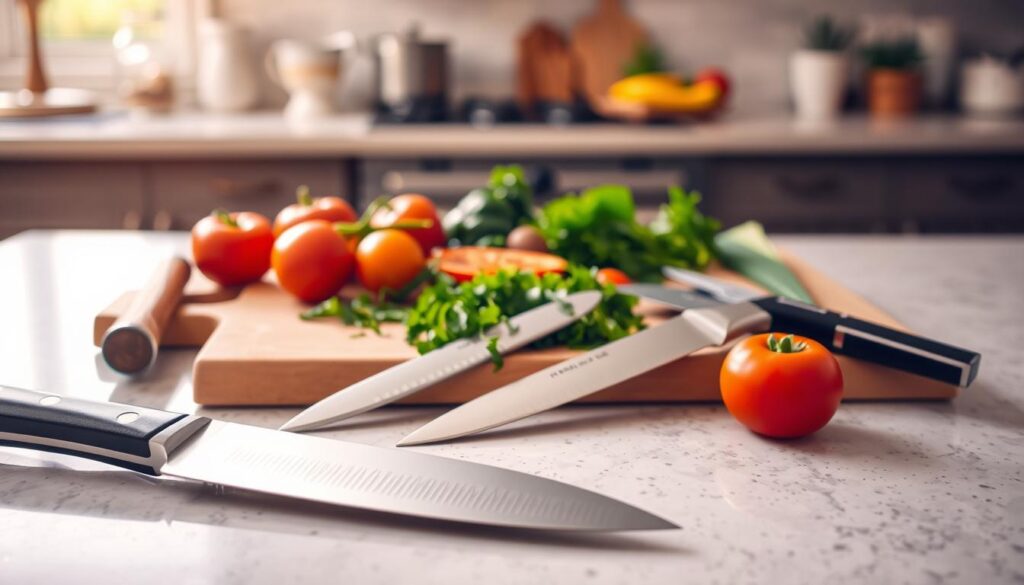
Chef knife and workhorse blades
The chef knife handles bulk prep and suits both rocking and push cuts. Choose length and profile to match your wrist motion and cutting surface.
Paring and utility options
A paring knife is best for peeling, trimming, and in-hand precision. A utility knife sits between petty and chef knife for small board work when length feels clumsy.
Bread, slicing, and proteins
Bread knives use serrations and a gentle sawing motion to slice loafs without crushing. Slicing knives or sujihiki offer long, narrow geometry for clean protein portions with less drag.
Boning, cleavers, and Japanese styles
Boning knives and the honesuki give stiffness and control around joints and bone. Cleavers range from heavy meat cleavers for impact to lighter vegetable cleavers for fast chopping and knuckle clearance.
- Santoku and nakiri specialize in vegetables.
- Gyuto mirrors a western chef knife for versatility.
- Kiritsuke blends styles for an executive, multi-use blade.
Custom kitchen knives guide: Steel, Heat Treatment, and What to Ask Your Maker
The steel and heat treat are the real engine behind how a blade performs at the bench.
Carbon steel vs stainless steel
Carbon steel often sharpens easily and gives keen feedback on stones. It can patina or rust if you skip drying and oiling.
Stainless steel trades some ease of sharpening for lower maintenance. It resists corrosion and suits busy cooks who want less fuss.
Damascus and what really matters
Damascus steel mainly changes appearance and can help food release. Still, the core steel and heat treatment define sharpness, retention, and toughness.
Hardness, Rockwell, and edge retention
Ask for a target Rockwell number. Edge retention links to hardness and microstructure—this tells you how long you can prep before a sharpen is needed.
Popular steels and sharpening feel
Common options include VG-10, Aogami, Shirogami, Ginsan, D2, and powdered R2/SG2. Each material offers different sharpening feel and edge stability.
- Ask the maker: exact steel name
- Ask: heat treatment approach and target Rockwell
- Ask: recommended use case and maintenance
Blade Geometry and Cutting Style: Get the Edge You’ll Enjoy Using
Geometry shapes the way a blade bites, slides, and releases ingredients under your hand. Pick a profile that matches your rhythm and the prep you do most.
Blade length and profile
A 7–10 inch chef knife is the practical sweet spot for most home and pro benches. Size up for large boards or big batches, and size down for tight prep or precision work.
Thin versus thick
Thin blades glide through vegetables and proteins with less drag. Thicker blades resist wedging and stand up to dense or heavy work.
Bevels and technique
Double bevels suit general use. Asymmetrical grinds favor one-sided push cuts and can boost precision. Ask your maker for a push-friendly profile or a belly for rocking.
Tip, heel, and clearance
A fine tip helps scoring and detail starts. Taller heels and good knuckle clearance keep your hand comfortable during long cutting sessions.
- Feel: drag, food release, and tracking
- When to size: board size and prep volume
- Longevity: very thin edges need careful technique to keep sharpness
Handle Fit, Balance, and Materials That Match Your Hand
A well-fitted handle changes how the blade moves in your hand and how long you can work without strain. Fit isn’t cosmetic: it affects control, safety, and how quickly your wrist tires during long prep sessions.
Western versus wa styles
Western handles feel more substantial and give an anchored weight in your palm. They suit chefs who like a solid grip and a fuller butt for push and rock cuts.
Wa handles are lighter and often narrower in the pinch grip. They let a knife feel agile and quick to respond when you favor precision or quick slicing.
Handle materials and care
Common material choices include traditional wood and modern composites. Wood offers warmth and character but needs sealing or stabilization to resist humidity and sweat.
Composites like stabilized wood, Micarta, and G10 stand up to moisture and give textured grip when wet. Ask your maker how they finish and seal any wood to avoid swelling or cracking.
Balance and fatigue
Balance alters effort: blade-forward tools do more cutting with less wrist motion, while neutral balance spreads load between hand and blade. Choose based on how long you cook and the kind of work you do.
- Fit matters: try grips before you buy to avoid hot spots.
- Material pick: prioritize grip when wet and low maintenance.
- Balance test: hold the spine over your index finger to feel the pivot point.
Forged vs Stamped vs Stock Removal: What Actually Impacts Quality
How a blade is cut, forged, or ground matters less than what the maker does to the steel afterward. The label alone won’t tell you how the finished tool will perform in your hand.
Why steel selection and heat treatment matter more
Steel name and heat treat set the limits. Hardness, microstructure, and tempering determine edge behavior and retention.
Whether you choose carbon or stainless steel, ask for the exact alloy and target Rockwell. That gives you a testable baseline beyond a manufacturing claim.
How “drop forged” is used — and what to focus on instead
“Drop forged” can be marketing shorthand. In practice it is sometimes just a stamped process with a different label.
Stamped, stock removal, and forged pieces can all become excellent knives when the maker controls heat treat, grind quality, and geometry.
- Check: exact steel name and hardness range.
- Inspect: grind and edge geometry for clean, even bevels.
- Confirm: fit-and-finish and honest performance claims from makers.
- Consider: maker reputation, options for testing, and price vs craft approach.
Bottom line: edge retention and toughness come from metallurgy and process, not just a single word stamped on the blade. Compare makers by transparency and consistent results, not a label.
How the Custom Ordering Process Works (From Concept to Delivery)
A focused spec sheet that lists daily chores, board size, and hand dominance saves time and cost.
Spec’ing your knife
Tell the maker about your daily tasks, dominant hand, board size, and the ingredients you cut most. Name must-have features versus nice-to-have details to keep the order efficient.
Design and build steps
Work flows from drawing to shaping: concept, forging (if used), grinding for edge geometry, heat treat, and finishing. Each stage creates quality you can test later.
Timeline, budget, and approvals
Expect clear checkpoints: drawings, measurements, steel choice, and finish sign-off before final work begins. Complex finishes add time and cost, so agree milestones in writing.
Fit-and-finish checks
Inspect rivets, bolsters, choil and spine rounding, and polish level. Good finishing means no sharp contact points, tight joints, and even grind symmetry for safe, precise use.
- Tip: keep a written spec sheet so you and the maker confirm every part before production.
Care and Maintenance for Custom Kitchen Knives
A trusted maintenance routine extends edge life and preserves the feel you paid for.
Cleaning basics
Hand wash with warm water and mild soap after each use. Do not soak or run the blade through a dishwasher.
Dry the handle and blade immediately to avoid stains or corrosion. Quick care prevents most damage.
Honing and sharpening
Honing realigns the edge; sharpening removes steel to form a new edge. Hone often and sharpen on a whetstone when the edge dulls noticeably.
If you cook a lot, touch up more frequently. Small, regular work beats long, rare sessions.
Carbon steel and stainless steel care
Carbon steel needs extra attention: wipe during use, dry thoroughly, and oil lightly if stored long-term. Accept patina as normal—it protects the metal.
Stainless steel is more forgiving but not rust-proof. Dry and store safely to keep the blade performing.
Storage and professional service
Use blocks, magnetic strips, or sheaths to protect the edge and prevent nicks. Choose a method that keeps the blade dry and secure.
- Home upkeep: routine honing and occasional stone sharpening.
- Use a pro service for chips, heavy re-profiles, or single-bevel restorations.
- Regular care preserves sharpness, edge life, and precision.
Conclusion
Focus first on what you do every day—your main tasks will show the best length, weight, and edge for your blade.
Start the order by listing routine prep, then choose the right types and a reliable steel and heat treat. Lock in geometry and a handle that fits your grip so the knife feels natural during long sessions.
Make one chef knife the foundation and add smaller knives only when they solve a real problem in your workflow. Ask your maker for exact steel, target hardness, and the intended edge geometry and maintenance plan.
Pick specs you’ll enjoy maintaining. A blade you keep sharp becomes a tool you reach for daily and that improves control, reduces fatigue, and yields cleaner cuts in meat and produce.
Quick buyer checklist: fit in your hand, honest metallurgy, comfortable geometry, and a care plan you’ll follow.