
Are Electric Knife Sharpeners Safe for High-End Kitchen Knives?
You want to protect your investment and keep blades working like new. This intro explains what “safe” means in plain terms: preserving heat treat, keeping a consistent edge, and avoiding excess metal loss that shortens a blade’s life.
Well-made machines used properly can give a refined, even edge. Cheap lookalikes may overheat, remove too much steel, or round tips. Those are the risks you must avoid.
We set realistic expectations for maintenance sharpening versus repair work like chips or rolled edges. You’ll see why sparks, blueing, and shaky motors are red flags, and how debris or airborne metal dust affects cleanup.
Finally, this guide will compare popular options — Chef’s Choice, Work Sharp Ken Onion, Presto, Smith’s, NuoDunco, WEN — by edge quality, control, mess, compatibility, and value so you can buy with confidence at the right price for your collection.
What “Safe” Means When You Sharpen High-End Kitchen Knives
Protecting high-end blades means knowing how heat, material loss, and geometry errors occur. That knowledge helps you spot risky behavior and pick a tool that preserves edge life instead of shortening it.
Heat and temper loss
If the very edge overheats you can ruin the temper and get an edge that dulls fast even if it feels razor-sharp at first. Watch for sparks, harsh grinding noises, or any blue/gray discoloration at the bevel; those are signs of excess heat from poorly balanced motors or coarse grit used too aggressively.
Too much steel removal
Removing steel is sometimes necessary, but an overly aggressive system will eat away bevels over time. That reduces your blade’s lifespan and forces more frequent re-profiling. Aim for the least material removal that still restores consistent sharpness.
Geometry mistakes and mess
Common geometry faults are rounded tips from lingering on a belt, missed heels when guides are narrow, and uneven bevels from angle drift or uneven pressure. Belt systems can throw metal dust into the air; enclosed countertop designs trap shavings and often include a clean-out port for safer food-area use. Wet, water-cooled wheels keep the edge cooler and carry shavings away, reducing heat risk.
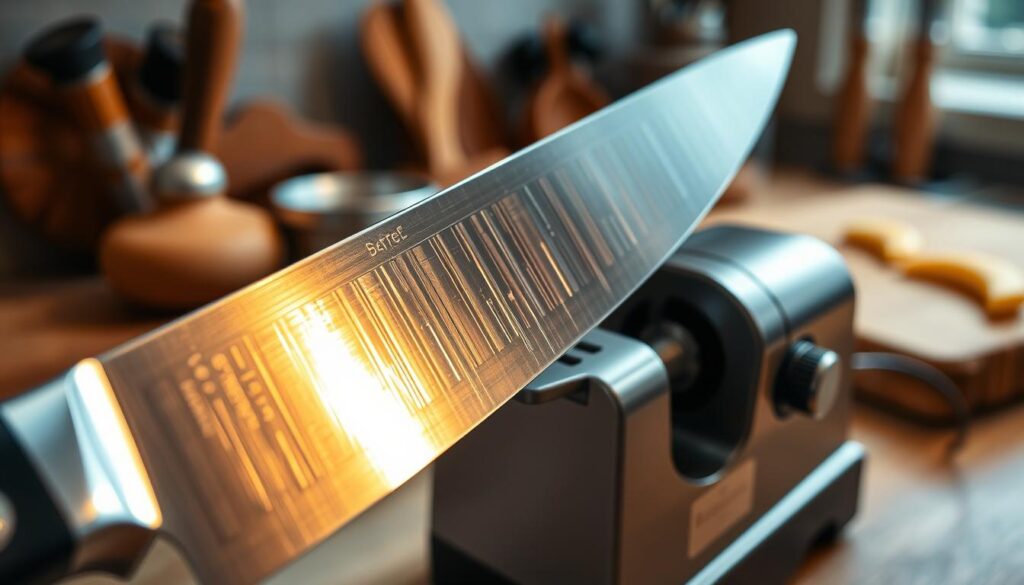
- Non-electric baselines: a sharpening stone offers precise control but takes time; a sharpening rod hones quickly but won’t reset a dull edge.
- Safe outcome to aim for: a consistent bevel at the right angle, minimal steel loss, and a clean workspace that won’t contaminate food prep.
Electric Knife Sharpener Safety Checklist Before You Buy
Run this quick safety-first filter before you buy so you protect your high-end blades and pocketbook.
Angle and guides
Match the tool’s angle support to your knives. A 15-degree setting suits many Japanese and hybrid chef blades, while 20-degree settings pair with Western grinds.
Check that guides reach the heel and hold angles steady. Narrow slots or loose guides waste steel and ruin geometry.
Abrasives and grit
Belt systems cut fast but remove more material. Diamond wheels are efficient and predictable. Stone-based wheels vary a lot in quality.
Look for coarse stages for reprofiling, medium for setting a working edge, and fine/honing stages for finish.
Speed, build and compatibility
Adjustable speed reduces heat and gives you control; fixed-speed can work if the guides and abrasives are well matched.
Confirm spine thickness, single-bevel and serrated compatibility. Cheap copies often shake, spark, or run hot—those are deal-breakers.
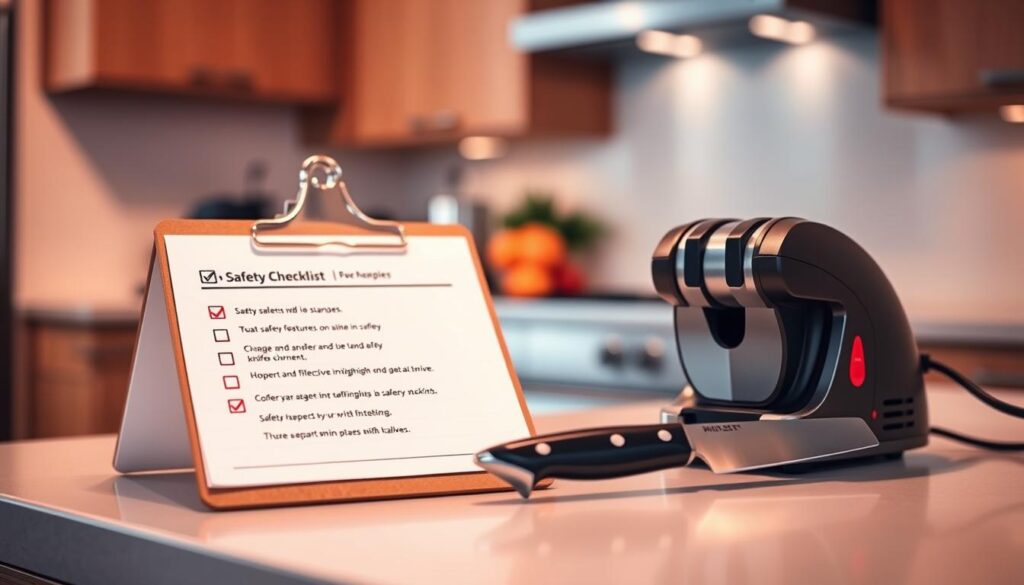
- Safety checklist: correct angle support, predictable abrasives, speed control, stable build, and knife compatibility.
- Note brands: Chef’s Choice Trizor XV is stable at 15° with good dust control; Work Sharp Ken Onion models give wide angle and speed control but throw dust.
- Consider accessory kits (wet-wheel jigs) if the base unit can’t service your blades out of the box.
Best Electric Knife Sharpeners for High-End Kitchen Knives
Here’s a compact roundup of trusted models so you can match performance to your priorities.
Chef’s Choice 15XV / Trizor XV
Best for most home kitchens: three-stage Trizor system (coarse, medium, stropping) yields consistent 15° edges. The motor runs quietly and shavings collect internally for cleaner counters. Tradeoff: not ideal for very thick blades or heavy chip repair.
Work Sharp Ken Onion Edition Elite Mk.2
Best for precision and versatility: wide angle range, speed control, belt-slack adjustment, and a blade grinder attachment. Expect a learning curve but gain pro-level control and multiple edge levels.
Presto EverSharp
Best budget touch-ups: fast, even bevels in minutes. Good for maintenance, less polishing finesse, and stability depends on your countertop.
- Smith’s Knife & Scissor — practical utility edges and scissor work; 20° guides limit angle variety.
- NuoDunco 3-in-1 — shop-value shaping and buffing; fixed angle and louder operation mean caution with high-end blades.
- WEN water-cooled — cool-running for reshaping and safer temper management; bulk and jig cost add complexity.
How Each Sharpener Type Treats Expensive Blades
Each sharpening system changes blade geometry and metal loss in its own distinct way. Understanding those differences helps you pick the right tool for preserving your high-end knives.
Electric pull-through units
Pull-through devices use fixed guides that simplify angle control and cut user error. That makes them quick and consistent for routine maintenance.
They remove material by design, so repeated use will thin bevels over time. Use coarse stages sparingly; fine stages are best for finish work.
Abrasive belt systems
Belts let you blend bevels and can produce true mirror edges when you control pressure, speed, and tip passes.
They demand practice. Inconsistent motion risks rounded tips or uneven edge geometry. Dust and airflow are also concerns in the kitchen.
Wet wheels and jigs
Wet wheels keep the edge cool and protect temper by using water to carry heat away. Jigs provide repeatable angles for precision.
The tradeoff is time and setup. You gain consistent outcomes at the cost of space and a slower process.
- Coarse grit repairs chips and reshapes geometry.
- Medium grit sets a working edge and removes burrs.
- Fine grit polishes for clean slicing on delicate foods.
Pick pull-throughs for low-effort upkeep, belts for control and shine, and wet wheels for cool-running precision when blade life is your priority.
Real-World Performance Factors That Matter in Your Kitchen
What matters most is how the finished edge behaves when you slice tomatoes, trim proteins, or cut crusty bread. That real-food test reveals whether an edge is toothy or refined and which one suits each task.
Edge quality: toothy vs refined
A toothy edge grips and tears through crusts and coarse produce. It can help with crusty bread and some proteins.
A refined, polished edge glides through tomatoes and delicate slicing. Finer grit and stropping stages produce this finish.
Time to sharpen
Pull-through style units (like Chef’s Choice) reached very high sharpness in tests in about 3:54 from a dull blade. A Presto-style model ran around four minutes. Belt systems often take 5–10 minutes if you chase a mirror polish.
Touch-ups take far less time than full resets. Plan for quick maintenance more often to avoid heavy grinding.
Noise, mess, and countertop friendliness
Quiet, enclosed units are counter-friendly and easier to keep in the kitchen. Loud, dustier belt systems often end up in the garage.
Stability matters: heavy bases or good suction beat lightweight designs. Use relaxed, light passes to protect edge geometry and reduce steel removal.
- Practical tip: frequent light maintenance preserves high-end blades better than infrequent aggressive sharpening.
- Ergonomics: steady angle, gentle pressure, and even tip passes improve consistency.
- Cleanliness: contained shavings make it easier to keep sharpening tasks in the kitchen.
Commercial-Grade Electric Knife Sharpeners for Restaurants and High-Volume Use
In busy kitchens you need gear that delivers fast, repeatable edges without constant babysitting.
Commercial units are built for durability, speed, and easy cleaning. They create a new edge quickly by removing the dull portion of a blade. That makes them ideal for occasional staff use, but overuse shortens blade life.
NSF-minded considerations: cleanability, durability, and staff-friendly guides
Clean surfaces and few crevices matter. Look for removable trays and wipeable housings that resist trapped filings.
Durability means robust motors and metal guides. Removable guides and simple controls reduce training time and mistakes.
Pro brand snapshot and price ranges
- Entry-level: Galaxy 2-stage $34.99, 3-stage $49.99 — low price, limited longevity.
- Value pro: Garde/Garde XL $99.99–$159.99 — better build, more reliable guides.
- Diamond-stage option: Mercer M10000 Triple Diamond $294.49 — durable abrasive stages for frequent touch-ups.
- Premium commercial: Waring WKS800 $449 and Edlund 395 $464.99 / Edlund 401 NSF $539 — NSF-listed, heavy-duty, staff-ready guides.
How this changes your way of working: higher volume makes repeatability, speed, and guide quality the top priorities. But remember: these tools remove metal to renew an edge, so pair them with honing and stropping to extend blade life.
Selection tip: if your kitchen uses varied blade styles, prioritize models with wider guide compatibility and durable abrasive stages. A small repair kit or replacement guides can extend useful life and lower long-term cost.
How to Sharpen Safely Without Damaging a High-End Knife
Learning to sharpen safely begins with small steps and predictable tools you can afford to test on. Start on inexpensive knives so you learn the feel of the guides, the timing of tip exits, and how much pressure the abrasives need. That practice protects your best chef knife.
Practice strategy
Use a cheap blade to rehearse passes and angle control. Repeat until your strokes are even and your tip exits are smooth.
Only then move to valuable blades, following the manufacturer’s directions to avoid overheating or burning the temper.
Technique essentials
Use light pressure and let the abrasive do the work. Keep a consistent angle on every pass to avoid uneven bevels.
Focus on controlled tip passes: reduce pressure on the last inch and exit smoothly to prevent rounded tips.
When to skip power
Skip powered systems if a blade is very thin, has a specialty grind, or the spine won’t fit the guides. In those cases, use a sharpening stone or seek professional service.
Keeping the workspace clean
Treat metal dust like any contaminant. Work on an easy-to-clean surface, keep sharpening away from food-prep areas, and empty internal shavings compartments per instructions.
- Alternatives: keep a sharpening rod for quick honing and a sharpening stone progression for careful, low-removal work.
- Risk reduction: practice first, follow directions, use light pressure, and protect your kitchen surfaces from dust.
Maintenance, Accessories, and Total Cost of Ownership
Think beyond the sticker price: ongoing consumables and extras shape long-term cost.
Consumables drive what you pay after buying. Belts, wheels, and stones wear with use. How often you press hard or use coarse grit speeds replacement.
Work Sharp Ken Onion Elite uses standard 1×18 belts. That lowers the cost and expands grit choices. It also accepts a blade grinder attachment to broaden tool use.
Replacement cycles and wear factors
Pull-through disks and wet wheels last longer if you dress them. Chef’s Choice stropping disks can be dressed and cleaned. WEN wet-wheel systems often need a separate kit of about $50 to handle most knives.
Accessories that change capability
- Blade grinder attachments: turn a sharpener into a multi-tool for tools and blades.
- Jigs and angle finders: help match factory bevels and keep guides consistent.
- Spares and kits: budget for belts, replacement wheels, and cleanup gear.
Hidden-cost checklist: extra kits, replacement consumables, and storage/cleanup items. If you’re looking for low maintenance, choose long-wearing abrasives and easy cleanup. If you’re looking for versatility, add belts and a blade grinder to your budget.
Conclusion
The right tool and a light touch keep high-end blades slicing well without costly repairs.
For safe sharpening, pick a quality system built for knives, set the correct angle, and use gentle, steady passes. Avoid improvised power tools that risk overheating or rounding tips.
For most home cooks, a Chef’s Choice-style enclosed unit gives tidy, counter-friendly results. Choose a Work Sharp Ken Onion setup if you want pro-level versatility and don’t mind more setup and dust. Budget models like Presto or Smith’s work for basic touch-ups.
Treat sharpening as routine maintenance, not emergency repair. Confirm compatibility with your kitchen knives, check cleanup needs, and factor price against consumables and accessories before you buy.