
Small Chips and Nicks: Can You Fix Your Knife Blade at Home?
Your favorite kitchen blade can develop small chips and nicks from hard surfaces, rust, or repeated use. When the edge feels grabby, slicing and chopping become harder and less safe.
Small chips are often repairable at home with the right tools and simple technique. The basic process is removing damaged steel until the chip is gone, then rebuilding a stable edge with sharpening and a durable finish.
If the damage is deep or the edge doesn’t come back after several passes, a professional repair service makes sense. Expect minor work to take one session; deeper work needs coarser stones and more time so you don’t alter the blade profile.
This guide focuses on kitchen knives and common steels, including many Japanese models. Technique and angle matter as much as the stone you choose.
Quick note: if embedded media won’t load because of a page blocked extension, you may need to try disabling extensions or try disabling an extension for that page before continuing.
Why Your Kitchen Knife Gets Chips and Nicks and How to Prevent Them
Hard ingredients and accidental knocks are common reasons the cutting edge fails in regular use.
Common causes:
- Twisting into frozen food or striking bone while cutting meat.
- Scraping the blade against hard material like ceramic, glass, or metal.
- Rust pitting along the steel and blunt impacts from drops or sink collisions.
Symptoms help you spot the problem. A toothy edge will catch tomato skin and skitter when you slice. Rust damage looks like tiny missing bites along the bevel.
Sharpness vs. durability: Ultra-fine, super sharp edges cut great but are fragile, especially on thin Japanese steel. That fragility shows up as micro-chips during normal use.
Prevention method: Add a small micro-bevel (Kobaduke) to thicken the apex without losing cut quality. Also follow these habits:
- Avoid prying or cutting frozen blocks and bones unless your tool is made for it.
- Use proper cutting boards, dry and wipe to stop rust, and store edges separately.
- Maintain regular sharpening with a whetstone or proper knife sharpening method to keep the angle consistent.
If a linked page won’t load because of a page blocked extension, try disabling extensions (one-by-one) to view full instructions.
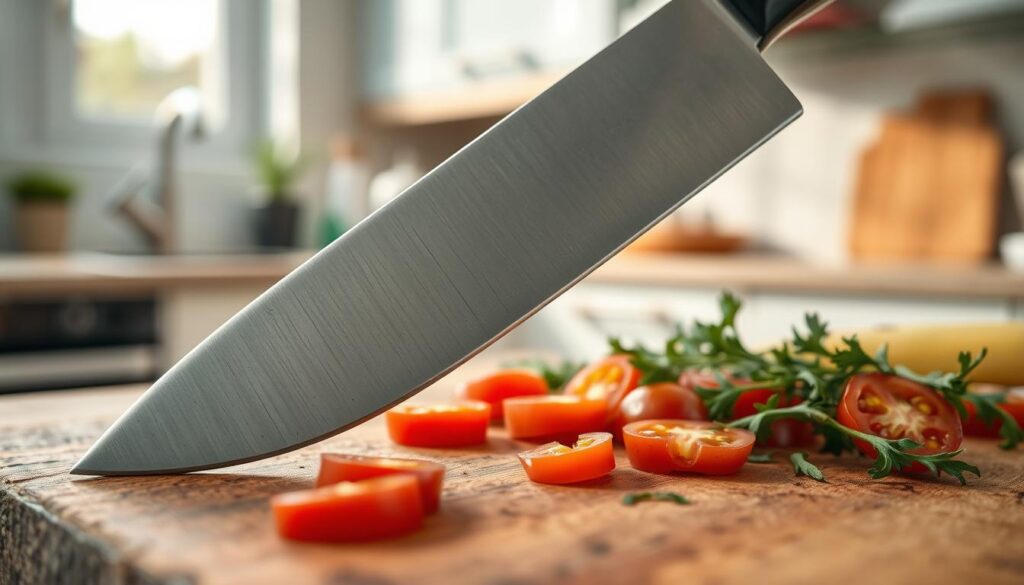
Fixing a chipped knife: Tools, Safety, and Setup Before You Sharpen
Start by checking if the damage is a true notch in the steel or just a rolled apex that needs straightening. Under bright light, run a careful fingernail test: rolled spots reflect light differently while a chip is a catchable notch.
Decide your method:
- Honing with a ceramic rod will often restore a rolled edge quickly.
- True chips need steel removal with coarse stone or a diamond plate.
Choose grits: For fast removal use ~220 grit or extra-coarse diamond plate. Use 1000 grit as mid-step, then 3000–6000 for finishing depending on your blade thickness and goals.
Prep and protect: Wet and stabilize the whetstone, true (flatten) it first, and mark the edge with a Sharpie along the full curve. That line helps you grind evenly and preserve the blade profile.
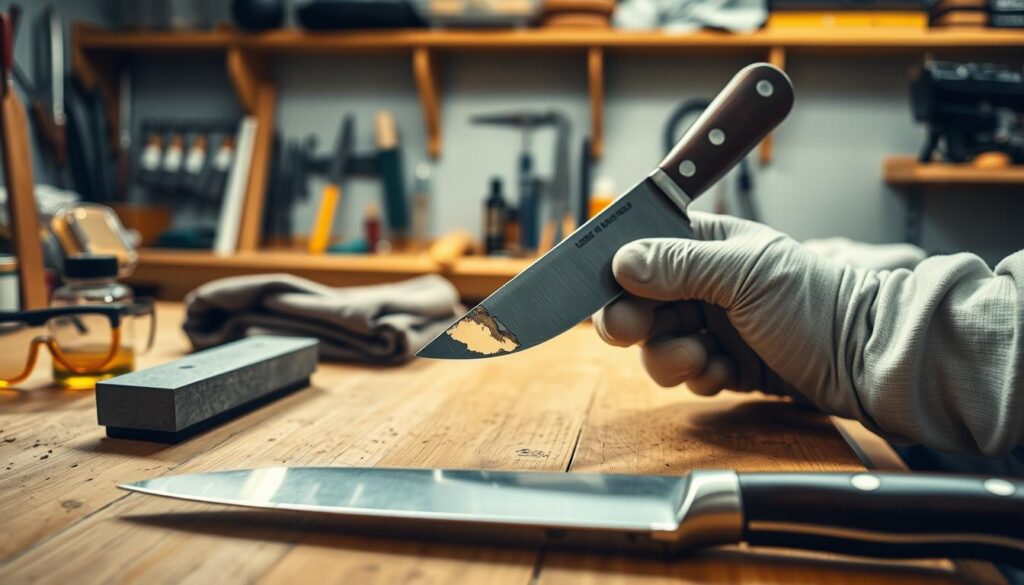
Work slowly, keep fingers clear, and hold knife firmly while you apply pressure. If a reference page is page blocked by an extension, try disabling extensions so you can view setup photos.
Step-by-Step Chip Repair and Knife Sharpening at Home
Repairing a tiny notch starts with removing damaged steel deliberately, then rebuilding the bevel with finer grits. Follow each step slowly and check the edge often so you don’t remove too much metal.
Grind out the chip
Start on a coarse stone (about 220 grit or use a diamond plate). Hold a wider angle—roughly 30–45°—so the stone removes the bad spot quickly and predictably.
Controlled strokes and pressure
Use repeatable passes and gentle pressure. Let the stone cut; don’t force it. Alternate sides in sets (for example, ~30 strokes per side) to keep the edge centered.
Preserve the blade profile
Don’t grind only the notch. Work the entire length of the blade so the curve stays consistent and you avoid flat spots that harm cutting ability.
Thin and restore cutting geometry
If the blade still feels thick after removal, lay the bevel flatter and thin behind the edge. This step restores cutting ability, especially on Japanese knives where thin geometry matters.
Refine, polish, and finish
Progress through higher grits (for example, 1000 → 2000 → 4000 or 3000 → 6000) to remove coarse scratches. Add a small micro-bevel (Kobaduke) at the very tip of the edge for durability.
Deburr, test, and adjust
Remove the burr with very light passes and finish with rolled newspaper or gentle stropping. Test on paper and a tomato; then tweak angle or grit based on blade thickness.
- Coarse removal: 220 grit/diamond plate
- Mid polish: 1000–2000 grit
- Final polish: 3000–6000 grit
If the tip needs work, expect extra profiling and more steel removal. If a tutorial page won’t load because of a blocked extension, try disabling extensions on that page to view visual guides.
Conclusion
With proper setup and steady pressure, you can remove small edge damage and restore reliable cutting performance.
Start by confirming whether the issue is a rolled apex or a true notch so you don’t over-grind. Remove the damaged steel, then rebuild the bevel and add a micro-bevel for more durable, super sharp results.
Follow safe habits: avoid hard material and frozen food, store edges separately, and keep regular maintenance to prevent repeat problems. When you control angle and pressure and preserve the blade profile, your knives should cut predictably again.
If the edge still feels thick, the tip is broken, or you’re unsure, consider a professional sharpening repair service for a cleaner outcome. Also, if a reference page won’t open, make sure your browser isn’t blocking content and make sure any extensions are disabled.