
Food Grade Mineral Oil vs. Vegetable Oil: What Should You Use?
You want a simple way to protect a blade from rust and corrosion while keeping contact with food worry-free. Moisture and oxygen cause metal to degrade, and a thin oil barrier helps repel both. This guide sets expectations and shows practical choices for everyday care.
We’ll compare food grade mineral oil with common vegetable oils and explain why some obvious kitchen options fall short for metal. Mineral oil is colorless, odorless, and resists rancidity, so it often wins for long-term rust performance.
This piece is for you if you maintain kitchen knives, occasionally oil a pocket blade, or want one product that won’t add smells or residue. You’ll get decision factors like stability, feel on the blade, cleanup, and how each option holds up over time.
Practical takeaways: what to buy, how to apply it, and how to store your tools so the oil layer lasts. You’ll also see alternatives—camellia, coconut derivatives, and beeswax blends—so you can match the best choice to your knives and environment.
Why you need a food-safe oil on your knife blade
Rust starts quietly where water meets metal; a proper oil barrier makes that meeting harmless. You’ll learn how moisture and oxygen begin corrosion and why a thin coating matters for everyday blade protection.

How rust and corrosion start with moisture and oxygen
At its core, rust forms when metal reacts with moisture and oxygen. Even stainless steels benefit from care, while carbon steels are more prone to quick rust corrosion.
What an oil barrier does for blade protection over time
A light film creates a hydrophobic layer that repels water and reduces oxygen contact. This oil protective coat slows damage and keeps edges ready with minimal effort.
Why food prep changes the “right oil” decision
In a kitchen, oils can touch ingredients, boards, and hands. That means you need a product that won’t spoil, smell, or leave sticky residue over time.
- Daily reality: water hides in handle junctions and scratches, so blades need regular attention.
- Routine: oiling is repeatable—apply based on use, storage, and humidity.
- Note: later sections will separate blade coating from pivot care so you don’t use a non-food product where it matters.
Food safe knife lubricants: what to look for before you buy
A practical buying checklist saves time and prevents picking an oil that smells, gums up, or collects lint. Focus on three core traits: non-rancidity, proper viscosity, and easy apply. These determine how well the coat protects a blade over time and how much upkeep it needs.
Non-rancidity and stability
Non-rancidity means the product won’t oxidize into a bad odor or sticky film during storage. Choose oils labeled inert or highly refined; they resist spoilage and keep your blade care predictable.
Viscosity: cling without gumming
Viscosity matters. Too thin and the oil runs off, leaving the blade exposed. Too thick and it feels tacky and traps debris. Aim for a mid-range oil that stays put but wipes off clean.
Ease of application and debris control
Easy apply equals a few drops, a quick spread, and a clean wipe. Avoid coats that pool or leave streaks.
- Low pickup: a dry-feeling finish draws less debris and lint.
- Maintenance: oily surfaces that attract dust need more frequent cleaning.
- Steel match: carbon steels need re-application more often than stainless.
Buyer mindset: you’re not buying any oil—you’re picking food-safe oils that stay stable, clean up easily, and protect your blade without adding work. In the next section you’ll see how mineral and plant-derived options score on stability, feel, and cleanup.
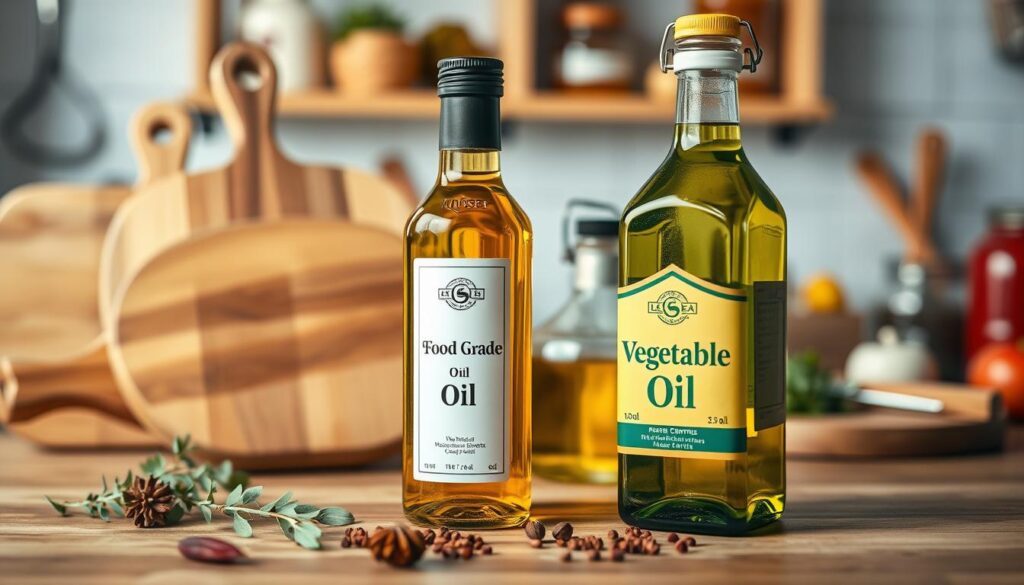
Food grade mineral oil vs. vegetable oil for knives
Not all kitchen oils behave the same on steel—some last, others turn messy. Below is a clear comparison so you can pick what works for your blade and routine.
Mineral oil: odorless, inert, and resistant to going rancid
Mineral oil is colorless, odorless, and chemically inert. It resists oxidation, so it stays consistent on a blade between uses.
Vegetable oils: why many can oxidize and spoil on metal
Many plant-derived oils will oxidize over time. That can create off smells, a tacky film, and sticky residue that attracts debris.
Rust prevention performance in real kitchen conditions
In daily kitchen scenarios—washing cycles, acidic cutting, or short storage in drawers—stability matters most. Mineral oil keeps a thin barrier that repels moisture and slows rust corrosion reliably over time.
How each oil feels on the blade and impacts cleanup
Mineral oil wipes to a low-sheen, near dry finish that leaves little transfer. Vegetable oils often leave a slick layer that needs more frequent degreasing.
- Stability: mineral oil scores highest.
- Residue: plant oils can gum up faster.
- When to pick plant options: if a labeled, refined oil proves long-term stable, it can be an alternative.
Best food-safe oils beyond mineral oil
If you want natural alternatives to mineral oil, several traditional and modern options work well for blade care.
Camellia oil for high-carbon steel blade care
Camellia oil is a Japanese classic for protecting high-carbon steel. It prevents rust and leaves a clean, low-sheen finish that users like for regular upkeep.
Tsubaki oil: lightweight, non-greasy protection
Tsubaki oil comes from seeds camellia and feels lighter than many plant options. Use it for frequent touch-ups because it spreads thin and won’t leave a heavy film.
Fractionated coconut oil vs. standard coconut oil
Fractionated coconut oil stays liquid and is easier to apply evenly in humid kitchens. Standard coconut oil can solidify; you must warm it for thin, uniform coverage.
Beeswax as a barrier booster
Pair a thin oil coat with a beeswax top layer for longer storage. Beeswax seals the film and reduces reapplication for tools you rarely use.
Ghee as an occasional alternative
Ghee resists rancidity better than butter but is organic. Apply very sparingly and only when you need a quick, short-term option.
- Tip: pick camellia oil or tsubaki oil for high-carbon steel, fractionated coconut for humid spaces, and beeswax for storage.
How to apply food-safe oils effectively (without making knives sticky)
A clean prep and a few careful drops make the difference between lasting protection and a sticky mess.
Prep with mild soap and water, then dry fully
Start by washing the blade with mild soap and water to remove residues. Dry completely so you do not trap moisture under the oil film.
Use a small amount and spread with a lint-free cloth
Apply only a few drops, then spread thinly with a lint-free cloth. This lets the coat cling without pooling.
Cover crevices and wipe excess
Work the oil into seams near the handle and the heel where moisture collects. Let it settle briefly, then wipe off excess to avoid tackiness and debris pickup.
Re-oil based on use and environment
Check monthly as a baseline. Reapply after heavy washing, acidic prep, or when the blade no longer shows even blade protection. Thicker options, including some coconut oil forms, need extra care to keep the layer thin.
- Tip: a lint-free rag prevents fibers and helps apply food-safe oils evenly.
- Too much oil attracts dust; less is more for lasting protection.
- Focus on handle seams first when humidity or spills are common.
Maintenance and storage that make your oil layer last
A short upkeep habit and steady storage conditions prevent small problems from turning into rust. Treat storage as part of blade care, not an afterthought. The right environment keeps your oil layer effective over time and reduces the need for intensive fixes.
Best storage conditions to prevent condensation and rust
Keep blades in a dry spot with stable temperatures. Fluctuations cause condensation that can undermine blade protection even when a room feels dry.
Keeping knives separated to protect the coating and edge
- Use dry drawers with organizers or edge guards to stop rubbing and scratches.
- Store blocks away from sinks and avoid damp sheaths for long-term storage.
- Separate compartments preserve the oil film and the edge, so you reapply less often.
What to monitor: dullness, discoloration, and early rust spots
Check blades on a schedule. Wipe after use, do a quick visual once a week, and apply a light oil touch-up when the film looks thin.
Quick upkeep routine: wipe dry, spread a drop, and buff. This simple maintenance protects blades, prevents rust from growing, and saves you the time of heavy restoration later.
Kitchen knives vs. pocket knives: choosing the right lubricant for each
Your kitchen drawer and your pocket demand different care; what protects a blade can ruin a folding pivot. Make the right choice by separating the roles: corrosion resistance for edges and friction control for moving parts.
Blade oiling vs. pivot lubrication: different needs, different risks
For cutting edges, a thin, non-reactive coat prevents corrosion. For pivots, you want low friction and clean action. These are distinct types of maintenance.
Why some top pivot products aren’t for kitchen use
Many high-performance products (for example, Tuf-Glide) are engineered for action, not kitchen contact. If you use a pocket knife for food prep, default to kitchen-rated oils on the blade and avoid putting performance-only lubes into joints.
Viscosity tradeoffs: smooth action vs. attracting grit and debris
- Thicker oil: smoother feel but can trap lint and grit in a pocket.
- Dry lubes: stay cleaner but may need more frequent reapplication.
- Practical rule: use one product for kitchen blades and a purpose-built pivot product for pocket carry if the folder is not used for food.
Buyer’s checklist: making the right choice for your knives today
Make buying simple: match oil performance to the metal, usage habits, and storage conditions.
Pick based on steel type, usage frequency, and storage conditions
Match the product to the steel: high-carbon blade needs more frequent care than stainless because it shows rust sooner.
For daily kitchen use pick a low-maintenance option you can reapply often. For occasional use choose a longer-lasting film.
What “food grade” and “food-safe” should mean for your kitchen
Look for clear labeling that notes incidental contact is non-toxic and the content is highly refined. Don’t assume “natural” equals appropriate.
Practical labels: non-rancid, odorless/clear, and listed for incidental food contact are the marks to trust.
What to avoid if you want long-term blade protection
- Avoid oils that oxidize into sticky films or leave heavy residue that attracts debris.
- Do not over-apply; excess traps grit and speeds wear.
- Keep performance-only pivot products off cutting edges used in the kitchen.
Quick shopping checklist and decision flow
Simple path: choose the best oil baseline for most homes, then tweak by condition—fractionated coconut oil or tsubaki oil work well in high humidity or for a different feel.
- Identify steel: carbon = more frequent reapplication; stainless = lower frequency.
- Decide use: daily = low-odor, quick-apply product; occasional = longer-lasting film.
- Match storage: humid or variable temps → pick a stable, non-rancid formula.
- Buy labeled for incidental contact and follow a light maintenance routine to protect blades and avoid rust.
Conclusion
A clear, repeatable routine beats guessing when it comes to protecting your blades.
Keep the surface clean and dry, then apply a thin coat of a stable oil. Mineral oil is the least fussy choice because it resists rancidity and wipes down cleanly. Choose Tsubaki or camellia for a light, traditional finish, or fractionated coconut oil if humidity is an issue.
Technique matters: use very little, spread thin, and wipe excess to avoid sticky buildup. Store blades in dry, separate compartments to preserve the film and the edge. Remember pivots need purpose-built products; do not assume pivot oils are food-rated for kitchen use.
If you hit a blocked page while researching—see a “page blocked extension” or “extension blocked” error—try disabling extensions or disabling blockers temporarily, then refresh the retailer or manufacturer page. Pick one oil that fits your routine, apply it right, and set a simple schedule so your knives stay protected over time.