
Honing Rod vs. Whetstone: Understanding the Difference for Blade Care
Honing rod vs whetstone explains two simple ways to keep your knives ready. One tool straightens a bent edge so a dull-feeling knife cuts better. The other removes a tiny amount of metal to rebuild a worn blade.
You use a rod often, even after each meal, to realign the edge and improve daily performance. A stone gets used less often to restore a true cutting surface when the knife is truly dull.
Why this matters: proper care keeps you safe and saves money. A sharp knife needs less force and gives cleaner cuts in your kitchen. Knowing which tool to pick stops guessing and prevents excess metal removal.
This article walks you through symptoms, the right tool choice, and a simple maintenance schedule. You’ll learn why edges dull, how each method works, tool types, grit basics, and a practical routine you can follow at home.
Why your knife edge gets dull in everyday kitchen use
Each chop and scrape subtly changes the metal at the tip of your blade. Under magnification the edge looks like tiny teeth; those micro-burrs bend, curl, or break from normal cutting and board contact.
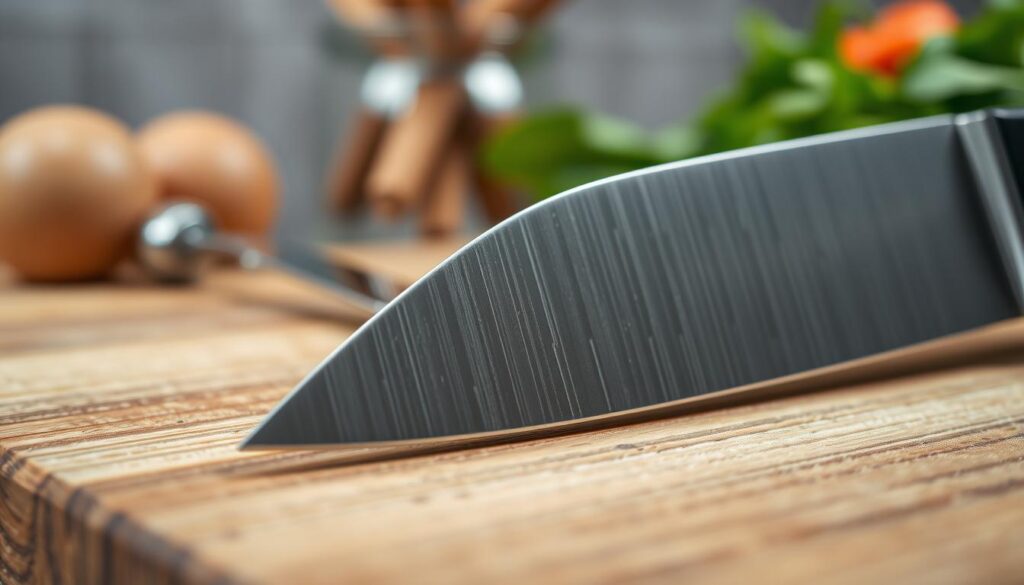
The “tiny teeth” edge: burrs, micro-bends, and why cutting boards matter
When you slice or twist on a hard board, the microscopic teeth deform. That wear makes the edge stop slicing cleanly and forces you to press harder. You’ll notice slipping on tomato skins and crushing instead of clean cuts.
Realigning vs. removing metal: the key concept behind upkeep
Realigning simply straightens curled teeth so the edge cuts well again. Sharpening removes a small amount of steel to rebuild the geometry when the edge is worn away.
- Misaligned edges often fix quickly with a few alignment passes.
- Worn edges need more aggressive metal removal to reform the angle.
- Pick the least invasive step that restores safe, predictable cutting.
Honing rod vs whetstone: what each tool actually does to your blade
Choosing between a quick pass and a full sharpening starts with a simple question: is the edge bent or worn? If the metal is merely misaligned, a few light passes restore contact with food without removing steel. If the edge bites poorly or tears soft produce, you likely need a stone session to rebuild the bevel.
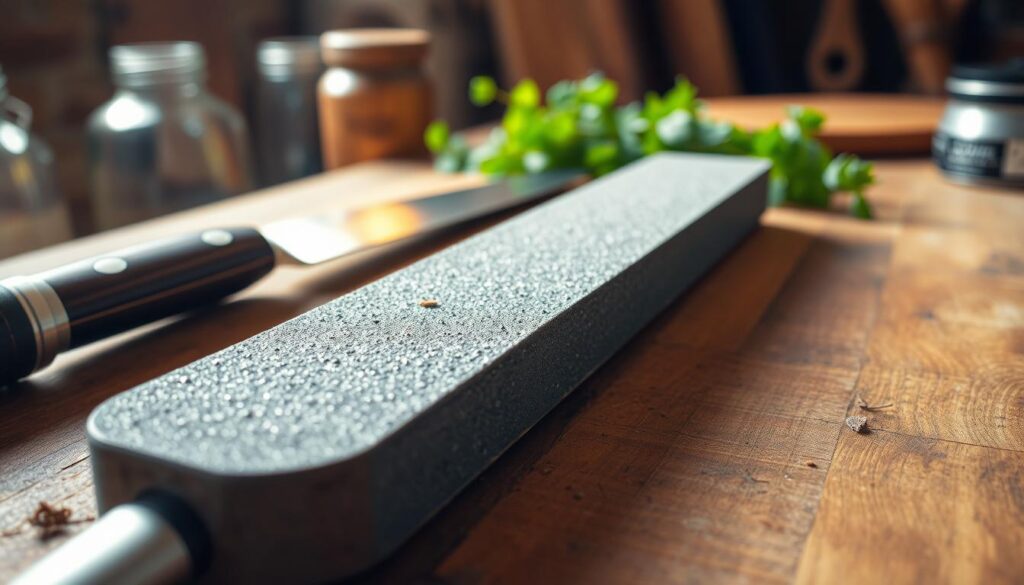
Honing rod basics: restoring alignment without true sharpening
What it does: the steel nudges a rolled edge back into line so the blade meets food cleanly. This is a quick maintenance method that smooths micro-burrs and improves cutting feel.
What it is not: most steels do not remove enough metal to reform the edge geometry. You’ll feel sharpness return, but you haven’t rebuilt a worn apex.
Whetstone basics: reforming the edge by shedding a small amount of steel
What it does: a sharpening stone removes a controlled bit of metal to recreate the bevel and apex. Done right, this is the gentlest way to fix a truly dull knife and repair minor damage.
Expectations: stone work takes more time but gives a deeper, longer-lasting reset compared to quick steel passes.
What “sharp” feels like in practice: the tomato test
Try slicing a ripe tomato. If the skin catches and the fruit squishes, it’s time to sharpen. If slices are mostly neat but slightly draggy, do a few steel passes, then test again.
- Quick fix: steel passes for realignment and daily upkeep.
- Full fix: sharpening stone when metal removal and bevel reforming are needed.
- Workflow tip: chefs hone often and sharpen less frequently to preserve steel.
Honing rods explained: honing steel, ceramic rods, and what to avoid
Not all tools that look similar act the same on kitchen knives; material matters more than shape. Match the tool to your blade steel to protect the edge knife and get consistent results.
Steel options for softer Western blades
Classic honing steel pairs well with softer Western steel. It nudges the micro-burrs straight without needing an ultra-hard surface. Technique is forgiving, but keep control of angle and pressure.
Ceramic for harder steels and many Japanese knives
Ceramic honing rods are much harder than most steels and work well on harder steels used in japanese knives. They realign where softer sticks do little.
When rods actually remove metal
Diamond-coated and heavily grooved tools act like a sharpener and remove metal quickly. That speeds wear and raises chipping risk on brittle steels. Use stones when you need controlled metal removal.
- Takeaway: use honing for quick upkeep and stones for full sharpening.
- Avoid aggressive coated tools for fragile japanese knives.
Whetstones explained: grit, water, and the technique that “respects” your edge
A good sharpening stone rewards patience: the right grit and steady angle give a lasting edge.
Grit guidance and how to pick the right numbers
Grit tells you how fast a stone removes metal. Under 1000 is coarse for chips and very blunt blades. Around 1000 rebuilds a dull but usable edge. Above 1000 refines and polishes for a smooth cutting feel.
Combination stones and wet use
Many sharpening stones pair a coarse side with a fine side. Start on the coarse face to reform the bevel, then flip to the finer face to polish. Most Japanese-style setups use water; soak the stone about 15 minutes so it cuts evenly and carries away swarf.
Angle control, time, and common pitfalls
Consistent angle beats heavy pressure. Hold the same angle as you stroke each side and count your passes. A full session often takes 30+ minutes; careful knife sharpening removes minimal steel and customizes the edge to your cooking style.
- Tip: steady angle, light pressure.
- Tip: soak the stone, work both sides.
- Tip: don’t rush—wobble and haste weaken the edge.
Which should you use and when: a practical maintenance schedule for home cooks
A small, regular maintenance plan keeps your knives working and reduces the need for big repairs. Follow a simple pattern that mixes quick upkeep with scheduled sharpening so your kitchen stays safe and efficient.
After each use: quick honing passes to realign the edge
Right after cooking, give each knife a few controlled passes to realign the edge. Use light pressure and a steady angle—three to five strokes per side is enough.
Quick tip: these short passes restore contact with food without removing metal.
Every few weeks to months: whetstone sharpening frequency
If you cook daily, plan a stone session about once a month. If you cook sporadically, stretch that to every two to four months.
When you sharpen knives on a stone, you rebuild the bevel and create a lasting sharp edge.
Why relying on only one tool backfires
Using only a rod or only a stone hurts more than it helps. Constant sharpening removes steel and shortens blade life. Only realigning leaves a dull knife once metal is gone.
Safety and control: a steady routine reduces slippage and lets you cut with less force and more predictability.
- Quick schedule: daily light upkeep; monthly or as-needed sharpening.
- Hone to realign; sharpen to rebuild.
- Test on a tomato skin—if it drags, sharpen the knife.
Choosing the right option for your knife type, steel, and goals
Your knife’s steel and the cuts you make should guide which maintenance tools you buy. If you own japanese knives with harder steels, favor controlled sharpening methods that remove metal predictably. Hard steels hold an edge longer but can chip if treated with aggressive abrasive metals.
Japanese knives vs. Western chef’s knives
Japanese blades often use harder steel and thinner edges. They like finer finishes and careful sharpening to avoid chipping.
Western chef knives use softer steel and tolerate frequent passes with a honing steel for quick realignment. That keeps chefs working without constant full sharpening sessions.
How sharp is “sharp enough” for your kitchen
Decide by task: a polished edge slices tomatoes and fish cleanly. A slightly toothier finish can grip tougher vegetables and crusty bread.
Practical rule: favor whetstones when you want peak precision and a guided sharpener if you struggle to hold angle. Maintain a consistent bevel and you’ll feel cleaner cuts, less crushing, and more control.
- For precision and longevity: use stones for controlled knife sharpening.
- For fast daily upkeep: add a compatible honing steel for Western blades.
- If angle control is hard: a guided sharpener helps, but match it to your blade’s geometry.
Conclusion
Simple care keeps your knife fleet safe and ready: realign often and strip metal only when needed.
Think of realignment as fast upkeep and sharpening as the full rebuild. Use a honing rod or honing steel for short, frequent passes and schedule a whetstone session when the edge no longer slices cleanly.
Use the tomato test: if a quick pass fails, plan a sharpen with a stone. Avoid aggressive coated tools that remove steel too fast and shorten blade life.
Follow this light maintenance rhythm and you’ll keep knives predictable, safer, and more satisfying to use in your kitchen.