
How to Force a Protective Patina on Carbon Steel Using Coffee or Vinegar
This short guide explains what a forced patina is and what you can expect when you use coffee or vinegar on carbon steel. A patina is a thin, protective oxidation layer that slows harmful rust and can improve the look of your tools.
Using coffee tends to produce a darker, more even finish over several repeated soaks. Vinegar acts faster and gives varied, sometimes streaky tones. You can choose speed or uniformity based on your goal.
You might force a finish now to cut early reactivity, prevent metal tastes in food, and get a consistent surface before regular use. This guide covers the coffee soak and vinegar wrap methods only; it does not focus on mustard art, ferric chloride, or bluing.
Safety first: you are intentionally oxidizing steel, so control moisture and air exposure. Dry and oil the surface after each session to avoid red rust.
The core principle here is simple: clean prep, controlled contact time, and repeated short rounds give a more consistent, protective result than one long aggressive soak. Even with a mature finish, store your gear dry and maintain it regularly.
What a Patina Is and Why You’d Want One on Carbon Steel
Think of a patina as a stable dark film that slows corrosion and gives steel a consistent look. It is a controlled form of oxidation that changes appearance while improving day-to-day resistance to moisture.
Patina vs. rust
Black rust (magnetite) is a harder, stable oxidation that can form in low-oxygen spots and helps slow further damage. Red rust is flaky and destructive and will eat the metal if left unchecked.
Why carbon reacts more
Many carbon steels lack the chromium layer that stainless makes, so they react faster. You may notice new carbon knives discolor onions or leave a slight metallic taste until the surface stabilizes.
Natural use vs. speeding it up
Natural patina starts quickly with acidic foods and matures over weeks of regular use. You can also develop patina sooner when you want protection and a uniform finish before daily carry.
- Quick check: wipe the spot with a tissue — if color transfers, treat it as active rust.
- Timeline: initial coating in a few uses; fuller protection after repeat exposure.
- Outcome varies: no two pieces age the same.
Before You Start: Prep Your Blade for an Even, Protective Finish
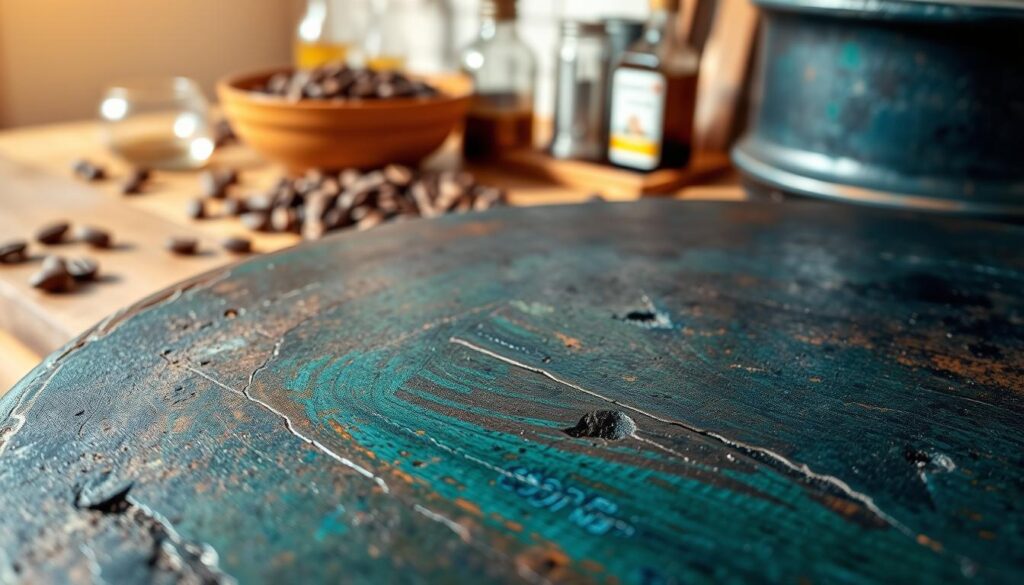
A clean, dry surface is the single best step to ensure an even, protective finish. Remove factory oil and fingerprints with warm water and dish soap. Rinse well and dry with a clean towel or paper towels so the steel surface is uniformly free of grease.
Degrease the steel surface so the patina forms evenly
Oil blocks contact and creates blotches where the finish won’t form. Wipe the entire blade area with a fresh paper towel after washing to confirm no residue remains.
Protect handle materials and folding pivots from trapped moisture
Stage a dry work area, a spare towel, and a place to set the knife. For folding models, avoid soaking past the handle line and keep liquid out of the pivot. Dry that area thoroughly to prevent hidden rust.
Set expectations for timing: minutes vs. hours and layering
- Vinegar wraps can work in minutes; coffee rounds build over hours and repeat sessions.
- Layering means let sit briefly, rinse, dry, and repeat so the patina deepens without triggering red rust.
- Work in a ventilated space and stay organized so you don’t leave the steel wet while you search for supplies.
Knife blade forced patina with coffee: the most even, beginner-friendly method
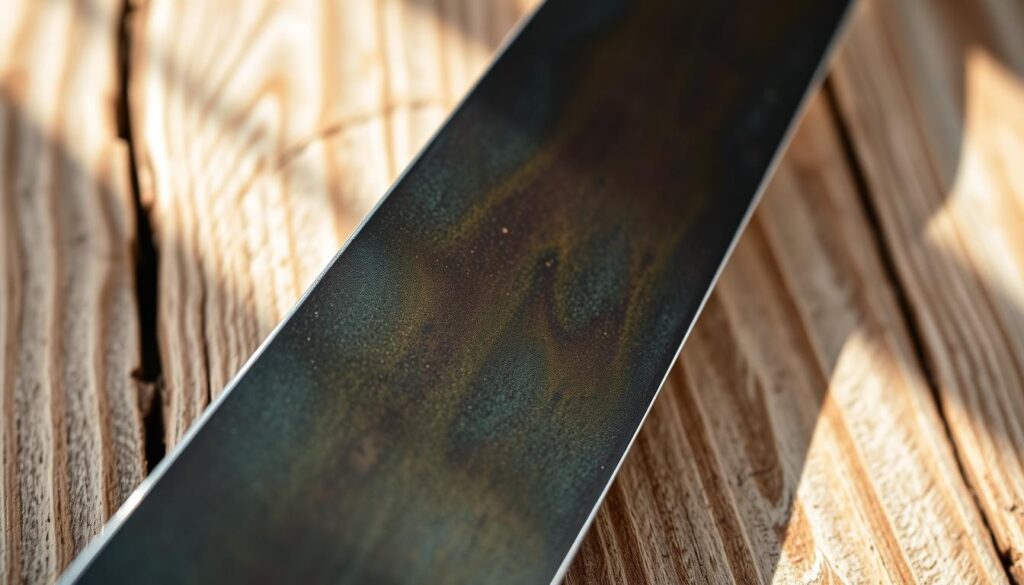
A simple coffee soak yields a steady, even finish that beginners can repeat safely. Start with a clean, dry metal edge and plan short rounds rather than one long soak.
What you need
- Very strong brewed coffee
- Non-reactive container tall enough for the blade
- Clean towel or paper towels for immediate drying and handling
How hot to go
Hot coffee speeds the reaction but stays far below temper-changing temperatures. Use it warm to get faster, more consistent results without risking hardness.
Step-by-step soak and signs of success
- Submerge the cleaned blade for a few minutes to start.
- Watch for gradual darkening to a charcoal tone, not orange staining.
- Rinse, dry with a towel, and repeat several short rounds to deepen the finish.
Control, troubleshooting, and finish
Full submersion gives uniform coverage. Partial dips or masked sections create contrast for patterns. Blotches often come from residual oil, bare-finger contact, or trapped bubbles—clean and handle with paper or gloves.
Prevent flash rust by drying immediately after rinsing and applying a light oil to stabilize the new layer. If you want artistic spots later, mustard can be used, but coffee is easier for a smooth, even coat.
Forced patina with vinegar: fast results using a paper towel wrap
A warm vinegar wrap is the quick method when you want visible results in minutes. Vinegar is acidic and speeds oxidation on carbon steel, so you must watch the process closely to favor a stable finish instead of orange rust.
Warm vinegar wrap method
Heat white vinegar until it is warm to the touch. Soak a paper towel and snugly wrap only the blade—keep liquids away from the handle and pivots. Check the steel often so you control how fast the change moves.
Timing guide and what to watch for
- Plan short runs: start checking at 10 minutes and expect most finishes by 10–30 minutes.
- Gray-to-dark tones show progress; powdery orange spots are active rust—stop immediately and rinse if you see them.
- Tighter wraps give an even look; wrinkles or overlaps make a mottled pattern.
Aftercare and alternatives
Rinse thoroughly to remove acid, dry every crevice, and apply a light oil to protect the surface. If you want defined shapes, apply mustard in spots instead of a full wrap, then follow the same rinse/dry/oil routine. Vinegar works fast, so it suits speed more than forgiveness.
Conclusion
If you want a slow, predictable finish go with coffee; pick vinegar if speed matters and you can watch closely.
For carbon steel care, the choice comes down to control versus time. Coffee builds color in repeat sessions. Vinegar gives fast, visible change that you must monitor.
Whatever method you pick, follow the same rules: start with perfectly clean metal, limit contact time, rinse well, dry thoroughly, and finish with a light oil. These steps cut the risk of red rust and help the new surface settle.
Let normal kitchen use continue to develop the look. Try slicing an apple and watch how handling and acids from food deepen the finish over weeks.
Takeaway: a short treatment helps, but regular cleaning, drying, and sensible storage keep your carbon steel ready and protected for years.