
When and Why You Should Thin Your Knife Blade (Beyond Sharpening)
Knife blade thinning is the simple act of removing steel just behind the edge to change geometry, not only to make the edge feel sharper.
In plain terms, you make the area behind the edge slimmer so the tool meets less resistance when cutting. Cutting is a mix of the edge breaking material and the blade pushing that material aside. When the section behind the edge is thick, the item drags more, even after frequent sharpening.
You can expect smoother performance with dense foods after this process, because the thin profile reduces wedging. Many people in U.S. kitchens keep sharpening and still feel drag. Even a new knife can benefit, since factories often favor durability or speed over fine geometry.
Read on for why thinning matters, when you should do it, and a safe step-by-step method using stones and power-tool cautions. Addressing thickness behind the edge can restore “out of the box” cuts without chasing ever finer edges.
Why Thinning Matters More Than Just Sharpening
A good cut comes from a keen edge for the initial bite and a slim profile behind it to pass through food with less drag. You can sharpen to restore bite, but the way the tool moves through dense items depends on the metal just behind that edge.
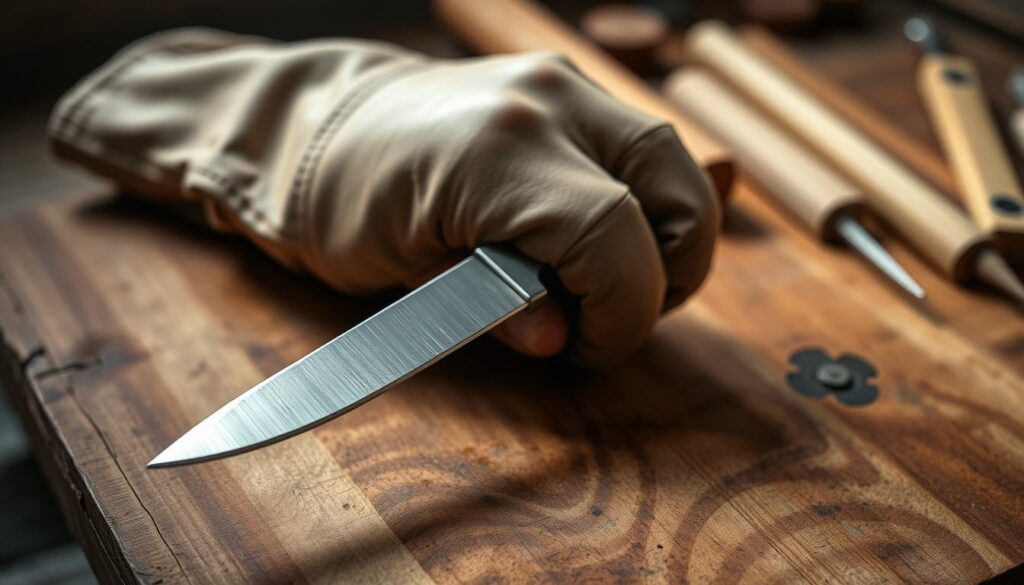
Sharp edge vs. thin geometry
The edge breaks material at first. Then the thicker part of the blade forces the cut open, which creates resistance. A razor-like edge can still feel dull if the geometry behind it wedges food instead of gliding.
How wedging happens
Think of hard squash or dense carrots. As the blade pushes deeper it displaces and compresses the flesh. That push-back is wedging, and it makes cutting feel like work.
Why repeated sharpening raises the edge
Every time you sharpen you remove metal at the tip. Over time the edge sits higher in thicker stock, increasing drag. By taking metal just above the bevel you reduce this resistance while keeping a sensible angle for strength.
Bottom line:
- Sharpening restores bite.
- Thinning refines geometry so the blade moves through food with less effort.
- Do both for best performance without sacrificing durability.
When Your Knife Needs Thinning (Not Just a Touch-Up)
If your knife shaves paper but stalls on dense vegetables, the geometry behind the edge is the likely culprit. That mismatch is common: a razor edge can still wedge if the metal just behind the bevel is bulky.
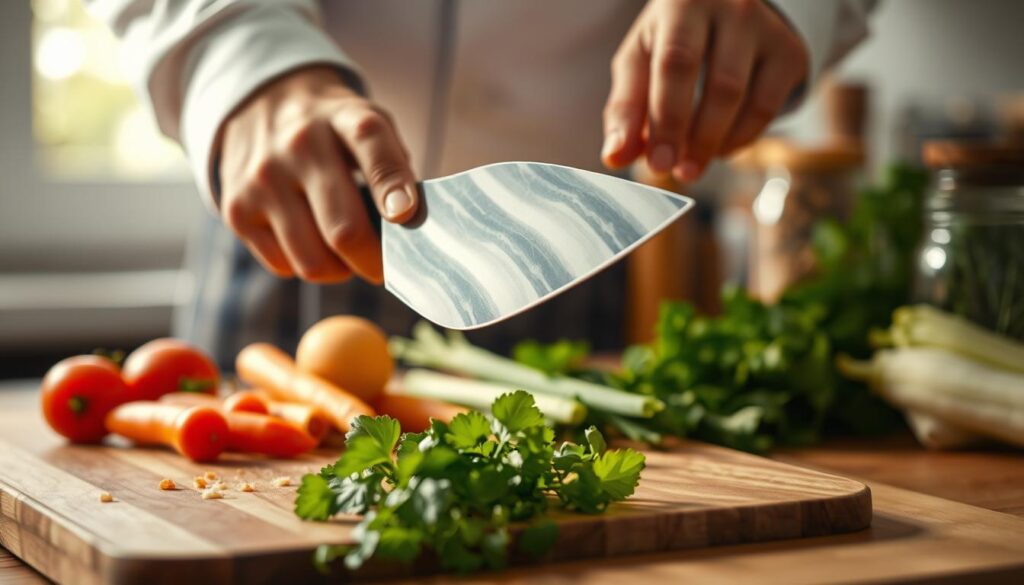
Signs your edge is “sharp but won’t cut”
Look for these simple clues. Your edge knife shaves paper yet stalls in carrots. It may crack onions or split potatoes instead of slicing cleanly.
You will feel more sticking, need extra force, and see the cut line widen as the blade pushes food apart.
New tool reality and what to expect
A new knife often ships with a serviceable sharp edge but a thicker profile behind it. That factory geometry favors durability or fast production rather than silky cutting performance.
Quick fix: a light pass to slim the area above the bevel can transform how a new knife moves through food.
How often to thin
Your routine matters. If you sharpen frequently, you expose thicker metal sooner. That creates a slow “thickening” cycle if you never address the section behind the edge.
- Practical cadence: thin every 2nd or 3rd sharpening for most knives.
- If you keep a consistent angle but notice worse cutting performance, inspect the bevel behind the edge first.
Make a quick checkpoint: when cutting performance drops in dense foods despite a keen edge, examine the bevel behind the edge before changing stones or technique.
Knife blade thinning: Tools, Angles, and Step-by-Step Process
Start with a quick safety and prep check. Inspect your tool for bends, chips, or old micro-bevels. A crooked or nicked edge makes even removal hard and wastes time.
Decide the cosmetic finish before you remove a lot of metal. Thinning the lower third of the face—roughly the part just above the cutting edge—keeps the rest of the profile intact.
Angle and stone guidance
Use a much lower angle for thinning than for sharpening: aim about 2–5° on the primary bevel versus 15–22° for the final edge. That way you ride the kireha without lifting into the secondary bevel.
Start coarse for speed (about 220 grit), then refine at 1000 grit and optionally 4000 for polish. Coarse stones remove metal fast but leave deeper scratches; finer grits smooth the finish.
Repeatable whetstone workflow
- Lay the knife flat and rock onto the primary bevel.
- Use even pressure and strokes from heel to tip across the whole side.
- Grind until the old koba disappears, then repeat on the other side.
Names and power-tool cautions
Watch for the shinogi line as your guide to the kireha. After thinning, sharpen the edge knife normally—thin first, then hone. If you use a belt grinder, work in short passes and cool often; overheating near 200°C can soften steel. Slow, water-cooled wheels reduce heat but take practice—use the wheel’s side for better control.
- Quick tip: thin evenly along the full heel-to-tip line to avoid an uneven bevel.
- Finish: move up in grit to reduce scratch depth and improve cutting feel.
Conclusion
Improving how the section behind the edge meets food often restores effortless cuts more than endless sharpening. If your knife slices paper but hangs up in real cooking, the core issue is usually geometry, not the very tip.
The process removes a small amount of metal from the primary bevel so the edge moves through dense items with less drag. This thinning step keeps the edge low in the profile and reduces wedging while preserving strength.
Adopt a steady maintenance plan: work thinning into your routine every few sharpenings and you keep knives performing without overworking the steel. Regular care costs less time than chasing poor cuts later.
Thin first, refine the finish, then sharpen the edge to restore bite. Most people see immediate gains — the first pass may look rough, but your skill and consistency improve quickly.