Wood vs. G10 vs. Micarta: Choosing the Best Knife Handle Material
You need a concise, practical buyer’s overview that puts use first, not just the way a product photoshoots. This section frames the comparison so you can match grip, durability, and weather resistance to your real tasks.
The handle is a performance part: it directly affects grip security, control, comfort, and how confidently you use the blade in wet or cold conditions.
Expect a side-by-side look at wood, G10, and micarta with quick contrasts to carbon fiber, metals, and FRN/Zytel. We’ll weigh traction, wear, moisture resistance, and temperature stability.
Cost often ties to manufacturing. Laminates, composites, and stabilized wood need more machining and finishing, which raises price beyond simple branding.
By the end you’ll know which option fits EDC folders, fixed blades, or outdoor work based on your tolerance for maintenance, texture aggressiveness, and long‑term wear. The goal is simple: a material that makes your knife safer, more controllable, and balanced for how you cut today.
What to Look for in Knife Handle Materials Before You Buy
Before you spend money, know which grip and balance will suit how you actually work with a blade. Think about the conditions you face: dry hands, gloves, rain, or messy tasks.
Grip and texture for control
Test grip in the exact scenarios you use most. Try a damp palm or a glove to see if traction holds. Aggressive texture helps when wet but can abrade pockets.
Durability against impact and wear
Look for practical durability: impact resistance, scratch behavior, and whether daily carry will polish surfaces smooth. Objects that chip or flex under stress are poor picks for heavy work.
Moisture, temperature swings, and corrosion
Porous surfaces can warp or trap water; laminates and synthetics shrug off moisture and chemicals. Even if the blade resists rust, trapped moisture at scale seams can cause corrosion over time.
Weight, balance, and comfort
Weight matters for real carry. Lighter scales reduce pocket fatigue for EDC. Slightly heavier options can balance larger blades for better control during tough cuts.
- Pocket knives: prefer light, stable options for repeat open/close and carry.
- Fixed blades: need shock resistance and ergonomic contours for long work.
- EDC: sits between — thin profile, daily-wear resistance, and reliable grip in mild dampness.
Finally, be honest about maintenance. If you want “wipe and go,” choose low-porosity synthetics. If you don’t mind oiling or sealing, natural options offer warmth and character.
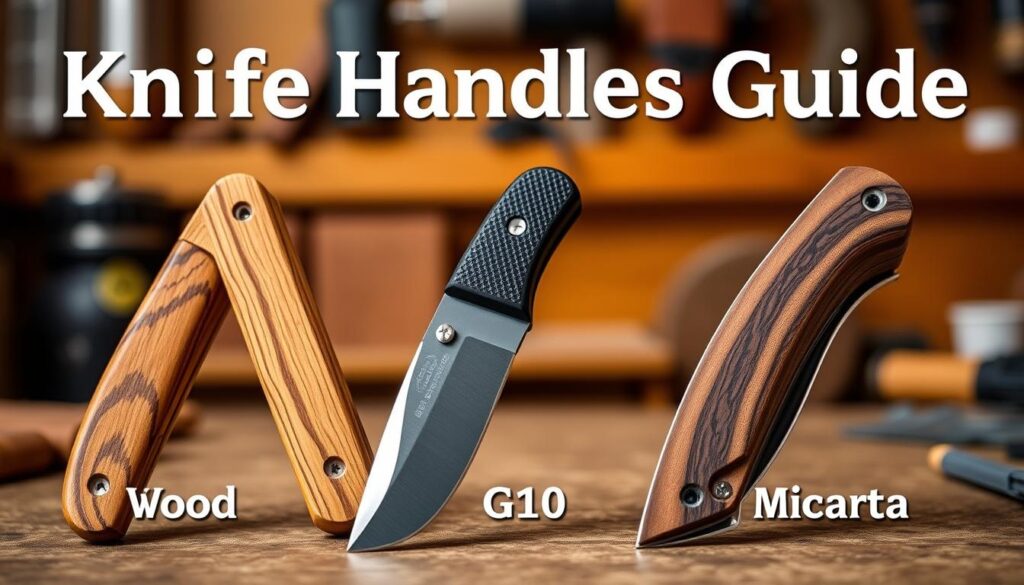
Knife handle materials guide: Wood vs. G10 vs. Micarta at a Glance
This snapshot highlights how each scale performs so you can shortlist the best option fast.
Quick performance comparison:
- Grip & feel: G10 accepts aggressive textures for high traction; Micarta feels warm and often improves grip when damp; wood is comfortable but finish-dependent.
- Strength: G10 is tough under daily stress; Micarta resists impact well; wood varies by species and can be weaker when wet.
- Moisture behavior: G10 is non-porous and resists water; untreated Micarta can absorb moisture; wood can swell or crack with repeated soaking.
Best match by use case: EDC folders often favor G10 for low maintenance. Bushcraft and wet environments lean toward Micarta for secure traction. Hunting and tactical knives may choose based on cleaning needs and weather exposure.
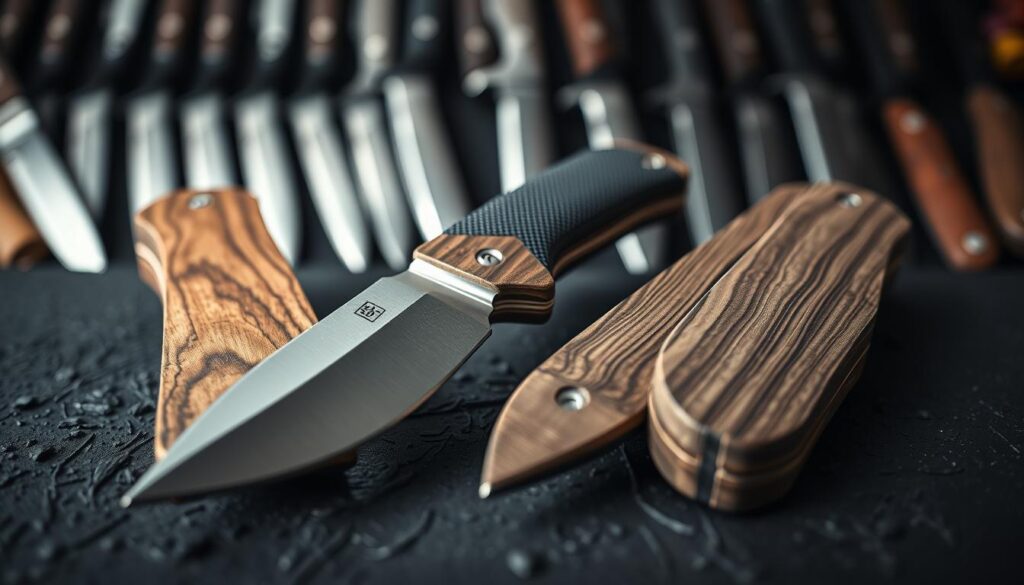
Cost, look, and reality check: Premium pricing comes from laminates, stabilization, and extra machining. Wood offers unique grain; G10 and Micarta give layered colors and designs. Carbon fiber is light and high-tech, but it can crack on sharp impacts, so it isn’t always the best choice for hard-use tools.
Wood Knife Handles: Natural Feel, Classic Look, Real-World Tradeoffs
Wood brings a warm, natural feel that many users prefer over cold synthetics. You notice grain, slight texture, and a finish that looks unique on every piece.
How wood behaves over time: Wood is porous. Repeated wet/dry cycles can lead to swelling, warping, or cracking if you expose it to moisture and heat without care.
Hardwood vs. softwood: Hardwoods like maple, walnut, olive, and rosewood offer better strength and durability than softwoods. Exotic species such as mesquite, desert ironwood, and pink ivory often cost more because they’re dense and rare.
Stabilized options: Resin-infused, high-pressure treated boards—Dymondwood®, Staminawood®, and Pakkawood®—raise density and moisture resistance while keeping the wood look. This processing adds cost but improves longevity.
When to pick wood: Choose wood when you want comfort, warmth, and classic look for everyday tasks, light outdoor use, or collecting. Expect to oil or seal scales occasionally. Remember, natural choices like bone share the same porosity and cracking risks as traditional woods.
- Immediate feel: warm, organic, and distinctive.
- Main tradeoff: needs maintenance to avoid moisture damage.
- Best use: aesthetic preference and light-duty practical work.
G10 Knife Handles: Tough, Lightweight, and Built for Hard Use
If you need a tough, stable grip that shrugs off water, consider a fiberglass laminate.
What it is:
How it’s made
Layers of fiberglass cloth are soaked in resin, stacked, then compressed and baked under heat and pressure. The result is a hard, stable laminate with excellent strength and low weight.
Why makers use it
Non-porous construction means it resists water and chemicals, so it performs well in wet conditions. Manufacturers add checkering or texture to improve traction and long-term control at the blade.
Downsides to plan for
- Synthetic feel: some users prefer natural scales over the firmer, utilitarian feel.
- Brittleness risk: sharp, focused impacts can chip where flexible options bend instead.
- Pocket wear: aggressive grip patterns can abrade pockets or gloves over time.
Who should pick this choice: EDC folders, utility fixed blades, and tactical designs that value traction, durability, and minimal upkeep.
Micarta Knife Handles: Warm in Hand, Strong, and Often Grippier When Wet
If you want a grip that warms in your hand and holds up to hard use, micarta is worth a close look.
What micarta is:
Micarta is a layered fabric composite. Sheets of linen, canvas, or paper are bonded with phenolic resin under heat and pressure to form a tough sheet that makers shape into scales made for comfort and strength.
Feel and traction
Micarta feels less cold than some synthetics and often develops a pleasing hand over time.
With the right finish, the surface keeps or even improves grip when damp, which helps during sweaty or wet use.
Finishing, aging, and drawbacks
Finishing matters: smooth micarta can be slippery, so manufacturers texture or expose the weave to boost traction.
Over time high spots may polish and need light maintenance. It can cost more because shaping and finishing are labor intensive.
Also, unsealed edges can absorb some moisture, so proper sealing helps match G10’s low-porosity durability.
- Best fit: bushcraft and outdoor fixed blades where feel, control, and dependable grip matter.
- Strength & durability: strong under shock and long use when finished well.
- Character: develops a patina that many users prefer to static composites.
How Wood, G10, and Micarta Compare to Other Common Handle Materials
A quick cross-check with metals, carbon options, and plastics helps you spot practical tradeoffs before you buy.
Carbon fiber
Pros: excellent strength-to-weight and a premium look. Carbon and carbon fiber save noticeable weight on folders and fixed tools.
Cons: that same stiffness can be brittle. A sharp side impact may crack the weave, so it’s less forgiving than layered synthetics.
Metals: stainless steel, aluminum, titanium
- Stainless steel: very durable and resists corrosion, but it adds weight and can be slippery without texture.
- Aluminum (6061-T6): light and often anodized for color and protection. It can feel cold and will ding or scratch under rough use.
- Titanium: premium option — corrosion-resistant, lighter than steel, and warmer to the touch. It costs more to machine and shows surface wear.
FRN/Zytel® and other plastics
FRN/Zytel® offers a low-cost, low-maintenance choice. It’s tough and injection molded for consistent fits.
Some users dislike the “plastic” feel and find it less grippy than textured G10 or micarta.
Natural alternatives
Bone, horn, and mother of pearl add classic look and tradition. They are dyeable and stylish.
However, natural options are porous, can crack, and may be slippery for heavy-duty use.
Bottom line: if you want max weather resistance and easy care, synthetics like G10 or FRN win. If you want warm feel and traction when wet, micarta is compelling. For classic character, stabilized wood can be right — just accept a bit more upkeep and a different long-term look.
Conclusion
Pick the option that matches your everyday tasks and the conditions you face most. The best knife comes from balancing comfort, grip, durability, and looks to suit your use.
Grip security and texture directly affect control at the blade. Try a quick feel test for wet hands or gloved use. That will show you pros and cons faster than specs.
Wood shines for classic looks and a warm feel; choose stabilized pieces to cut moisture risk. G10 wins for low‑maintenance toughness and confident traction, but watch aggressive patterns. Micarta gives warm-in-hand comfort and reliable wet grip, though sealed edges last longer.
If you want “wipe clean and go,” lean G10. If you want outdoor comfort and traction, lean Micarta. If you want natural looks, lean stabilized wood. Finally, confirm ergonomics, balance, and pocket comfort—no material fixes poor fit.