
The Best Oils for Maintaining and Waterproofing Wooden Knife Handles
Wooden handles feel warm and comfortable, but they need regular care to stay that way. In this short guide you’ll learn how knife maintenance works, which products boost water resistance, and how to apply them without leaving a greasy mess.
“Waterproofing” here means improving water resistance and slowing moisture uptake, not making the piece dishwasher-safe. I’ll compare mineral, beeswax blends, linseed, tung, Danish, walnut, and camellia options and explain how each affects feel and sheen.
Focus is on everyday U.S. kitchen use, so food safety, odor, and easy reapplication matter. You’ll also learn what to avoid—like ingredients that can go rancid—and when oiling is pointless, such as on painted or stabilized resin grips.
What you’ll get: quick decision rules, step-by-step application, and simple fixes for dry wood, sticky residue, and gaps. Read on for clear, practical steps you can use tonight.
Why Oiling Wooden Knife Handles Matters for Waterproofing and Longevity
A small, regular treatment makes wooden surfaces resist moisture and stay stable through daily use. This simple step helps the material cope with kitchen humidity and keeps the grip comfortable over time.
How wood moves in real kitchens
Wood is hygroscopic: it takes up and releases water from the air. That cycle can cause swelling, warping, and small cracks unless the surface is maintained.
What conditioning does
Treating the surface creates a thin moisture barrier that delays water penetration rather than building a thick film. The result is less deformation and fewer repairs years from now.
- Comfort: A well-conditioned grip reduces friction points and feels stable in your hand during long prep sessions.
- Appearance: Regular care deepens grain and prevents gray, chalky dryness so the finish improves with time.
- Metal protection: Light application near exposed tangs, pins, or moving parts helps lower corrosion risk.
Small, routine care beats heavy, infrequent treatments. Your schedule should match use, climate, and how often the piece meets water.
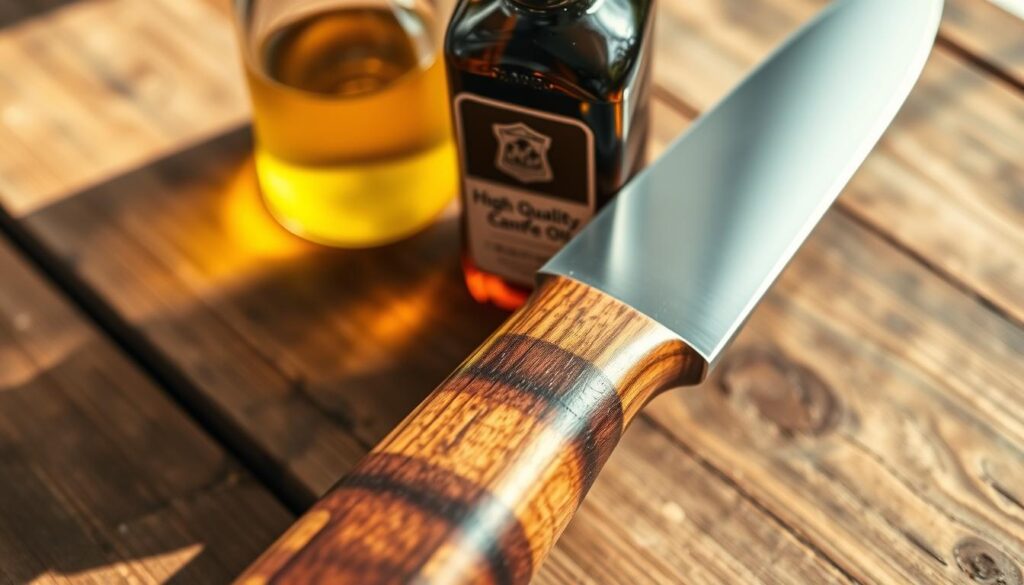
What Damages Wood Handles Most in Everyday Kitchen Use
Even brief contact with water or heat can start long-term damage to wood in the kitchen. You’ll see problems appear slowly over months and years if you don’t change small habits.
Water exposure and the dishwasher problem
Water exposure and the dishwasher problem
Running wooden pieces through the dishwasher is the biggest avoidable mistake. High heat, detergent, and prolonged water cause swelling, loosen joints, and can deform the grip quickly.
Quick rinses still matter
Why quick rinses still matter
Even short water contact can creep into seams where wood meets metal. That moisture leads to slow movement and, eventually, sticking or gaps in folding mechanisms.
Environmental stress
Humidity, heat, cold, and rapid temperature swings
Humidity, dry HVAC air, and rapid temperature swings force expansion and contraction cycles. Over time this causes checking, small cracks, and loss of sheen.
Shocks, wear, and the slow effects of time
Shocks, wear, and the slow effects of time
Bumps, vibration, and repeated cutting wear the surface and abrade the wood. Dense, oily species resist moisture better than open-grain woods, but none benefit from soaking.
- Tip: Oiling is the simplest way to cut these risks without changing the character of the wood.
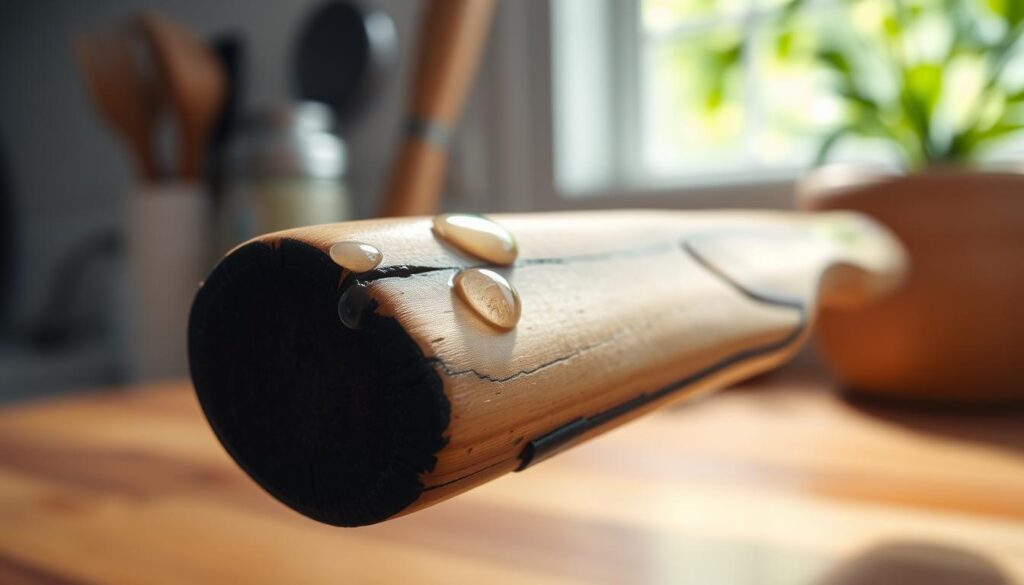
Knife Handle Oil Basics: How Oils Protect Wood Without a Thick Film
Treating wood correctly means you feed the grain so it resists moisture rather than sealing it under a thick coat. A vegetable or food-safe treatment works by penetrating the pores and conditioning the fibers instead of creating a hard topcoat.
Impregnation vs. surface coatings
How penetration differs from varnish and lacquer
Impregnation sinks into the wood and stays with the fibers. Varnish and lacquer sit on the surface and can chip or peel. That makes impregnation easier to refresh with light maintenance.
What saturation means and why a thin layer works best
Saturation means repeating thin applications until the wood stops drinking it in. Let each thin layer absorb for about 15 minutes, then wipe excess off and repeat.
Food-safety and odor considerations
Pick stable, low-odor products meant for food contact. Apply oil sparingly to avoid a greasy surface that can trap grime. If the wood is painted or lacquered, skip this method—products won’t penetrate and can leave a gummy residue.
- Quick tip: Technique beats quantity—use a thin layer and test absorption.
- Result: A conditioned, less absorbent surface that feels natural and stays cleaner.
Mineral Oil for Knife Handles: The Simple, Food-Safe Staple
For everyday maintenance, mineral oil offers a no-fuss, food-safe way to keep wooden grips and boards stable. It soaks in, feeds the grain, and helps slow moisture uptake without adding scent or color.
Why people reach for it
Availability and safety: Mineral oil is non-toxic, inexpensive, and sold widely in the U.S. It’s a common choice for a cutting board and for wooden knife handles because it meets simple food standards.
What to expect visually and in use
Expect a clean, subtle refresh rather than a dramatic darkening of grain. The look stays natural and nearly unchanged.
Performance and maintenance reality
It penetrates well and reduces moisture entry, but it doesn’t cure hard. That means more frequent reapplication, especially with regular washing or dry climates.
- Best for beginners: neutral, safe, and easy to apply.
- Tip: Reapply when the wood looks chalky or thirsty.
- Next step: If you want extra water resistance and sheen, consider a beeswax blend.
Beeswax and Mineral Oil Mix: More Water Resistance, More Sheen
A DIY beeswax blend builds a thin, renewable shield that stands up to kitchen dampness better than oil alone.
What the blend does: Mineral oil conditions the wood from within while beeswax forms a light, water-repellent surface. Together they slow moisture uptake and give the piece a refreshed look that lasts longer between treatments.
- Simple ratio: Mix equal parts beeswax and mineral oil. Warm the beeswax, stir in mineral oil, and cool to a balm-like texture you can rub in.
- Feel upgrade: The blend adds a subtle sheen and a bit more grip for many users. It hides the quick-dry look raw oil can leave behind.
- Application tips: Apply sparingly, let the balm haze, then buff thoroughly so the surface is smooth and not sticky. Work small areas and avoid thick buildup on the handle.
- Problem solving: Press softened beeswax into tiny gaps where water creeps in, then wipe and buff the excess.
- Expectations: This is a repeatable maintenance layer, not a permanent finish. Reapply when the wood looks dull or thirsty.
Linseed Oil on Wooden Knife Handles: Color, Protection, and Dry Time Tradeoffs
Linseed from flax nourishes wood and brings out a warm, golden tone that changes how the grain reads under light. The effect is most noticeable on pale species, where a honeyed shift can be dramatic.
What it does best:
- Enhances grain contrast and enriches the overall look without masking texture.
- Provides nourishing protection that keeps wood from feeling dry or chalky.
- Works well if you want a classic, aged appearance on wooden knives.
Drying and tradeoffs
Raw linseed cures slowly; boiled or heat-processed versions shorten cure time. If you need quick turnaround between coats, this may not fit your routine.
Practical notes and safety
Expect some odor during application; it fades as the finish cures. Important: rags soaked with linseed must be laundered or sealed airtight. Left bunched in air they can self-heat and pose a fire risk.
Who should choose it: Pick linseed if you value color and character and can wait for proper curing. For faster maintenance, consider faster-drying alternatives.
Tung Oil for a Harder, Water-Resistant Finish on Wooden Knife Handles
If you want a longer-lasting barrier that resists stains and abrasion, tung finishes are a dependable choice. Tung comes from tung tree seed and cures into a tougher film than non-curing treatments.
Why durability matters: tung forms a harder layer that improves water resistance and resists scratches. That makes it a good long-term option for wooden knife handles that see frequent use.
Appearance and feel
Tung tends to “pop” grain and leaves a satin sheen without looking plasticky when you apply thin coats. The result looks finished but still natural.
Be aware that tung-treated grips can feel smoother and less tacky than a mineral oil plus beeswax combo. If your hands get oily, you may notice less bite under heavy use.
Cure time and technique
Patience pays off: thin coats, thorough wiping, and full cure between layers prevent tacky, uneven spots. Rushing leads to tackiness.
- Decision tip: choose tung if you want longer intervals between maintenance and stronger stain resistance.
- Practical tip: keep coats thin and wipe excess completely for the best finish.
Danish Oil for Knife Handles: A Balanced Option for Protection and a Natural Sheen
A blended finish like Danish gives you the penetration of an oil with the added toughness of resins. It soaks into the grain, then the varnish content cures to give a light protective layer that lasts longer than plain conditioning treatments.
What Danish products usually contain and why that matters
Danish blends typically mix linseed or tung with varnish/resin and solvents. The oils feed the wood while the resins help the surface dry and resist peeling. Solvents speed cure time so you can use the piece within hours instead of days.
Performance and practical benefits
The result is a durable, satin finish that reduces cracking and improves moisture resistance. You’ll get a soft sheen rather than a glossy, plastic look, and maintenance intervals stretch out compared with plain mineral treatments.
How to avoid an overly lacquered surface
Work thin coats, wipe off excess, and let each coat dry 4–6 hours. After the last coat, lightly polish with a soft cloth to keep the grain tactile and avoid buildup that looks like varnish.
- Balanced choice: combines penetration with cured protection.
- Timeline: apply, wait a few hours, then polish for a satin result.
- Use case: a middle path for those who want more durability than basic oils without long cure times.
Walnut Oil for Knife Handles: Rich Color With an Allergy Caveat
Walnut oil brings a deep, antique richness to wood that changes the overall look in a single treatment. It warms pale species and makes the grain pop without glossing the surface.
Slow penetration and what it means for you
Because walnut oil dries slowly, it keeps penetrating for days. That extended open time deepens color and allows you to build a layered, natural tone.
Take care to wipe excess between coats to avoid a greasy feel while the finish cures.
Allergy and kitchen practicality
Walnut products are derived from tree nuts and can trigger reactions. In shared kitchens or professional settings, that risk can outweigh the visual benefit.
- Visual payoff: rich, antique look and enhanced grain contrast.
- Work pace: slow drying lets deeper penetration but needs clean wipe-downs.
- Food safety note: avoid in communal or allergy-sensitive environments.
- Decision tip: choose walnut oil when appearance is the priority and allergy risk is low.
Camellia Oil: A Light, Fast-Feeling Oil That Supports Both Handle and Blade
Cold-pressed camellia from Camellia sinensis soaks into wood quickly and leaves a natural, low‑residue finish. It’s ultra-fluid, so it penetrates grain and conditions fibers without adding weight.
Why owners favor it
- It spreads easily and balances protection for wood and steel.
- It reduces humidity uptake, cuts dust and lint clinging in storage, and helps slow oxidation on reactive metals.
- The feel is light; when you wipe excess, the surface rarely gets waxy or slick in your hand.
Best fit
Use camellia on everyday kitchen knives and paring tools that see frequent use and need quick post-cleaning care. It’s a simple wipe-on habit that keeps grips comfortable and blades ready.
Waterproofing expectations
Camellia helps with routine moisture exposure but won’t make pieces dishwasher-safe. Avoid soaking and repeat applications as needed after heavy washing.
Oils to Avoid or Use Carefully on Wooden Knife Handles
Not every household oil is safe for long-term use on wood used near food. Some choices cause lasting odor, sticky build-up, or poor performance on finished surfaces.
Why olive can go rancid:
Olive breaks down over time and can oxidize into a rancid smell. That odor may cling to the wood and transfer to your hand or food.
This problem makes olive a poor pick for routine maintenance of a wooden handle, especially in a kitchen where subtle aromas matter.
Painted or lacquered surfaces
If the wood is painted or sealed, adding oil won’t penetrate. Instead, it can create a sticky film or trap grime under the finish.
For finished pieces, stick to cleaning and light polishing rather than penetrating treatments.
“Teak oil” is often misleading
Teak oil is usually a branded blend for outdoor or exotic woods. It may contain vegetable bases plus solvents and resins.
Read labels carefully; some versions behave more like varnish than a penetrating conditioner.
- Safer alternative: choose a stable, food-safe option like mineral when you’re unsure—think of it as the neutral baseline.
- Core rule: avoid prolonged water exposure; oiling helps maintenance but is not a license to soak the wood.
How to Apply Oil to a Knife Handle the Right Way
Start by preparing the wood so the treatment soaks in evenly and the final result stays non-greasy. Work in a well-lit, dry spot and keep any folding mechanisms free of trapped moisture.
Clean gently first
Wipe the wooden handle with a damp cloth. Use a single drop of dish soap only if there is sticky residue, then rinse the cloth and dry completely.
Apply a few drops as a thin layer
Put a couple of drops on a soft, clean cloth and spread a thin layer along the grain. Work small areas so the surface never becomes slippery or gummy.
Let it absorb and wipe excess
Allow about 15 minutes for absorption. Then use a dry cloth to remove all excess and buff the wood until it feels smooth and dry to the touch.
Repeat until saturated
Keep adding thin coats and wiping until the wood stops accepting product. That saturation point means the wooden knives are conditioned and ready for normal use.
- Safety note: Launder or seal oily rags—especially those used with linseed—before disposal to prevent self-heating.
- Final tip: Avoid corrosive cleaners near metal parts and keep joints dry while you work.
Choosing the Right Oil for Your Knife Handle Material and Wood Type
Picking a treatment depends on the wood’s porosity, the material’s stability, and the appearance you want. Open-grain woods absorb quickly and need more frequent care. Dense, naturally oily species soak in slowly and usually require fewer applications.
Open-grain vs. dense woods
Open-grain wood will darken and drink up product fast. You’ll apply thin coats until saturation. Dense exotic woods still resist water, so a light wipe with a clean cloth often suffices.
Stabilized or resin-impregnated woods
Stabilized materials such as pakkawood are dimensionally stable. They rarely need saturation—regular wiping keeps them looking fresh.
Non-wood natural materials
Horn, antler, and ivory-like materials should stay dry and cool. A very light rub preserves shine; avoid soaking and direct heat or bright light.
Handle gaps and beeswax
Use softened beeswax to press into tiny gaps where moisture collects. Remove excess and buff to prevent buildup.
- Storage tip: Keep items in dry spots; wrap in tissue paper in humid climates to reduce moisture.
- Aesthetics: Choose treatments based on whether you want a preserved new look or a slow-developing patina.
Conclusion
Small, scheduled upkeep is the easiest way to keep wooden tools reliable and good-looking in a busy kitchen.
Key takeaways: Regular treatment protects wood from moisture and wear, improves comfort, and helps reduce rust risk on nearby metal. For most people, mineral oil is the simple, food-safe choice for routine maintenance. If you want stronger water resistance and longer intervals between care, pick tung oil and respect cure times.
Linseed oil is best when you want richer color but plan for longer drying and safe rag disposal. Avoid olive on food-contact wood and skip penetration treatments on painted or lacquered surfaces.
Do this today: wipe clean, dry fully, apply a thin coat, let it absorb, wipe off excess, and repeat only until the wood stops drawing product. A few minutes now keeps your knives comfortable, good-looking, and ready for daily use.