Petty Knife vs. Paring Knife: Which Small Blade Do You Actually Need?
Your chef knife can feel bulky for small tasks. You reach for a smaller tool, but not all small knives handle the same jobs.
In a typical U.S. kitchen you’ll peel, trim, and work both on the board and in your hand. Blade length matters: paring blades run about 3–4 inches, while the longer petty style sits around 4–6 inches and acts like a compact utility tool.
This section sets expectations. You’ll learn how size, geometry, and control affect performance. I’ll explain which tool fits your grip, common home tasks, and which one to buy if you can own only one.
Quick take: this comparison isn’t about better or worse. It’s about matching your usual work—precision peeling and detail, or board-based utility and reach.
Later you’ll get guidance on steel, edge feel, maintenance, and storage so your purchase lasts.
Why This Small-Knife Choice Matters in Your Kitchen
When small produce shows up, you want a tool that feels intentional and safe in your hand. Reaching for a smaller blade is about precision and visibility, not just size.
When a chef knife feels like too much blade
Large blades give power on the board but can be awkward for strawberries, garlic, or trimming tiny produce. You trade leverage for reach, which can reduce tip control and make small cuts feel sloppy.
How “control” changes on the board versus in your hand
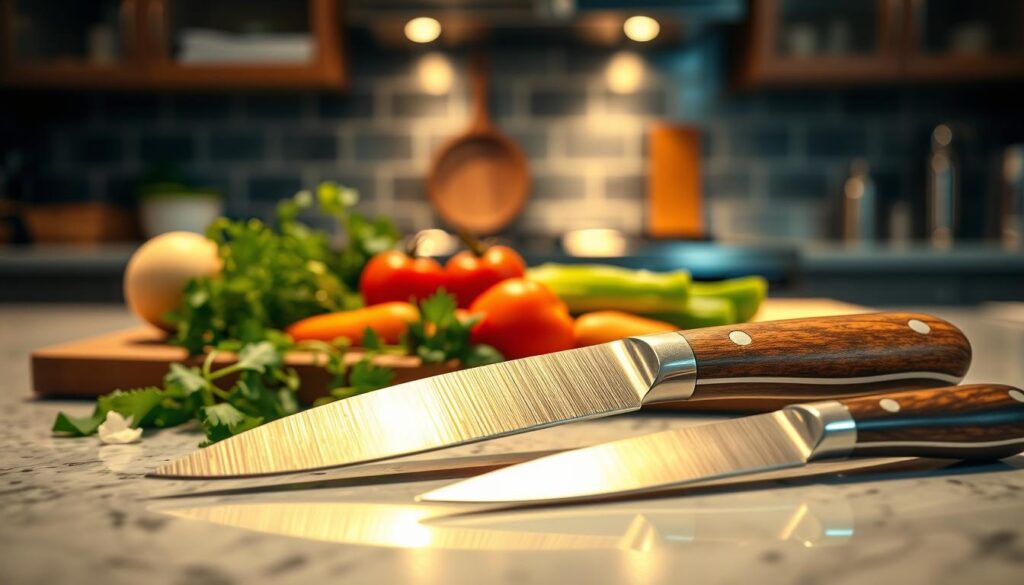
On the board, the surface stabilizes the work. The board supports the food and the blade, so control comes from balance and a steady wrist.
Off the board, your fingers guide the motion. Shorter blades reduce leverage against your hand and keep the tip visible, which improves safety and precision.
- Fewer slips during peeling.
- Cleaner cuts through tomato skin.
- Less fatigue during repetitive prep.
Practical takeaway: Choose the small tool that matches where you do most of your work—on the board, in your hand, or switching between both. The rest of this article helps you match technique to the right design.
What Is a Paring Knife?
For tight, detailed work you need a small blade that feels like an extension of your fingertips.
Typical blade length and overall size
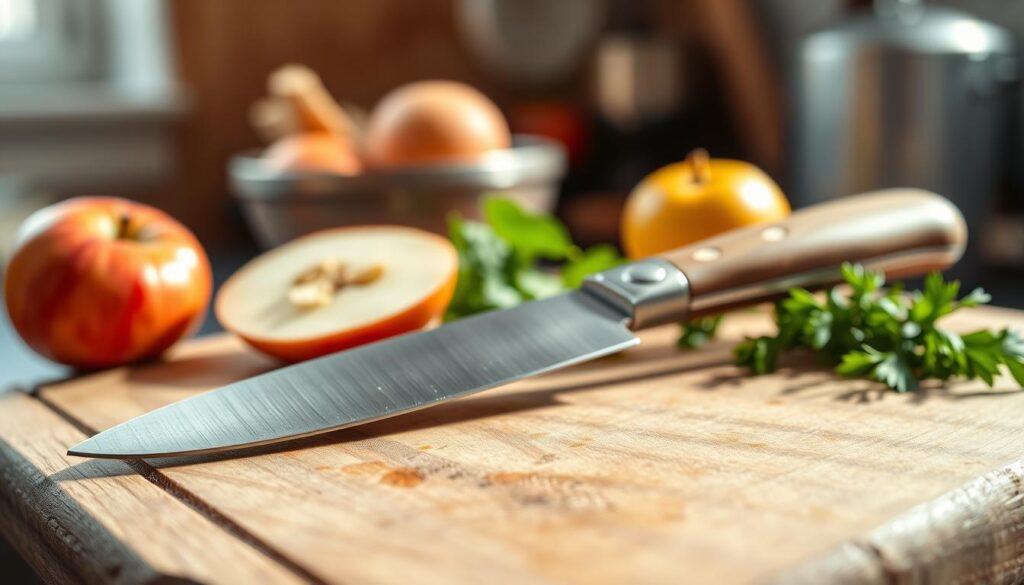
A paring knife is a compact, sharp tool built for close-up control and detail work. Most paring blades run about 3–4 inches (8–10 cm), keeping the working edge short and easy to steer.
Why the straighter, rigid blade matters
The edge is usually straighter and more rigid than longer blades. That stiffness gives you deliberate, stable cuts in tight spots without unexpected flex.
Common tasks and in-hand technique
Use this small parer for weekly tasks like peeling apples, trimming blemishes, hulling strawberries, and quick garlic prep. The short size improves visibility when the ingredient sits in your hand.
Comfort, grip, and control
Comfort and a secure handle matter because you rotate your wrist and guide the tip with your thumb. A confident grip gives better precision and safer control for delicate work.
- Compact for detail
- Short edge for visibility
- Designed for in-hand comfort
What Is a Petty Knife?
A compact, chef-like tool fills the gap between tiny detail blades and a full-size workhorse.
Definition: The petty knife is a Japanese-style utility blade you reach for when you want more reach than a parer but less bulk than a chef knife.
The Japanese take on the utility knife
This design borrows chef-like balance in a smaller package. It feels more like a scaled-down chef tool than a fingertip parer.
Typical blade length and where it fits
Blades usually run about 4–6 inches, with many popular models near 5 inches. That length gives extra reach without the height and heft of a full chef blade.
Common uses and cutting style
Use it for slicing tomatoes, dicing small vegetables, cutting fruit, and trimming small proteins. The profile often has a gentle curve toward the tip, which supports light rocking and longer board strokes.
- Board-focused: Longer edge for cleaner slices.
- In-hand work: Can handle some detail tasks so you switch tools less.
- Knuckle clearance: Lower blade height means less chance of banging your knuckles while chopping.
Practical takeaway: If you want one small, versatile utility that bridges board work and occasional in-hand detail, this compact, Japanese-style blade is a strong choice.
Petty knife vs paring knife: The Core Differences at a Glance
Small prep tasks expose the real trade-offs between control and reach in a compact kitchen tool. Use this quick shopping lens to compare length, profile, and how each tool balances in your hand.
Size and blade length
Size matters first: a paring knife usually has a shorter blade (~3–4″) that favors tight, controlled motions. A petty knife sits longer (~4–6″) and covers more distance per stroke.
Blade profile and curvature
Curvature changes how you cut. The longer design often has a slight curve that supports light rocking and longer slices. The straighter, rigid edge on a paring blade excels at short, precise cuts.
Grip position, balance, and control
You’ll hold a paring model closer to the edge for fingertip control. A petty model shifts your hand a bit back, offering more balance for board work while retaining decent control for in-hand tasks.
Tip design and precision vs stability
Longer tips can feel more precise for point work, but shorter tips often feel more stable for peeling and trimming. Match tip shape to the tasks you do most.
Weight and fatigue during repetitive cuts
Paring tools tend to be lighter for short, fussy jobs. A slightly heavier, longer utility reduces repetitive motions when you need fewer, longer cuts—so choose by range and design of your prep.
- Shopping summary: compare blade length, edge profile, and balance in your hand.
- Choose short for detail and longer for reach and slicing efficiency.
- Let your common tasks guide the final pick—not the specs alone.
Size, Thickness, and Blade Geometry
Blade geometry defines how a small tool reacts the moment it meets food. The way a blade keeps thickness or tapers toward the tip changes how you cut, how much force you need, and how safe you feel.
Short and rigid versus longer, tapered tips
Short, rigid edges resist twisting and give steady control when you work in your hand. That consistency helps with fine precision and tight trimming.
Longer, tapered tips feel more agile on the board. They respond quickly but ask you to use cleaner technique to avoid wobble.
How thickness affects flexibility, leverage, and safety
Thicker profiles add leverage and safety if you torque the tool off the board. Thinner blades bite faster and lower your cutting force, but they can punish sideways pressure.
Remember, steel and heat treatment set limits on how thin a blade can get while staying resilient. You notice geometry when trimming silver skin, slicing citrus, or doing quick board work on small veg.
- Feel: short = stable; tapered = responsive.
- Technique: thinner tips require cleaner cuts.
- Safety: too much flex off the board can reduce control.
Blade Shape and Cutting Motion on a Board
When you work on the board, small differences in curve and height shape every slice. The way an edge meets food affects rhythm, comfort, and the result you want.
Why slight curvature helps for light rocking and longer slices
A gentle curve gives you more continuous edge contact during a stroke. That makes longer slices—like halving cherry tomatoes or cutting small citrus—feel smoother.
This design reduces chattering and lets you use a light rocking motion that needs less effort and fewer passes for clean slices.
Where a straighter edge still wins on the board
A straighter edge favors short push cuts and quick stop-and-start work. It shines when you need precise, tiny trims or when space on the board is tight.
Practical tip: if your small-knife tasks are mostly on the board, the curved option gives reach and knuckle clearance. If you do lots of micro-cuts or trimming, the straighter edge will keep control tight.
- Curved edges support gentle rocking and longer slices.
- Straight edges excel at controlled, short board cuts.
- Better knuckle clearance makes longer board sessions more comfortable.
Off-the-Board Prep: Where the Paring Knife Often Dominates
When you work over a bowl or hold fruit in your palm, less blade often means more confidence. A short tool gives quick feedback and keeps the tip visible so you can follow curves without second-guessing.
Peeling, segmenting, and small wrist rotations
Paring knives around ~3.5″ excel at peeling apples, segmenting citrus, and turning mushrooms. Your fingers guide the motion, so compact blade length reduces leverage against your palm and improves precision.
Tight-radius cutting and visibility
When you trace a curve—cores, blemishes, or hulls—less blade needs to pivot. That makes the motion feel steadier and keeps your supporting hand safer. A short tip stays in view to prevent overcutting.
Edge bite and practical limits
A refined edge bites slick skins like tomato and citrus so the blade grabs instead of slides. That improves control during delicate tasks.
- Purpose-built: paring knives fit in-hand prep where fingertip feedback matters.
- Safer-feeling: shorter reach reduces slips and improves visibility.
- Know the limit: they shine on detail but can feel slow on larger ingredients.
Off-the-Board Prep: Where a Petty Knife Takes the Lead
Extending your reach by an inch or two can turn fiddly trimming into smooth, efficient work. A ~5″ petty knife provides that extra length so you complete longer strokes with fewer starts and stops.
Trimming proteins and silver skin with longer strokes
When you trim chicken thighs or clean silver skin from a tenderloin, the longer edge lets you pull a single, controlled stroke. That reduces serrated tugs and keeps the meat surface cleaner.
Result: fewer strokes, better cut quality, and less hand fatigue during repetitive prep.
Handling larger ingredients like mangoes with fewer repetitive cuts
For curved produce such as mango, the added length follows contours with fewer start-stop motions. You get smoother slices and more even flesh removal.
Switching between board work and in-hand work without changing knives
A compact utility bridges board slicing and quick hand trims so you keep flow in the kitchen. Slice on the cutting board, then flip to a quick hand trim without swapping tools.
- Better reach: longer strokes for proteins and larger fruit.
- One-knife flow: move between tasks with minimal tool changes.
- Technique note: these blades can taper thin near the tip—keep strokes straight and avoid twisting to maintain precision and control.
Handle, Grip, and Ergonomics: Choosing What Feels Right
A handle’s shape often decides whether a small blade feels like an extension of your hand or a separate tool. Good design is not cosmetic — it sets the knife’s balance and how secure you feel during close, delicate work.
Full tang vs hidden/partial tang
Full tang construction gives a planted, steady balance. That extra weight through the spine often makes a paring knife feel reliable for in-hand precision.
Hidden or partial tang reduces weight and can make a petty knife feel nimble on the board. You trade a bit of heft for quicker wrist motion.
Grip placement and precision
Your grip changes where balance sits. Holding close to the blade boosts precision and fingertip control. Moving back a bit gives knuckle clearance and smoother board strokes.
Ambidextrous comfort and a quick fit check
Symmetric handles favor both hands and sharing knives in a busy kitchen. Do this fit check: rest your thumb where it naturally wants to sit, check knuckle clearance, and try a few peeling strokes. If your wrist stays relaxed and your grip isn’t white-knuckled, the handle is a match.
- Why it matters: the right handle reduces fatigue for chefs and home cooks alike.
- Balance tip: look for where the tool pivots in your hand, not on paper specs.
- Final rule: pick ergonomics that let you make precise cuts with control and comfort.
Steel, Edge Performance, and Finish in Modern Knives
The feel of a blade starts long before the cut — it begins with the metal and finish.
How steel affects bite and responsiveness
Steel choice changes what you feel: sharper initial bite, faster edge recovery, and how the tool starts on slick skins. Alloys like VG-10 and AUS-10 are common because they balance hardness and corrosion resistance.
In practice, those steels let the edge penetrate tomato skin and citrus peel cleanly. You use less force, which raises safety and lets you work with more precision.
Why a refined edge matters for small cutting tasks
A refined edge matters on small tools because you do low-force, controlled cuts. A good edge engages immediately instead of skating over a tomato or orange.
Common finishes and what they mean
You’ll see visual finishes such as Damascus, a mirror or polished migaki, rustic kurouchi, and the subtle texture of nashiji.
- Damascus: pattern, mostly aesthetic.
- Polished: food release and easy cleaning.
- Kurouchi: low-maintenance, rustic look.
- Nashiji: mild texture, better non-stick behavior.
Practical rule: match steel and finish to how much care you’ll do. Prioritize geometry, comfort, and edge quality over looks, then pick the finish that fits your routine.
Maintenance and Care: Sharpening, Rust, and Storage
A little upkeep goes a long way toward keeping small tools safe and sharp for daily use. Proper maintenance keeps the edge biting and reduces slips during cutting. Follow a simple routine and your tools will serve you longer.
How often you’ll realistically sharpen each tool
Set realistic expectations: frequency depends on use and steel choice. Small knives used every day dull faster than many expect.
Common cadence: a petty knife often needs sharpening every few months with regular use. A paring knife may be fine with sharpening twice a year. Harder steel can extend that range, while softer alloys need attention more often.
Why thinner tips demand careful technique
Thin tips near the point are more delicate. Excessive force or a poor angle can bend or chip the blade.
When you sharpen, use controlled passes and a steady angle. Treat thin edges gently to avoid premature wear and preserve cutting performance.
Smart storage: block, magnetic strip, or sheath
Protect the edge and your hands. Good storage reduces micro-damage and means you sharpen less.
- Knife block: keeps edges covered and organized.
- Magnetic strip: quick access but mount it high enough to avoid drops and keep handles reachable.
- Sheath/guard: ideal for drawers or travel—simple and effective.
Usability note: consistent sharpening and safe storage preserve edge life, protect the handle, and make every prep work feel smoother.
Which Knife Should You Buy If You Can Only Pick One?
The right single small blade should match your weekly tasks, not the latest trend. Make your decision by listing what you do most and matching that to a tool’s strengths.
Choose a paring knife if your prep is mostly peeling and tight detail work
Paring knife (~3–4″) wins when you need close visibility and fingertip precision. If you do frequent peeling, hulling, coring, or tiny trims, this tool gives better control and safer in-hand work.
Choose a petty knife if you want one small knife for board and utility tasks
Petty knife (~4–6″) acts as a true utility knife on the board and still handles quick hand trims. Pick this if your prep mixes slicing small veg, trimming proteins, and occasional in-hand detail.
How to choose blade length in the 3–6 inch range for your comfort
Match blade length to hand size and the cuts you do most. Shorter feels safer for repeated peeling; longer reduces repetitive strokes for slicing and dicing.
- If you choke up naturally and do lots of in-hand work, pick shorter.
- If you favor board work and longer slices, pick longer.
- Let weekly prep drive the final choice, not aspiration.
How a Petty Knife, Paring Knife, and Chef Knife Work Together
A small, well-chosen set of blades makes routine prep flow faster and safer. In a typical home kitchen, three complementary knives cover nearly every task without forcing one blade to do everything.
A practical three-knife setup for most home cooks
Chef knife handles volume board prep—slicing vegetables, breaking down proteins, and big chopping. Keep it on the cutting board for stability and speed.
The petty knife acts as the bridge. Use it for mid-size utility work and when you switch between board slicing and quick trims.
The paring knife is your detail tool. Reach for it when you need tight control for peels, cores, and small curves.
When your chef’s knife should stay on the board
Reserve the chef knife for board work. Its length and weight make it safer and more efficient on a stable surface. This trio of knives reduces frustration, speeds prep, and keeps control where it matters.
- Chef knife = volume, board-focused.
- Petty knife = bridge for mixed tasks.
- Paring knife = in-hand precision.
Workflow example: use the chef knife to chop lettuce, the petty knife to slice mango and trim chicken, then the paring knife to peel citrus and finish small details. The sequence keeps your work smooth and safe.
Conclusion
Deciding between a petty knife and a paring knife comes down to the cuts you do every week.
Choose a paring knife for tight, in-hand detail and peeling. Choose a petty knife when you want a small blade that handles board work with extra reach.
Keep four criteria in mind: blade length, blade shape, grip comfort, and where you do most of your prep—on the board or in your hand.
A refined edge and quality steel improve bite on tomato skin and citrus peel, so you use less force and gain better precision.
Routine sharpening and safe storage protect thin tips and extend performance more than most cooks expect.
Remove any “page blocked extension” or similar scraped-note strings from drafts before publishing; they distract readers and reduce credibility.
Pick the tool that matches your weekly work so prep feels controlled, not forced.