
How to Hand-Polish a Kitchen Knife Blade to a Satin or Mirror Finish
This short guide shows you what hand polishing means, what to expect, and how to work safely.
Polishing a knife blade means you refine the steel surface so light scratches and haze give way to either a satin sheen or a true mirror reflection. The process uses progressively finer abrasives to remove small defects and build consistent scratch patterns.
Be ready to spend time and move through careful, ordered steps. You start by fixing deep marks, then refine, then shine. Trying to remove big scratches at the end wastes time and risks removing too much metal.
You can do this without industrial gear, but you must be methodical to protect edge geometry. The two end goals—satin or mirror—use the same fundamentals: clean transitions, progressive grits, and steady hands.
Coming next: safety and setup, tools and materials, prep (including rust), hand sanding, scratch control, optional buffing wheel, and final cleaning and protection. This step guide will help you choose the finish that fits how you cook and care for your tools.
What a Satin vs Mirror Finish Means for Your Kitchen Knife
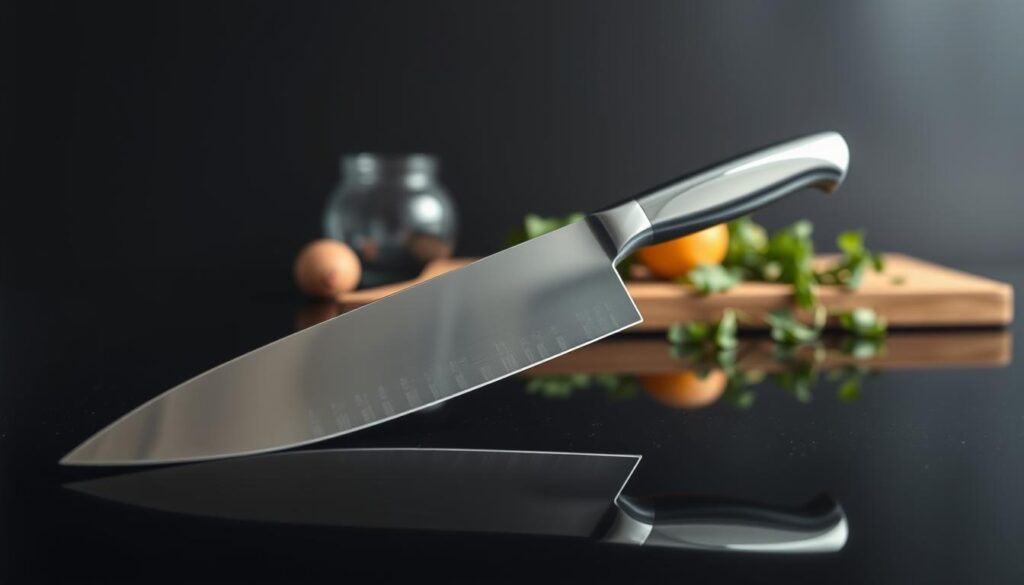
Satin surfaces hide small scratches; mirror surfaces expose them with glass-like clarity. Both finishes come from the same steps: remove defects, refine scratch patterns, then finish with finer abrasives.
Visual difference: Satin reflects light softly with fine, directional lines. A mirror finish reflects uniformly like glass, and it highlights any remaining defects on the surface.
Why mirror is more than looks
A mirror finish creates a smoother steel plane. That smoothness reduces microscopic crevices where moisture and residue collect, so corrosion risk drops and cleaning takes less effort.
Practical kitchen benefits
On stainless steel and other alloys, a refined surface gives fewer tooth points for food to cling to. This makes daily cleanup easier and can provide reduced friction during delicate slicing.
When satin is the smarter choice
Satin hides tiny scuffs from heavy use, so high-contact work knives will look better longer without constant touch-ups. Choose mirror for showpieces or tools you keep carefully maintained.
- Mirror finish: best for easy cleaning and corrosion resistance
- Satin finish: hides wear and is low maintenance
- Both rely on steady polishing and grit progression for consistent results
Safety, Setup, and the Right Workspace for Polishing
Begin with a clear plan: good light, solid clamping, and protective gear in place. Your first priority is personal safety. You will handle sharp steel, create fine metal dust, and may use a rotating wheel that can catch the material if mishandled.
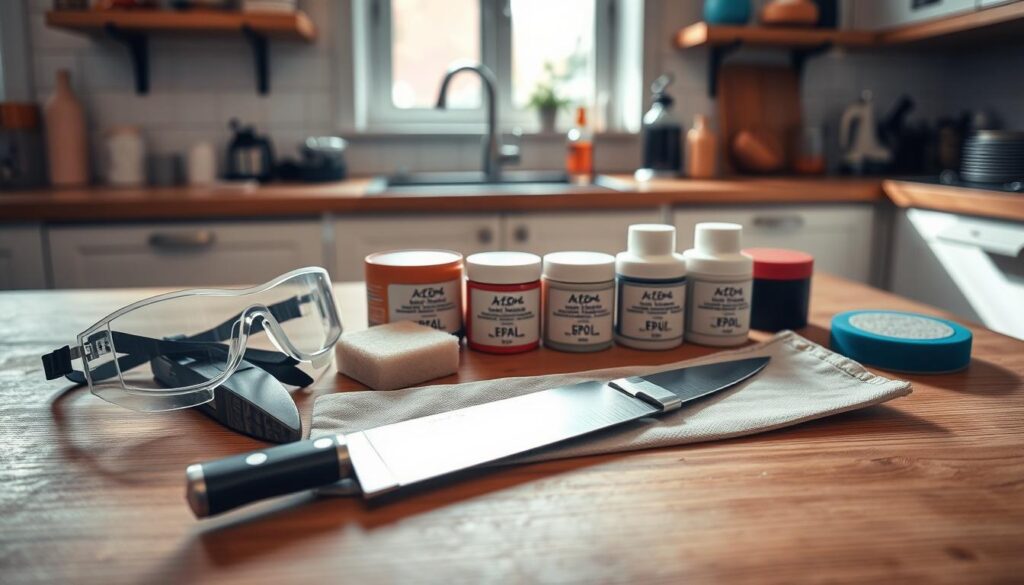
Protective gear to use when sanding and buffing
- Eyes: wear safety goggles to block dust and flying debris.
- Hands: use well-fitting gloves, but remove them when working very close to spinning tools to avoid entanglement.
- Respiratory: use a mask or respirator if sanding produces visible dust.
Ventilation and dust control during the process
Work near open airflow or position a fan to push dust away. Wipe surfaces with a damp cloth after each session to trap metal particles.
Keep polishing materials and cleaning cloths separate: one cloth for compound, one for final wipe, and one for general cleanup. This prevents grit transfer and new scratches.
Practical workspace checklist
- Firm bench and non-slip mat or clamp so the piece does not skate.
- Bright lighting to inspect scratch patterns and progress over time.
- Organized shop layout so you can reach materials, wheel, and cloths safely.
Information access note: If a page blocked extension or extension blocked message prevents you from viewing online video guides, try disabling extensions or switching browsers so the instructional content loads without a blocked extension or page blocked warning.
Be patient. Rushing increases the chance you slip, over-sand, or heat the metal and harm edge life and finish quality.
Tools and Materials You’ll Need to Polish Knife Steel
Good results begin with quality supplies: planned grits, dedicated wheels, and clean cloths keep work consistent.
Sandpaper grit ranges and what each step does
Use sandpaper in a planned progression so each pass removes the previous pattern. A common ladder is: coarse 220/400, medium 800/1000, fine 1500/2000, extra-fine 3000+.
Coarse grits flatten deep scratches and stains. Medium grits even the surface. Fine and extra-fine grits prepare stainless steel for either a satin or near-mirror result.
Polishing compounds and metal polish options
Start cutting with Tripoli or emery, then finish with white rouge or a fine finishing compound. For the final hand pass, use a trusted metal polish such as Flitz or Mothers.
Buffing wheel basics for home shops
Keep one buffing wheel per compound to avoid contamination. A wheel can change lines quickly and build heat, so control speed and pressure.
Cloths, cleaners, and lubricants that prevent new scratches
- Microfiber and clean cotton rags for wiping between steps.
- Use clean water or a light lubricant for wet sanding to reduce clogging.
- Finish with isopropyl alcohol to remove residue before the last polish.
Workflow note: follow “clean to cleaner” preparation: keep hands and bench free of grit. Contamination can undo an entire step and harm overall quality.
Preparation: Clean the Blade and Remove Rust Before You Start
Clean, dry, and inspected metal gives predictable results. Begin by removing kitchen oils, fingerprints, and residues so abrasives cut evenly. Wipe the surface with a degreasing agent and a clean cloth, then dry thoroughly to avoid water spots or trapped moisture.
Degreasing and drying for a contaminant-free surface
Wipe the blade with solvent or dish soap, then follow with a lint-free cloth. Dry fully; hidden moisture can worsen rust during long work sessions.
Safe rust removal with remover and oil
Apply a store-bought rust remover per label directions and cover with a cloth so the product works without evaporating. After the recommended time, wipe residue away and apply a light oil to neutralize salts and protect the metal.
Inspecting for burrs, rough spots, and stubborn corrosion
Under bright light examine for pits, gray staining, and burrs. Decide if you can hand-sand minor defects or if deeper corrosion needs coarse grits and more time.
- Tip: active rust will reappear through a finish if left; remove it fully before further steps.
- Set a baseline: clean, dry, contaminant-free surface equals predictable scratch patterns and success when you polish knife.
Polishing a Knife Blade by Hand with Sandpaper
Hand sanding gives you precise control to remove visible defects while protecting the cutting geometry. This method lets you manage how much metal you take off and ensures the edge stays true.
Initial sanding to remove deep scratches
Begin around 220 grit for large marks, or 400 if damage is lighter. Use coarse grits only as aggressive as needed. Make controlled passes along the length of the blade and keep the edge taped or shielded to prevent nicking.
Progressively finer sanding for an even surface
Move through 600, 800, 1000, 1500, 2000 and 3000+ in order. Do not skip grits: each step erases the prior scratch pattern faster than skipping and hoping polishing hides it.
Wet sanding and move-up rules
Wet sand with water or a light lubricant to reduce clogging and keep grit cutting clean. Change sanding direction between steps to cross-hatch and verify removal.
- Uniformity check: inspect under bright light at multiple angles.
- Move up when no prior scratches remain visible.
- Use steady, moderate pressure and limit time per pass to avoid low spots.
Controlling Scratches and Keeping Your Edge Intact
Intentional sanding patterns make leftover scratches obvious and keep your edge geometry safe.
Sanding direction to reveal old marks
Change direction between passes so prior scratches show up. If you sand lengthwise at one step, go slightly diagonal at the next.
This cross-hatch method makes trapped coarse lines easy to spot before you move on.
Pressure, time, and limiting material removal
Use light-to-moderate pressure and let the abrasive do the work. Heavy pressure digs grooves that take more time and amount of steel to remove.
Track how long you work at each stage; every pass removes steel and is irreversible.
Protecting the bevel and practical safeguards
Avoid sanding into the edge so you do not round the bevel and harm cutting performance. Masking tape, a flat sanding block, and frequent inspections help keep transitions crisp.
- Tip: stop when prior scratches are gone.
- Tip: inspect under bright light often to protect the blade and preserve finish quality.
- Tip: these controls reduce the need to polish harder later and save steel on your knife.
Buffing Wheel and Compounds for a Faster Shine
Once sanding has leveled the surface, a buffing wheel refines the texture and cuts polishing time. Use the wheel after you finish with sandpaper; it speeds removal of very fine marks left by high grits and builds shine faster than hand rubbing.
Compound selection and order
Start with Tripoli or emery to gently remove fine sanding grain. Follow with white rouge for a bright, clean finish that lifts micro-haze and creates a mirror-like reflectivity on steel.
Speed control and why it matters
Keep wheel rpm moderate—around 1800 rpm is a practical baseline. Too fast and you can strip metal, lose control, or burn through temper of the steel.
Avoiding heat and uneven results
Use light pressure and keep the piece moving. Pause between passes to cool the metal and inspect for ripples. Work consistent strokes and maintain the same angle to avoid uneven shine.
- Keep wheels dedicated to one compound to prevent cross-contamination and black residue.
- Orient the knife carefully; avoid presenting sharp corners into rotation to reduce the chance of grab or kickback.
- Secure your grip and clamp when needed in a small shop to improve control and safety.
Final Polishing to a Satin or Mirror Finish
Before you finish, remove any dark compound film so you can tell if the surface truly reflects. Wipe residue with a clean microfiber cloth and, if needed, rinse under warm water. Dry fully to avoid water spots that dull the mirror finish.
Clean belts and wipe off black residue
Dirty wheels and belts add grit. They leave black streaks that hide defects and can re-scratch the metal. Replace or clean buffing media between compounds to protect the final finish.
Last pass with a small amount of polish
Apply a small amount of metal polish to a clean cloth. Work slowly, using light pressure and steady strokes. Buff off with a separate cloth to raise clarity and reduce haze.
Inspection, touch-ups, and protection
Inspect under bright light at multiple angles. If dull spots or fine lines remain, step back to the proper abrasive stage rather than forcing them out with heat.
- Wash with mild soap and warm water.
- Dry immediately and completely.
- Apply a thin oil layer to slow rust and corrosion, especially on high-carbon metal.
Conclusion
The true test of this guide is consistency: follow each step and you get repeatable results. Start by cleaning and inspecting, remove rust, then sand through planned grits. Control scratch direction and pressure, use a buffing wheel if needed, and finish with final polish and protection.
Decide whether you want a satin or mirror look. Both look great when the scratch pattern stays even and the surface is refined. Patience is your main tool—rushing can leave uneven lines, overheat steel during buffing, or harm edge geometry.
For kitchen maintenance, wash and dry knives promptly, avoid abrasive pads that re-scratch, and apply a light oil when storing. Practice on an old piece first to learn pressure control before working on a favorite knife.
Next action: pick your target finish, choose the right grit ladder for your blade’s condition, and follow the steps in order for consistent, repeatable results.