
How to Remove Hard Water Spots and Mineral Buildup from Blades
Hard water spots and cloudy residue can make your blades look dull, feel rough, and cut poorly when calcium and magnesium collect near the edge. This guide explains what “Removing mineral deposits” means here: safely dissolving or lifting that chalky film without scratching the finish.
You will learn simple, surface-safe methods that work around the home, like mild acids and gentle abrasives. Expect quick wins for light spotting, and know that tougher buildup may take repeated effort and a little time.
This piece previews ways to get rid of spots based on severity and blade material — vinegar, baking soda paste, peroxide options, borax mixes, and when to try a commercial remover. It also lists basic precautions: test a small area first, avoid harsh scouring pads, and always rinse and dry to prevent spots from returning.
Why Hard Water Leaves Spots on Blades and When to Clean Them
White spots and cloudy rings are common signs that your blade met hard water. Those marks are not rust but the chalky residue left when water dries. You can spot white specks, a cloudy film, chalky edges near holes or hinges, and ring-like water stains where drops dried.
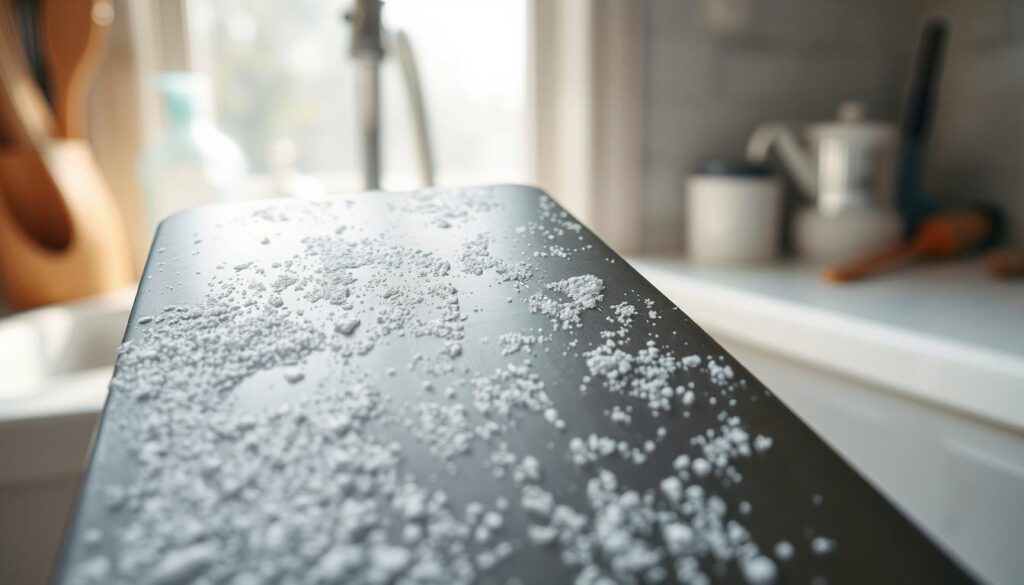
Here’s the simple mechanism: water evaporates and the minerals stay behind. Calcium and magnesium bond to the metal as mineral deposits. The higher the minerals, the harder the stains cling and the more often you’ll see them.
Clean as soon as you notice dull spots or rough patches. Fresh stains come off faster than marks that have set for days or weeks. Blades near sinks, in humid bathrooms, or after washing get hit most often.
- Do a quick finish check: stainless, coated, polished, and etched surfaces react differently to acids and scrubs.
- Avoid heavy scouring to prevent micro-scratches that trap stains later.
- Spot-test first and use light pressure, especially on brushed or black-coated surfaces.
Work with bright light and keep fingers clear of the edge. Approach stains methodically rather than scrubbing hard right away.
Removing mineral deposits from blades using safe, proven cleaning solutions
Prepare a steady workspace and choose gentle tools before you start. Lay a towel down, stabilize the blade, and keep a cup of clean water for rinses. Use a soft cloth plus a nylon-bristle brush or an old toothbrush; avoid wire bristles or harsh pads that scratch the finish.
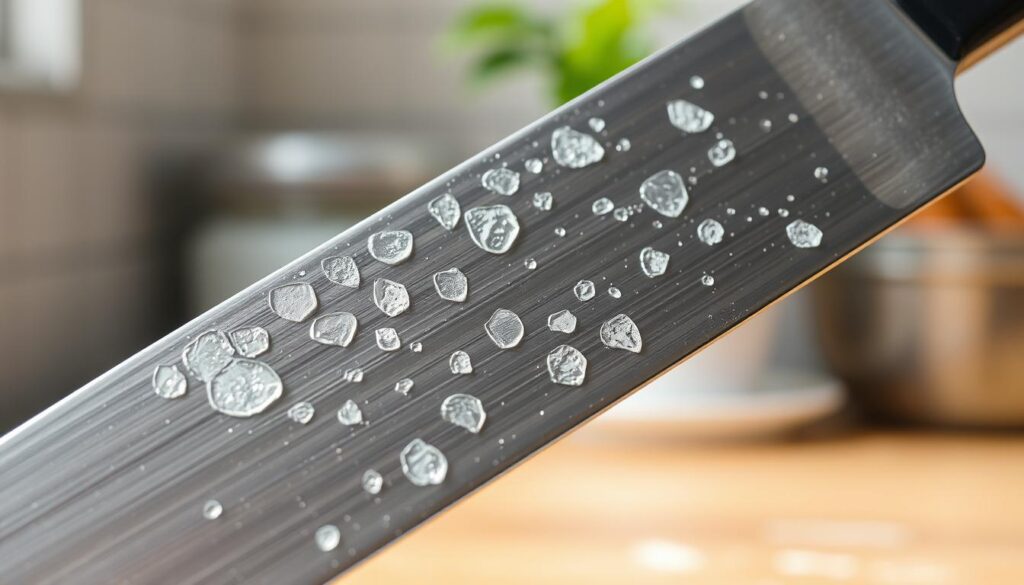
White vinegar method: Apply vinegar from a bottle to a cloth, press it onto light water stains, and let sit minutes—5–10 for glass or light spotting, 15–30 for heavier scale. You’ll see spots soften and wipe away.
Baking soda paste: Mix baking soda with a little water into a spreadable paste. Rub gently to use mild abrasion, then rinse. For textured areas, add vinegar to the paste to fizz and lift faster.
Hydrogen peroxide & borax: Use peroxide on lighter finishes or mix with baking soda for tougher discoloration. If stains won’t budge, try a borax+vinegar paste briefly, then rinse. For very stubborn scale, a commercial hard water stain remover is a valid last step—spot-test and follow the label.
- Rinse thoroughly, dry immediately, and inspect under bright light.
- Repeat only as needed to avoid overworking the surface.
- Use lemon juice sparingly for last traces on safe finishes.
How to keep blades spot-free and reduce future hard water stains
A few fast steps after each rinse cut the chance that stains will set. Make sure you dry the blade after any wash so water droplets don’t sit and evaporate into marks. This habit prevents most water stains before they form.
Quick dry-down habits that stop water stains before they form
Carry a microfiber cloth and wipe the edge and pivot points right after cleaning. Focus on joints, screw heads, and engraved areas where moisture clings. Keeping the cloth handy saves time and avoids frequent deep cleaning sessions.
Simple vinegar solution maintenance for problem areas over time
Mix a mild vinegar solution (one part vinegar to four parts water) in a spray bottle. Lightly mist problem spots, wait a minute, wipe, then rinse and dry. Use this routine weekly where stains recur to keep glass-like finishes looking clear without harsh scrubbing.
Long-term fix: addressing hard water with a water softener to reduce minerals
If your home has hard water, consider a whole-house water softener to cut the cause at the source. Softer water reduces buildup across glass, fixtures, and any blade-cleaning you do—so you spend less time with stronger cleaners that wear finishes over time.
- Pro tip: Treat the blade like a shower door—use a quick wipe or a squeegee idea after use.
- Store blades away from humid bathrooms or add airflow where you keep them to lower lingering moisture.
- Prevention reduces visible spots and the need for aggressive solutions that can harm finishes.
Conclusion
Wrap up with a simple, safe routine: spot stains early, try vinegar first, use gentle tools, then rinse and dry. This prevents repeat water marks and keeps finishes clear.
Work up the ladder only as needed: vinegar, baking soda paste, then combos like vinegar+baking soda, and finally peroxide or borax for stubborn areas. Avoid metal tools or harsh scrubbing.
For cross-surface care, choose nylon bristles (think toilet brush, not wire) to protect glass-like or brushed finishes. A toilet bowl may collect similar scale, but blades need a softer touch.
Safety first: follow product labels, ventilate the area, and never mix bleach and ammonia. The goal is cleaner-looking blades, fewer repeat stains, and a low-effort maintenance habit.