
How to Remove Stubborn Food Stains from High-End Stainless Steel
You want clear guidance on Removing stains from knives without harming the blade finish. High-end stainless steel is stain-resistant, not stain-proof, and small marks often show after regular use.
In this short guide you will learn how to tackle early rust spots and food marks using pantry items. Methods include baking soda paste, lemon and salt, a white vinegar soak, the potato trick, and when to try a rust eraser.
The goal is simple: restore appearance and keep cutting performance. Rust on the cutting edge or heavy corrosion needs prompt, careful attention before you use the knife again.
The workflow is clear: prep → method → rinse and wash → immediate dry. These steps help prevent future rust stains and keep your knife safe for food prep.
Why High-End Stainless Steel Knives Still Get Stains, Rust Spots, and Corrosion
Even premium blades can show marks; understanding why helps you prevent and treat them.
Oxidation is simple: iron in the steel reacts with oxygen and moisture and creates rust. In kitchen terms, a damp blade left on a wet cutting board or stored in a humid drawer invites tiny rust spots fast.
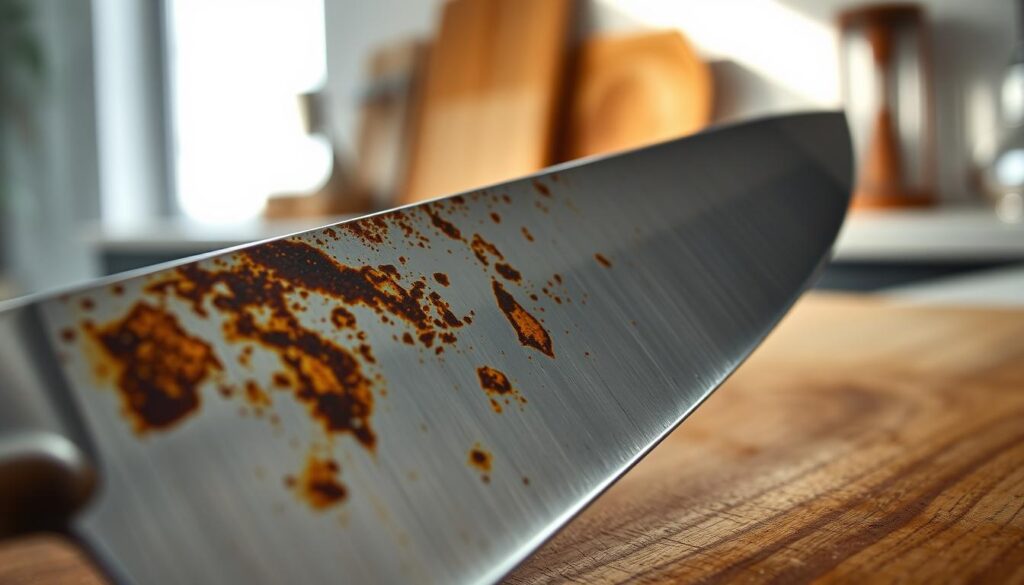
Acidic foods speed that process. Tomato juice, citrus, or vinegar can break down the protective layer and quicken corrosion. Wiping a blade during prep reduces contact time and lowers risk.
- Stainless steel gets a chromium layer that improves resistance but is not immune.
- Carbon steel lacks that chromium, so it shows patina and rust faster.
- Damascus and carbon steel knives need gentler, quicker care to avoid heavy spots.
Small rust stains away from the cutting edge are usually cosmetic. But rust on the edge, flaking, or pitting harms performance and safety. Rust increases drag, roughens the blade, and can lead to faster decay if ignored.
Knowing these causes helps you pick the right method next and avoid unnecessary abrasives that can damage the finish.
Removing stains from knives with Food-Safe Prep, Tools, and Cleaning Rules
Start by gathering simple, food-safe supplies you already have in the pantry. These let you try gentle methods before moving to stronger options.
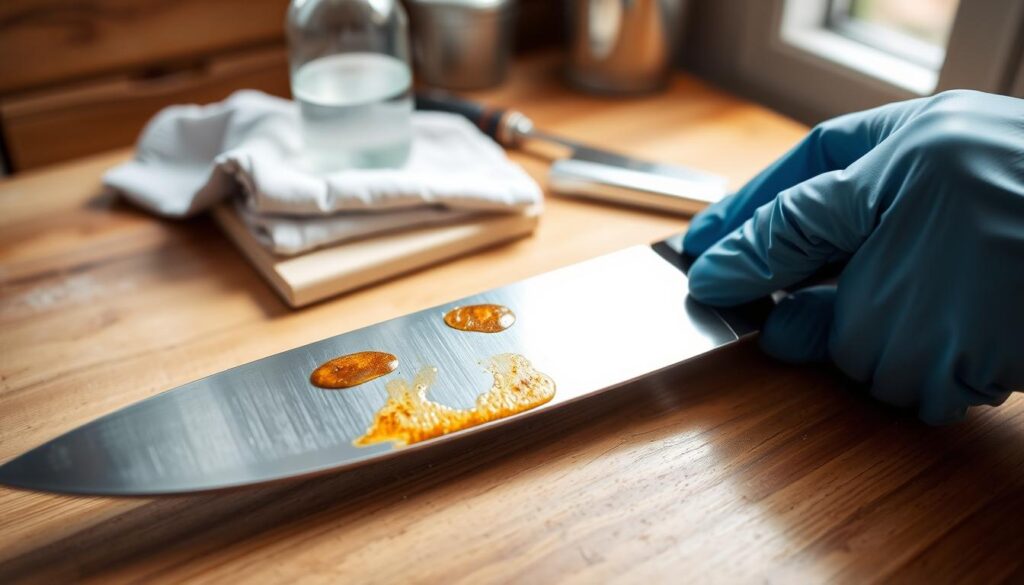
What to gather from your kitchen
Pantry checklist:
- baking soda — mild abrasive for light marks
- lemon juice and salt — gentle acid plus abrasion
- white vinegar and clean water — lifts rust and residue
- dish soap and a soft cloth or non-metal sponge
What to avoid on kitchen blades
Avoid harsh degreasers, WD-40–type products, or any non-food-safe chemicals. They can leave residues even after rinsing and harm taste or safety.
Protecting the finish
Scrub with the grain to preserve the original look of stainless steel. Skip steel wool on high-end blades; it scratches, embeds particles, and raises corrosion risk.
- Start gentle and escalate only if needed.
- Stabilize the knife on a towel, keep fingers clear, and don’t rush.
- After any method: rinse, wash with dish soap, and dry immediately — non-negotiable care.
Best Household Methods to Remove Stubborn Stains and Rust from Stainless Steel Knives
Tackle stubborn rust and food marks using simple kitchen supplies and careful timing. Below are safe, tested approaches you can try before moving to stronger tools.
Baking soda paste for light surface rust
Make a thick baking soda paste with a little water. Apply and let sit 1–2 hours so the paste clings to the spot.
Rub gently with a soft cloth or a soft toothbrush. If needed, repeat rather than switch to harsh abrasives.
Lemon and salt: citric acid plus gentle abrasion
Sprinkle salt, squeeze lemon juice over it, and wait 15–30 minutes. Scrub with the grain and rinse.
Avoid long exposure on carbon steel to prevent etching or darkening.
White vinegar soak for tougher rust spots
Soak the affected area in white vinegar (about 5% acidity) for 30 minutes to 2 hours depending on severity.
Check often and stop as soon as the rust lifts to limit etching.
Potato method for delicate finishes
Rub a raw potato dipped in salt or baking soda over the spot, or impale the blade and let it sit 1–3 hours.
Oxalic acid in potatoes can ease rust without aggressive scrubbing.
Timing, safety, and the final steps
- Time matters: follow the dwell times above and shorten on carbon steel.
- Use light pressure and re‑wet as needed; repeat gentle cycles if the spot remains.
- Always rinse, wash with dish soap, and dry immediately. Do not air‑dry — leftover water restarts oxidation.
More Stubborn Rust on Blades: When to Use a Rust Eraser or Stronger Approaches
When gentle kitchen fixes fail, it’s time to pick a more targeted approach for long-standing rust. Decide to escalate if dark, rough spots keep returning or if the corrosion feels raised when you run a fingertip lightly across the edge.
Rust eraser technique: controlled scrubbing for persistent spots
Rust erasers are rubber blocks with abrasive particles like silicon carbide. Soak the eraser in water for about five minutes, then rub with the grain using light, even strokes.
Re-wet the eraser frequently to lower friction and wash away grit. Stop as soon as the spot lifts, then rinse and wash the blade to remove residue.
When stronger acids are an option — and safety rules
Oxalic or phosphoric acid can speed heavy rust removal, but they are chemicals. Follow label directions, wear gloves and eye protection, avoid splashing, and keep acids off food prep surfaces.
Limit contact time, rinse thoroughly, and never use aggressive abrasion like steel wool on premium steel. Steel wool can scratch, embed particles, and cause future rust issues.
- Escalate only for persistent rust that resists pantry methods.
- Use light pressure to protect finish and edge geometry.
- Rinse, wash with soap, and dry immediately to prevent recurring rust knives problems.
Conclusion
A short, consistent care habit protects your investment and stops rust before it starts.
Start with the mild fixes: a baking soda paste, then lemon and salt. If needed, try a white vinegar soak or the potato method. Use a rust eraser only for persistent, raised spots.
Control contact time with acids, especially on carbon steel knives, and always follow one routine after any method: rinse, wash with dish soap, and dry immediately.
Practical tips: never air-dry, avoid long soaks, and skip the dishwasher. Store blades in a dry place — a block, magnetic strip, or sheath beats a damp drawer.
For carbon steel, wipe a thin layer of food-safe mineral oil as a humidity barrier. Address edge rust, pitting, or recurring corrosion quickly; those issues need priority maintenance.
With gentle methods, good timing, and simple care, your kitchen knives stay sharper, cleaner, and ready for use.