
The Safest Way to Remove Sticky Tape Residue from a Sharp Blade
Sticky buildup often stays after you open packages, even if the edge looks clean. This gummy layer comes from leftover adhesive and can make a knife feel dull and drag during cuts.
You should deal with tape residue quickly. Buildup traps particles and grime, which harms hygiene and cutting performance, especially on food-contact surfaces.
The safest approach puts control first. Work with a steady hand and a stable surface, use gentle, food-safe options at first, and only step up to stronger methods if needed.
Goal: remove sticky gunk without harming the edge or finish. That keeps your knife effective and safe to use, and it prevents scratches, corrosion, or premature dulling.
Safety prep before you remove tape adhesive from a sharp knife blade
Start by protecting your hands and stabilizing the knife so cleaning is controlled. A simple prep step prevents slips and keeps the work quick.
Set up a stable surface. Lay a dry counter with a towel or rubber mat beneath the knife so the tool won’t slide while you work on tape adhesive.
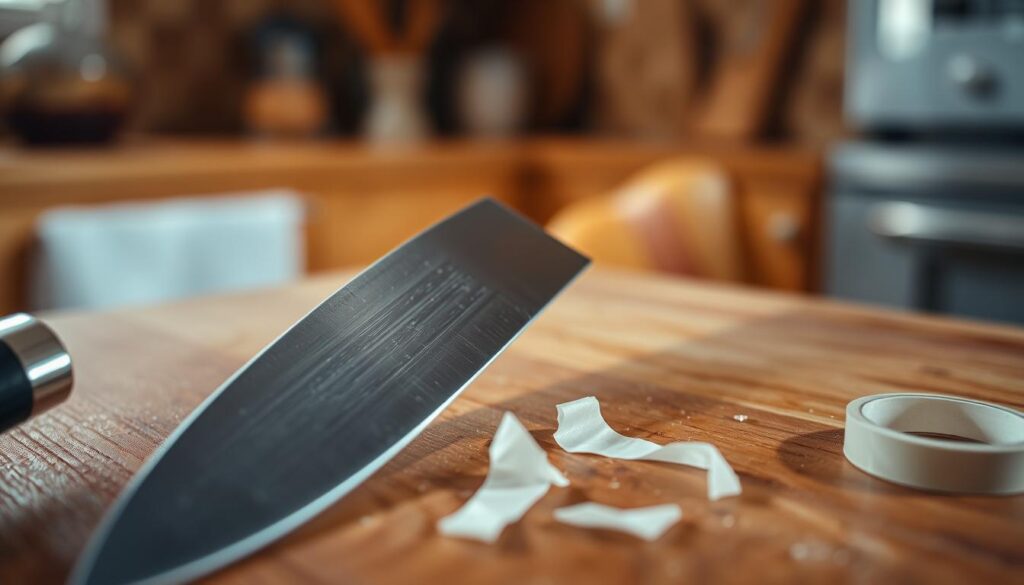
Personal protection and handling
Wear gloves when you use chemicals or expect a slip. Keep fingers well away from the edge and hold the knife by the handle.
Wipe toward the spine, not along the edge, to reduce cut risk. Use light pressure and give the cleaner time to act instead of scrubbing hard.
Know your knife and choose methods carefully
Decide whether the knife is for food prep or utility use. That choice guides whether to use food-safe oil or a stronger solvent like a WD-40-style product.
Check metal type and any coating. Stainless, carbon, and coated finishes react differently to chemicals and moisture, so match the cleaner to the material.
- Least aggressive first: warm water, mild soap, then oil, and only then alcohol or solvent if needed.
- Chemical safety: ventilate the area, keep cleaners off food surfaces, and follow product instructions.
- Final rinse: wash and dry the knife thoroughly so no cleaner film or adhesive remains.
Removing tape residue from blade with safe, proven cleaning methods
Plan your steps so you use the gentlest option that works. Start with warm water and move to food-safe oil, then try stronger cleaners only as needed.
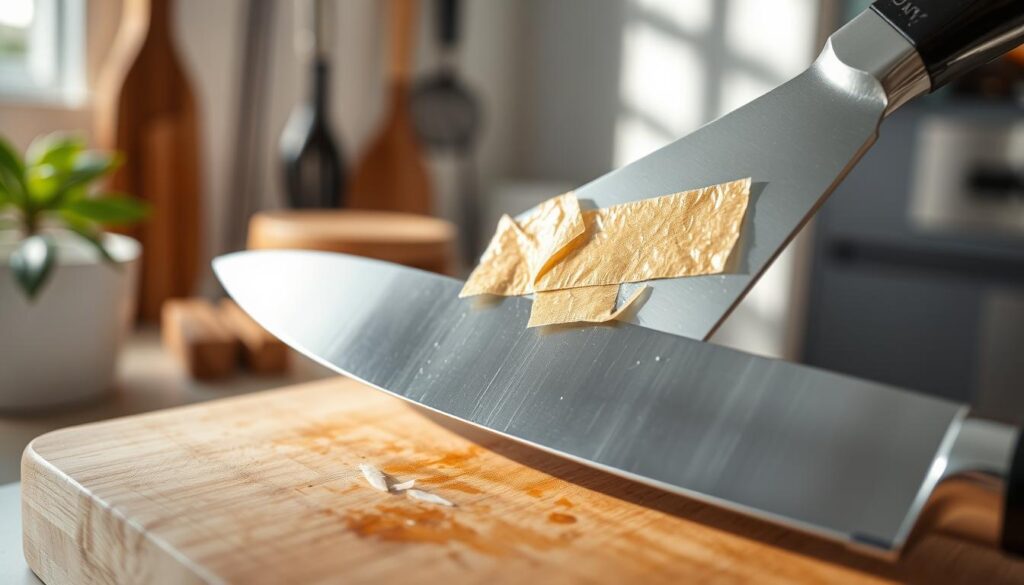
Soak, oil, solvent — pick the right way
Warm water soak: submerge only the metal parts in warm water to soften sticky patches. Wipe with a soft cloth and re-check before you try stronger solutions.
Oil method (food-safe): dab a small amount of cooking oil on a cloth. Rub gently until the adhesive lifts. Finish by washing with dish soap so no oily film stays.
WD-40 (utility use): spray a little, wait, then wipe the gunk off. Follow with soap and water. Avoid this for kitchen knives due to odor and food-contact concerns.
- Rubbing alcohol: apply to a cloth, rub until the bond breaks, then rinse and dry.
- Household paste: mix equal parts vinegar and baking soda, apply briefly, scrub gently, then rinse.
- Lemon juice: a quick acid wipe to loosen sticky areas; rinse and dry after.
Tip: Choose blade-safe cleaners labeled for metal, test first, and follow directions to prevent damage.
Technique tips to clean blades without damaging the edge or finish
A calm, methodical approach keeps the metal finish intact while you clean. Work in short steps and pick the gentlest method that lifts adhesive. This protects the edge and the overall surface.
Manual scrubbing with safe pads
Use soft sponges or nylon scrub pads, not steel wool. These materials lift gunk while protecting coatings on most metal surfaces.
Wipe from the spine toward the edge — never along the sharp line. Keep your hand behind the blade line so you don’t slip onto the edge.
- Apply steady, moderate pressure and let the pad and cleaner do the work.
- For kitchen knife care, finish with dish soap and a full rinse to avoid cross-contamination.
- This trick reduces scratches and makes future buildup easier to remove.
Heat and time strategy
Use hot (not boiling) water to soften adhesive and give it a minute to act. Warm water often reduces how much force you need.
When you use oil, alcohol, or a stronger cleaner, let the product sit briefly and reapply if needed. Avoid long soaks on blades that can corrode.
Follow chemical directions, rinse thoroughly, and dry immediately to protect the finish and keep your knife performing well.
Conclusion
Close with a few practical steps that make cleanup faster and safer next time.
Start with the gentlest way: warm water and a soft wipe, then use food-safe oil if you must. For utility tools, stronger cleaners are an option, but always wash and dry thoroughly afterward.
Keep control first — steady grip, wipe toward the spine, and use light pressure to lower injury risk. Check common parts near the tip and along the flats during quick maintenance.
Prevent buildup by cutting the cardboard, not the tape, and if you do cut tape, rinse and wash right away to limit the amount of work later. Store a dedicated cloth and a small bottle of oil or cleaner nearby so you can act fast.