
DIY Knife Restoration: How to Bring a Vintage Kitchen Knife Back to Life
You can revive a cherished blade and keep family stories alive. Vintage pieces show history and craft in every mark. This guide explains what “restoring an old kitchen knife” looks like in real steps.
Start by choosing a knife that feels balanced, has surface rust only, intact wood, and a workable edge. You will focus on blade cleanup, handle care, and sharpening in order. These phases help you plan your workspace and avoid mistakes.
Expect different outcomes: a clean, usable kitchen tool or a preserved heirloom with character. Older knives often outperform modern mass-made tools when they are cared for properly.
Safety matters: you will work with sharp steel and abrasives. Use controlled movements, a stable surface, and basic protection. By the end, your blade will have a stable edge, a secure handle, and a renewed purpose — a true new life for a beloved piece.
Why vintage kitchen knives are worth saving
A vintage blade often tells a family story through wear, marks, and the way it was used. You get more than a tool: you get a piece of history shaped by older steelwork and real meals. That story can matter to cooks and collectors alike.
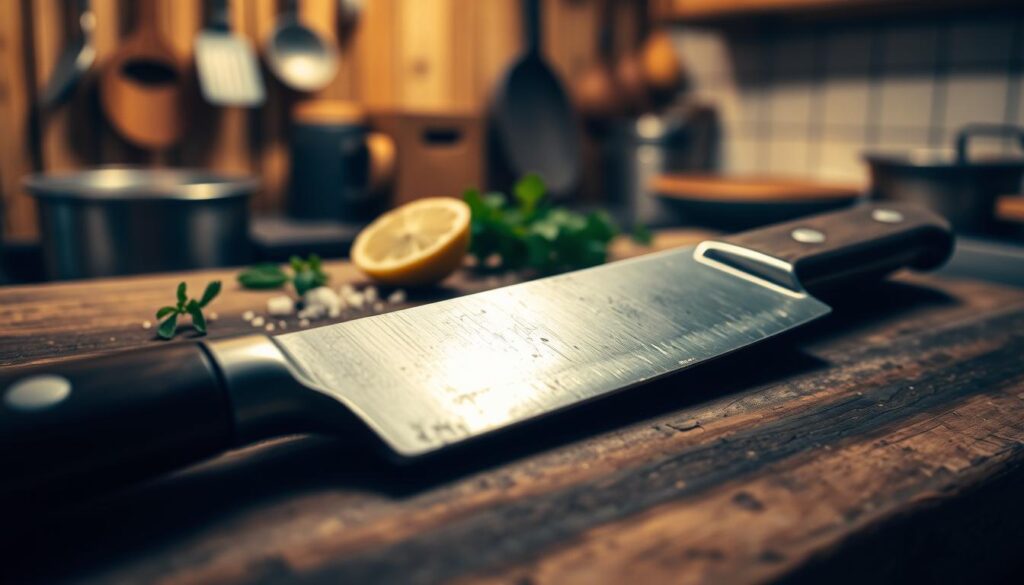
How a blade’s history, patina, and craftsmanship add value today
Patina is a stable discoloration that forms when metal reacts during cutting. Many users call it character and avoid stripping it. Patina can even slow corrosion when it is even and smooth.
When to preserve patina vs. when to remove rust
Keep patina if it is uniform and not flaking. Remove active rust because it eats into the steel and changes the blade’s shape and strength.
- Patina: gray/blue/brown staining, smooth feel, protective.
- Rust: orange/red, rough or flaky, needs removal.
- Collectors value original markings; home cooks may prefer a cleaner finish—both are valid.
Decide by checking the blade and handle for structural soundness. Next, you’ll choose the right piece and set up your workspace for careful work.
Choosing the right knife and setting up your workspace
Pick a candidate that feels balanced and safe to handle. Hold it and check weight, look down the spine for bends, and view the steel under bright light. This quick routine takes little time and saves you effort later.
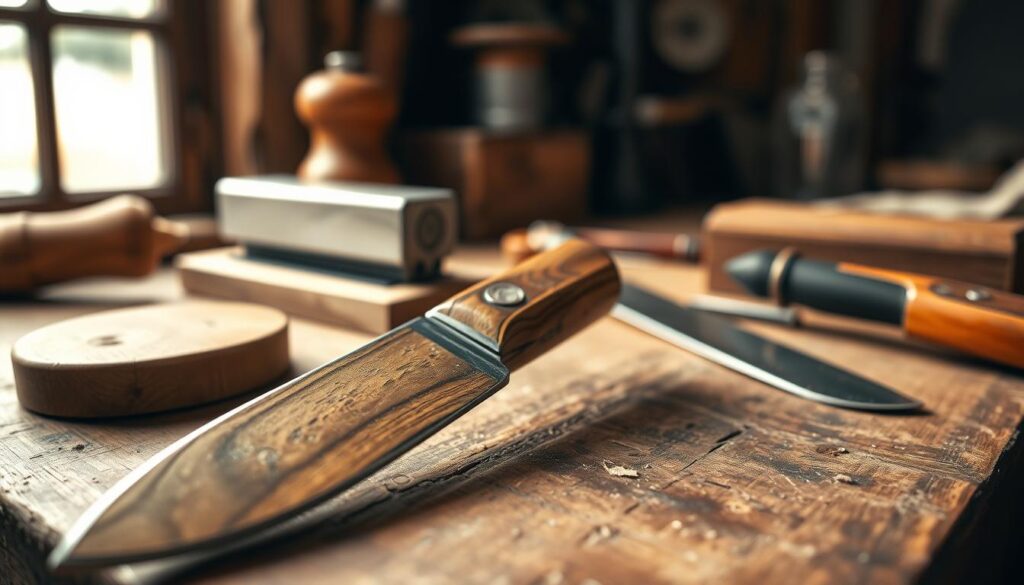
What to look for
Green flags: surface oxidation only, intact handle scales, tight rivets, and enough thickness behind the edge for sharpening. If the steel shows only light surface wear, you can proceed confidently.
Red flags to avoid
- Deep pitting near the edge that changes blade shape.
- Cracks in the steel or severe chips that need major reshaping.
- Loose, split, or rotten handles that compromise safety.
Tools, materials and safety basics
Workspace: stable bench, bright lighting, and ventilation. Keep a cloth to stop sliding and a bucket of warm soapy water for a first rinse.
Gather basic tools and materials: sandpaper grits, steel wool, wire brush, polishing compound, oil or wax, sharpening stone and a honing steel. Wear cut-resistant gloves, eye protection, and move abrasives away from your fingers.
Clean knife first: use dish soap and warm water to remove dirt grime. This reveals true condition so you can judge pitting and the real state of the handle and edge.
Restoring an old kitchen knife: cleaning, rust removal, and blade refinishing
A gentle first wash matters. Begin by lifting grease and surface grime with warm, soapy water and a soft dishcloth. This exposes true pitting and stamps before any abrasion so you avoid grinding dirt into the steel.
Initial clean to remove dirt and grime without damaging steel
Use warm soap and a cloth; rinse and dry thoroughly. If marks remain, a light citric acid soak (diluted in water) can loosen rust without erasing stamped branding or reaching tight crevices.
Rust removal methods: citric acid soak vs. sanding
Choose the citric soak when you want a gentler result and to preserve markings. Pick sanding when rust is heavy or you must level rough spots. Balance finish goals with preserving the blade’s original grind.
Scrubbing and detailing
After soaking or applying a remover, scrub gently with a wire brush. Pay special attention to the tang area; it traps moisture and rust. Finish tight spots with 0000steel woolso you clean without removing metal unnecessarily.
Sanding sequence and polishing
Start with coarse grit sandpaper to remove stubborn rust and pitting, then move to finer grits to smooth scratch lines and match the blade’s original geometry. Use a polishing compound on a cloth or buffer topolish bladesurfaces; stop before you overheat the steel.
Apply protective coating
Wipe a thin coat of food-safeoilor wax across the blade and tang. Buff off excess. This simple barrier will slow futurerust, especially in humid kitchens.
- Quick checklist: clean → soak or sand → wire brush → 0000 wool → coarse to fine grit → polish → apply protective oil.
Refurbishing wooden handles without ruining the fit and feel
Begin by inspecting the handle for loose rivets, gaps at the tang, or rust pockets where wood meets steel. Catching issues early keeps you from sanding away clues that show a loose fit.
Cleaning and inspection
Clean the wood with a gentle wood cleaner to lift dirt. Check rivets and the joint line closely.
If you find rust in the gap, use a small piece of 0000 steel wool to polish the tang without widening the joint.
Sanding and shaping
Use coarse grit only to remove rough spots, then move to fine grit to smooth the grip. Work for comfort, not a new shape.
Finishing options
Choose stain for color, polyurethane for a hard seal, or mineral oil for a simple, food-safe feel. Apply thin coats and allow full cure between layers.
Final buff and grip test
Lightly buff to remove raised grain. Then test multiple grips—pinch and full-handle—to confirm the handle feels secure in your hand.
- Quick checklist: inspect → clean → address tang rust → sand coarse→ sand fine → finish → buff → grip test
- After curing, store the knife in a dry place to keep wood and steel stable.
Fixing the edge: straightening, sharpening, and honing for clean cutting
Before you sharpen, check the edge for bends or rolls that hurt cutting performance. Small issues—rolled edges or mild bends—are fixable at home with care and the right tools. Major cracks or missing chunks mean you should stop and consult a pro.
Straightening a curved edge
Secure the blade in a vise with the edge facing up. Gently coax the bend with pliers, adding only light pressure so you do not warp the steel.
Use a file evenly on both sides to restore symmetry. Work slowly and check progress often.
Sharpening and grit choice
Use a sharpening stone and keep a steady ~20-degree angle. Start on a coarse grit to rebuild the edge, then switch to fine grit to refine the bite for clean cutting.
Honing and testing
After sharpening, use honing steel to realign the apex. Keep the same angle and use smooth, alternating strokes.
- Safe tests: slice paper to check for snagging.
- Cut a tomato on a stable surface to confirm the blade starts the cut cleanly.
Take your time. Rushing angle control will leave you with a duller edge, so make sure each pass is deliberate. A truly sharp edge is safer and more predictable when you cook.
Conclusion
Close the project with a quick checklist: evaluate, clean, remove active rust, refine the blade finish, protect with oil or wax, refurbish the handle, then sharpen and hone.
Keep patina if it adds character, but remove active rust to preserve metal. Dry and apply a light coat before you store tools in a dry spot to slow corrosion.
Adopt a maintenance habit: short honing sessions, careful washing, and occasional oiling will keep knives reliable longer.
If a tutorial page won’t load because of a page blocked extension, try disabling extensions to view images or steps.
Now pick one kitchen knife you own, set aside an hour, and start with cleaning and inspection.