
Heavy-Duty Sharpening: How to Maintain a Meat Cleaver’s Edge
You rely on your cleaver for tough prep, so its edge must be practical and safe. A dull blade forces extra pressure and invites slips. That makes routine care more than cosmetic work.
This guide focuses on heavy-duty, real-kitchen care, not collector polish. Expect clear steps for whetstone work, guided pull-through systems, and honing. You’ll learn how each method fits different comfort and time limits.
Maintaining an edge means consistent cuts, better control, and fewer crushed pieces. The goal is a working bite that stays durable through chopping, portioning, and everyday prep.
This article is for home cooks using cleavers and common kitchen tools. You’ll get setup tips, technique pointers, and maintenance checks so your knife performs reliably and safely.
Why a Sharp Meat Cleaver Matters for Control, Safety, and Everyday Kitchen Tasks
A reliable edge changes how you cut, how much effort you use, and how safe your prep feels.
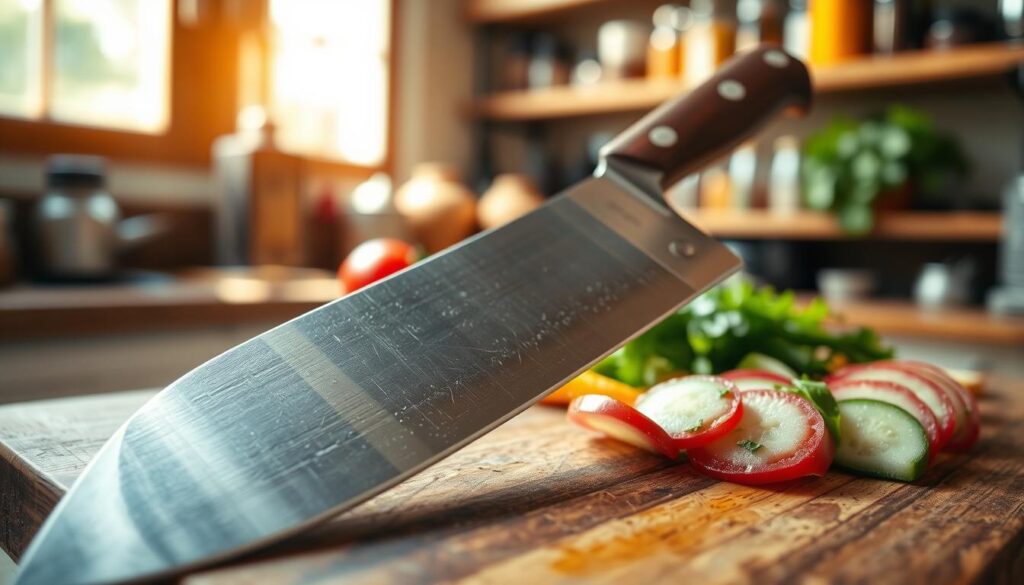
When a dull cleaver meets food it often squashes or wedges instead of slicing cleanly. That slows prep and makes portions inconsistent.
Using more force to compensate reduces control and raises the chance the blade slips. This links dullness directly to safety concerns in busy home kitchens.
- Signs of a dull cleaver: tomatoes squashing, onions cracking, and tough skins tearing. These are edge problems, not just technique.
- Durability note: chasing a paper-thin sharpness for bone contact can backfire—thin edges may fold or roll under heavy chopping.
- Right sharpness = balance. You want dependable cutting performance that holds up during heavy tasks without frequent repair.
With a dependable working edge, one tool handles multiple kitchen tasks more accurately and with less fatigue. Later sections will help you pick methods and angles that favor control and safety in your home setup.
Sharpening a Cleaver: Choose the Right Method for Your Blade and Your Time
Pick the best way to restore your edge based on your time, skill, and steel. Each method trades speed for control, so match the tool to your needs in the home kitchen.
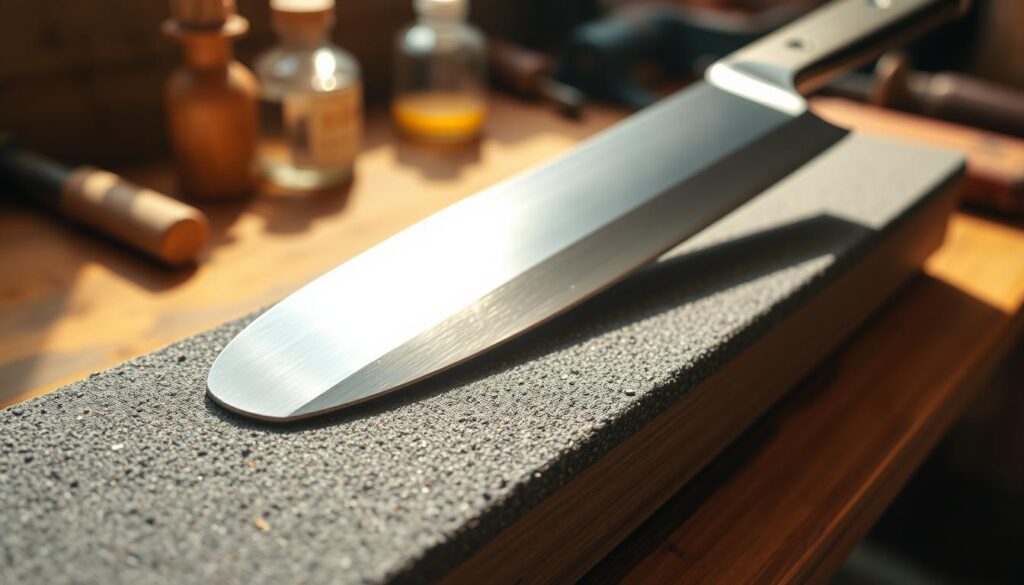
Whetstone control and long-term edge life
Whetstone work gives full angle control, removes minimal metal, and can fix unevenness or small nicks. Expect a learning curve and some prep—many stones need water or soaking.
Fast pull-through and guided options
Pull-through and guided devices save time and are great for quick touch-ups. They remove more metal and offer limited angle choice, so they won’t repair chips or bad geometry.
Honing rods vs sharpening on stones
Honing rods realign the edge between stone sessions. They don’t grind a new bevel; they extend time between full sharpening.
- Match the method to your blade steel: many stainless steel blades take longer on stone, while softer steels sharpen faster but need upkeep.
- Use a honing rod weekly for maintenance, a whetstone when performance drops, and quick tools for urgent touch-ups.
- Consider your comfort with technique and the available time before choosing a method.
Dial In the Sharpening Angle, Grit, and Setup Before You Start
Start by locking in angle, grit, and a safe setup so your work on the whetstone stays consistent.
Choose a practical angle range. For mixed kitchen duty, aim for about 15–20° per side. Around 18° per side balances sharpness and durability. Smaller angles feel keener but can lose strength under heavy chopping. Wider angles stand up better to bone contact and hard use.
Pick grit that matches the damage
Map grit to the edge condition: use coarse 400–600 grit for very dull edges or small nicks. Move to 1000–3000 grit to refine and smooth for routine maintenance. For regular upkeep, fewer strokes on a medium/fine stone will keep the edge even without removing too much metal.
Prepare a stable, repeatable setup
- Stable surface with a non-slip mat or damp towel under the stone.
- Bright lighting so you can hold the chosen angle and watch the burr form.
- Follow your stone’s soak or wetting needs and keep the surface lubricated while working across stone.
Control your pressure. Use light, steady pressure—let the abrasive do the work. This step sets a predictable baseline for the whole process and helps you build an even, durable edge on the blade.
Step-by-Step Whetstone Sharpening Process for a Clean, Even Edge
Follow a simple, repeatable routine on the whetstone to rebuild a dependable working edge. This step plan keeps your technique consistent and reduces lost metal.
Hold angle and use consistent strokes
Set your angle to about 15–20° and maintain it. Use smooth strokes from heel to tip so you work across stone evenly.
Use light, even pressure
Let the abrasive do the work. Firm force makes uneven bevels and drags metal instead of cutting it away.
Raise a burr, then switch sides
Work one side until a thin burr appears along the back edge, then flip to the other side. Match counts and strokes per side so edges track true.
Refine, deburr, and test
- Move to a finer grit to smooth scratches and strengthen the apex.
- Deburr with gentle alternating strokes to remove loose metal.
- Finish by slicing paper or a ripe tomato to test sharpness safely.
Maintenance Between Sharpenings: Honing, Cleaning, Storage, and Damage Checks
Minutes of upkeep at home stop small problems from becoming big repairs. Spend a few minutes after each use to protect the edge and keep your cleaver ready for work.
After-use routine
Wash by hand with warm, soapy water and rinse promptly. Dry the blade thoroughly with a clean towel to prevent moisture and residue from harming the edge.
Avoid dishwashers; heat, detergents, and jostling dull the blade and cause dings.
Weekly honing routine
Use a honing rod for quick alignment. About five quick, controlled passes per side restores control without removing much metal.
Regular honing improves safety because the edge cuts predictably and you use less force during prep.
Storage and damage checks
- Store in a block, on a magnetic strip, or with a blade guard to prevent chips.
- Avoid loose drawer storage; contact with other tools creates nicks and dulling.
- Inspect for chips, rolled spots, or reflections along the edge and address chips damage early to avoid heavy grinding later.
Conclusion
Keep your focus on control and durability rather than chasing the thinnest edge. Strong, repeatable habits deliver safer, more consistent cuts and reduce the need for heavy repairs.
Choose methods you will use: pick a practical approach, match grit to damage, and hold a steady angle while you work. Guided systems help for quick touch-ups when time is tight; whetstone work gives the most control when you need to rebuild geometry.
Use honing and simple daily care to cut down overall effort and preserve performance. Check the cleaver before prep, maintain the edge between sessions, and perform full sharpening only when the blade no longer slices cleanly.
With brief, regular attention, your cleaver will stay ready for heavy kitchen work.