
Flexible Blades: How to Properly Sharpen a Fillet Knife
You’ll learn a clear, safe workflow for flexible blades that differs from work on a stiff chef tool. Many fillet models use softer German-style stainless like Boker 4116 (~56–58 HRC). That steel tends to roll rather than chip, so you rely on honing often and sharpening less frequently.
This intro previews the full process: assess the edge, hone if it’s rolled, use a stone for true dullness, then refine, test, and store. You’ll get practical tips on angle control, steady pressure, and consistent motion so the flexible blade does not feel wobbly.
Expectations: the goal is a razor edge that slices cleanly with minimal waste, not an over-thinned edge that fails fast. The guide will explain grit choice, water versus oil, burr checks, and common mistakes that keep edges dull.
Why a Sharp Fillet Knife Matters for Clean, Safe Cuts
When your blade bites instantly, you steer along bones instead of sawing at them. That control reduces wasted flesh and keeps fillet work efficient. A keen edge slips under ribs and along the backbone, so you leave more edible meat on the fillet.
Sharp tools also improve safety. When the edge cuts on contact, you use less force. Less force means less chance the blade will slip on a wet deck or slick countertop and cause accidents.
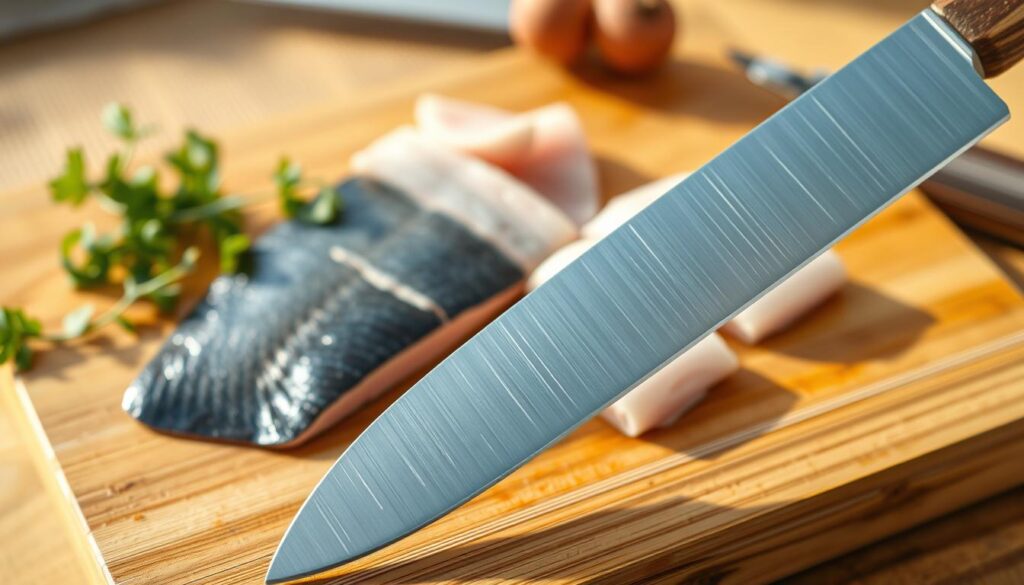
How quick bite improves precision and reduces waste
You can “steer” with a sharp blade, following bone lines with small corrective strokes. That precision lowers trim loss and gives cleaner portions for cooking or sale.
Why dull edges increase accident risk
Dull edges feel safer but demand pushing. That extra pressure makes the blade jump off the skin or bone, which raises the risk of cuts on boats and in kitchens. Make sure you maintain the edge to cut with less effort and more control.
What sets fillet blades apart
Fillet knives are long, narrow, and flexible for slicing and pulling motions rather than chopping. Many models use softer stainless that can roll when it contacts small bones. That roll protects against microchips but means you must hone more often or use the right fillet knife sharpener when true edge repair is needed.
- Steerability: precise cutting along bones.
- Control: less force, fewer slips, fewer accidents.
- Maintenance: softer steel rolls and needs frequent honing and the right stone selection.
Next you’ll learn how to restore a rolled edge with honing, when to move to stone work, and how to pick the proper grit for your blade.
Honing vs. Sharpening for Flexible, Soft Steel Knives
Most performance problems with flexible steel come from a bent apex, not missing metal. That bent tip—called a rolled edge—makes the blade feel dull even when the metal is mostly intact.
What “rolled edge” means and why honing restores it
A rolled edge occurs when the very thin apex bends to one side after contact with bone or hard boards. The result is loss of bite while the bevel remains present.
A honing rod realigns that bent apex back toward center. Use short, controlled strokes to restore the bite without removing significant material from soft steel knives.
How often to hone and when you may need true sharpening
Follow this simple rule: hone every time you use the blade and certainly before breaking down a large fish. AFTCO recommends daily honing for frequent use; true sharpening is usually about once per year for most users.
- Signs you may need more: repeated honing fails to restore the edge or the bevel is rounded.
- Next step: move to stone work when alignment no longer fixes performance.
These techniques keep steel knives working longer and save you material. In the next step you’ll learn the tools and non-slip setup that make consistent work safer and repeatable.
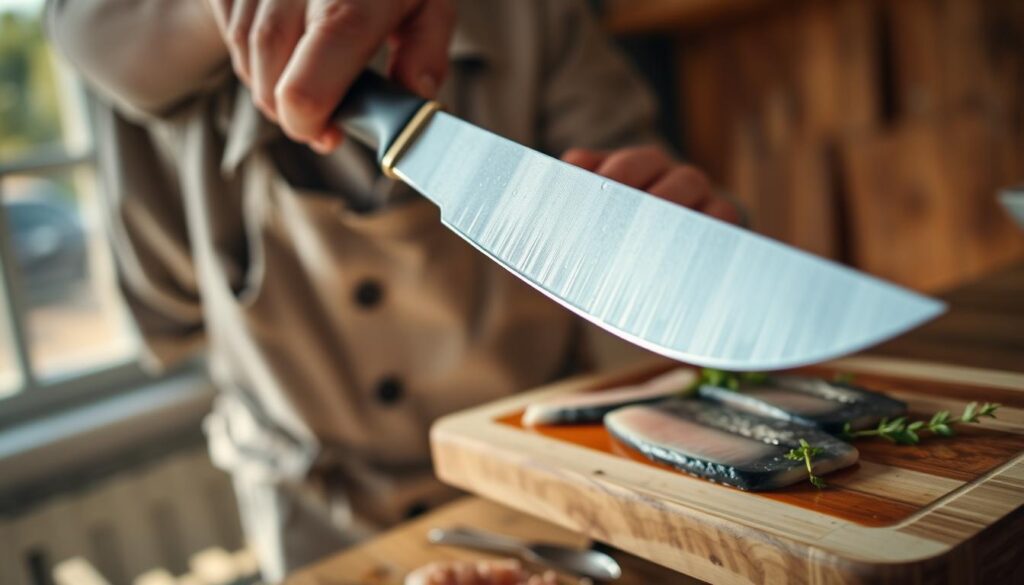
Tools and Setup You Need Before You Sharpen Fillet Knife
Good results start with the right stone, steady surface, and simple safety gear. Gather your sharpening stone, water or oil, a non-slip pad, and any angle guides before you begin.
Choosing stones and other sharpeners
For repair work pick a coarse grit; use medium grit for everyday edges and fine grit to polish. Water stones (whetstones) are common at home and often need a 10–30 minute soak unless they’re splash-and-go. Oil stones require a few drops of oil spread evenly.
Water vs. oil lubrication
Water reduces clogging and cools the edge on water stones. Oil keeps particles from binding on oil stones. Lubrication is not optional; it preserves the stone and speeds up the process.
Secure the stone and optional helpers
- Place the stone on a damp towel or rubber base to stop slipping.
- Use an angle guide to lock your desired bevel and keep strokes consistent.
- Wear cut-resistant gloves if you are new or working in tight spaces.
Once your setup is stable, the next step is repeatable angle, light pressure, and the correct slicing motion to sharpen fillet knife edges reliably.
Sharpening a Fillet knife with a Whetstone the Right Way
Pick the correct grit first; that choice sets the rest of the process and protects the blade. Use coarse grits (200–400) for very dull or microchipped edges, 1000 as a reliable one-stone option, then move to 3000–8000 to polish the bevel.
Prep the stone: soak a water stone for 10–30 minutes depending on the model, or use splash-and-go stones by wetting the surface. Keep water nearby so the sharpening stone stays lubricated while you work.
Hold a consistent angle
Set an angle guide or use the “two quarters” reference to find about 15–20 degrees for most fillet work. Keep that angle steady from heel to tip on every pass to preserve the knife edge geometry.
Use the right motion
Use a controlled pull/slicing stroke that mimics filleting. Move from heel to tip, apply light pressure, and let the stone remove metal evenly. Avoid chopping motions that stress flexible steel.
Even sides, feel the burr, refine
Count strokes and work each side evenly so the edge stays balanced. Check for a burr by running your finger down and away from the cutting edge. Once the burr is consistent, switch to finer grits and reduce stroke counts to remove the burr and polish the blade.
- Finish check: confirm uniform sharpness along the whole edge so the tool slices cleanly without catching.
- Tip: track strokes in sets to avoid overworking one side and to keep the edge centered.
Common Mistakes That Keep Your Edge Dull
A dull-feeling edge usually points to technique issues, stone problems, or damage beyond home repair.
Inconsistent angle and uneven edge issues
Most uneven edges come from angle drift. If you change the angle from heel to tip, the apex never meets evenly.
In practice this shows as bite in one spot and sliding elsewhere, or the blade drifting left or right when you cut.
Too much pressure, over-sharpening, and thinning the blade
Pressing hard removes metal fast and can thin the blade. Overworking soft steel makes the edge feel fragile or “grabby.”
Use light, consistent pressure and count strokes rather than forcing more material away.
Stone clogging, poor lubrication, and why cleaning matters
A loaded stone cuts slower. Without enough water or oil, swarf builds up and you compensate with extra pressure.
Keep the stone clean, resurface or soak as needed, and maintain proper lubrication so the stone cuts predictably.
When your tool may need professional help instead of more work
Stop sharpening if you cannot raise a burr after even grits and steady angle work. Chips, warps, or heavy damage often may need pro restoration.
- Inconsistent angle = uneven apex; fix your stance or use a guide.
- Light pressure and balanced strokes protect blade life.
- Clean and lubricate the stone to keep cutting power steady.
- If repeated effort fails, seek professional repair for chips or warps.
If research pages are blocked while you study techniques or manuals, try disabling extensions, switching browsers, or using another device so you don’t miss critical safety or stone instructions.
After Sharpening: Hone, Test, Clean, and Store for Long-Lasting Sharpness
After you finish work on the stone, a short routine keeps the edge precise and durable. Follow these simple steps so your tool stays ready and safe between sessions.
Dialing in the edge with honing
Use a honing rod after finishing with the stone to realign the freshly refined apex. Make light, controlled strokes along the bevel to remove any remaining micro-burr and center the edge.
Safe sharpness tests
Test on paper or by slicing a tomato skin. Both methods confirm bite without risky fingertip checks. If slices are clean and consistent, the edge is ready for use.
Clean, dry, and protect
Wash with warm water and mild detergent to remove metal particles and residue. Do not use the dishwasher; rinse and dry completely to prevent rust and faster dulling.
- Store smart: magnetic strip, block, or sheath protects the edge from knocks.
- Avoid loose drawers: contact with other gear causes roll and dulling.
- On boats or in humid rooms: keep the tool dry and separated from clutter.
Care for your sharpening stone
Wipe swarf from the surface, wash if the manufacturer allows, and dry the stone fully. Store water stones flat in a cool, dry place; wipe oil stones clean of residue and oil before storage.
Final tip: regular honing and proper storage reduce how often you need major sharpening and help your equipment last.
Conclusion
Prioritize quick alignment after each use so major edge work stays rare and predictable.
Hone often to restore a rolled apex, and plan true rebuilds roughly once per year or sooner with heavy use. Keep your setup steady, hold a consistent angle, use light pressure, and use a smooth pull or slicing motion while working both sides evenly.
Remember grit progression in one line: coarse to fix damage, medium to re-establish geometry, fine to refine and remove the burr.
Test cuts on paper or produce, then clean, dry, and store the blade so it does not bang against other gear. Wipe and dry your stone between sessions. With short, regular practice you’ll gain speed and repeatable results while staying safe.