
Does Sharpening Damascus Steel Ruin the Pattern?
Quick answer: You can sharpen with confidence. Modern damascus steel patterns come from layered pattern welding, not the ancient wootz process, and routine edge maintenance rarely erases the visible pattern on the blade face.
Define what “ruin the pattern” means for you: cosmetic fading on the side of the blade versus removing metal at the very edge. Most knife owners only remove microscopic material from the bevel when they sharpen, so the layered look stays intact.
When you care for damascus steel knives, your technique and tools matter. Manual whetstones give you control and avoid aggressive grinding. This short guide previews tool choice, grit progression, angle control, burr-building, and testing so you get a lasting edge.
Safety tip: A sharp knife is safer than a dull one because you use less force and cut more predictably. Later sections show step-by-step knife sharpening and how to avoid scratches or uneven finishes.
What makes Damascus steel knives different
Pattern-welded construction creates visible layers that run across the blade face. You can see bands and contrast because makers fold and forge stacked steels. That layered build gives real depth, not a surface-only print.
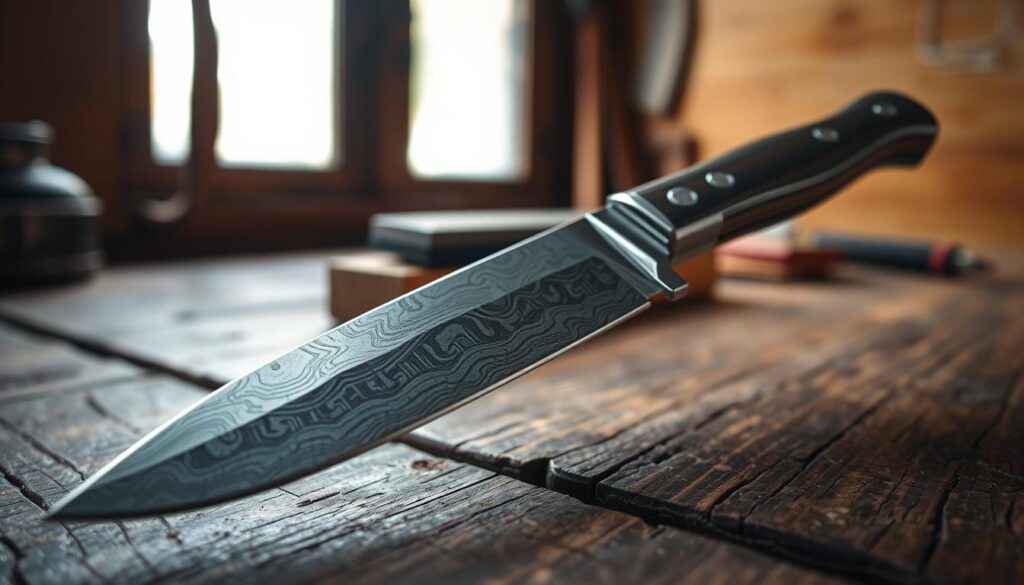
Pattern-welded layers vs. surface etch
True pattern-welded damascus steel shows variation through the thickness of the metal. If a pattern looks overly uniform or only sits on top, it may be a decorative etch. Look for depth, transition lines, and consistency across the whole blade.
How hardness and steel mix change the feel
The mix of steels and heat treatment control how the edge responds. A harder steel (for example, RWL34–PMC37 at 59 HRC) takes longer to abrade but holds an edge well.
- Harder mixes: slower material removal, longer edge life.
- Softer mixes: faster wear, more frequent touch-ups.
- Match abrasives and pressure to the steel for best results.
Remember: the pattern lives across the blade faces and within layers. Your cutting performance sits at the very edge. That’s why routine care usually keeps both the look and the edge intact.
Does sharpening ruin the Damascus pattern on your blade?
Most routine edge work removes only microns from the very tip, leaving the visible banding intact. In practice, regular maintenance focuses on the cutting edge, not the wide faces that show the pattern.
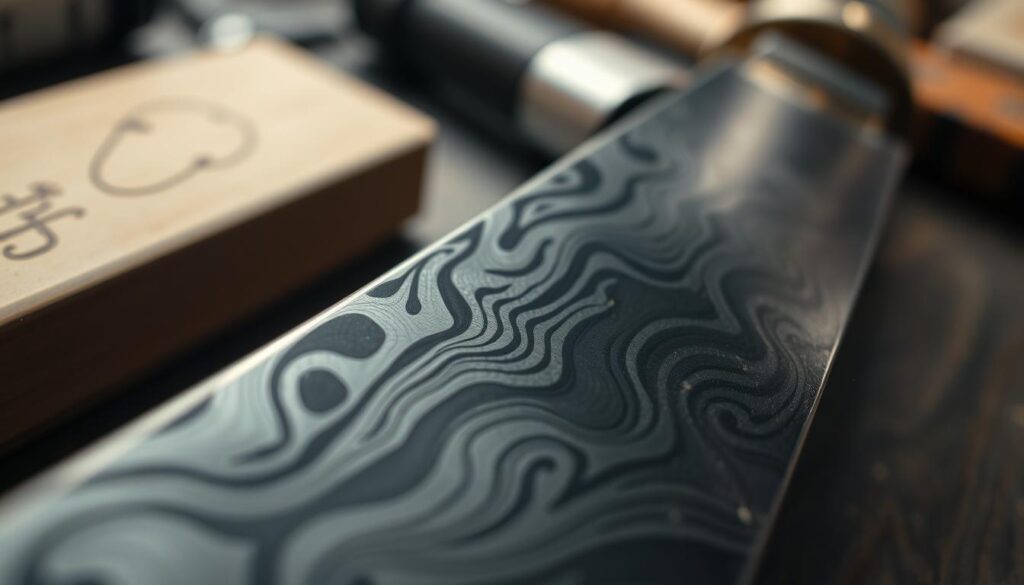
What actually gets removed
The process grinds the apex of the edge. That means tiny amounts of steel at the cutting edge are removed to restore geometry. The broad blade face that displays the pattern stays mostly untouched.
Why the pattern can look faded
The pattern can appear dulled when the side of the blade is scratched, polished, or unevenly abraded. Slurry, hard grit, or stray strokes across the face change contrast and create inconsistent marks.
How to avoid cosmetic and structural harm
- Keep strokes on the bevel and control the angle so abrasives meet only the edge.
- Wipe away slurry often to stop abrasive drag that can scar the face.
- Avoid aggressive pull-through or electric tools if you care about the look and strength.
- Don’t over-thin behind the edge — that thins geometry and can reduce blade life.
In short, normal maintenance does not inherently cause damage blade patterns. The real risk comes from heavy thinning, high heat, or careless contact with the blade face. Preserve your geometry and you keep both performance and appearance.
Sharpening Damascus knives with the right tools
Tool choice and setup shape the result. Pick methods that give you control so you protect the layered finish while restoring a keen edge.
Whetstone vs. electric sharpener for patterned blades
Manual whetstone work gives finer control. You can stop at the bevel and avoid scraping the face. Electric sharpeners remove metal faster and can be harsher on the finish.
Choosing the best stones for your steel
Natural whetstones and water stones often deliver a smooth finish and are gentle on patterned faces. Diamond plates cut quickly and feel aggressive.
- Use ceramic for fine polishing and consistent scratch patterns.
- Choose oil stones when the product calls for honing oil and slower glazing.
- Match grit to hardness: harder mixes need coarser removal then refinement.
Setup, lubrication, and safety
Stabilize the stone with a damp towel and a solid base. An angle guide helps you hold a steady angle or specific angle degrees across the bevel.
Soak water stones (10–45 minutes) or apply oil for oil stones as directed. Lubrication reduces friction, prevents glazing, and influences final scratch patterns.
Wipe slurry and residue with a clean cloth to avoid random scratches that dull contrast. These simple tools and habits protect both edge and finish.
Choosing whetstone grit for sharpness, time, and finish
Your choice of stone grit decides whether you fix a damaged edge fast or spend more time getting a mirror finish.
Coarse grit for very dull or chipped edges
Use #400-class stones for heavy correction. Coarse grit removes material quickly and reshapes geometry. Expect deeper scratches and shorter work time, but plan to follow with finer stones.
Medium grit for regular maintenance
Around #800–#1,000 is the common maintenance range. This whetstone range restores the edge without excessive metal loss. It balances speed and everyday sharpness so you don’t over-thin the blade.
Finer grit for polishing and smoother cutting
Move to higher JIS grits for refinement. Finer grit removes scratches, improves final sharpness, and gives a cleaner cut for push-slicing tasks.
How grit choice changes material removal and your final edge
- Coarse = fast material removal, rough finish.
- Medium = good balance of removal and polish.
- Fine = slow removal, better edge feel and longevity.
Match the grit to damage and your desired bite. Follow the right progression and you save steel and get the edge you want.
Prep your Damascus steel knife and stone before you sharpen
Start every session by readying both blade and bench—small steps prevent big mistakes. Proper prep keeps the finish intact and speeds the work.
Clean and dry the knife
Wash the damascus steel knife with gentle dish soap and a soft cloth or sponge. Rinse, then dry the blade completely to avoid rust and grit that can scratch the finish.
Inspect the edge closely
Look for chips, rolls, or uneven bevels along the edge. This quick check tells you which grit to start with and whether you must correct a roll before you sharpen knife edges.
Prepare the stone correctly
- For water stones: soak per instructions until bubbles stop (usually 10–45 minutes).
- For oil stones: apply a light layer of honing oil—do not soak.
- Keep a clean cloth nearby to wipe slurry so the process stays predictable.
Good prep controls the cut: a lubricated stone cuts evenly, which helps you hold angles and avoid over-grinding. This step shortens the sharpening damascus knife process and improves both sharpness and appearance.
Set the correct sharpening angle for a clean cutting edge
Hold the right angle and you control whether the blade bites or simply skims the metal. A typical target is about 15–20 degrees per side. Some damascus knife designs lean toward 15 degrees, so matching the existing bevel means you remove the least steel while restoring the edge.
Why angle matters more than force: the angle you hold determines whether you reach the true cutting edge or only polish the shoulder behind it. Too steep and the edge may become blunt faster. Too low and the edge can chip under heavy use.
How to match and keep the same angle
Check the current bevel and aim to follow it. Use an angle guide if you are new to knife sharpening. An angle guide or simple protractor gives a consistent baseline in degrees.
Keeping angle consistent from heel to tip
Move with your wrists and shoulders—not just your fingers—to keep motion repeatable. Slightly rock the blade as it curves so the tip sees the same angle degrees as the heel.
- Practical range: 15–20 degrees is a good compromise for slicing and durability.
- Beginner help: use an angle guide or a marker on the bevel to watch your progress.
- Tradeoff: lower angles feel sharper but are less robust; higher angles add strength.
- Appearance: consistent strokes reduce stray scratches on the face and keep the finish cleaner.
Step-by-step sharpening process on a whetstone
A steady, measured approach on your stone gives predictable results and keeps the blade looking its best.
Build a burr with controlled strokes and even pressure
Place the blade at your chosen angle and make smooth, even passes. Use light to moderate pressure and count passes—often 10–20 on the first grit until a burr forms.
Switch sides evenly to keep your edge centered
Flip the blade and repeat the same number of passes on the opposite side. This keeps the bevel balanced and prevents a lopsided edge.
Refine with a finer grit stone to increase sharpness
Move to a finer grit and repeat the process. You’ll notice fewer metal shavings and a quieter, smoother sound as the edge refines.
Polish, finish, and test
- Polish: Use very light strokes to remove the last burr and smooth the bevel.
- Clean slurry: Wipe residue often so the face keeps its finish.
- Test: Try the paper test or slice a tomato—success is a clean cut with minimal tearing.
Final tip: Work deliberately on the whetstone and keep contact on the bevel to protect the patterned face while you sharpen damascus steel.
Common mistakes that damage your edge or dull the pattern
Many blade issues trace back to simple habits: wrong angle, too much metal removal, or using a harsh abrasive. These errors often reduce performance and make the pattern look hazy.
Using the wrong angle and creating a weak bevel
Too steep, too shallow, or wobbling when you set the angle builds a bevel that fails quickly. A weak bevel dulls faster and chips more easily.
Re-establish the correct angle and keep consistent motion from heel to tip. Use a guide or marker to check progress.
Over-sharpening and removing more steel than needed
Excessive sessions or long coarse passes lead to over-sharpening. You lose useful steel and shorten the tool’s life.
Stop when performance tests pass. Count passes and move up grits rather than repeating coarse strokes.
Choosing an overly coarse stone or harsh tools that scratch the blade
Starting too coarse or using aggressive electric systems can leave deep scratches that travel onto the face. That makes the pattern look uneven and dull.
Prefer controlled whetstone work and a proper grit progression. If you use powered tools, work very lightly and clean slurry often.
- Fix it: re-establish your angle degrees, step through finer grits, and test on paper.
- Protect appearance: keep strokes on the bevel and wipe residue to preserve contrast.
- Protect performance: balance removal with edge stability to avoid damage to the steel.
Maintenance tips to keep Damascus knives sharp and beautiful
A short maintenance routine protects the finish while extending edge life between full rebuilds. Follow a few simple steps and you will spend less time on heavy work.
Honing vs. sharpening: when to do each
Honing realigns the edge without removing meaningful metal. Use it often between full sessions to keep performance steady.
Full sharpening removes metal to recreate the edge. For casual use, expect a full session about once or twice a year and more frequent honing as needed.
Cleaning without soaking
Wash with gentle dish soap and a soft cloth. Dry immediately and never leave the blade soaking in the sink where rust can start.
Safe storage to protect the edge
Store in a knife block, drawer organizer, or a knife roll for travel. A properly mounted magnetic strip works too—avoid metal contact that can ding the edge.
Caring for your whetstones
- Rinse away metal swarf after use and scrub lightly with a soft brush.
- Flatten stones when uneven to keep a consistent bevel.
- Store dry in a cool place to prevent cracking and prolong life.
Final note: Regular maintenance saves time and keeps both the pattern and cutting performance looking great.
Conclusion
Keep your focus on controlled, repeatable motions, and you will protect both the look and the cut of your damascus steel over time.
The key takeaway: routine work removes metal at the very edge, so the layered appearance stays intact unless you scratch or over-thin the face. Use the right tools, hold a steady angle, and move through grits sensibly.
Protect the pattern by keeping contact on the bevel, using lubrication, and wiping slurry often. Stop when simple tests show a clean cut and not before.
Treat sharpening as a repeatable process you refine with practice. With regular honing, careful cleaning, and safe storage, your damascus knife and steel knife will stay sharp, durable, and visually striking for years.