
Maintaining Stabilized Wood Handles: Do They Still Need Oiling?
You use your knife often, so you want a reliable grip and a neat look that lasts for years. This short guide explains what “Stabilized wood handle care” looks like in real life and when simple steps matter.
Quick answer: most resin-impregnated grips need wiping, not routine oiling. How often you use the blade, how wet it gets, and the finish all affect what you should do over time.
In this article you will learn everyday cleaning habits, when a light oil helps, which oils to pick, what to avoid, and safe storage tips. The aim is practical tips to prevent dulling, residue buildup, and moisture problems without over-treating the surface.
Think of maintenance as part of safe knife use: it keeps the grip predictable and the appearance attractive while you use the tool day after day.
What “Stabilized Wood” Means for Knife Handles Today
Today’s grips often use resin to change how the base material reacts to water and stress. You’ll see less movement and better durability compared with untreated lumber. That makes the scales more predictable in daily use.
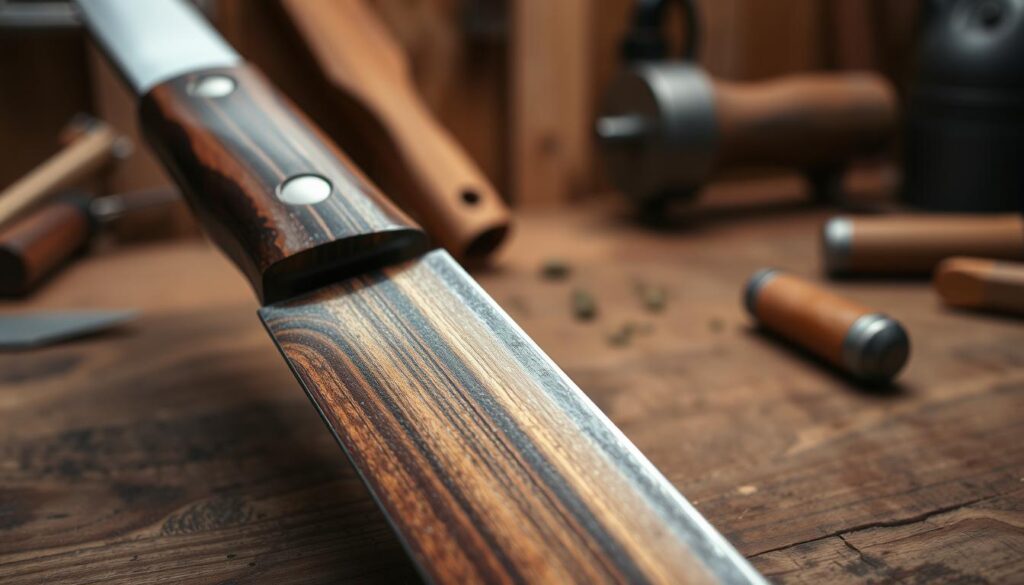
How resin-impregnated wood changes moisture behavior and durability
Impregnating timber with resin reduces its hygroscopic nature. In plain terms, the pieces absorb and release much less moisture, so they swell and shrink far less.
Common builds and hybrid patterns
Makers use a few common approaches:
- Fully resin-impregnated scales for a consistent, stable slab.
- Segmented or patterned pieces that combine wooden inserts with resin seams.
- Hybrid builds—examples from makers like 285Woodworks mix stabilized lumber with urethane resin for visual effects.
Why treated material isn’t maintenance-free
More resistant does not mean waterproof. Extended water exposure, strong cleaners, or constant wet/dry cycles can still dull resin and stress glue lines.
So you should still wipe, dry, and store your knife properly. How you wash and stow the tool matters as much as the materials used in the scales.
Do Stabilized Wood Handles Still Need Oil?
A quick wipe after use prevents buildup and keeps the finish looking lively.
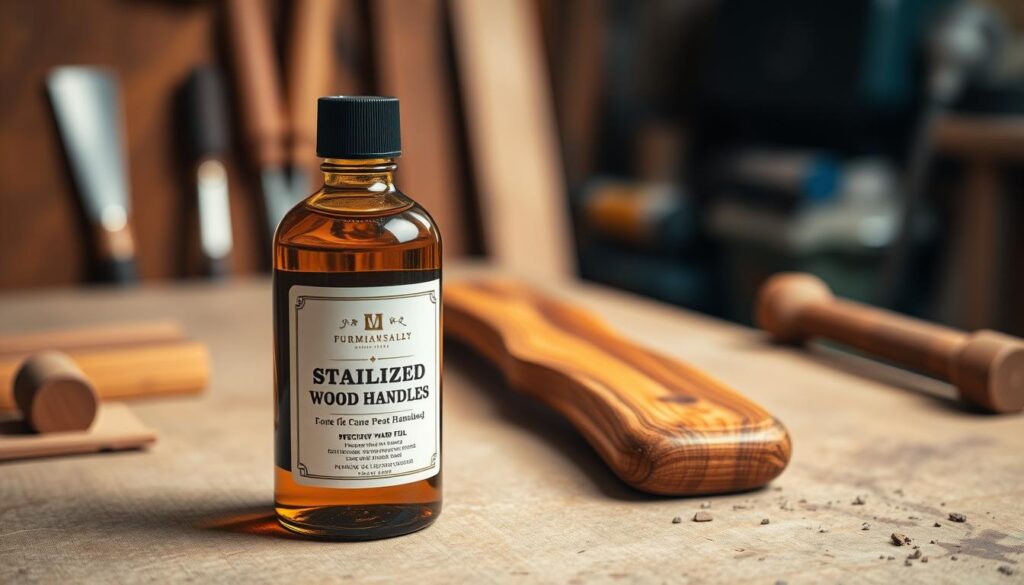
When wiping is enough versus when oil helps restore sheen
For most daily use, a soft cloth removes fingerprints, food oils, and light moisture from your knife. This simple step keeps the surface looking good without changing the finish.
When to consider oil: if the finish looks flat or your handle feels less slick, a light application of food-safe mineral oil can restore sheen and add minor water resistance.
How frequent water exposure and cleaners can dull resin over time
Repeated exposure to water, dish soap, or harsh cleaners can make resin-rich surfaces look cloudy or muted. The scales may still be structurally fine, but the visual pop fades.
Signs your handle feels dry, looks dull, or needs a light refresh
- Your handle feels dry or the grip feels inconsistent.
- The surface looks cloudy or the color and grain appear muted.
- Light buffing with a clean cloth restores some life but only temporarily.
- If oil is used, apply a few drops to a cloth, spread thinly, then buff thoroughly with a clean cloth.
Stabilized wood handle care basics for everyday use
A regular wipe and quick check are all you need to keep most grips performing well. Make this a simple habit after each use to prevent grime and moisture buildup.
Wipe down after use
Use a soft cloth to remove skin oils, food residue, and light moisture. A quick pass with a clean cloth keeps the finish bright and prevents sticky buildup.
Never soak or leave standing water
Avoid submerging your knife or leaving it in standing water. Even treated surfaces can dull or delaminate at seams when exposed to long wet cycles.
Use mild soap and dry immediately
Only use mild dish soap for sticky messes. Rinse sparingly, then dry both blade and grip with a soft cloth right away to stop trapped moisture from causing problems.
Why dishwashers and running water are risky
Dishwashers expose knives to heat, harsh detergent, and long wet cycles that can loosen adhesives and fade finishes. For folding knives, running water can carry moisture into the pivot and lock, where non-stainless steel parts may corrode if not dried fully.
- Daily routine: wipe with a soft cloth.
- Skip soaking; dry quickly after any wash.
- Keep folding knives open and dry pivots thoroughly.
Water, humidity, and temperature: what damages handles over time
Small shifts in humidity and heat add up over time and change how your grip performs.
Why moisture swings still matter
Wood naturally takes up and releases moisture. That means seasonal humidity changes can move fibers even in treated pieces.
At seams or exposed edges, moisture can cause slight lifting, micro-cracks, or a grip that no longer feels even in your hand.
Heat, cold, and rapid temperature changes
Different materials expand and contract at different rates. Rapid temperature swings—like rinsing with hot water then resting on a cold counter—stress the bond between resin and timber.
Leaving a knife in a hot car or near a stove, or carrying it from freezing morning air to a warm fire, raises the chance of splits over years.
UV and long-term light exposure
Strong light slowly breaks down lignins and other compounds in the grain. Over years the color dulls and the surface appears gray or muted.
This is usually cosmetic, but it reduces the visual pop and may make the grip feel less finished.
- Prevention: dry tools thoroughly after any contact with water, store away from direct light, and avoid extreme heat or cold.
- Small habits now save you time and expense repairing stressed resin or timber later.
Choosing the right oil for knife handle maintenance
Deciding which oil to use depends on whether you want food-safe protection, a satin finish, or long-lasting toughness.
Food-safe mineral oil for sheen and moisture resistance
Mineral oil is the simplest product for kitchen use. It restores sheen without building a film and is safe where food contact is likely.
Apply sparingly and buff; repeat when the surface looks dull.
Danish and tung oil for a deeper, satin finish
Danish oil blends oils and resins for a warm, satin look. Let it dry 4–6 hours and buff to avoid a lacquer-like film.
Tung oil dries hard and rarely alters color, so it’s a strong choice when you want durable protection without much darkening.
Linseed and camellia oil notes
Linseed adds a golden tone but can yellow lighter grain over time; test first on a scrap or hidden edge.
Camellia oil is light, penetrates well, and doubles as a simple blade and steel rust deterrent for owners who prefer one product for both tasks.
- Choose by use: kitchen, outdoor, or display.
- Always apply thinly and buff off excess.
- Test on an unseen spot before committing to a full application.
Oils to avoid and common mistakes that shorten handle life
Simple mistakes—like the wrong oil or too much product—cause lasting damage. Choose your treatments carefully to keep the grip stable and attractive over time.
Why olive oil is a poor choice
Olive oil can oxidize and go rancid. Over months it may leave a lingering odor you notice every time you pick up your knife.
This makes olive a bad long-term pick for a wooden handle in kitchen use.
Painted or lacquered finishes and oil
Painted or lacquered surfaces do not absorb oil well. Applying oil wastes effort and can create a sticky layer that attracts dirt.
Over-oiling and film-forming products
Too much oil sits on the surface and becomes slippery. It traps grime and degrades traction when you use the tool.
Also note: Danish oil and linseed oil can look great if wiped properly. If you fail to buff excess, they may dry into a cheap, lacquer-like film.
- Best practice: use thin applications and wipe thoroughly.
- When shine and light sealing are the goal, consider a small amount of wax or beeswax instead of heavy oils.
- Minimal maintenance extends life; avoid saturation and repeated heavy treatments.
How to oil a stabilized wood handle without overdoing it
Controlled oiling restores sheen and grip while avoiding buildup that ruins traction during cutting. Follow simple, timed steps so you add protection without creating a greasy film.
Prep: clean with a damp cloth and dry
Wipe the knife handle with a damp cloth to remove dirt and residue. Then dry thoroughly so trapped moisture won’t sit under the oil.
Apply oil sparingly
Put a few drops of oil on a clean cloth — never pour directly on the knife handle. Spread a thin, even layer and leave it for about 15 minutes so the oil can absorb.
Buff to remove excess and improve grip
Wipe off remaining oil with a dry cloth, then rub and buff until the surface no longer feels slick. This final step makes the grip more secure in use.
When to stop
Repeat thin coats until the surface no longer absorbs oil. If oil begins to sit on top, you’re saturated and should stop. Keep oil away from areas where your hand needs traction during cutting.
- Wipe with a damp cloth and dry.
- Apply oil to a clean cloth, thin coat, wait ~15 minutes.
- Buff off excess and polish until dry to touch.
Wax and conditioners as alternatives to oiling
Wax-based products give a low-effort finish that polishes and protects without leaving a greasy film. Many makers and brands recommend beeswax or blended balms for a quick refresh when oil feels like overkill.
Beeswax and handle balms for polishing and light sealing
Beeswax and commercial balms polish the surface, add a light barrier, and improve water beading. They tidy up dull spots and leave the grip feeling dry-to-the-touch.
When a dedicated conditioner is better than oil
Choose a dedicated conditioner when your grip has hybrid scales, urethane resin segments, or remains muted after cleaning. 285Woodworks and other makers note these products can seal seams and protect mixed materials.
- Apply a small amount of product to a cloth, rub on, let haze briefly, then buff.
- Use monthly or seasonal checks rather than after every use.
- If the surface is badly worn, light sanding and resealing will work better than wax alone.
Storage and long-term upkeep for kitchen knives and outdoor knives
Good storage habits cut down on moisture and slow the wear that ruins both blade finish and grip over time. Treat storage as part of regular maintenance so you avoid slow dulling and corrosion between uses.
Dry, ventilated storage options
Keep kitchen knives in a block that allows airflow, on a magnetic strip that keeps handles dry, or in individual sheaths for outdoor knives once they are completely dry. These options reduce trapped moisture and limit exposure to heat or strong light.
Extra steps for humid or marine environments
Salty air speeds corrosion. Store tools in a drawer, case, or dry sheath and add silica packs if you live near the coast. Wipe metal surfaces before stowing to cut salt and water residue.
Protect mechanisms and nearby steel
Folding knives trap lint and moisture in pivots. Keep pivots clean and avoid heavy rinsing under running water. A light coat of camellia, mineral oil, or Ballistol on exposed steel helps prevent rust and stops stains from transferring to the grip.
- Inspect periodically for cracks, lifting, or chips and act early.
- Dry thoroughly before sheathing and store in a ventilated place.
- Use thin protective oil on blades as needed; wipe off excess.
Conclusion
A quick, focused finish routine saves time and prevents bigger fixes later.
Wipe and dry your knife after each use, and store it away from heat and direct light. This simple habit protects the wooden handle and keeps the blade ready for work.
You rarely need regular oiling; a small, occasional dab of food-safe mineral oil will restore sheen when the surface looks dull. For polishing, a beeswax balm or conditioner gives light sealing without a greasy film.
Avoid soaking, dishwasher cycles, and letting water sit in pivots or seams. Do not use olive oil (it can go rancid), and skip oil on painted or lacquered surfaces that won’t absorb product.
Follow a rhythm: clean after use, inspect monthly, refresh with a tiny amount of oil or balm as needed, and keep the tool dry. Well-maintained gear looks better and lets you cut with confidence.